
spec sheet10 rows
Maitake (Grifola frondosa) is an edible and medicinal mushroom native to temperate forests of East Asia and North America, where it grows in large clustered fruiting bodies at the base of trees. It is valued both as a culinary mushroom and as a source of bioactive polysaccharides, especially beta-glucans, that have been studied for immune-modulating and antitumor effects [1][3]. A partially purified extract known as maitake D-fraction has been the focus of much of the medicinal research [2][3].
- Immune support
- Blood sugar support
- Possible lipid benefit
- Antioxidant
- May lower blood sugar, which can matter for people on diabetes medicines
Overview
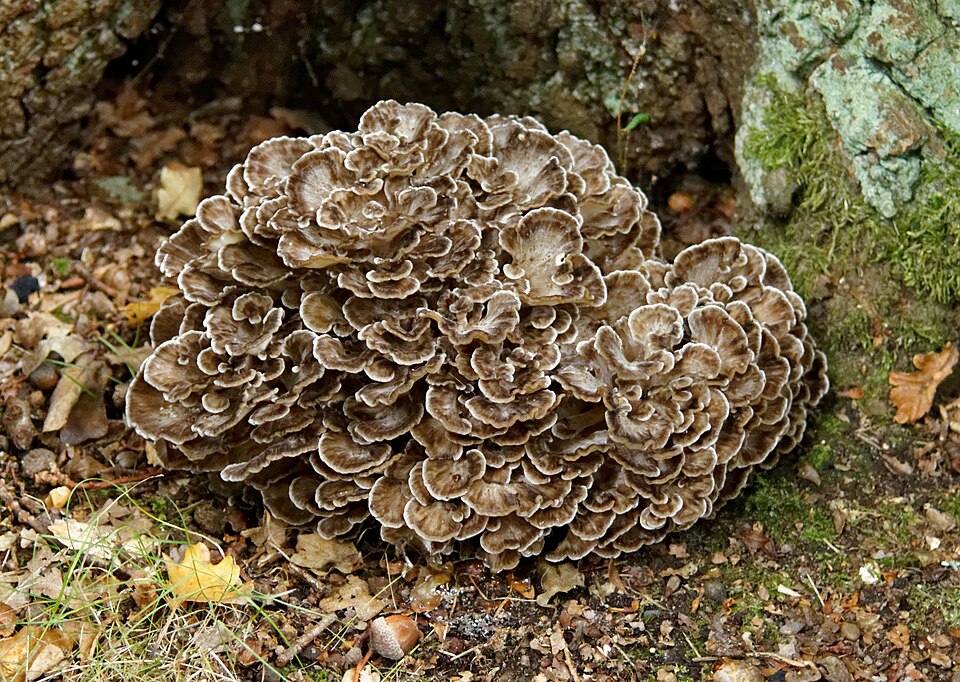
Maitake is the Japanese name for Grifola frondosa, a polypore fungus that forms large, ruffled, overlapping caps and is commonly called hen of the woods. It is widely eaten as a food and cultivated commercially, and in East Asian traditions it has also been used for general health and vitality [3]. The mushroom's medicinal reputation rests largely on its cell-wall polysaccharides, particularly beta-glucans, complex sugars that make up part of the fungal structure [1][3].
The most studied preparation is a standardized extract called maitake D-fraction, a protein-bound beta-glucan, or proteoglucan, isolated from the fruiting body [2][3]. Related preparations, sometimes labeled MD-fraction or SX-fraction, have also been described. Laboratory work has characterized purified maitake polysaccharides chemically and shown that they can activate immune cells; one water-soluble polysaccharide was reported to stimulate macrophages through the Toll-like receptor 4 pathway and to increase output of nitric oxide and cytokines such as tumor necrosis factor alpha and interleukins [1].
Much of the human and animal research has examined immune and anticancer effects. In cancer patients given maitake D-fraction, investigators reported increased natural killer cell activity and, in some cases, reduced expression of tumor markers, and proposed that natural killer activity might serve as a marker of disease response [2]. A randomized clinical trial in patients with advanced laryngeal and pharyngeal cancer found that adding maitake D-fraction during concurrent chemoradiotherapy was associated with fewer severe treatment-related adverse events and better quality-of-life scores [4]. Additional reports include a case of apparent remission in an elderly patient with invasive bladder cancer taking a D-fraction regimen [5], and laboratory studies suggesting that combining the extract with vitamin C may enhance its effects [3]. Reviews also note investigation of maitake for blood-sugar regulation, blood pressure, and cholesterol, although the overall clinical evidence remains limited [3].
Maitake is consumed as a whole food and is also sold as a dietary supplement in the form of powders, capsules, and standardized extracts such as D-fraction [3]. It is regulated as a food or dietary supplement rather than as an approved drug, and the medicinal claims made for it are not established to the standard of licensed medicines. It is generally regarded as safe as a food, and the research to date is dominated by small studies, case reports, and preclinical work, so larger controlled trials would be needed to confirm therapeutic benefits [2][4].
Mechanism
Maitake's biological effects are attributed chiefly to its beta-glucan polysaccharides, which act as immunomodulators rather than as direct chemical toxins to cells [1][2]. These complex sugars are recognized by receptors on innate immune cells; purified maitake polysaccharide has been shown to engage the Toll-like receptor 4 pathway on macrophages, prompting their activation and the release of and signaling molecules such as tumor necrosis factor alpha and interleukins that help coordinate an immune response [1]. Through this activation of macrophages, T cells, and natural killer cells, maitake extracts are thought to strengthen the body's surveillance against tumor cells, which is the proposed basis for the antitumor activity seen in animal models and the raised natural killer cell activity observed in treated patients [1][2].
The standardized D-fraction, a protein-bound beta-glucan, concentrates this activity and has been the main vehicle for clinical study [2]. Because the mechanism is indirect, working through the immune system, maitake has been explored as a complement to conventional cancer treatment, where it may support immune parameters and help reduce treatment-related side effects rather than replace primary therapy [4]. Laboratory findings that vitamin C can the extract point to additional, still-preliminary mechanisms [3]. Reported effects on glucose and lipid metabolism have been linked to other maitake fractions, but these actions are less well defined and remain under study [3].
receptor fingerprint
Dectin-1 / beta-glucan receptorsactivates
Natural killer cellsstimulates
sensitivityimproves
Blood lipidsmodulates
Dosingtypical ranges, not medical advice
interested in protocols and clinical dosages? make an account to see them! ^_^
Safetyrisks and cautions, not medical advice
As a culinary mushroom it is very safe; supplements are generally well tolerated with occasional GI upset. Because it may lower blood sugar, people on diabetes medication should monitor for additive effects. Those on immunosuppressants should be cautious given immune-modulating activity.
Subjective profileweighing the evidence above
A solid, food-safe medicinal mushroom for immune support with some metabolic upside; reasonable to include, especially if you like the actual mushroom.
Resources
This entry is here for reference.
Research
- 2003first citedEffect of Maitake (Grifola frondosa) D-Fraction on the activation of NK cells in cancer patients
- 2022most recentEffect of Maitake D-fraction in advanced laryngeal and pharyngeal cancers during concurrent che…
- 1.Antitumor and immunomodulatory activity of a water-soluble polysaccharide from Grifola frondosa
- 2.Effect of Maitake (Grifola frondosa) D-Fraction on the activation of NK cells in cancer patients
- 3.Synergistic potentiation of D-fraction with vitamin C as possible alternative approach for cancer therapy
- 4.Effect of Maitake D-fraction in advanced laryngeal and pharyngeal cancers during concurrent chemoradiotherapy: A randomized clinical trial
- 5.Possible disease remission in patient with invasive bladder cancer with D-fraction regimen
5 listed here; entry last updated July 2026
Reviews
My notesprivate to this device
FAQ
What is the D-fraction?
It is a specific beta-glucan fraction from maitake studied for immune effects.
Can I just eat the mushroom?
Yes, hen of the woods is a delicious edible mushroom with the same beta-glucans.
Does it help blood sugar?
There is some early evidence for improved insulin sensitivity, but do not rely on it as treatment.
Is it safe with diabetes meds?
Monitor your blood sugar since effects can add up.
Who should avoid it?
People on immunosuppressive therapy should check with their doctor.
Adverse effects
- May lower blood sugar, which can matter for people on diabetes medicines
Notes and cautions
- Generally well tolerated when eaten as food
- Occasional digestive upset with concentrated extracts
- Most medicinal evidence comes from small studies, so safety at high supplemental doses is not fully characterized