
data + articles · 4 listed
newest 2023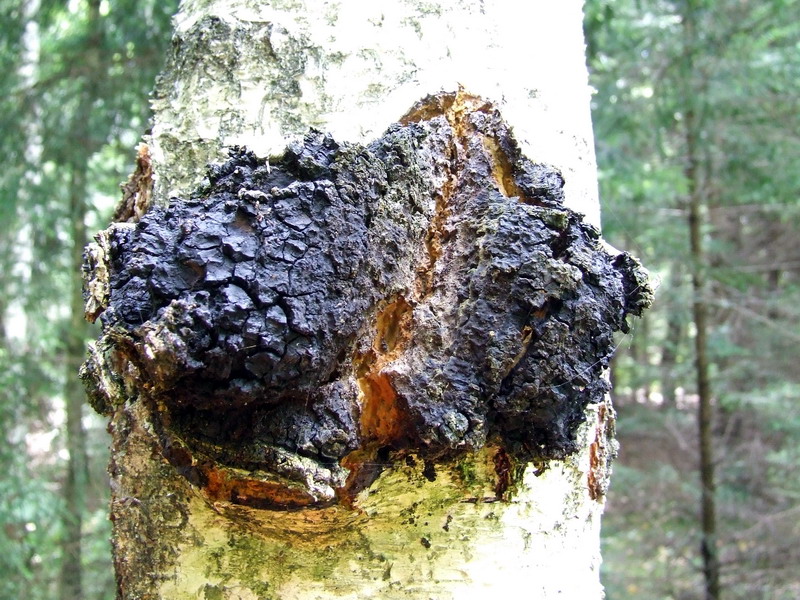
spec sheet11 rows
Chaga Mushroom Chaga is the common name for Inonotus obliquus, a fungus that grows as a hard, blackened mass on birch and other trees in the cold forests of the Northern Hemisphere [1]. Although its charred-looking growth resembles burnt wood, it is actually a sterile mass of fungal tissue rich in melanin, and it has a long history in folk medicine across Russia and northern Europe, where it is often brewed as a tea [1][2]. Modern laboratory research has examined chaga extracts and their polysaccharides for antioxidant, immune, and anticancer activity, but strong clinical evidence in people is lacking, and its very high oxalate content raises safety concerns with heavy or prolonged use [1][2][3].
- Wild birch fungus with centuries of northern folk use
- Exceptional antioxidant capacity; melanin rich by nature
- Brews into a rich, earthy coffee style tea
- Lab work shows immune activity; human trials still pending
- A pleasant daily ritual rather than a heavy supplement
Overview
Inonotus obliquus is a wood-decay fungus in the family Hymenochaetaceae [1]. The part known as chaga is not the fungus's spore-producing fruiting body but a sterile conk, essentially a dense mass of mycelium and sclerotial tissue that bulges out of the host tree; its exterior is hard, cracked, and deep black because of a high melanin content, so that it resembles a lump of burnt charcoal, while the interior is a rusty orange-brown [1]. It grows most often as a parasite on birch trees, and less commonly on alder, beech, or poplar, and it is found chiefly in the circumboreal birch forests of the northern latitudes [1].
Chaga has been gathered and used in folk medicine for centuries, with records reaching back to at least the sixteenth century, and it is especially associated with the traditional practices of Russia, the Baltic countries, and parts of China and Korea [2][4]. It has been taken as a tea or decoction and applied traditionally to complaints such as stomach ailments, ulcers, and various tumors [2][4]. In modern times it is sold widely as a dietary supplement and functional beverage, in forms such as chunks, ground powder, and extract capsules [1][2].
The fungus contains a varied mixture of compounds that researchers have linked to its biological activity [2][3]. Prominent among them are polysaccharides, especially beta-glucans, which are regarded as its major bioactive fraction, along with triterpenoids, phenolic compounds including hispidin derivatives, lignin metabolites, sterols, and large amounts of the pigment melanin [2][3]. Because it draws material from its birch host, chaga also concentrates betulin-related triterpenes [2]. Notably, it contains extremely high levels of oxalates, a feature with direct safety implications [1].
Most scientific study of chaga has been carried out in test tubes and animals rather than in controlled human trials [2][4]. In such preclinical work, extracts and isolated polysaccharides have shown antioxidant, anti-inflammatory, immune-modulating, antiviral, blood-sugar-lowering, and antitumor effects, with the antitumor activity attributed to interference with several cell-signaling pathways involved in tumor growth [2][3][4]. Reviewers consistently caution that these promising laboratory findings have not yet been confirmed by rigorous clinical studies, so the mushroom's medicinal value in humans remains unproven [1][2].
Chaga is regulated as a food or dietary supplement rather than as an approved medicine, and it lacks sufficient scientific evidence for either safety or effectiveness in treating disease [1]. The most significant documented risk comes from its very high oxalate content: chronic or heavy consumption has been linked to oxalate build-up and kidney damage, and cases of kidney injury after prolonged use have been reported, so caution is warranted, especially for people with kidney problems [1].
Mechanism
Chaga does not have a single defined mechanism; its reported effects are attributed to a combination of constituents acting in different ways [2][3]. Its beta-glucan polysaccharides are thought to engage receptors on immune cells and modulate immune responses, which may underlie the immune-supporting and antitumor activities seen in laboratory models [3]. Its abundant melanin and phenolic compounds act as antioxidants, scavenging reactive oxygen species and protecting cells from [2]. In cell studies, chaga triterpenoids and other metabolites have been observed to interfere with signaling pathways that drive tumor growth and spread, and to influence energy metabolism and cell-cycle checkpoints in cancer cells [4]. These actions have been demonstrated mainly in vitro and in animals and have not been established in humans [2][4].
receptor fingerprint
Free radicals / ROSscavenges
Immune cell (beta-glucan) activitystimulates
Inflammatory cytokinesreduces
Blood glucoselowers
Dosingtypical ranges, not medical advice
interested in protocols and clinical dosages? make an account to see them! ^_^
Safetyrisks and cautions, not medical advice
Generally well tolerated as tea or extract, but chaga is high in oxalates, which can raise kidney stone risk and, in extreme use, harm kidney function. It may lower blood sugar and has mild blood-thinning potential, so caution with diabetes and anticoagulant medication. Avoid in pregnancy and before surgery.
Subjective profileweighing the evidence above
A tasty, antioxidant-heavy immune tonic; solid daily wellness herb but the disease claims outrun the evidence.
Where to buy
Suppliers
Vendors carrying Chaga Mushroom, with live product details and codes. Links are affiliate links that support the wiki at no cost to you.
RUPharma🌐
Chaga Mushroom
Research
- 1.Chaga mushroom: a super-fungus with countless facets and untapped potential.
- 2.Therapeutic properties of Inonotus obliquus (Chaga mushroom): A review.
- 3.Recent Developments in Inonotus obliquus (Chaga mushroom) Polysaccharides: Isolation, Structural Characteristics, Biological Activities and Application.
- 4.Deciphering the antitumoral potential of the bioactive metabolites from medicinal mushroom Inonotus obliquus.
4 listed here; entry last updated August 2026
Reviews
My notesprivate to this device
FAQ
Is chaga good for immunity?
Its beta-glucans support immune function and it is very high in antioxidants, so it makes a reasonable immune tonic.
Are the oxalates a real concern?
Yes. Chaga is high in oxalates, so heavy use is not ideal for people prone to kidney stones or with kidney issues.
Does chaga cure cancer?
No. Some compounds show anticancer activity in the lab, but there is no proof it treats cancer in people.
Tea or capsule?
Both work; traditional use favors a slow-simmered tea, while extracts offer convenience and standardization.
Notes and cautions
- Very high oxalate content; heavy or prolonged use has been linked to kidney damage
- Human evidence for health benefits is lacking
- May affect blood sugar, a consideration for people with diabetes
- Quality and composition of products vary widely
- Regulated as a supplement, not an approved medicine