
spec sheet10 rows
Ashitaba is the common name for Angelica keiskei, a perennial flowering plant in the carrot family (Apiaceae) native to the Pacific coast of Japan. Its Japanese name means "tomorrow's leaf," a reference to how quickly it regrows after being cut. The plant is eaten as a vegetable and used in Japanese folk medicine, and its yellow sap is notable for containing distinctive chalcones, chiefly xanthoangelol and 4-hydroxyderricin, which are the focus of most laboratory research.
- Antioxidant support
- Gentle metabolic support
- Anti-inflammatory activity
- Rich in vitamins and fiber
- Possible allergy in people sensitive to plants in the carrot family
Overview
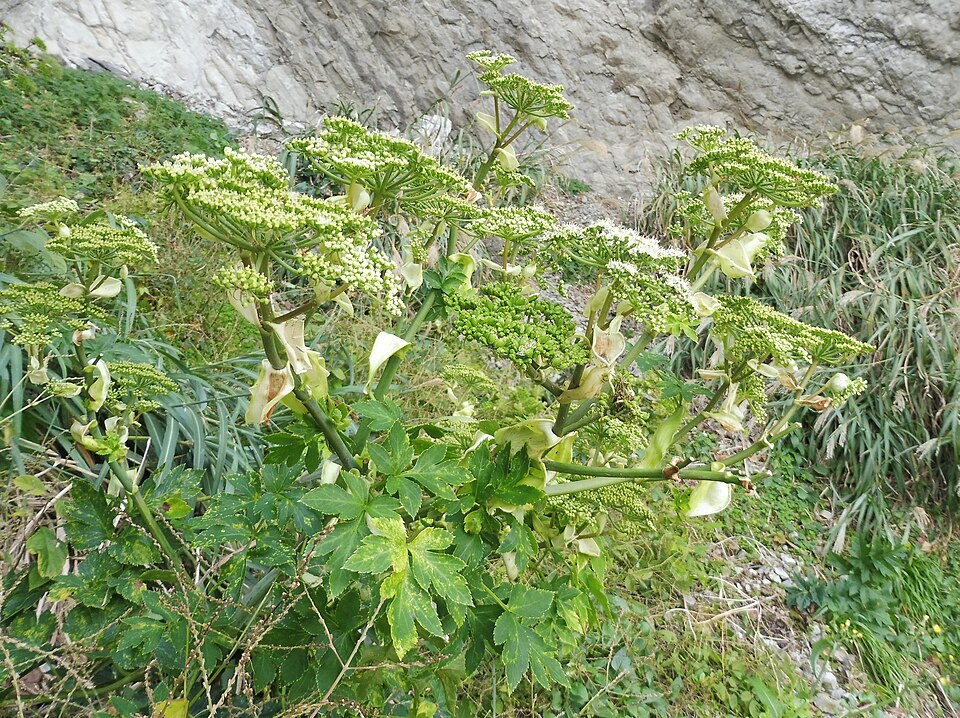
Ashitaba is a leafy perennial in the genus Angelica, reaching roughly waist height, with divided leaves and umbels of small white flowers typical of the carrot family. [1] It is native to a limited stretch of Japan's central Pacific coast, including the Boso, Miura, and Izu peninsulas and the Izu Islands, and has since been cultivated more widely. Traditionally it is eaten as a vegetable in dishes such as tempura and soba and is brewed into tea.
When a stem is cut it exudes a viscous yellow sap that is unusually rich in chalcones, a class of flavonoid pigments. The two signature compounds are xanthoangelol and 4-hydroxyderricin, which are largely specific to this species and are thought to underlie much of its biological activity. [1] The plant also contains coumarins and furanocoumarins.
Most evidence for ashitaba's chalcones comes from cell and animal studies rather than human trials. In laboratory models the chalcones have shown anti-cancer activity; one study reported that 4-hydroxyderricin and xanthoangelol suppressed melanoma development by acting on the BRAF and PI3K signaling pathways. [1] Other animal work found that the same chalcones helped prevent dexamethasone-induced muscle wasting, pointing to possible effects on muscle metabolism. [2]
Pharmacokinetic experiments in mice confirmed that both chalcones are absorbed after oral dosing of ashitaba extract and then metabolized, which helps explain how orally consumed material could produce systemic effects. [3] A toxicological assessment of a standardized ashitaba chalcone preparation supported a reasonable margin of safety at the doses tested, consistent with the plant's long dietary history. [4]
Ashitaba is treated as a food and dietary supplement rather than an approved medicine. It is sold as dried leaf powder, capsules, tea, and extracts standardized to chalcone content. Because it contains furanocoumarins, handling the fresh plant or its sap can increase skin sensitivity to sunlight in some people.
Mechanism
The characteristic actions of ashitaba are attributed to its chalcones, principally xanthoangelol and 4-hydroxyderricin, which are concentrated in the plant's yellow sap. [1] These molecules behave as antioxidants and modulate several intracellular signaling pathways in laboratory systems. In cancer cell models they interfere with the BRAF and / cascades that drive proliferation and survival. [1] In muscle tissue they appear to counter glucocorticoid-driven protein breakdown, helping to preserve muscle mass in animals given dexamethasone. [2] Feeding studies show the chalcones are absorbed from the gut and metabolized, so oral intake can deliver them to the circulation. [3] Human mechanistic data remain limited, and most proposed benefits are still based on preclinical work.
receptor fingerprint
Adiponectin signalingupregulates
NF-kB inflammatory pathwayinhibits
Reactive oxygen speciesscavenges
(spermidine pathway)promotes
Dosingtypical ranges, not medical advice
interested in protocols and clinical dosages? make an account to see them! ^_^
Safetyrisks and cautions, not medical advice
Generally well tolerated as a food and supplement, with occasional mild GI upset. It is in the same botanical family as celery and angelica, so people with those allergies should be cautious. Human safety data at supplement doses is limited, so pregnant or breastfeeding women should skip it.
Resources
This entry is here for reference.
Research
- 2012first citedAbsorption and metabolism of 4-hydroxyderricin and xanthoangelol after oral administration of A…
- 2020most recent4-Hydroxyderricin and xanthoangelol isolated from Angelica keiskei prevent dexamethasone-induce…
- 1.The Ashitaba (Angelica keiskei) Chalcones 4-Hydroxyderricin and Xanthoangelol Suppress Melanomagenesis By Targeting BRAF and PI3K
- 2.4-Hydroxyderricin and xanthoangelol isolated from Angelica keiskei prevent dexamethasone-induced muscle loss
- 3.Absorption and metabolism of 4-hydroxyderricin and xanthoangelol after oral administration of Angelica keiskei (Ashitaba) extract in mice
- 4.Toxicological assessment of Ashitaba Chalcone
4 listed here; entry last updated August 2026
Reviews
My notesprivate to this device
FAQ
Will ashitaba make me lose weight?
At best it is a mild metabolic helper. Real weight change comes from diet and activity; think of this as a small supporting player.
What are the yellow chalcones?
Xanthoangelol and 4-hydroxyderricin, found in the plant's yellow sap; they are the main studied actives.
Is it safe daily?
It has a long history as a food, so daily use of reasonable doses is generally fine, but human trial data is thin.
Can I just eat the leaf?
Yes, it is eaten as a vegetable in Japan; supplements just concentrate the chalcones.
Limitations of the evidence
- Human safety data are limited
Adverse effects
- Possible allergy in people sensitive to plants in the carrot family
Notes and cautions
- Generally regarded as safe as a food
- Yellow sap may irritate skin
- Furanocoumarins can increase sun sensitivity