
spec sheet10 rows
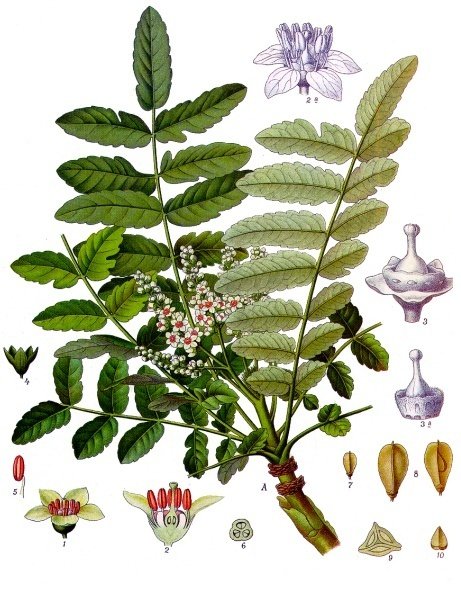
Boswellia is a genus of flowering trees in the family Burseraceae whose fragrant oleo-gum resin, known as frankincense, has a long history in traditional medicine. Standardized extracts of Boswellia serrata are studied chiefly as anti-inflammatory agents, with a family of pentacyclic triterpenes called boswellic acids regarded as the main active constituents. Research has focused on osteoarthritis and other inflammatory conditions.
- Reduces joint pain
- Improves joint function
- NSAID-alternative anti-inflammatory
- Supports gut inflammation
- Mild digestive upset such as nausea or diarrhea
- Acid reflux or stomach discomfort in some people
- Occasional allergic skin rash
- Long-term safety data remain limited
Overview
Boswellia is a genus of flowering trees in the family Burseraceae, native to dry, often mountainous regions of Africa, the Arabian Peninsula, and India. When the bark is tapped, the trees exude an aromatic oleo-gum resin that dries into frankincense, a substance valued for thousands of years in incense, perfumery, and the traditional medical systems of India, China, and the Arab world [3]. Several species, including Boswellia serrata, Boswellia sacra, Boswellia frereana, and Boswellia papyrifera, are the principal sources of true frankincense.
Much of the resin's pharmacological interest comes from a group of pentacyclic triterpenes known as boswellic acids. Among these, 11-keto-beta-boswellic acid (KBA) and acetyl-11-keto-beta-boswellic acid (AKBA) are generally considered the most biologically active, alongside beta-boswellic acid and related triterpene acids [3][4]. Commercial products are usually sold as standardized Boswellia serrata extracts defined by their boswellic acid content, and formulation research has explored nanoparticle and other delivery approaches to improve the relatively poor oral absorption of these molecules [5].
Modern laboratory and clinical work has centered on the anti-inflammatory potential of Boswellia. A systematic review and meta-analysis of randomized trials in osteoarthritis found that Boswellia and its extracts were associated with reduced pain and stiffness and improved joint function compared with control [1]. A separate randomized, placebo-controlled trial of a standardized Boswellia serrata extract in knee osteoarthritis reported gains in physical function together with lower levels of the inflammatory marker C-reactive protein [2]. Broader reviews of frankincense have surveyed its studied roles in conditions such as asthma and inflammatory bowel disease, as well as exploratory anti-cancer research, while emphasizing that larger and better-controlled trials are still needed [3][4].
In most countries Boswellia is marketed as a botanical dietary supplement rather than an approved drug, so products are not subject to the same efficacy review as prescription medicines and can vary in how they are standardized. It is commonly sold as capsules, tablets, and topical preparations made from the gum resin or its purified extracts. Tolerability reported in trials has generally been good, with mostly mild adverse effects [1][3].
Mechanism
Boswellic acids, the pentacyclic triterpenes concentrated in Boswellia oleo-gum resin, are thought to reduce inflammation mainly by inhibiting 5-lipoxygenase, the enzyme that drives synthesis of pro-inflammatory leukotrienes; 11-keto-beta-boswellic acid (KBA) and acetyl-11-keto-beta-boswellic acid (AKBA) are regarded as the most active constituents [3][4]. Beyond the leukotriene pathway, boswellic acids have been reported to dampen NF-kappaB signaling and lower pro-inflammatory cytokines, and to inhibit proteases and reactive oxygen species that contribute to tissue damage [4]. In osteoarthritis, standardized extracts have been associated with reduced pain and stiffness and improved joint function, alongside falls in inflammatory markers such as C-reactive protein [1][2].
receptor fingerprint
5-lipoxygenase (5-LOX)inhibits
NF-kB pathwayinhibits
Cathepsin Ginhibits
Cartilage matrix breakdownreduces
Dosingtypical ranges, not medical advice
interested in protocols and clinical dosages? make an account to see them! ^_^
Safetyrisks and cautions, not medical advice
Generally well tolerated, with occasional mild GI upset, nausea, or reflux. It does not carry the same stomach and kidney risks as NSAIDs at typical doses. It may theoretically interact with drugs metabolized by certain liver enzymes, so check with heavier medication regimens.
Subjective profileweighing the evidence above
One of the more legit herbal anti-inflammatories, especially for joints; get an AKBA-standardized extract.
Resources
This entry is here for reference.
Research
- 2010first citedModulation of the immune system by Boswellia serrata extracts and boswellic acids
- 2020meta-analysisEffectiveness of Boswellia and Boswellia extract for osteoarthritis patients: a systematic revi…
- 2022most recentAnti-inflammatory and anti-cancer activities of frankincense: Targets, treatments and toxicities
- 1.Effectiveness of Boswellia and Boswellia extract for osteoarthritis patients: a systematic review and meta-analysis
- 2.A pilot, randomized, double-blind, placebo-controlled trial to assess the safety and efficacy of a novel Boswellia serrata extract in the management of osteoarthritis of the knee
- 3.Anti-inflammatory and anti-cancer activities of frankincense: Targets, treatments and toxicities
- 4.Modulation of the immune system by Boswellia serrata extracts and boswellic acids
- 5.Nanoparticle formulation of 11-keto-β-boswellic acid (KBA): anti-inflammatory activity and in vivo pharmacokinetics.
5 listed here; entry last updated August 2026
Reviews
My notesprivate to this device
FAQ
How is it different from ibuprofen?
Boswellia works mainly through 5-LOX rather than COX, so it targets a different inflammatory pathway and is gentler on the stomach.
What is AKBA?
Acetyl-11-keto-beta-boswellic acid, considered the most potent boswellic acid; better extracts are standardized to it.
How long until it works?
Many people notice joint benefits over a few weeks of consistent use rather than instantly.
Can I combine it with curcumin?
Yes, that is a popular joint stack since they hit different inflammatory pathways.
Adverse effects
- Mild digestive upset such as nausea or diarrhea
- Acid reflux or stomach discomfort in some people
- Occasional allergic skin rash
- Long-term safety data remain limited
Notes and cautions
- Generally well tolerated in clinical trials