
spec sheet10 rows
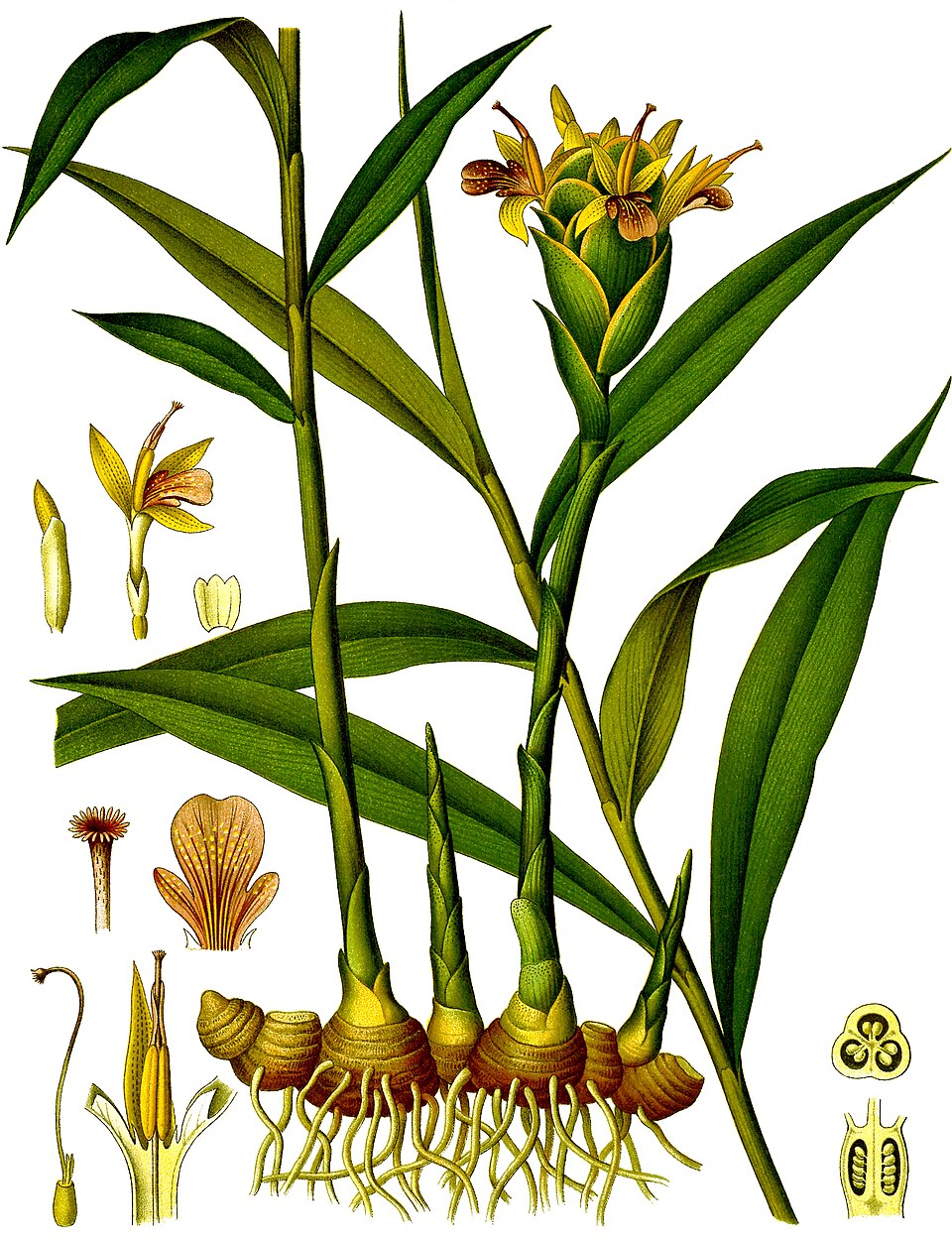
Ginger is the rhizome of Zingiber officinale, a flowering herbaceous perennial in the family Zingiberaceae that has served for millennia as both a culinary spice and a folk remedy. Native to Maritime Southeast Asia, where Austronesian peoples are thought to have first domesticated it, the plant is prized for its pungent, aromatic root, whose flavor derives chiefly from gingerols and related shogaols. Ginger is used fresh, dried, powdered, pickled, or candied, and among its many traditional uses it is most studied for easing nausea.
- Reduces nausea and motion sickness
- Mild anti-inflammatory effect
- Eases muscle soreness
- May lower osteoarthritis pain
- Aids digestion and gastric emptying
- Heartburn or burning aftertaste
- Mild gastrointestinal upset with concentrated forms
- May interact with anticoagulant drugs such as warfarin
- Caution advised in people with gallstones or bleeding disorders
Overview
Ginger (Zingiber officinale) is a herbaceous perennial in the ginger family, Zingiberaceae, which also includes turmeric, cardamom, and galangal. The plant grows annual leafy pseudostems roughly a meter tall and is cultivated for its thick, branching underground rhizome. Raw ginger contains hundreds of constituents; its characteristic pungency and aroma come largely from gingerols, especially the compound often written as 6-gingerol, which convert to the sharper shogaols when the root is dried or heated and to milder zingerone during cooking. A volatile oil fraction rich in sesquiterpenes such as zingiberene contributes the warm, spicy scent.
Ginger is a true cultigen that does not occur in the wild, and it is believed to have been first domesticated by Austronesian peoples in island Southeast Asia several thousand years ago before being carried across the Indo-Pacific. It appears in some of the earliest East Asian writings; classical Chinese texts record its everyday culinary and medicinal use, and by the first century it was reaching the Mediterranean world through established trade routes. During the medieval period it became one of the most valuable spices in Europe, and it was later introduced to the Caribbean and other tropical regions, several of which remain important producers today.
In cooking, ginger is a staple of South, East, and Southeast Asian cuisines and features in preparations ranging from curries and stir-fries to pickles, teas, and confections; in Western contexts it flavors baked goods and beverages such as ginger ale and ginger beer. Medicinally, its most examined application is the relief of nausea and vomiting. Systematic reviews of randomized trials report that ginger can reduce the severity of postoperative nausea and vomiting, although its effect on the incidence of vomiting has been less consistent [1][3]. Evidence also points to a modest benefit for nausea in early pregnancy, though the overall quality of the trials is generally rated as low [2]. Studies of ginger for pain, including osteoarthritis and menstrual cramps, offer only tentative support and are limited by methodological weaknesses [4].
In the United States, ginger holds "generally recognized as safe" status as a food, and it is marketed widely as a dietary supplement and herbal tea rather than as an approved drug. It is sold as fresh rhizome, dried powder, crystallized or pickled pieces, extracts, and juice. Ginger is generally well tolerated, but concentrated forms may cause heartburn or gastrointestinal upset in some people, and it has been reported to interact with anticoagulant medications such as warfarin.
Mechanism
Ginger's biological activity is attributed mainly to its pungent phenolic constituents, the gingerols and shogaols, together with volatile terpenoids. These compounds are thought to act on the gastrointestinal tract and nervous system in ways that dampen the nausea and vomiting reflex; proposed targets include 5-HT3 receptors and cholinergic pathways governing gastric motility, which may help explain the antiemetic effects seen in clinical reviews [1][3].
Gingerols and shogaols also show antioxidant and anti-inflammatory activity in laboratory studies, partly by moderating inflammatory signaling and the production of prostaglandins, a property proposed to underlie ginger's tentative analgesic effects in conditions such as osteoarthritis [4]. Much of this mechanistic detail comes from cell and animal experiments, so the extent to which these pathways operate at dietary or supplemental intakes in humans remains incompletely defined [2].
receptor fingerprint
5-HT3 receptorantagonist
COX-2inhibits
NF-kB pathwayinhibits
Gastric motilityenhances
5-LOXinhibits
Dosingtypical ranges, not medical advice
interested in protocols and clinical dosages? make an account to see them! ^_^
Safetyrisks and cautions, not medical advice
Ginger is very well tolerated; the most common complaints are mild heartburn, a burning aftertaste, or loose stools at higher doses. It has mild antiplatelet activity, so people on blood thinners or facing surgery should be cautious and check with a doctor. Doses used in pregnancy for morning sickness are generally considered safe, but it's worth clearing with an OB first.
Resources
This entry is here for reference.
Research
- 2000first citedEfficacy of ginger for nausea and vomiting: a systematic review of randomized clinical trials
- 2018most recentGinger (Zingiber officinale): An alternative for the prevention of postoperative nausea and vom…
- 1.Ginger (Zingiber officinale): An alternative for the prevention of postoperative nausea and vomiting. A meta-analysis
- 2.Treatments for Hyperemesis Gravidarum and Nausea and Vomiting in Pregnancy: A Systematic Review
- 3.Efficacy of ginger for nausea and vomiting: a systematic review of randomized clinical trials
- 4.The use of ginger (Zingiber officinale) for the treatment of pain: a systematic review of clinical trials
4 listed here; entry last updated July 2026
Reviews
My notesprivate to this device
FAQ
Does ginger really help nausea?
Yes, this is its best-supported use. It reliably reduces pregnancy, motion, and post-op nausea in trials.
Fresh vs dried, which is better?
Dried ginger is higher in shogaols and often used in supplements; fresh is higher in gingerols. Both work; dried is more convenient for dosing.
Can it thin my blood?
It has mild antiplatelet activity. If you take blood thinners or are near surgery, check with your doctor first.
Will it fix workout soreness?
It takes the edge off, but the effect is modest. Don't expect it to erase DOMS.
Is it safe daily?
For most people yes, up to a couple grams a day. Take with food if you get heartburn.
Adverse effects
- Heartburn or burning aftertaste
- Mild gastrointestinal upset with concentrated forms
- May interact with anticoagulant drugs such as warfarin
- Caution advised in people with gallstones or bleeding disorders