
spec sheet10 rows
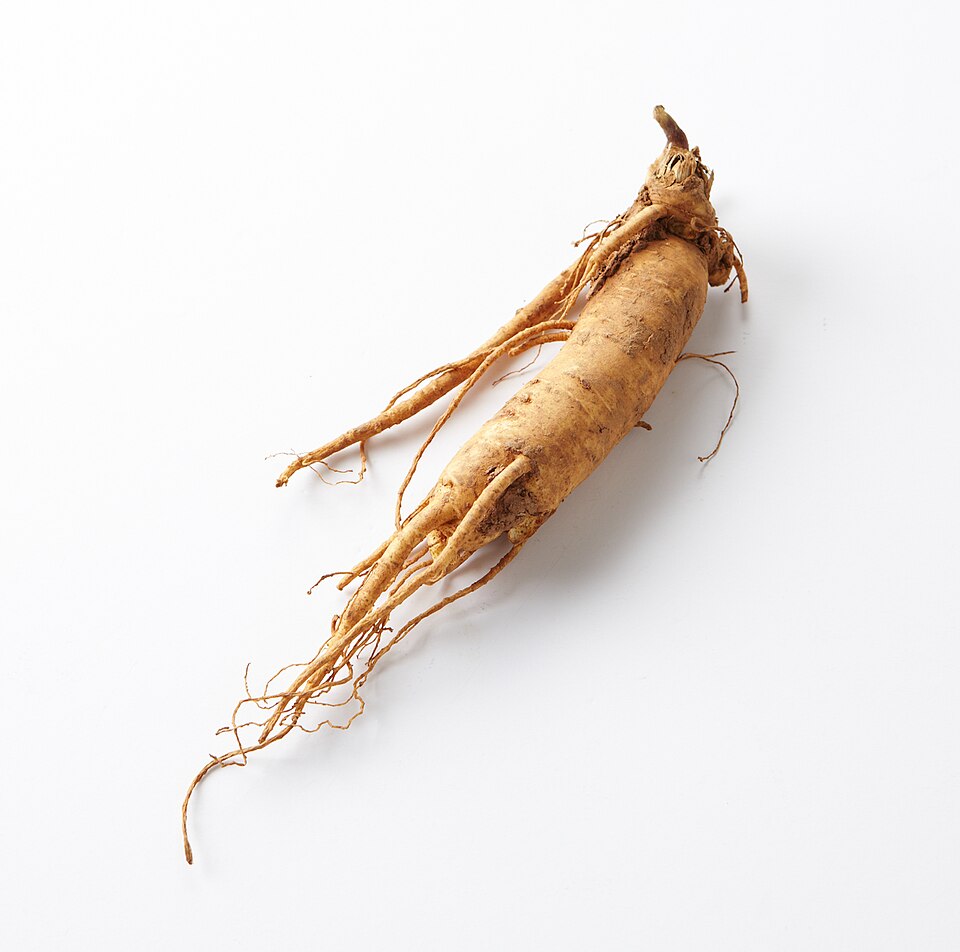
Ginseng is the fleshy root of several slow-growing perennial plants in the genus Panax, part of the ivy family Araliaceae, and it is among the most widely used herbs in traditional East Asian medicine. The best known species are Asian ginseng (Panax ginseng) and American ginseng (Panax quinquefolius), both valued for a group of active saponins called ginsenosides. Ginseng is taken as a general tonic and is marketed to support energy, cognition, and resilience to stress, although clinical evidence for these uses is mixed.
- Reduces mental and physical fatigue
- Supports focus and clarity
- Improves stress resilience
- Modest immune support
- May aid blood flow
- Difficulty sleeping, especially with higher intakes
- Occasional headache or digestive upset
- May lower blood glucose and interact with diabetes medications
- May interact with anticoagulant drugs
Overview
Ginseng refers to the roots of plants in the genus Panax, a name derived from a Greek term meaning "all healing." Botanically it belongs to the family Araliaceae, and the herb sold commercially comes mainly from Asian ginseng (Panax ginseng) and American ginseng (Panax quinquefolius), with Panax notoginseng also used in China. The characteristic constituents are the ginsenosides, a large family of triterpene saponins, accompanied by polysaccharides, peptidoglycans, polyacetylenes, and a peptide fraction termed gintonin [1]. The relative proportions of individual ginsenosides differ between species and preparations and are used to tell them apart.
Ginseng has been prized in China and Korea for well over a thousand years and appears in early Chinese pharmacopeias as a superior tonic used to restore vitality during illness and fatigue. Traditional practice classifies it by processing: fresh root, white ginseng (peeled and air-dried), and red ginseng (steamed and then dried), the last valued for its stability and altered ginsenoside profile. American ginseng, native to eastern North America, became an important export to Asia from the eighteenth century onward and is traditionally regarded as having a cooler, more calming character than the Asian species.
Contemporary research has examined ginseng for cognition, fatigue, immune function, blood-sugar regulation, and physical performance. Some short-term trials in healthy adults report modest improvements in aspects of mental performance and reductions in subjective fatigue after single or repeated doses [2][3], and reviews of Panax ginseng in older or frail populations describe possible benefits for fatigue and other age-related complaints while noting small samples and uneven study quality [4]. Overall the clinical picture remains inconsistent, and authoritative summaries caution that ginseng has not been conclusively shown to treat or prevent any specific disease.
In the United States and many other countries ginseng is regulated as a dietary supplement or food rather than a licensed medicine, and it holds "generally recognized as safe" status as a food ingredient. It is sold as dried root, powders, capsules, teas, extracts, and energy products, and true ginseng should be distinguished from unrelated herbs sometimes sold under the name, such as Siberian ginseng (Eleutherococcus). Ginseng is generally well tolerated; reported effects include difficulty sleeping and, less commonly, headache or digestive upset, and it may interact with anticoagulant drugs and with diabetes medications through its effects on blood glucose [1].
Mechanism
The pharmacological activity of ginseng is attributed chiefly to its ginsenosides, steroid-like triterpene saponins that can interact with many cellular targets rather than a single receptor [1]. Individual ginsenosides differ in structure and often produce distinct or even opposing effects, which is one reason the overall pharmacology of whole ginseng is complex; proposed actions include engagement of steroid hormone receptors, modulation of ion channels and neurotransmitter systems, and influence over signaling [1].
After oral intake, many ginsenosides are extensively metabolized by gut bacteria into smaller, more readily absorbed compounds such as compound K, and differences in this microbial conversion between individuals may help explain variable responses. In laboratory studies ginseng and its saponins show antioxidant, anti-inflammatory, and neuroprotective activities, and some human trials link ginseng to acute changes in blood glucose that parallel improvements in sustained mental performance [2]. These converging mechanisms provide a rationale for its traditional use as an adaptogenic tonic, though how strongly they translate into clinical benefit is still debated [3][4].
receptor fingerprint
/ modulates
/ eNOSenhances
Natural killer cellsstimulates
Fatigue pathwaysmodulates
Neurotrophic signalingsupports
Dosingtypical ranges, not medical advice
interested in protocols and clinical dosages? make an account to see them! ^_^
Safetyrisks and cautions, not medical advice
Generally well tolerated; side effects can include insomnia if taken late, jitteriness, headache, or mild blood pressure changes. It may interact with blood thinners, diabetes medications, and stimulants, so caution is warranted there. High doses or long uninterrupted use can cause overstimulation, so many people cycle it.
Resources
This entry is here for reference.
Research
- 1999first citedGinseng pharmacology: multiple constituents and multiple actions
- 2005controlled trialSingle doses of Panax ginseng (G115) reduce blood glucose levels and improve cognitive performa…
- 2022most recentA randomized, placebo-controlled trial investigating the acute and chronic benefits of American…
- 1.Ginseng pharmacology: multiple constituents and multiple actions
- 2.Single doses of Panax ginseng (G115) reduce blood glucose levels and improve cognitive performance during sustained mental activity
- 3.A randomized, placebo-controlled trial investigating the acute and chronic benefits of American Ginseng (Cereboost®) on mood and cognition in healthy young adults, including in vitro investigation of gut microbiota changes as a possible mechanism of action.
- 4.Panax ginseng for Frailty-Related Disorders: A Review
4 listed here; entry last updated August 2026
Reviews
My notesprivate to this device
FAQ
Is ginseng a stimulant?
Not in the caffeine sense. It's an adaptogen that reduces fatigue gently rather than jolting you awake.
Panax vs American ginseng?
Panax (Asian) is more energizing and warming; American ginseng is considered calmer. This entry is Panax.
Should I cycle it?
Many people cycle a few weeks on, a week off, to avoid tolerance and overstimulation, though it's not strictly required.
Will it keep me up at night?
It can if taken late. Stick to morning dosing.
Does the ginsenoside percentage matter?
Yes, a lot. Standardized extracts (around 3 to 5 percent ginsenosides) are far more reliable than unstandardized root powder.
Adverse effects
- Difficulty sleeping, especially with higher intakes
- Occasional headache or digestive upset
- May lower blood glucose and interact with diabetes medications
- May interact with anticoagulant drugs