
spec sheet10 rows
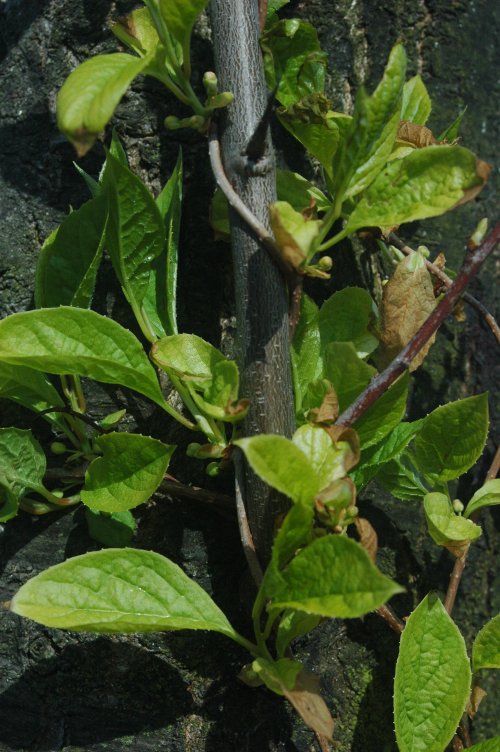
Schisandra chinensis, known as magnolia berry, five-flavor berry, or wu wei zi, is a deciduous woody vine native to East Asia whose red berries have been used for centuries in traditional Chinese and Russian medicine. It is classified as an adaptogen, a plant said to help the body resist stress, and its activity is attributed to a family of dibenzocyclooctadiene lignans such as schisandrin and the gomisins. Research has focused on its liver-protective, antioxidant, and central nervous system effects.
- Stress resilience
- Steady, non-jittery energy
- Liver and antioxidant support
- May support focus and endurance
- Heartburn
- Stomach upset
- Reduced appetite in some people
- Possible drug interactions via CYP3A4
Overview
Schisandra chinensis is a climbing vine of the family Schisandraceae, native to the forests of northern China, the Russian Far East, Korea, and Japan, that produces clusters of small red berries [1]. Its Chinese name wu wei zi, meaning five-flavor berry, reflects the traditional observation that the fruit combines sweet, sour, salty, bitter, and pungent tastes [1]. The characteristic bioactive constituents are dibenzocyclooctadiene lignans, including schisandrin (also written schizandrin), deoxyschizandrin, and various gomisins, which are largely specific to this genus, along with polysaccharides and essential oils [1].
The berry has a long history in East Asian medicine, where it is valued as a tonic and astringent, and in Korea it is brewed as omija tea [1]. Notably, it was also adopted into official Soviet medicine in the twentieth century, where extensive Russian pharmacological and clinical research established its reputation as an adaptogen used to increase physical working capacity and resistance to a wide range of stressors [2].
Modern research has explored several activities. As an adaptogen, Schisandra and its lignans have been reported to improve endurance, mental performance, and stress tolerance in animal and human studies, in part through effects on nitric oxide and cortisol [2]. The plant is also a well-studied hepatoprotective agent; in laboratory models the lignan schisandrin B protects the liver from chemically induced injury and fibrosis by activating the Nrf2 antioxidant pathway and suppressing profibrotic TGF-beta/Smad signaling [3]. Additional lignans show antioxidant, anti-inflammatory, and central nervous system stimulating effects [1].
Schisandra is consumed as dried berries, teas, tinctures, powders, and standardized lignan extracts, and it appears both on its own and in adaptogenic combination formulas [1]. It is regulated as a herbal medicine or dietary supplement depending on the country and is an official drug in the Russian pharmacopoeia [2].
Schisandra is generally well tolerated, with occasional heartburn, stomach upset, or reduced appetite reported [1]. Because its lignans can influence drug-metabolizing enzymes such as cytochrome P450 3A4, it has the potential to interact with medications processed by that pathway, so caution is warranted when combining it with prescription drugs [1].
Mechanism
Schisandra's effects are attributed mainly to its dibenzocyclooctadiene lignans acting through antioxidant and stress-modulating pathways [1][2]. In the liver, schisandrin B and related lignans strengthen the body's antioxidant defenses by activating nuclear factor-erythroid 2-related factor 2 (Nrf2) and its downstream antioxidant response element, while inhibiting the transforming growth factor-beta/Smad cascade that drives hepatic stellate cell activation and fibrosis [3].
As an adaptogen, Schisandra is thought to buffer the body's stress response, with reported effects on the hypothalamic-pituitary-adrenal axis, on and levels, on heat shock protein expression, and on cellular energy metabolism [2]. Its lignans also modulate arachidonic acid metabolism and show central nervous system stimulating activity [2]. The whole-fruit extract is a complex mixture whose constituents are believed to act in a complementary, mutually reinforcing way rather than through a single target [2].
receptor fingerprint
Glutathione/antioxidant enzymesupregulates
CYP3A4 and phase II enzymesmodulates
/stress responsemodulates
signalingmodulates
Dosingtypical ranges, not medical advice
interested in protocols and clinical dosages? make an account to see them! ^_^
Safetyrisks and cautions, not medical advice
Generally well tolerated, with occasional heartburn, appetite changes, or mild stomach upset. It can interact with drugs metabolized by liver enzymes (it affects CYP3A4), so people on medications should check for interactions. It's best avoided in pregnancy and by people with active peptic ulcers or high stomach acid.
Resources
This entry is here for reference.
Research
- 2008first citedPharmacology of Schisandra chinensis Bail.: an overview of Russian research and uses in medicine
- 2019most recentSchisandra chinensis and its phytotherapeutical applications
- 1.Schisandra chinensis and its phytotherapeutical applications
- 2.Pharmacology of Schisandra chinensis Bail.: an overview of Russian research and uses in medicine
- 3.Schisandrin B attenuates CCl(4)-induced liver fibrosis in rats by regulation of Nrf2-ARE and TGF-β/Smad signaling pathways.
3 listed here; entry last updated August 2026
Reviews
My notesprivate to this device
FAQ
Is schisandra a stimulant?
Not really; it's an adaptogen, so the energy is steadier and doesn't rely on caffeine-like stimulation.
Does it actually help the liver?
Preclinical and traditional use are supportive, but human trials are limited, so consider it promising rather than proven.
Can I take it with medications?
Be careful; it affects CYP3A4 liver enzymes and can change how some drugs are metabolized.
What does the 'five flavors' name mean?
The berry is said to carry sweet, sour, salty, bitter, and pungent tastes, which is where its Chinese name comes from.
When will I notice effects?
Adaptogens usually take a couple of weeks of consistent use to show up.
Adverse effects
- Heartburn
- Stomach upset
- Reduced appetite in some people
- Possible drug interactions via CYP3A4