
spec sheet10 rows
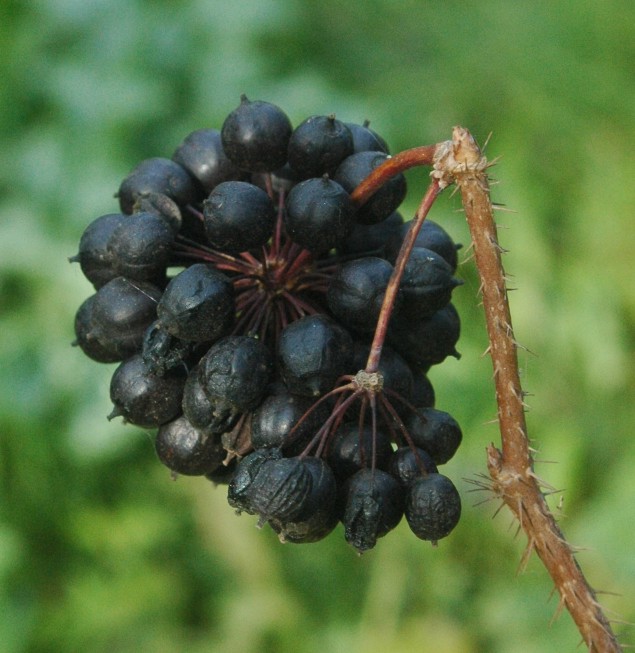
Eleuthero (Eleutherococcus senticosus), also called Siberian ginseng, is a woody shrub native to northeastern Asia whose root and rhizome are used in traditional Chinese, Korean, and Russian medicine. It is classed as an adaptogen, a substance believed to help the body resist physical and mental stress and fatigue. Despite long use and popular sale as a supplement, controlled clinical evidence for its benefits is limited and inconsistent.
- Improves stress resilience
- Reduces fatigue
- Supports steady energy
- Mild immune support
- Possible mild insomnia or irritability, especially if taken late in the day
- May affect blood pressure or blood sugar
- Could interact with sedatives, stimulants, or drugs processed by the liver
Overview
Eleutherococcus senticosus is a thorny shrub of the family Araliaceae, the same botanical family as true ginseng (Panax), native to the Russian Far East, northeastern China, Korea, and Japan. Although widely marketed as Siberian ginseng, it is not a Panax species and does not contain the ginsenosides found in true ginseng; the name reflects marketing and its traditional use as a tonic. The root and rhizome are the parts used medicinally [1].
Its characteristic constituents are a group of compounds collectively called eleutherosides, along with lignans, saponins, flavonoids, and polysaccharides [1]. The plant was popularized during the twentieth century, particularly in the Soviet Union, as an adaptogen, and it has since been used to counter fatigue, support the immune system, and improve physical endurance.
Laboratory and animal studies attribute antioxidant, neuroprotective, immunostimulatory, and antifatigue activities to eleuthero and its constituents [1]. The human evidence is weaker and mixed; for example, a randomized controlled trial found that adding an eleuthero extract to a stress-management program produced, at most, negligible extra benefit for stress-related fatigue and concentration [2]. Well-designed clinical trials remain limited, and firm conclusions about efficacy cannot yet be drawn.
Eleuthero is sold as dried root, powders, capsules, liquid extracts, and teas and is regulated as a dietary supplement or traditional herbal product rather than an approved drug. It is generally well tolerated. Because wild populations are threatened in some regions, sustainable cultivation has become a concern [1].
Mechanism
As an adaptogen, eleuthero is thought to act broadly on the body's stress-response systems rather than through a single receptor. Its effects are attributed to eleutherosides and other constituents such as lignans, saponins, flavonoids, and polysaccharides, which show antioxidant activity and can influence immune cells [1]. Preclinical studies suggest these compounds help shield cells from and can modulate stress hormones and inflammatory signaling; in animal models of heart injury, for instance, an eleuthero extract reduced oxidative damage and inflammatory markers while acting on the MAPK and caspase pathways involved in cell survival [3]. How well these laboratory mechanisms translate into meaningful effects in people remains uncertain, and clinical results have been inconsistent [2].
receptor fingerprint
/ regulationmodulates
Fatigue and enduranceimproves
Immune cell activitymodulates
reduces
Dosingtypical ranges, not medical advice
interested in protocols and clinical dosages? make an account to see them! ^_^
Safetyrisks and cautions, not medical advice
Eleuthero is generally well tolerated; occasional side effects include mild insomnia if taken late, jitteriness, or changes in blood pressure. People with uncontrolled high blood pressure or on certain medications should check with a clinician. It's best taken earlier in the day to avoid sleep disruption.
Subjective profileweighing the evidence above
A solid, gentle adaptogen for stress and fatigue; milder than true ginseng and good for daily use.
Resources
This entry is here for reference.
Research
- 2013first citedNo benefit adding Eleutherococcus senticosus to stress management training in stress-related fa…
- 2025most recentEleutherococcus senticosus (Acanthopanax senticosus): An Important Adaptogenic Plant.
- 1.Eleutherococcus senticosus (Acanthopanax senticosus): An Important Adaptogenic Plant.
- 2.No benefit adding Eleutherococcus senticosus to stress management training in stress-related fatigue/weakness, impaired work or concentration: a randomized controlled study
- 3.Integrating serum pharmacochemistry and network pharmacology to explore the molecular mechanisms of Acanthopanax senticosus on attenuating doxorubicin-induced myocardial injury
3 listed here; entry last updated August 2026
Reviews
My notesprivate to this device
FAQ
Is it the same as ginseng?
No. Despite the 'Siberian ginseng' nickname, it's a different plant from Panax ginseng and generally milder.
Will it keep me awake?
It can if taken too late, so morning or early afternoon dosing is best.
How long until it helps?
Adaptogens usually build over a couple of weeks of consistent use rather than working instantly.
Is it stimulating?
Not in the caffeine sense; it supports energy by improving stress tolerance rather than revving you up.
Limitations of the evidence
- Clinical benefits are not well established
Adverse effects
- Possible mild insomnia or irritability, especially if taken late in the day
- May affect blood pressure or blood sugar
- Could interact with sedatives, stimulants, or drugs processed by the liver
Notes and cautions
- Generally well tolerated