
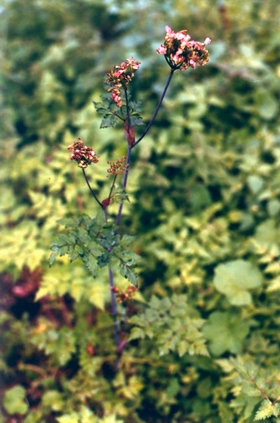
spec sheet10 rows
Dong quai is the dried root of Angelica sinensis, a flowering plant of the carrot family native to the mountains of China and East Asia, sometimes called female ginseng. It is one of the most widely used herbs in traditional Chinese medicine, where it has long been taken for women's health concerns such as menstrual and menopausal complaints and as a general blood tonic. Modern controlled studies have not shown it to be effective for these purposes, and it is sold in Western countries as a dietary supplement rather than an approved medicine. Because it contains natural coumarins, it can interact with blood-thinning drugs.
- Traditional women's tonic
- Antioxidant activity
- Circulatory support
- May ease menstrual cramping
- May increase bleeding risk, especially with blood-thinning drugs
Overview
Dong quai is prepared from the root of Angelica sinensis, an aromatic perennial herb in the family Apiaceae, the same botanical family as carrots and parsley [2]. Native to China and cultivated in cool, high-altitude regions of East Asia, the plant is widely known as female ginseng because of its long association with women's health [2]. In traditional Chinese medicine the dried root is one of the most commonly used remedies.
Historically, dong quai has been used, usually as part of multi-herb formulas, for menstrual irregularities, cramping, and menopausal symptoms, and it is described in traditional practice as a tonic that nourishes and moves the blood [2]. Chemical analyses have identified a range of constituents, among them the aromatic compound ligustilide and related phthalides, ferulic acid, polysaccharides, and phytosterols. The root also contains natural coumarin derivatives, and analyses have noted constituents with antithrombotic and light-sensitizing properties [3].
Despite its popularity, modern scientific research has not established that dong quai is effective for the conditions it is traditionally used to treat [2]. A frequently cited double-blind, placebo-controlled trial in postmenopausal women found that dong quai taken on its own did not relieve hot flashes and produced no measurable estrogen-like effect on the body [1]. Broader reviews of complementary treatments for menopause have likewise concluded that the evidence for dong quai is insufficient to recommend it [2].
The most clearly documented safety concern involves the plant's coumarin content: a case report described a woman stabilized on the anticoagulant warfarin whose blood-thinning effect increased markedly after she began taking dong quai, raising the risk of bleeding [3]. For this reason, caution is advised when it is combined with warfarin or other blood-thinning agents [3]. Some of its constituents can also make the skin more sensitive to sunlight. In the United States and other Western countries dong quai is sold as a dietary supplement, frequently in combination products, and is not regulated or approved as a drug [2].
Mechanism
Dong quai has no single, well-defined mechanism of action, and modern studies have not confirmed a clear pharmacological effect in humans [1][2]. It was traditionally thought to work through -like or blood-regulating actions, but a controlled trial in postmenopausal women found no evidence that it behaves like estrogen in the body [1]. Its root does contain natural coumarins and other constituents reported to influence blood clotting, which provides a plausible basis for its documented interaction with the anticoagulant warfarin, even though the exact mechanism of that interaction remains uncertain [3]. Overall, the way dong quai might produce the effects claimed for it is not established [2].
receptor fingerprint
Reactive oxygen speciesreduces
Platelet aggregationinhibits
Smooth muscle / vascular tonerelaxes
Inflammatory signalingreduces
Dosingtypical ranges, not medical advice
interested in protocols and clinical dosages? make an account to see them! ^_^
Safetyrisks and cautions, not medical advice
Usually well tolerated, but the coumarin content means it can add to the effect of blood thinners like warfarin, raising bleeding risk. It may cause photosensitivity and GI upset in some people. It's not recommended in pregnancy because of potential effects on the uterus.
Subjective profileweighing the evidence above
A traditional women's tonic with plausible but under-proven effects; fine in context, just mind the blood-thinning risk.
Resources
This entry is here for reference.
Research
- 1997first citedDoes dong quai have estrogenic effects in postmenopausal women? A double-blind, placebo-control…
- 2002most recentUse of alternative and complementary medicine in menopause
- 1.Does dong quai have estrogenic effects in postmenopausal women? A double-blind, placebo-controlled trial
- 2.Use of alternative and complementary medicine in menopause
- 3.Potentiation of warfarin by dong quai
3 listed here; entry last updated July 2026
Reviews
My notesprivate to this device
FAQ
What is dong quai used for?
Traditionally for women's health, menstrual regulation, and as a blood tonic, usually within a formula.
Does it work on its own?
It's rarely used solo; human evidence is limited and it's traditionally combined with other herbs.
Can I take it with blood thinners?
Be careful; its coumarins can add to anticoagulant effects and raise bleeding risk.
Is it estrogenic?
Some phytoestrogen activity has been proposed but isn't well established.
Is it safe in pregnancy?
No, it's not recommended in pregnancy due to potential uterine effects.
Adverse effects
- May increase bleeding risk, especially with blood-thinning drugs
Notes and cautions
- Can make the skin more sensitive to sunlight
- Marketed as a supplement; not proven effective in controlled trials