
spec sheet11 rows
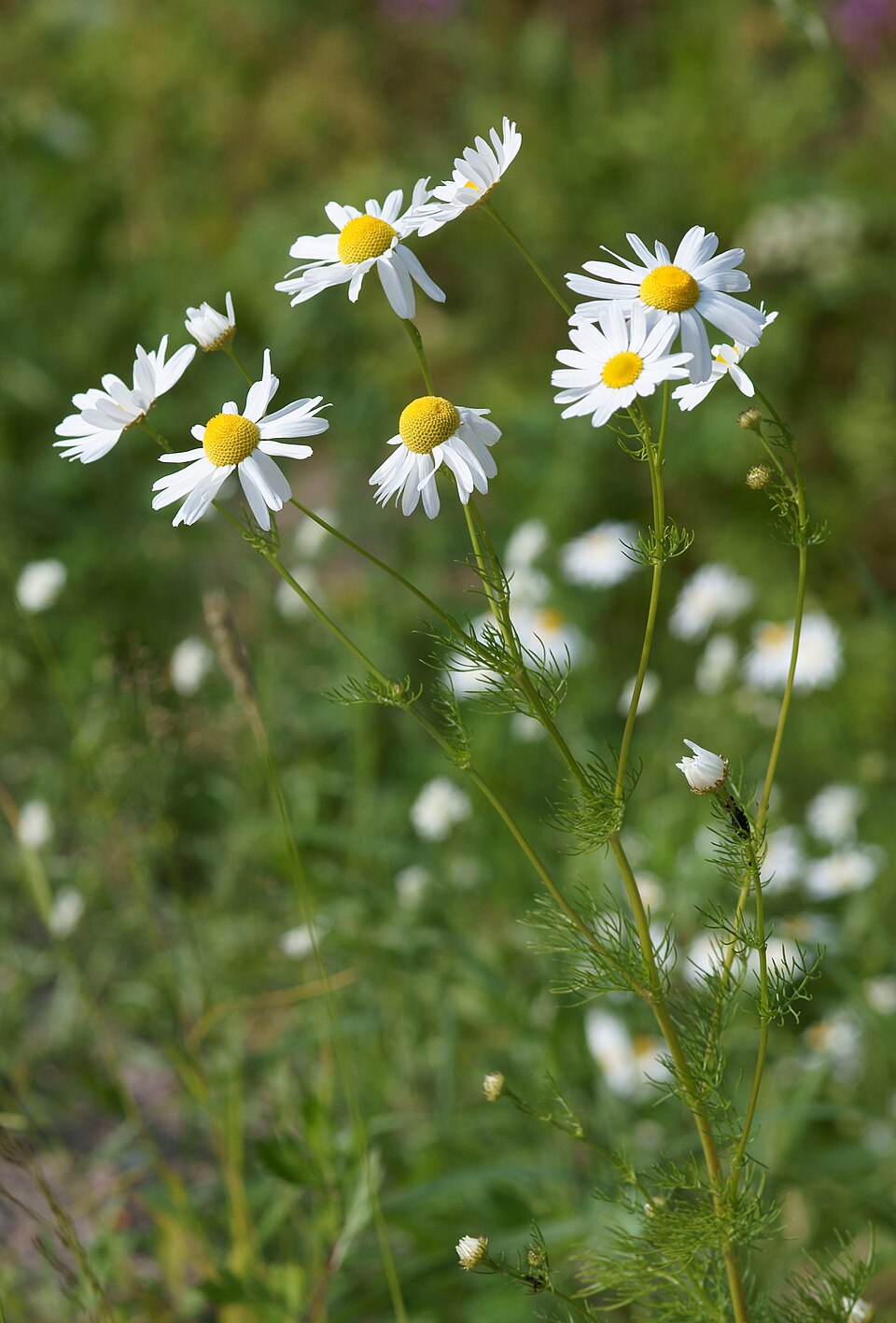
Chamomile is the common name for several daisy-like flowering plants in the family Asteraceae, most importantly German chamomile (Matricaria chamomilla, also cataloged as Matricaria recutita) and Roman chamomile (Chamaemelum nobile). Its dried flower heads have been used for centuries as a soothing herbal tea and folk remedy for relaxation, sleep, and digestion. The flowers are rich in the flavonoid apigenin and in terpenoids such as alpha-bisabolol and chamazulene, and modern research has documented anxiolytic, anti-inflammatory, and antioxidant activity, with the calming effect linked to apigenin binding the benzodiazepine site of the GABA-A receptor.
- Eases mild anxiety with a gentle benzodiazepine-site nudge
- Helps you wind down and settle before sleep
- Cuts down night-time awakenings
- Anti-inflammatory; soothes skin and oral/GI irritation
- Antispasmodic for digestive cramps
- Cheap, food-safe, and well tolerated
- Allergic reactions in people sensitive to ragweed, daisies, marigolds, or chrysanthemums
Overview
Chamomile is one of those herbs worth recommending without hesitation; it's cheap, food-safe, and unlike a lot of 'calming' supplements it has actual human trials behind it. The workhorse is a flavonoid called apigenin, which slots into the benzodiazepine site on the GABA-A receptor (the same broad site Valium-type drugs act on, just far, far weaker), so you get a soft anxiolytic nudge without the knockout or the dependence; its affinity is micromolar, essentially a whisper next to real benzos, which is exactly why it takes the edge off instead of flooring you.
What makes the case is that the clinical side isn't hand-wavy; Jay Amsterdam's group ran a proper placebo-controlled trial in people with generalized anxiety disorder and chamomile extract beat placebo on anxiety scores, and the long-term follow-up kept those symptoms down over months.
Sleep-wise the meta-analysis is refreshingly honest; chamomile pretty much helps you settle and cuts night-time awakenings, but it won't magically add hours to your total sleep. It's a legit anti-inflammatory too; the bisabolol and chamazulene in the flower oil calm irritated tissue, and topical chamomile even helped with chemo-related mouth sores in reviews.
It works best as a wind-down ritual and a mild-anxiety tool, not a sedative; tea is the classic route but it's a variable dose, so for the anxiety-trial effect an extract standardized to about 1.2% apigenin is the better bet. Only real cautions: if you react to ragweed or the daisy family it can cross-react, and it mildly nudges anticoagulants. Stacks beautifully with L-Theanine, magnesium glycinate, or a bit of concentrated apigenin.
Mechanism
Chamomile's calming action is credited chiefly to the flavone apigenin, which binds the benzodiazepine site of the -A receptor. In receptor assays apigenin competitively displaces flunitrazepam with a Ki near 4 micromolar and produces clear anxiolytic effects in animals without the strong sedation, muscle relaxation, or anticonvulsant activity of true benzodiazepines; its micromolar rather than nanomolar affinity explains the gentle, non-intoxicating calm.
Separately, the flower's terpenoids alpha-bisabolol and chamazulene, together with apigenin and other flavonoids (quercetin, luteolin, patuletin), dampen inflammatory mediators and scavenge reactive oxygen species, which underlies chamomile's anti-inflammatory and skin- and mucosa-soothing effects, while flavonoid-driven smooth-muscle relaxation accounts for its traditional antispasmodic use and its mild in-vitro antiplatelet activity. Most of these actions are established in vitro and in animals and only partly confirmed in humans.
receptor fingerprint
Inflammatory mediators (cytokines, eicosanoids)inhibits
GI smooth musclerelaxes
-A benzodiazepine sitebinds / weak positive modulator (via apigenin)
Platelet aggregationinhibits
Reactive oxygen speciesreduces
Dosingtypical ranges, not medical advice
interested in protocols and clinical dosages? make an account to see them! ^_^
Safetyrisks and cautions, not medical advice
Very safe for most people. The main caveat is cross-allergy; if you react to ragweed, daisies, marigolds, or chrysanthemums (the Asteraceae family), chamomile can set off the same reaction, occasionally serious. It mildly potentiates sedatives and has in-vitro antiplatelet activity, so use care alongside blood thinners like warfarin or before surgery. Roman chamomile is traditionally avoided in pregnancy over uterine concerns. Concentrated extracts are less studied than the tea.
Resources
This entry is here for reference.
Research
- 1995first citedApigenin, a component of Matricaria recutita flowers, is a central benzodiazepine receptors-lig…
- 2024most recentEffects of chamomile (Matricaria chamomilla L.) on sleep: A systematic review and meta-analysis…
- 1.Apigenin, a component of Matricaria recutita flowers, is a central benzodiazepine receptors-ligand with anxiolytic effects
- 2.A randomized, double-blind, placebo-controlled trial of oral Matricaria recutita (chamomile) extract therapy for generalized anxiety disorder
- 3.Long-term chamomile (Matricaria chamomilla L.) treatment for generalized anxiety disorder: A randomized clinical trial
- 4.Effects of chamomile (Matricaria chamomilla L.) on sleep: A systematic review and meta-analysis of clinical trials
- 5.A review of the bioactivity and potential health benefits of chamomile tea (Matricaria recutita L.)
- 6.Action of Matricaria recutita (chamomile) in the management of radiochemotherapy oral mucositis: A systematic review
6 listed here; entry last updated July 2026
Reviews
My notesprivate to this device
FAQ
Does chamomile actually help anxiety, or is it just a nice ritual?
Both, honestly. In placebo-controlled trials a standardized extract beat placebo on generalized-anxiety symptoms, so there's a real anxiolytic signal on top of the comforting routine.
What's the calming compound?
Mostly apigenin, a flavonoid that binds the benzodiazepine site on GABA-A receptors; it's a very gentle, weak version of what benzo drugs do, which is why it soothes without knocking you out.
Tea or a standardized extract?
Tea is the classic, gentle route but the dose varies cup to cup. For the effect seen in the anxiety trials, use an extract standardized to about 1.2% apigenin.
How fast does it work?
For calm and sleep, most people feel a mild effect within about 30 to 45 minutes of a cup or a dose; the anxiety-disorder benefits build over a few weeks of daily use.
Can I be allergic to it?
Yes; if you react to ragweed, daisies, marigolds, or chrysanthemums, chamomile can cross-react, so start cautiously.
What does it stack well with?
L-Theanine and magnesium glycinate for calm, or a small dose of melatonin for sleep; just be sensible layering multiple calming agents.
Adverse effects
- Allergic reactions in people sensitive to ragweed, daisies, marigolds, or chrysanthemums
Notes and cautions
- Can add to the effect of sedatives
- Mild antiplatelet effect; caution with blood thinners
- Roman chamomile traditionally avoided in pregnancy
- Drowsiness in some people