
spec sheet15 rows
Phenibut (beta-phenyl-GABA) is a Russian-developed anxiolytic and nootropic prized for delivering calm, sociable focus and easier sleep [1][3]. Because an added phenyl ring lets it cross the blood-brain barrier that ordinary GABA cannot, it acts chiefly as a GABA-B receptor agonist, the target behind its reputation for melting away tension and quieting a racing mind [1][3]. Introduced into Soviet clinical practice in the 1960s, it remains one of the most recognizable GABAergic nootropics on the market, used for anxiety, stress, and relaxation [1][3].
- Melts tension and quiets a racing mind
- Calm, sociable focus
- Easier sleep, deeper relaxation
- Crosses into the brain where plain GABA cannot
- The most recognizable GABA-B nootropic on the market
- Phenibut commonly causes sedation, drowsiness, dizziness, and nausea
- Tolerance develops with regular use, so the same amount produces less effect over time
- Stopping abruptly after sustained use can trigger a withdrawal syndrome with anxiety, insomnia, and agitation
Overview
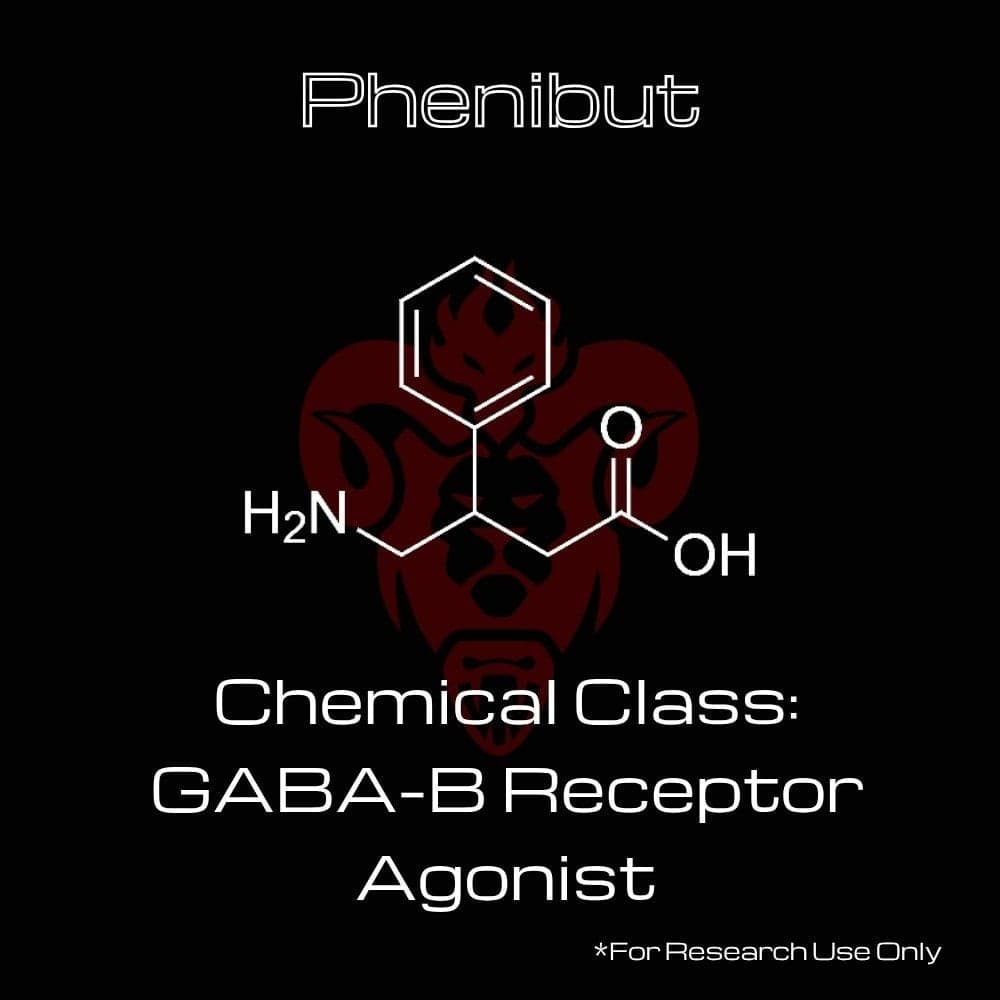
Phenibut is the common name for beta-phenyl-gamma-aminobutyric acid, also written beta-phenyl-GABA, a central nervous system depressant and nootropic that is essentially the inhibitory neurotransmitter GABA with a phenyl ring added at the beta position [1][3]. That aromatic ring is the defining chemical feature, because it makes the molecule lipophilic enough to cross the blood-brain barrier, something unmodified GABA cannot do efficiently, allowing orally taken phenibut to reach central GABA receptors [1][3]. It is closely related to baclofen, which is essentially phenibut with a chlorine atom added to the phenyl ring, and the two share much of their pharmacology [1].
Phenibut was discovered and introduced into clinical practice in the Soviet Union in the 1960s, where it was used to relieve tension, anxiety, and fear, to improve sleep in psychosomatic and neurotic patients, and as a pre-operative or post-operative medication [1]. In Russian medicine it has also been applied to conditions marked by asthenia and depression, and to post-traumatic stress, stuttering, and vestibular disorders [1]. Its reported effects combine anxiolytic, or tension-relieving, and nootropic, or cognition-supporting, actions, and its psychopharmacological profile has been likened both to baclofen and, for its calming quality, to tranquilizers such as diazepam [1][3].
Outside the former Soviet states phenibut is not an approved medicine. In the United States the Food and Drug Administration has never approved it as a drug and has warned that it is not a lawful dietary ingredient, yet it continues to be sold online as a supplement marketed for nootropic and relaxation purposes [3][5]. Analytical work has found wide and inconsistent amounts of phenibut in over-the-counter products, in some cases far exceeding a typical pharmaceutical dose [5]. It is most often encountered as a free-amino-acid powder or as the hydrochloride salt, and a fluorinated analogue sold as F-phenibut is also available from online suppliers [1][2]. Poison-center reports and published case series document that intoxication, dependence, and a withdrawal syndrome can accompany heavy or prolonged use, and this clinical experience frames much of the modern literature on the compound [3][4][6].
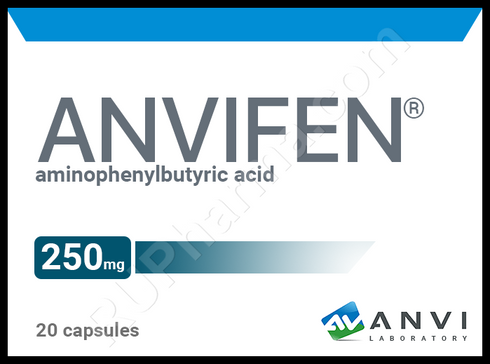
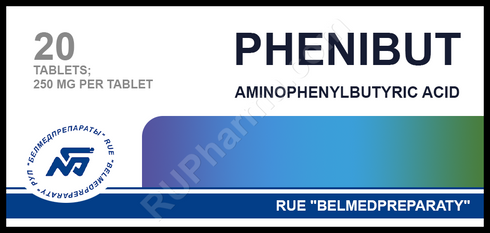
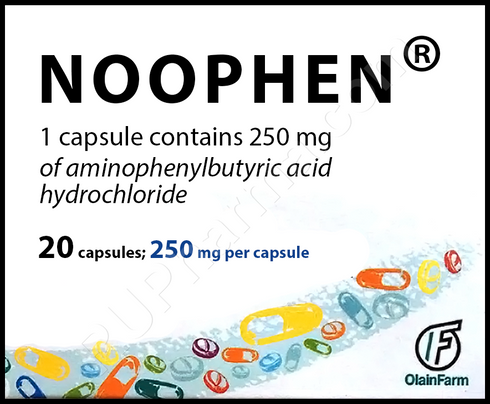
- Phenibut was reportedly included in the Soviet cosmonauts' medical kit because it relieved anxiety without the sedation or performance impairment of typical tranquilizers.
- It is a genuinely weak GABA-B agonist; its half-maximal concentration in one study was about 1362 micromolar, versus roughly 6 micromolar for baclofen, which is why effective phenibut quantities are measured in grams rather than milligrams.
Mechanism
Phenibut's core mechanism is agonism at the -B receptor, a metabotropic G-protein-coupled receptor for the brain's principal inhibitory neurotransmitter, GABA [1][3]. By activating -B receptors it raises inhibitory tone in the central nervous system, lowering neuronal excitability and producing the anxiolytic, sedative, and muscle-relaxant effects for which it is valued; at higher exposures it also shows some activity at GABA-A receptors [1][3]. Its potency at -B is comparatively low: in mouse cerebellar Purkinje cell recordings the half-maximal effective concentration for activating an outward potassium current was about 1362 micromolar for phenibut, versus roughly 23.3 micromolar for the fluorinated analogue F-phenibut and about 6.0 micromolar for baclofen [2]. This weak receptor potency is why the effective quantities of phenibut are so much larger than those of baclofen [2].
Beyond -B, phenibut has secondary actions that round out its profile. The R- binds the alpha-2-delta subunit of voltage-dependent calcium channels, the same site targeted by gabapentinoids such as gabapentin and pregabalin, which is linked to anxiolytic and neuroprotective effects; in a rat stroke model R-phenibut improved histological outcome and increased and VEGF gene expression [8]. The parent compound has also been described as stimulating receptors and antagonizing beta-phenethylamine, a putative endogenous anxiogenic, which may help explain its mood-lifting and pro-social character [1].
The same inhibitory pharmacology that produces calm and sociability also drives phenibut's main liabilities. Because -B signaling adapts with regular exposure, tolerance builds, and stopping abruptly after sustained use can precipitate a withdrawal syndrome dominated by rebound anxiety, agitation, insomnia, and in severe cases psychosis [3][4][7]. A systematic review of 62 reported cases found that nearly half of acute toxicity presentations required intubation, and clinicians have managed dependence by substituting and then tapering baclofen at roughly 10 mg of baclofen for every gram of phenibut [4][7]. These properties make phenibut a genuinely effective anxiolytic while also accounting for its documented dependence and overdose risk [3][4].
receptor fingerprint
-B receptoragonist
alpha-2-delta calcium channelsbinds
-Aweak agonist (high dose)
Dosingtypical ranges, not medical advice
interested in protocols and clinical dosages? make an account to see them! ^_^
Safetyrisks and cautions, not medical advice
Phenibut is a GABA-B agonist with a well-documented risk of tolerance, dependence, and a severe withdrawal syndrome (anxiety, insomnia, agitation, and in serious cases psychosis or seizures) that can follow even a few weeks of regular use. It causes sedation and, especially when combined with alcohol, benzodiazepines, or opioids, can dangerously depress breathing and consciousness. Overdose and difficult withdrawals are frequently reported, and it is not an approved medicine in most countries.
Interactionsdocumented pairs only, not exhaustive
As a GABA-B receptor agonist, phenibut produces additive central nervous system and respiratory depression when combined with alcohol, benzodiazepines, opioids, gabapentinoids, or baclofen, and published case reports describe severe sedation, respiratory depression, and delirium from such combinations. Its pharmacology overlaps baclofen, so concurrent use compounds GABA-B mediated effects and complicates withdrawal, which itself can present as a severe benzodiazepine-like syndrome managed in case reports with baclofen or benzodiazepines. Reports also describe interactions in the setting of polydrug use where phenibut deepened the sedation of other depressants. Because phenibut is an unapproved substance, these interactions derive from case reports and toxicology literature rather than a regulatory label. This is research information, not medical advice.
Checking a whole stack? Run it through interactions + stacks.
History
Phenibut was developed in the Soviet Union in the early 1960s at the Herzen Leningrad Pedagogical Institute, where a team associated with Professor Vsevolod Perekalin synthesized it by adding a phenyl ring to GABA so the molecule could cross the blood-brain barrier. It entered Soviet clinical practice as an anxiolytic and was famously included in the Soviet cosmonaut medical kit because it calmed nerves without impairing performance. For decades it was prescribed across Eastern Europe for anxiety, insomnia, and stress-related conditions. In more recent years it has spread internationally as an over-the-counter nootropic, which has also drawn attention to its risks of tolerance and dependence.
Reputation
Phenibut is widely recognized as one of the most effective GABAergic anxiolytics available without a prescription, valued for producing calm, sociability, and easier sleep. Its heritage as a Soviet clinical medicine and cosmonaut aid lends it credibility, and its GABA-B mechanism is well characterized. Responsible discussion is equally clear about its liabilities: because GABA-B signaling adapts with regular use, tolerance builds quickly, and abrupt discontinuation after sustained dosing can cause a serious withdrawal syndrome. A systematic review found that at therapeutic doses phenibut is generally safe and well tolerated, with problems concentrated among high-dose, online-sourced use; it is best approached with infrequent dosing and respect for its dependence potential.
Subjective profileweighing the evidence above
It works, and that is what makes it dangerous. Tolerance climbs within weeks, and stopping abruptly after regular use produces a real withdrawal syndrome, psychosis and seizures included. If used at all, keep it occasional, never with alcohol, and never on a schedule.
Where to buy


Suppliers
Vendors carrying Phenibut, with live product details and codes. Links are affiliate links that support the wiki at no cost to you.
| supplier | size | price | $/mg |
|---|---|---|---|
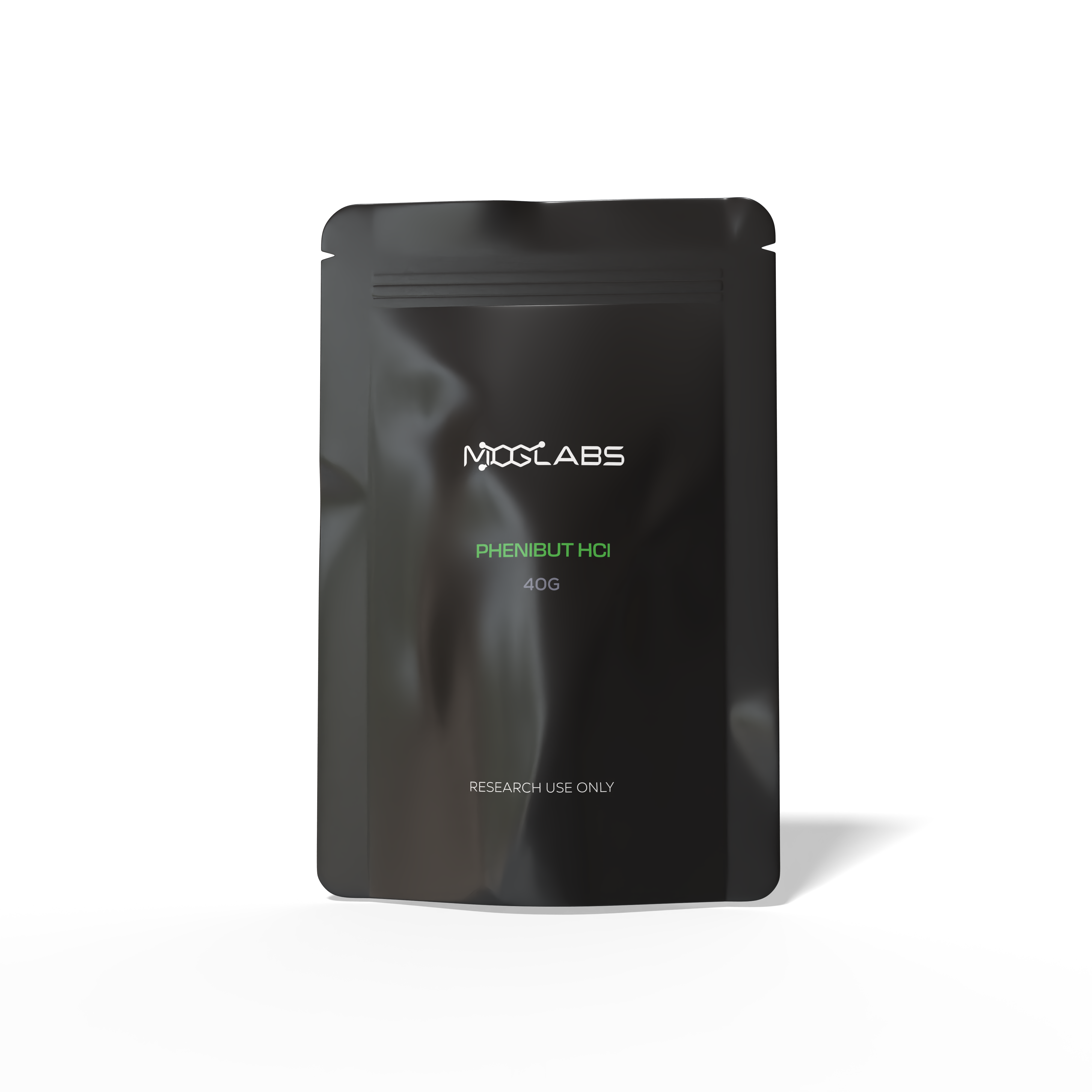
| Moglabslowest | 40G | $42.00 | $0.001/mg |
| RUO | 40G | $50.00 | $0.001/mg |

RUPharma🌐
Phenibut
RUPharma🌐
Phenibut

RUPharma🌐
Phenibut
Kimera Chems
Phenibut
Moglabs
Phenibut
RUO
Phenibut
Research
- 1982first cited[Fenibut binding with bicuculline-insensitive GABA receptors in the rat brain].
- 2024most recentPhenibut: A drug with one too many "buts".
- 1.Phenibut (beta-phenyl-GABA): a tranquilizer and nootropic drug.
- 2.F-phenibut (β-(4-Fluorophenyl)-GABA), a potent GABA(B) receptor agonist, activates an outward-rectifying K(+) current and suppresses the generation of action potentials in mouse cerebellar Purkinje cells.
- 3.Phenibut: A drug with one too many "buts".
- 4.Clinical Presentations and Treatment of Phenibut Toxicity and Withdrawal: A Systematic Literature Review.
- 5.Quantity of phenibut in dietary supplements before and after FDA warnings.
- 6.Phenibut exposures and clinical effects reported to a regional poison center.
- 7.Phenibut dependence.
- 8.The neuroprotective effects of R-phenibut after focal cerebral ischemia.
- 9.Safety and Tolerability of the Anxiolytic and Nootropic Drug Phenibut: A Systematic Review of Clinical Trials and Case Reports.
- 10.Comparative pharmacological activity of optical isomers of phenibut.
- 11.R-phenibut binds to the α2-δ subunit of voltage-dependent calcium channels and exerts gabapentin-like anti-nociceptive effects.
- 12.Mitochondrial-Protective Effects of R-Phenibut after Experimental Traumatic Brain Injury.
26 listed here; entry last updated August 2026
Reviews
My notesprivate to this device
FAQ
How does phenibut work?
It acts as a GABA-B agonist, which produces its calming and sleep-supporting effects.
Why the caution around it?
Tolerance builds quickly and dependence can develop, so it carries a real risk of misuse and withdrawal.
Why does it take a while to feel?
Its onset is slow, sometimes several hours, which can lead people to redose too early.
Is it safe to use daily?
Frequent use is associated with tolerance and dependence, so many sources caution strongly against regular use.
Limitations of the evidence
- It is not approved as a medicine or dietary supplement in the United States, and the amount in commercial products varies widely
Adverse effects
- Phenibut commonly causes sedation, drowsiness, dizziness, and nausea
- Tolerance develops with regular use, so the same amount produces less effect over time
- Stopping abruptly after sustained use can trigger a withdrawal syndrome with anxiety, insomnia, and agitation
- In overdose, especially when combined with alcohol or other depressants, it can cause pronounced central nervous system and respiratory depression