
spec sheet10 rows
Nigella sativa is an annual flowering plant of the buttercup family (Ranunculaceae), native to parts of western Asia and southeastern Europe and best known for its small black seeds, sold under names such as black seed, black cumin, and kalonji. The seeds have served for millennia as a culinary spice and as a fixture of traditional medicine across the Middle East, North Africa, and South Asia. Their most studied constituent is thymoquinone, a compound concentrated in the seed's volatile oil. Laboratory work has documented antioxidant and anti-inflammatory activity, though high-quality clinical evidence that the seed or its oil treats human disease remains limited.
- Modest but real gains in metabolic and inflammatory markers
- Thymoquinone rich oil with documented antioxidant activity
- Calms inflammation and oxidative stress in laboratory work
- Supports healthy blood sugar and blood pressure readings
- Thousands of years of culinary and traditional use behind it
- Immune and allergy modulation from a well studied seed
- Concentrated seed oil or capsules can cause mild digestive upset or nausea in some people
- Topical application has occasionally caused allergic contact dermatitis
Overview
Nigella sativa is a small annual herb in the Ranunculaceae, or buttercup, family, typically reaching only twenty to thirty centimeters in height and bearing pale blue and white flowers that give way to an inflated seed capsule [1]. The plant is the botanical source of the black seeds known in commerce and cookery as black seed, black cumin, black caraway, or kalonji, and it is these seeds, rather than the foliage, that carry its culinary and medicinal reputation [1].
Chemically, the seeds are rich in fixed and volatile oils, which together can make up a large fraction of their weight, alongside proteins, alkaloids, and a range of aromatic terpenes [1]. The molecule most closely associated with the seed is thymoquinone, the principal component of the volatile oil; other constituents include dihydrothymoquinone, p-cymene, carvacrol, thymol, and various pinenes, together with fatty acids such as linoleic and oleic acid [1][3]. Much of the modern research literature treats thymoquinone as the marker compound to which many of the seed's reported effects are attributed [2][3].
The plant carries a long documented history. Archaeological finds place its use across the ancient Near East, with seeds recovered from Egyptian sites, and early physicians including Avicenna referenced it for respiratory complaints [1]. Across the Middle East, North Africa, and South Asia it became a staple both of the spice cabinet and of folk medicine, where it was sometimes described in glowing terms as a remedy for a wide array of ailments [3]. As a spice, the dry-roasted seeds season breads, curries, vegetables, and pulses, and they form part of the Bengali five-spice blend panch phoron [1].
Contemporary interest centers on the seed's antioxidant, anti-inflammatory, and immunomodulatory activity, which has been explored in laboratory, animal, and human studies for conditions spanning metabolic, cardiovascular, respiratory, and inflammatory disease [1][2][3]. Systematic reviews of clinical trials report signals such as modest improvements in blood glucose and lipid measures along with possible bronchodilatory and blood-pressure effects, and one systematic review focused on diabetes found generally favorable glycemic outcomes when the seed or thymoquinone was added to standard care [2][3][4]. Reviewers consistently caution, however, that many trials are small, vary in preparation and dose, and often omit details of the plant material, so the overall body of high-quality evidence remains limited and the findings are best regarded as preliminary [2][3][4].
In everyday use the seed and its cold-pressed oil are sold as a food, a flavoring, and a dietary supplement rather than as an approved medicine, and regulators such as the United States Food and Drug Administration treat the seed as generally recognized as safe for culinary purposes [1]. Concentrated seed oil, powdered seed, and standardized thymoquinone extracts are the common commercial forms, and reviewers generally describe short-term use at food-level intakes as well tolerated while noting that concentrated or prolonged use has been less thoroughly characterized [1][2].

Mechanism
The biological activity of Nigella sativa is attributed largely to its volatile-oil constituents, above all thymoquinone, which behaves as a redox-active molecule capable of both scavenging reactive oxygen species directly and strengthening the cell's own antioxidant defenses [1][3]. Experimental work indicates that thymoquinone can raise the activity of protective enzymes such as superoxide dismutase, catalase, and glutathione-linked systems, lowering markers of in tissues [1]. Alongside this antioxidant role, the compound exerts anti-inflammatory effects by dampening signaling through nuclear factor-kappa B and reducing the production of pro-inflammatory mediators including various cytokines and eicosanoids [1][3].
In laboratory models these overlapping actions are thought to underlie the seed's reported immunomodulatory, bronchodilatory, glucose-lowering, and lipid-modifying effects, while additional preclinical studies describe antimicrobial, antiproliferative, and cytoprotective activity for both the whole seed and isolated thymoquinone [2][3]. Because the concentration of thymoquinone varies widely among seed preparations and its absorption is limited, the degree to which these mechanisms translate into consistent clinical effects in people remains an open question [1][2].
receptor fingerprint
Reactive oxygen speciesreduces
NF-kB inflammatory signalinginhibits
Fasting blood glucoselowers
Blood pressurelowers
LDL cholesterollowers
Dosingtypical ranges, not medical advice
interested in protocols and clinical dosages? make an account to see them! ^_^
Safetyrisks and cautions, not medical advice
Generally well tolerated, with occasional GI upset or mild allergic reactions. Because it can lower blood pressure and blood sugar, it can add to the effect of relevant medications. High doses of concentrated oil may stress the liver or kidneys in theory, and data in pregnancy is limited, so skip it if pregnant.
Where to buy
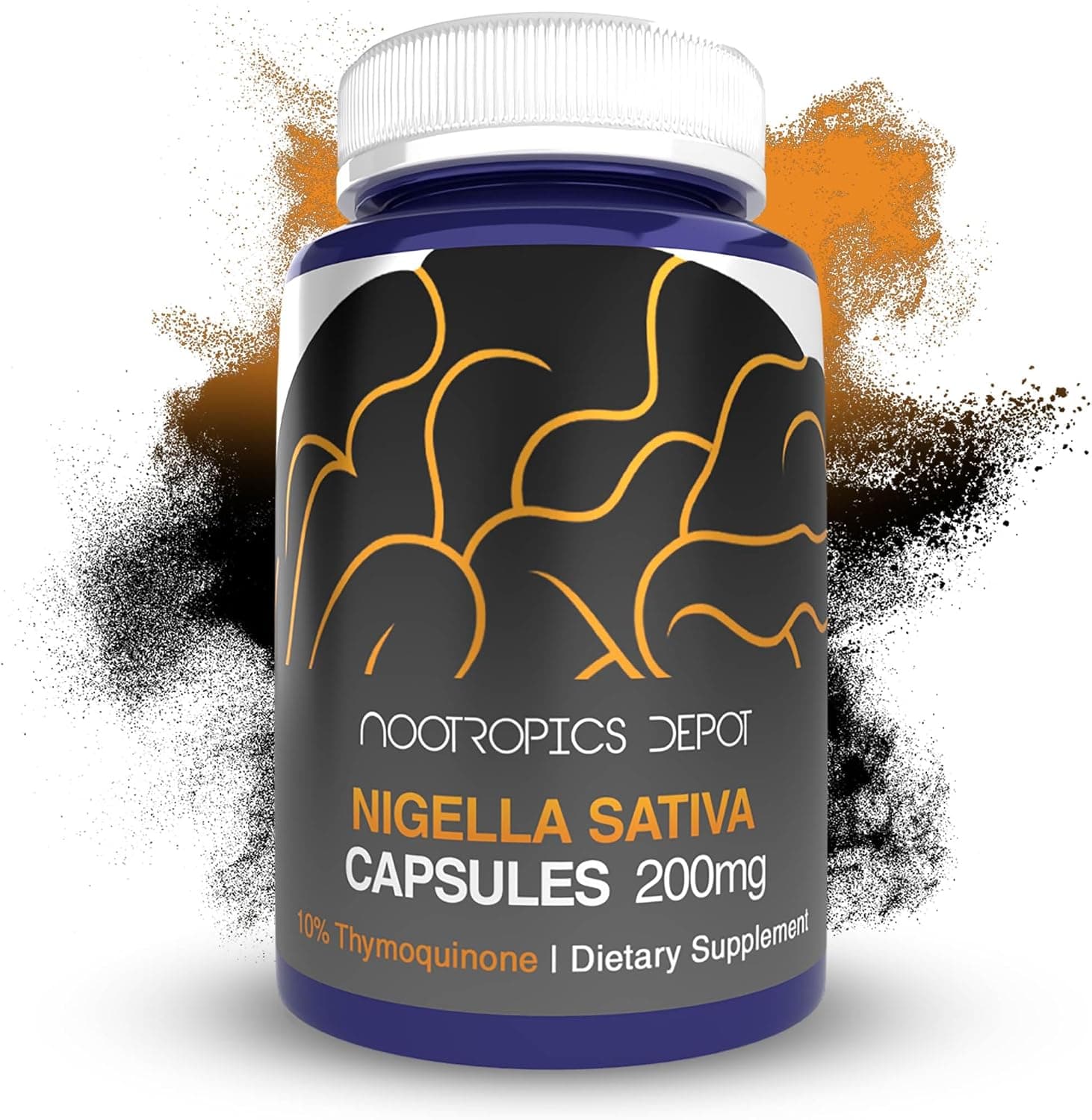
Suppliers
Vendors carrying Nigella Sativa, with live product details and codes. Links are affiliate links that support the wiki at no cost to you.
Amazon
Nigella Sativa
Research
- 2016first citedPreclinical and clinical effects of Nigella sativa and its constituent, thymoquinone: A review.
- 2022most recentNigella sativa L. and Its Active Compound Thymoquinone in the Clinical Management of Diabetes:…
- 1.Black Cumin (Nigella sativa L.): A Comprehensive Review on Phytochemistry, Health Benefits, Molecular Pharmacology, and Safety.
- 2.Review on Clinical Trials of Black Seed (Nigella sativa) and Its Active Constituent, Thymoquinone.
- 3.Preclinical and clinical effects of Nigella sativa and its constituent, thymoquinone: A review.
- 4.Nigella sativa L. and Its Active Compound Thymoquinone in the Clinical Management of Diabetes: A Systematic Review.
4 listed here; entry last updated August 2026
Reviews
My notesprivate to this device
FAQ
What makes black seed work?
Its main active is thymoquinone, an antioxidant and anti-inflammatory compound with decent human data.
Oil or capsules?
Cold-pressed oil standardized for thymoquinone is the pick; keep it cool so it doesn't oxidize.
Does it help allergies?
Several small trials show benefit for allergic rhinitis and asthma symptoms, likely from the anti-inflammatory effect.
Can it lower blood sugar too much?
It can add to diabetes meds, so monitor if you're on them.
Is it safe daily?
For most people yes, at food-like doses; very high concentrated oil doses long-term are less studied.
Adverse effects
- Concentrated seed oil or capsules can cause mild digestive upset or nausea in some people
- Topical application has occasionally caused allergic contact dermatitis
Notes and cautions
- Generally well tolerated when used as a culinary spice in food amounts
- May add to the effect of blood-sugar-lowering or blood-pressure-lowering medications
- Safety of concentrated, high-intake, or long-term use is not well established