
spec sheet11 rows
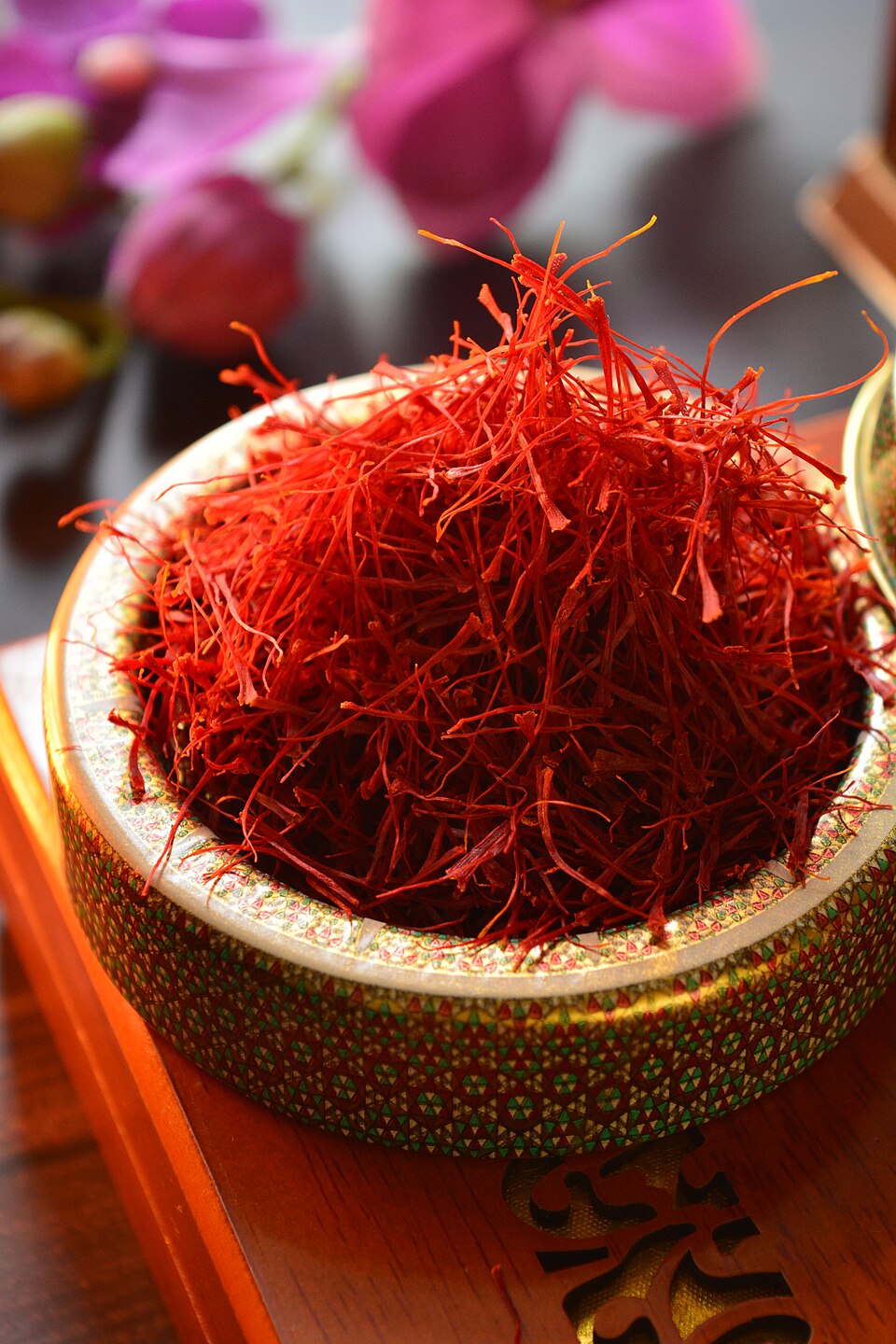
Saffron is a spice obtained from the dried red stigmas of the flower Crocus sativus, and it is among the most expensive spices in the world by weight. Beyond its long use in cooking as a coloring and flavoring, it has been investigated as a herbal remedy, most notably for depression and low mood. Its characteristic color, taste, and aroma come from the compounds crocin, picrocrocin, and safranal.
- One of the best evidenced mood herbs on the shelf
- A gentle lift rather than a blunt hammer
- Fewer sexual side effects than SSRIs
- Eases mild anxiety and can steady sleep
- Real antioxidant content from crocin and safranal
- Worth a proper trial before or alongside conventional options
- Nausea
- Headache
- Dizziness or drowsiness
Overview
Saffron consists of the thread-like stigmas of Crocus sativus, a purple-flowered member of the iris family, which are hand-picked and dried; it takes a great many flowers to yield a small quantity of the spice, which is why it is so costly. Its deep color comes from crocin, a carotenoid pigment, its bitter taste from picrocrocin, and its distinctive aroma from safranal, and these constituents are also thought to underlie its biological effects [1]. As a plant product it contains a mixture of carotenoids and other compounds rather than a single active ingredient [1].
Saffron has been cultivated for thousands of years around the Mediterranean, the Middle East, and South Asia, and has served as a culinary spice, a dye, a perfume, and a traditional medicine. In cooking it colors and flavors dishes across many cuisines. As a remedy it appears in traditional systems of medicine, and modern interest has focused on standardized extracts sold as dietary supplements [1].
The most studied medicinal use of saffron is for depression and mood. Systematic reviews and meta-analyses of randomized trials have concluded that saffron, or standardized saffron extracts, can improve symptoms of mild to moderate depression compared with placebo, with some studies finding effects broadly comparable to conventional antidepressants [1][3][4]. Trials in healthy adults have likewise reported improvements in mood [2]. Saffron has additionally been explored for anxiety, premenstrual symptoms, and other conditions, although the evidence there is more preliminary and the trials overall tend to be small [4].
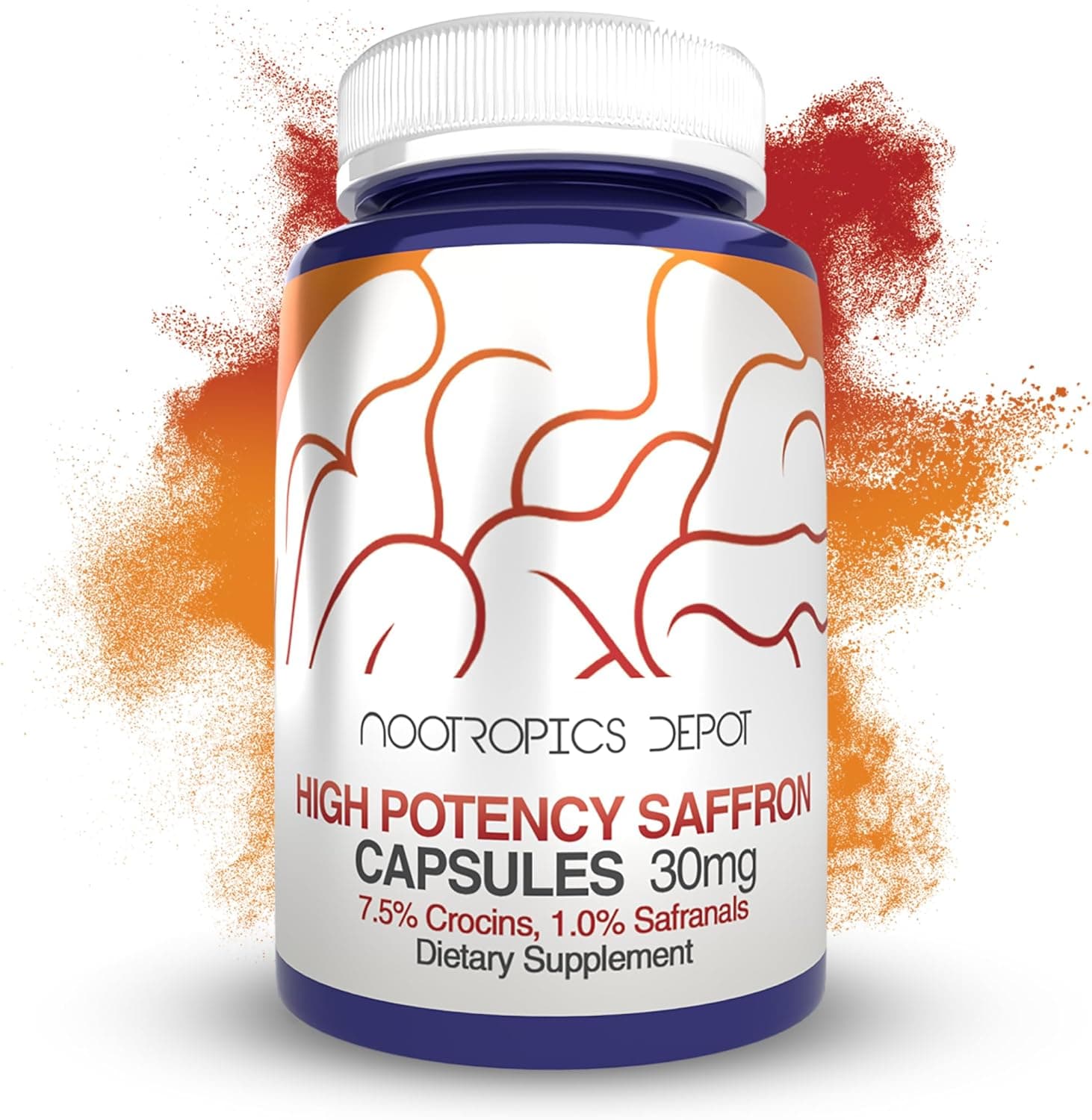
Saffron is sold both as the culinary spice, in threads or powder, and as concentrated, standardized extracts in capsule form marketed as dietary supplements. In most countries it is treated as a food and supplement rather than a licensed medicine. It is generally well tolerated at the amounts used in food and in trials, although very large quantities can be toxic [1].

Mechanism
The mood-related effects of saffron are attributed mainly to its carotenoid constituents, especially crocin and safranal, which appear to influence several neurotransmitter systems. Laboratory studies suggest these compounds can raise the availability of in the brain, partly by interfering with its reuptake, an action similar in direction to that of common antidepressants [1]. Saffron's constituents are also antioxidants and have anti-inflammatory effects, and they may modulate and signaling and support , all of which have been proposed as contributors to its benefit in depression [1][3]. Because it acts through a combination of compounds and pathways, no single mechanism fully accounts for its effects [4].
receptor fingerprint
reuptakeinhibits
reduces
reuptakeweakly inhibits
-A (via safranal)modulates
signalingsupports
Dosingtypical ranges, not medical advice
interested in protocols and clinical dosages? make an account to see them! ^_^
Safetyrisks and cautions, not medical advice
Saffron is well tolerated at typical supplement doses, with occasional nausea, headache, dry mouth, or reduced appetite. High doses (several grams of the raw spice) can be toxic and are dangerous in pregnancy because they can stimulate the uterus. Because it may add to the effect of antidepressants, anyone on serotonergic medication should be cautious and loop in a doctor.
History
Saffron is the dried red stigma of the flower Crocus sativus, a male-sterile triploid crop that cannot reproduce without human cultivation, and its use as a spice, dye, and medicine stretches back millennia. It appears in Bronze Age Minoan frescoes on Crete from roughly 1600 to 1700 BCE, and genetic and archaeological evidence points to an origin around early Greece before it spread through Persia, Rome, Byzantium, the Arab world, and on to India and China.
Across these cultures saffron was applied medicinally for a wide range of ailments and was traditionally regarded as a mood-lifting tonic. Modern pharmacological research has focused on its bioactive constituents crocin, crocetin, and safranal, and a series of randomized clinical trials and meta-analyses since the 2000s have evaluated standardized saffron extracts for depressive symptoms. It is sold today as a culinary spice and as a dietary supplement rather than an approved pharmaceutical.
Subjective profileweighing the evidence above
One of the better-evidenced mood herbs out there, and worth a real trial if you want something gentle before or alongside conventional options. Just don't megadose it.
Where to buy
2 other outlets

Suppliers
Vendors carrying Saffron, with live product details and codes. Links are affiliate links that support the wiki at no cost to you.
Amazon
Saffron

iHerb
Saffron
iHerb
Saffron
Research
- 2014first citedSaffron (Crocus sativus) for depression: a systematic review of clinical studies and examinatio…
- 2019meta-analysisThe Efficacy of Saffron in the Treatment of Mild to Moderate Depression: A Meta-analysis.
- 2025most recentEffect of Saffron Versus Selective Serotonin Reuptake Inhibitors (SSRIs) in Treatment of Depres…
- 1.Saffron (Crocus sativus) for depression: a systematic review of clinical studies and examination of underlying antidepressant mechanisms of action.
- 2.affron, a novel saffron extract (Crocus sativus L.) improves mood in healthy adults over 4 weeks in a double-blind, parallel, randomized, placebo-controlled clinical trial.
- 3.The Efficacy of Saffron in the Treatment of Mild to Moderate Depression: A Meta-analysis.
- 4.Effect of Saffron Versus Selective Serotonin Reuptake Inhibitors (SSRIs) in Treatment of Depression and Anxiety: A Meta-analysis of Randomized Controlled Trials.
4 listed here; entry last updated August 2026
Reviews
My notesprivate to this device
FAQ
Can I just use cooking saffron?
You can, but the doses used in studies are hard to hit reliably with the raw spice, and it gets expensive fast. Standardized extracts are more consistent.
How long until it works?
Most mood trials run six to eight weeks, so give it at least a month before judging.
Is it safe with an SSRI?
It might add to serotonergic effects, so combine only with a doctor's okay to avoid serotonin excess.
Is saffron safe in pregnancy?
No, high doses can stimulate the uterus, so it's best avoided while pregnant.
Does it help sleep?
Some people find it mildly calming in the evening, likely from safranal, but it's not a strong sedative.
Adverse effects
- Nausea
- Headache
- Dizziness or drowsiness
- Reduced appetite or dry mouth
- Toxic in very large amounts
Notes and cautions
- Generally well tolerated