
data + articles · 3 listed
newest 2021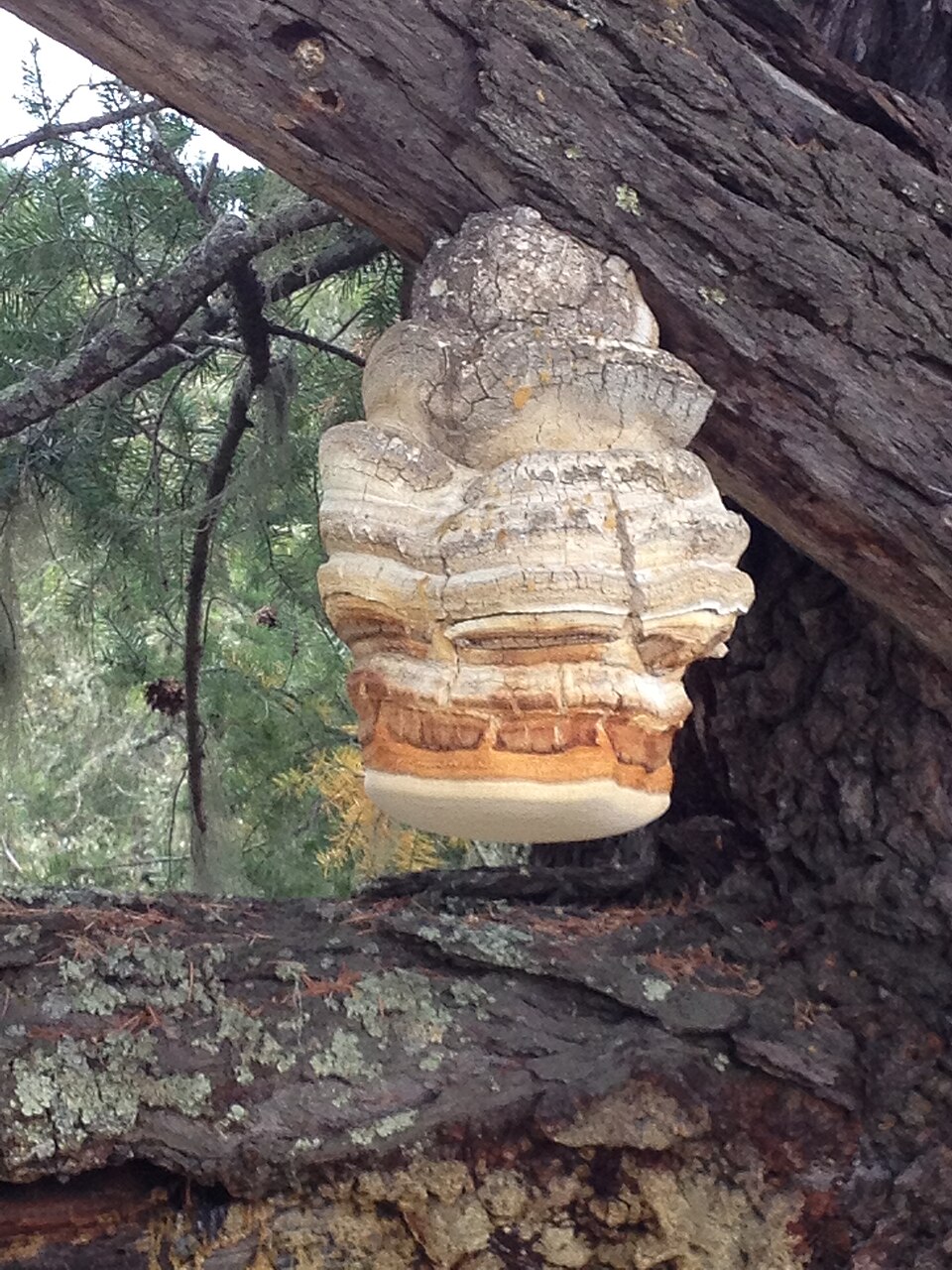
spec sheet10 rows
Agarikon Mushroom Agarikon is the common name for Laricifomes officinalis, a large, long-lived bracket fungus that grows on conifer trees in the old-growth forests of Europe, Asia, and North America. Also called the quinine conk or larch bracket, it has a long history of medicinal and ceremonial use, from ancient Greek treatments for consumption to the spiritual practices of Indigenous peoples of the Pacific Northwest. Now rare and declining, it is the subject of modern research into antimicrobial and antiviral compounds found in its wood-decaying tissue.
- may support immune function
- antimicrobial activity in lab studies
- traditional stress-resilience use
- rich in triterpenoids
- Digestive upset is possible, and historically it was used as a purgative
- Allergic reactions to fungal material can occur
Overview
Agarikon, scientifically Laricifomes officinalis and historically also called Fomitopsis officinalis, is a wood-decay polypore that forms large hoof-shaped or columnar fruiting bodies on the trunks of conifers, chiefly larch but also pine and cedar [1]. The fungus causes a brown heart rot of the living tree, and its woody conks can grow very large and persist for many years, turning chalky and cracked with age [1]. It is the sole species of its genus and is found in old-growth coniferous forests across Eurasia, North Africa, and western North America [1].
The mushroom has one of the longest recorded histories of medicinal use in the Western world; the ancient Greek physician Dioscorides described it around the first century for treating consumption, the old term for tuberculosis, and it was long valued as a bitter tonic sometimes nicknamed the quinine conk [1]. Among Indigenous peoples of the Pacific Northwest, including the Tlingit, Haida, and Tsimshian, the fungus held deep cultural significance; carved conks marked the graves of shamans, and the fungal material was also worked into a leather-like textile [3]. These ethnographic uses are well documented in the anthropological and mycological literature [3].
Modern interest centers on the fungus as a source of bioactive metabolites, and reviews catalog a range of triterpenoids, coumarins, and organic acids with reported antimicrobial activity [1]. Chemical studies have isolated previously unknown chlorinated coumarins from the mushroom that show activity against the bacteria responsible for tuberculosis, echoing its historical use for lung disease [2]. Extracts have also been screened for antiviral effects in the laboratory [1]. Agarikon is now considered rare and is declining because of logging and the loss of old-growth habitat, with legal protection in only a few countries, and it is available mainly as a niche dietary supplement rather than an approved medicine [1].
Mechanism
The medicinal reputation of agarikon rests on the diverse secondary metabolites it produces as a wood-rotting fungus rather than on any single active drug [1]. Reviews of its chemistry describe an array of compounds, including lanostane-type triterpenoids, aromatic acids such as agaric acid, and coumarins, several of which display antimicrobial activity in laboratory tests [1]. Historically the bitter agaric acid content was linked to its use for reducing the drenching sweats of tuberculosis and as a purgative tonic [1].
Among the better-characterized findings, researchers isolated previously unknown chlorinated coumarins from the fungus and showed that they inhibit the growth of the Mycobacterium tuberculosis complex at low concentrations, providing a possible chemical rationale for the traditional use against consumption [2]. Broader screening programs have reported that extracts of the fungus can inhibit various viruses and bacteria in cell-based assays, effects attributed to this mixture of metabolites [1]. Because most of this work has been carried out in test tubes or cell culture, the way these compounds might act in the human body, and at what exposures, remains largely uncharacterized, and the fungus is best regarded as a promising natural source of antimicrobial chemistry rather than a proven therapy [1][2].
receptor fingerprint
Macrophages and immune cells (beta-glucan receptors)modulates
Viral replication (lab studies)inhibits
Bacterial growth (lab studies)inhibits
Inflammatory signalingmodulates
Dosingtypical ranges, not medical advice
interested in protocols and clinical dosages? make an account to see them! ^_^
Safetyrisks and cautions, not medical advice
It is generally regarded as well tolerated when used as a dietary supplement, but rigorous human safety data is limited. As with any mushroom product, quality, correct species identification, and extract standardization matter a lot. People who are immunocompromised, pregnant, or on immune-related medication should check with a clinician first.
Resources
This entry is here for reference.
Research
- 2013first citedChlorinated coumarins from the polypore mushroom Fomitopsis officinalis and their activity agai…
- 2021most recentFungal mycelial mats used as textile by indigenous people of North America
- 1.Antimicrobial properties of Fomitopsis officinalis in the light of its bioactive metabolites: a review
- 2.Chlorinated coumarins from the polypore mushroom Fomitopsis officinalis and their activity against Mycobacterium tuberculosis
- 3.Fungal mycelial mats used as textile by indigenous people of North America
3 listed here; entry last updated July 2026
Reviews
My notesprivate to this device
FAQ
What is agarikon?
A long-lived wood-conk mushroom, Fomitopsis officinalis, used traditionally for immune support.
Does it fight viruses?
Extracts show antiviral effects in lab studies, but this isn't proven in humans.
Is it safe?
It's generally well tolerated as a supplement, but rigorous safety data is limited.
How is it usually taken?
Most often as a dual-extract tincture or capsule.
Limitations of the evidence
- Traditionally used as a bitter tonic; robust human safety data are limited
Adverse effects
- Digestive upset is possible, and historically it was used as a purgative
- Allergic reactions to fungal material can occur
Notes and cautions
- Wild harvesting threatens this rare species, so sourcing is a concern
- Sold as a niche supplement with variable quality and potency