
spec sheet9 rows
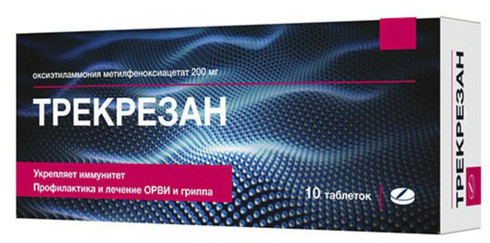
Trekrezan is a Russian actoprotector and adaptogen (a synthetic agent that raises the body's nonspecific resistance to physical, thermal, and hypoxic stress) that also acts as an immunomodulator and antioxidant. Chemically it is tris(2-hydroxyethyl)ammonium 2-methylphenoxyacetate, the triethanolamine salt of ortho-cresoxyacetic acid (molecular formula C15H25NO6), and the same active substance is marketed in agriculture and microbiology under the name Crezacin. It was developed by the school of academician Mikhail Voronkov at the Irkutsk Institute of Organic Chemistry, Siberian Branch of the Russian Academy of Sciences, and has been studied primarily in rodent models with a smaller body of human cold-exposure data. Rather than binding a single receptor, Trekrezan is characterized as an energy-stabilizing, meteoadaptogenic compound that shifts stressed tissue metabolism back toward aerobic ATP production, strengthens enzymatic and non-enzymatic antioxidant defenses, and modulates humoral immunity and hematopoiesis.
- Built for raw stress resistance; cold, heat and thin air
- Pushes tired tissue back toward clean aerobic energy
- Lifts the body's own antioxidant enzymes, SOD and catalase
- Held physical and mental output during real cold exposure in volunteers
- Immune support; backs antibody production and blood cell formation
- Decades of Russian research behind it; Western trials still to come
- Long-term human safety and drug-interaction data are sparse
Overview
From the notes: Trekrezan is essentially the quiet Russian workhorse of the actoprotector shelf; it is hands down one of the cleaner ways to buy resistance to cold, heat, and thin air without reaching for a stimulant. The appeal is that it plays on metabolism rather than on dopamine; it nudges tissue back toward aerobic ATP, keeps lactate from piling up, and props up your own antioxidant enzymes (SOD, catalase, glutathione) instead of dumping in exogenous ones.
It pretty much doubles as a low-key immune tuner too; the animal work on antibody production and hematopoiesis is genuinely interesting, and there is even a human cold-chamber study where it held physical and cognitive output together. Most of the literature is Russian and preclinical, so expectations should stay grounded and it is best treated as investigational; still, for stress-load days and rough acclimatization it earns its spot.
Mechanism
Trekrezan does not act through a single classical receptor; it behaves as an energy-stabilizing actoprotector and adaptogen. Under hypoxic, thermal, or infectious stress it shifts cellular bioenergetics back toward aerobic metabolism, raising tissue ATP and pyruvate while lowering lactate and the ADP/AMP hydrolysis products in brain, heart, liver, lung, and blood lymphocytes; this is the "energy-stabilizing" effect reported across rodent models. In parallel it reinforces antioxidant defense, increasing the activity of superoxide dismutase (SOD), catalase, glutathione peroxidase and glutathione reductase and raising reduced glutathione, which lowers lipid peroxidation (measured as malondialdehyde) and protects cell membranes and hepatocytes.
As an immunomodulator it stimulates humoral antibody production and normalizes coupled immunopoiesis and erythropoiesis, in part by modulating monokine (interleukin-1) output from macrophages. It additionally shows antisclerotic activity, lowering serum cholesterol, LDL, and triglycerides in cholesterol-loaded animals. The net pharmacology is a broad increase in nonspecific resistance (adaptogenic/meteoadaptogenic) rather than a targeted single-pathway drug action.
receptor fingerprint
Aerobic energy metabolism (tissue ATP and pyruvate)Increases
Anaerobic load (lactate, ADP, AMP)Decreases
Superoxide dismutase (SOD) / catalaseUpregulates
Glutathione system (GPx, GR, reduced glutathione)Upregulates
Lipid peroxidation (malondialdehyde formation)Inhibits
Humoral immunity / antibody productionStimulates
Serum cholesterol / LDL / triglyceridesLowers
Monokine (interleukin-1) productionModulates
Safetyrisks and cautions, not medical advice
Trekrezan has been reported as well tolerated across rodent studies and a small human cold-exposure trial, with no distinctive toxicity described in the published literature. However, the evidence base is overwhelmingly preclinical and Russian-language; it is not FDA-approved and is essentially unavailable through regulated channels outside Russia and the CIS. Because it modulates the immune system, its effects in autoimmune or immunosuppressed states are uncharacterized, and long-term human safety and drug-interaction data are lacking. It should be regarded as investigational rather than risk-free.
Subjective profileweighing the evidence above
A legitimate, metabolism-first Russian actoprotector with solid preclinical antioxidant, energy-stabilizing, and immunomodulatory data and one supportive human cold-exposure study; worthwhile for stress resilience and acclimatization, but treat it as investigational given the limited Western evidence.
Where to buy
Suppliers
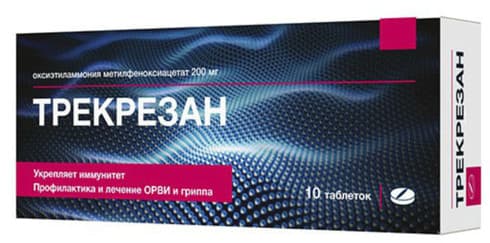
Vendors carrying Trekrezan, with live product details and codes. Links are affiliate links that support the wiki at no cost to you.
RUPharma🌐
Trekrezan
Research
- 2002first citedCarcinostatic, protective, and adaptive activities of tris-(2-hydroxyethyl)ammonium salts of ar…
- 2010most recentAntisclerotic effect of Trekrezan and its possible mechanisms
- 1.Antisclerotic effect of Trekrezan and its possible mechanisms
- 2.Metabolic effects of Trekrezan during adaptation of rats to intermittent hypoxic hypoxia
- 3.Functional and metabolic changes of healthy volunteers after cold exposure and administration of meteoadaptogen trekrezan
- 4.Efficiency of trekrezan in experimental bronchopneumonia in rats
- 5.Effect of trekrezan on immunogenesis under experimental conditions
- 6.Carcinostatic, protective, and adaptive activities of tris-(2-hydroxyethyl)ammonium salts of arylheteroacetic acids
6 listed here; entry last updated August 2026
Reviews
My notesprivate to this device
FAQ
What is Trekrezan used for?
It is used as an adaptogen and actoprotector to build resistance to physical, cold, heat, and altitude stress, to counter fatigue, and to give mild immune support; the same substance (Crezacin) is also used as a plant and microbial biostimulator.
How does Trekrezan work?
It is not a receptor drug. It stabilizes cellular energy metabolism (raising ATP and pyruvate, lowering lactate), strengthens antioxidant enzymes like SOD, catalase, and glutathione peroxidase, and modulates humoral immunity, producing a broad increase in nonspecific stress resistance.
Is Trekrezan well-researched?
It has decades of Russian preclinical work in rodents plus a human cold-chamber study in 75 volunteers, but Western and large-scale clinical data are limited, so it is best treated as investigational.
What are the main side effects?
It was generally well tolerated in the published studies; the main caveats are the limited Western data, its immunomodulatory nature, and the absence of long-term human safety information rather than any specific reported toxicity.
Is Trekrezan a stimulant like bromantane?
No. Both are actoprotectors, but Trekrezan works through metabolic and antioxidant pathways rather than dopaminergic stimulation, so it does not act as a psychostimulant.
Limitations of the evidence
- Human evidence is limited mainly to small cold-exposure volunteer studies
Adverse effects
- Long-term human safety and drug-interaction data are sparse
Notes and cautions
- Most safety and efficacy data is preclinical and from Russian-language literature
- Not FDA-approved; investigational and largely unavailable outside Russia and the CIS
- As an immunomodulator, its effect on autoimmune conditions is uncharacterized