
spec sheet11 rows
Thymagen, also transliterated as Thymogen, is a synthetic thymus-derived peptide used as an immunomodulator, developed in the Soviet Union and Russia as part of a family of short peptide bioregulators. It is a dipeptide made of the amino acids glutamic acid and tryptophan (glutamyl-tryptophan), designed to reproduce the immune-stimulating activity of the thymus gland [3][4]. Given mainly by nasal or injectable routes, it has been studied and used chiefly in Russia and neighboring countries to support immune function in infections, immunodeficiency, and the perioperative and aging settings; it is not an approved medicine in the United States or the European Union [2][3].
- a two amino acid thymus peptide, glutamyl-tryptophan
- designed to echo the immune signalling of the thymus gland
- decades of clinical use across Russia and its neighbours
- available by nasal or injectable routes
- the evidence is Russian language work; independent trials still to come
- Immune-modulating effects call for caution in immune-related conditions
Overview
Thymagen belongs to a group of peptide preparations and synthetic peptides that emerged from research at the St. Petersburg Institute of Bioregulation and Gerontology and related Russian institutions, where scientists sought to isolate and then reproduce the active peptides of organs such as the thymus. The thymus is a gland central to the maturation of T lymphocytes, the immune cells that coordinate defense against infection. The natural thymus extract from this research is called Thymalin, while Thymagen represents a defined synthetic dipeptide, glutamyl-tryptophan, developed as a simpler, chemically defined molecule with thymus-like immune activity [3][4]. In the literature it is described as one of several thymomimetic peptides alongside Thymalin and Vilon [3].
These peptide bioregulators have been studied for decades in Russia as immunocorrectors and as so-called geroprotectors, agents intended to counter age-related decline. Reported and studied uses of Thymagen and its relatives center on strengthening cell-mediated immunity, for example in people with weakened immune defenses, chronic or recurrent infections, and following surgery or other physiological stress [2][3]. A double-blind, placebo-controlled study in older surgical patients reported that a course of Thymogen before abdominal cancer operations helped restore measures of cellular immunity and was associated with fewer postoperative complications [2]. The broader peptide-bioregulator program has also examined effects on immunity, tumor resistance, and lifespan in experimental and clinical settings [3][4].
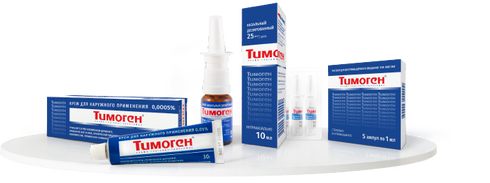
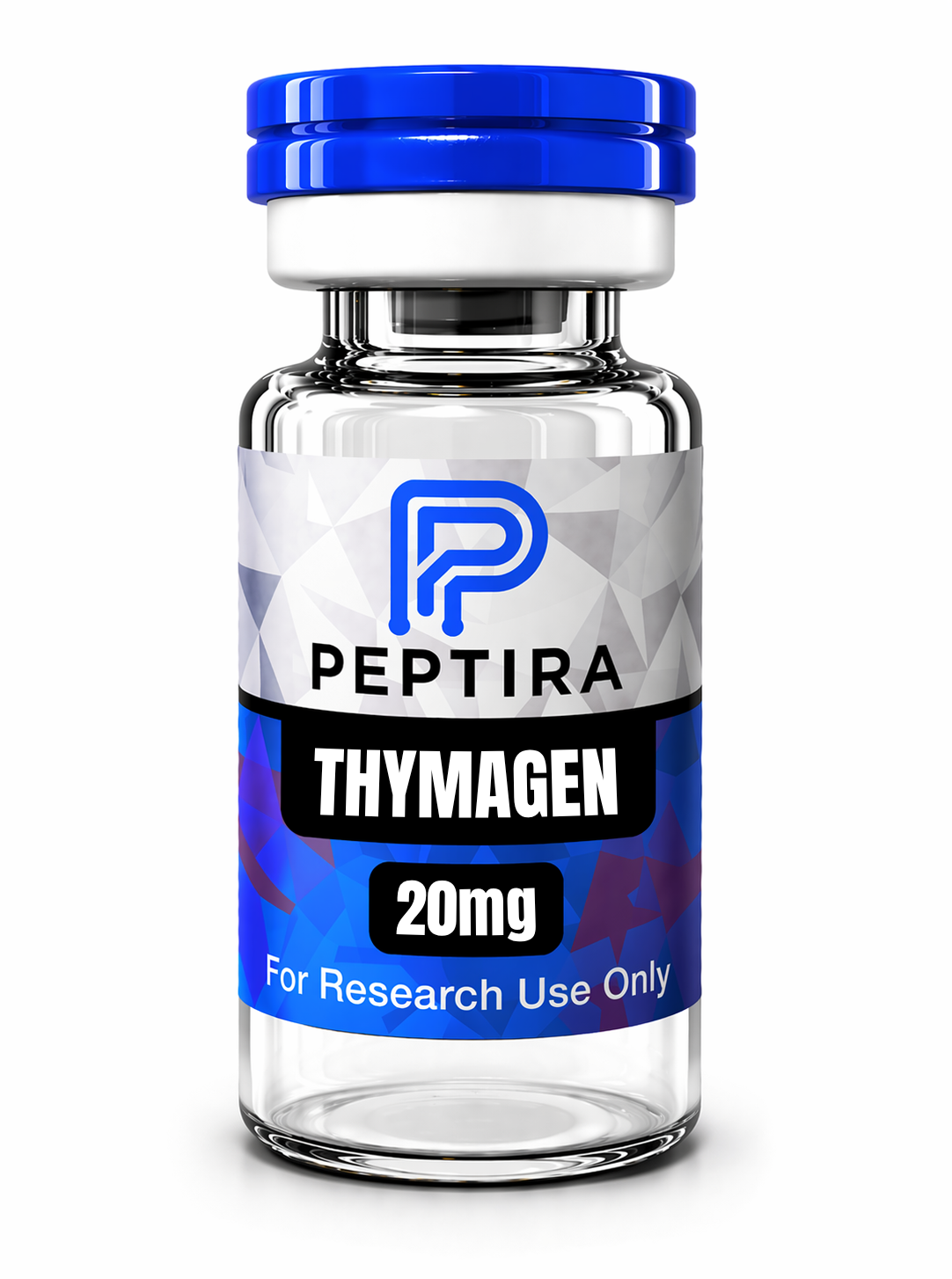
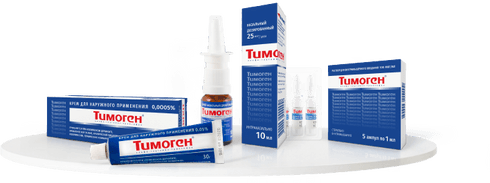
Thymagen is administered by injection or as an intranasal preparation, and related products have appeared in ointment and other forms. It is registered and marketed as a medicine in Russia and some post-Soviet states, where it is used under medical supervision as an immunostimulant. It has not been approved by major Western regulators such as the U.S. Food and Drug Administration or the European Medicines Agency, and it is sometimes sold internationally as a research chemical or supplement-style peptide. Much of the supporting clinical literature is published in Russian and has not been widely replicated in large international trials [3].
As with several peptides in this family, enthusiasm for broad benefits, including anti-aging effects, rests substantially on studies from a small number of research groups, and the level of independent, large-scale evidence is limited. The compounds are generally reported to be well tolerated at the doses studied, but a full modern safety and efficacy profile by contemporary regulatory standards is not established outside their region of origin [3][4].
- Thymagen is essentially just two amino acids joined together, glutamic acid and tryptophan, making it one of the smallest peptides proposed to mimic thymic immune signaling.
- It was designed as a minimalist successor to the more complex calf-thymus extract thymalin, distilling the activity down to a single dipeptide.
- Despite decades of use in Russia and neighboring countries, thymagen has never been approved as a medicine in the United States or the European Union.
Mechanism
Thymagen is understood to act as an immunomodulator that promotes the maturation and activity of T lymphocytes, mimicking a signaling role of natural thymic peptides. Because it is a very short , glutamyl-tryptophan, it is thought to influence immune cells partly by altering intracellular signaling rather than by a single classical receptor.
Early experimental work placed the effects of thymus-derived immunocorrectors, including thymagen and thymalin, within the cyclic nucleotide system: in lymphocytes, these peptides changed the balance of the second messengers cyclic AMP and cyclic GMP and affected the activity of phosphodiesterase, the enzyme that breaks these messengers down, particularly under conditions of immune sensitization and anaphylaxis [1].
Shifts in the cyclic AMP to cyclic GMP ratio are linked to how lymphocytes proliferate and respond, offering a proposed route by which the tunes immune activity. At the level of the whole organism, the peptide-bioregulator theory advanced by its developers holds that short peptides can influence gene expression and thereby restore tissue-specific functions that decline with age or disease, so that supplying a thymus-directed peptide helps normalize immune regulation [4].
In practical terms, the reported result is enhanced cell-mediated immunity, seen as improved lymphocyte parameters and better resistance to infection and postoperative complications in the populations studied [2][3]. It is worth stressing that these mechanisms are drawn largely from Russian experimental and clinical literature and have not been extensively confirmed by independent international research [3][4].
receptor fingerprint
Gene expression (thymus bioregulator)modulates
Immune functionsupports
Safetyrisks and cautions, not medical advice
Thymagen is a synthetic peptide bioregulator promoted for immune support, with essentially no rigorous published human safety data and no approval as a medicine outside limited regional use. Its claims rest largely on Russian research that has not been independently validated, and its long-term safety is unknown. As an immunomodulator, its effects in people with autoimmune conditions or on immune-active therapies are unstudied.
Reconstitutionarithmetic only, not dosing advice
arithmetic only; not medical or dosing advice.
History
Thymagen, also transliterated as Thymogen, is a synthetic dipeptide of glutamic acid and tryptophan (glutamyl-tryptophan) developed within the Soviet and later Russian program of short peptide bioregulators. That program, associated most prominently with researchers at the St. Petersburg Institute of Bioregulation and Gerontology, sought to distill the activity of complex thymic extracts such as thymalin down to the smallest active peptide sequences, and thymagen was advanced as a minimal thymus-mimetic immunomodulator.
It was studied and used chiefly in Russia and neighboring countries from the late twentieth century onward, given mainly by nasal or injectable routes to support immune function in infections, immunodeficiency, and perioperative and aging settings. Its proposed mechanisms and clinical claims derive largely from the originating Russian experimental and clinical literature. Thymagen is not an approved medicine in the United States or the European Union, and its evidence base has not been extensively confirmed by independent international research.
Reputation
Thymagen occupies an interesting niche as one of the shortest peptide immunomodulators to come out of the influential Russian bioregulator tradition, notable for the idea that a simple two-amino-acid molecule might reproduce meaningful thymic signaling. Within that literature it is credited with enhancing cell-mediated immunity, improving lymphocyte parameters, and supporting resistance to infection and postoperative complications, and its small size and simple structure give it a certain elegance as a research concept.
It is fair to be candid that its reputation rests almost entirely on studies from its country of origin; large independent, international, placebo-controlled trials are lacking, and it holds no regulatory approval in Western markets. Regarded as a well-characterized experimental peptide with an intriguing rationale rather than a proven therapeutic, thymagen remains of genuine interest to those exploring thymic peptides, provided its limited and geographically concentrated evidence base is kept in view.
Subjective profileweighing the evidence above
Hard to justify. The thymus-peptide rationale is plausible, but the evidence is almost entirely Russian-language work that has not been independently replicated, and there is no meaningful safety data. Anyone with an autoimmune condition should stay well clear of an unstudied immunomodulator.
Where to buy

2 other outlets
Suppliers
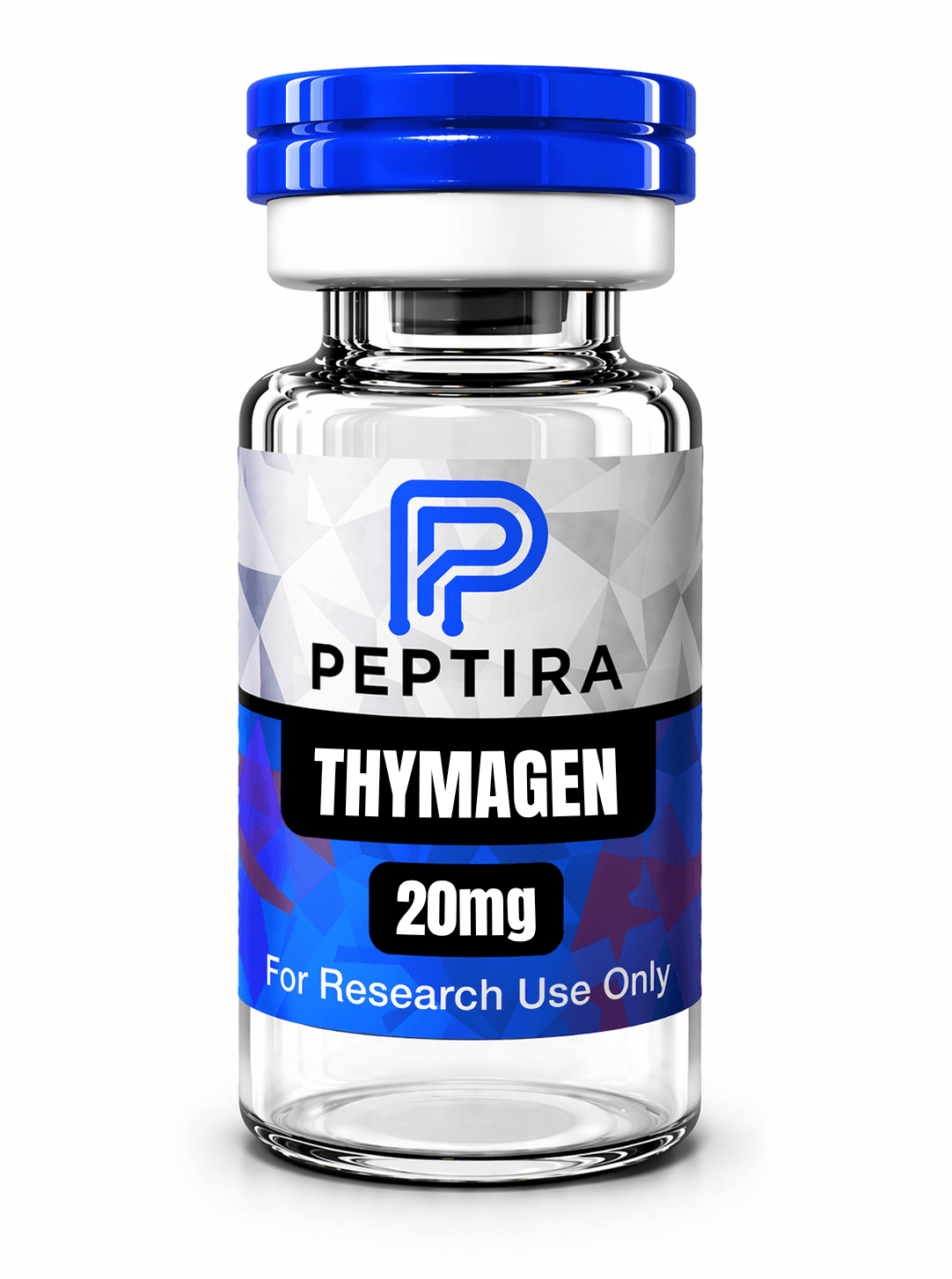
Vendors carrying Thymagen, with live product details and codes. Links are affiliate links that support the wiki at no cost to you.
RUPharma🌐
Thymogen
Kimera Chems
Thymogen
Peptira
Thymagen
Research
- 1991first citedEffect of thymagen, thymalin and vilosen on the cAMP and cGMP levels and phosphodiesterase acti…
- 2011controlled trial[Application thymogen for preoperative preparation of elderly patients with tumor processes in…
- 2013most recentPeptide bioregulators: the new class of geroprotectors. Message 2. Clinical studies results.
- 1.Effect of thymagen, thymalin and vilosen on the cAMP and cGMP levels and phosphodiesterase activity in spleen lymphocytes during sensitization and anaphylactic shock.
- 2.[Application thymogen for preoperative preparation of elderly patients with tumor processes in abdominal cavity].
- 3.Peptide bioregulators: the new class of geroprotectors. Message 2. Clinical studies results.
- 4.Peptides and Ageing.
- 5.[The clinico-epidemiological efficacy of thymogen in acute respiratory viral infections in a military collective].
- 6.Results of a randomized study of IM862 nasal solution in the treatment of AIDS-related Kaposi's sarcoma.
- 7.Angiogenesis inhibitor IM862 is ineffective against AIDS-Kaposi's sarcoma in a phase III trial, but demonstrates sustained, potent effect of highly active antiretroviral therapy: from the AIDS Malignancy Consortium and IM862 Study Team.
- 8.Phase II trial of the antiangiogenic agent IM862 in metastatic renal cell carcinoma.
8 listed here; entry last updated August 2026
Reviews
My notesprivate to this device
FAQ
What is Thymagen?
It is a thymus-derived peptide bioregulator studied for immune tuning and inflammation.
What are bioregulators?
They are short peptides, popularized by the Khavinson group, proposed to help regulate tissue-specific function.
Is it well studied in humans?
Most research is from Russian sources and human data are limited, so evidence remains preliminary.
How is it typically used?
Peptide bioregulators are often used in short cycles rather than continuously.
Limitations of the evidence
- Most evidence comes from Russian-language studies
- Limited independent long-term safety data
Adverse effects
- Immune-modulating effects call for caution in immune-related conditions
Notes and cautions
- Generally reported as well tolerated in the studies available
- Not approved by U.S. or E.U. regulators
- Thymagen, also transliterated as thymogen, has a genuine intranasal record rather than an inferred one. A double blind randomised placebo controlled trial gave it by intranasal instillation once daily for seven days before abdominal cancer surgery in elderly patients and reported restored cellular immunity and fewer postoperative complications [2]. Earlier work compared intranasal against subcutaneous thymogen for respiratory infection prophylaxis in a military cohort and found both routes effective [5]. The same glutamyl-tryptophan dipeptide was developed in the West as IM862 and formulated specifically as a nasal solution; a phase II study dosed 5 mg as intranasal drops in AIDS related Kaposi sarcoma [6], a phase III trial used the same 5 mg nasal dose and found no benefit over placebo [7], and a renal cell carcinoma trial dosed 20 mg intranasally three times daily [8]. The nasal route for this dipeptide is a formulated product route rather than a workaround, though the clinical results in oncology were negative.