
spec sheet11 rows
Cartalax is a synthetic short peptide bioregulator, the tripeptide Ala-Glu-Asp, from the celebrated Russian family of tissue-targeted peptides studied for cellular renewal and healthy aging. Working at the level of gene expression, it has been shown to reduce markers of cellular senescence and support proliferation in aging cells. For those pursuing a science-driven approach to regeneration and longevity, Cartalax is a compelling peptide.
- Short peptide bioregulator from the celebrated Russian family
- Works upstream at the level of gene expression
- Lowered markers of cellular senescence in studies
- Supports vascular tissue and blood vessel function
- Helps temper the inflammatory tone
- Tiny signal, low burden, longevity minded
- Possible mild local reactions with parenteral use
Overview
Cartalax is a synthetic short peptide bioregulator corresponding to the tripeptide Ala-Glu-Asp (AED), one of the tissue-specific short peptides developed within the St. Petersburg school of bioregulation and gerontology associated with Vladimir Khavinson [1][5]. Like others in this family, it is a very small molecule, three amino acids in length, engineered to act as a signaling peptide that influences cellular activity rather than as a conventional receptor drug.
The short peptides of this class, generally two to seven residues long, are studied for their ability to penetrate cells and their nuclei and to regulate gene expression and protein synthesis; AED specifically has been examined across skin, neuronal, kidney, and stem cell models [1][2][3][4]. Because these effects appear at very low, nanomolar concentrations and resemble the action of endogenous signaling molecules, the peptides are described as epigenetic regulators of cell function [3][5].
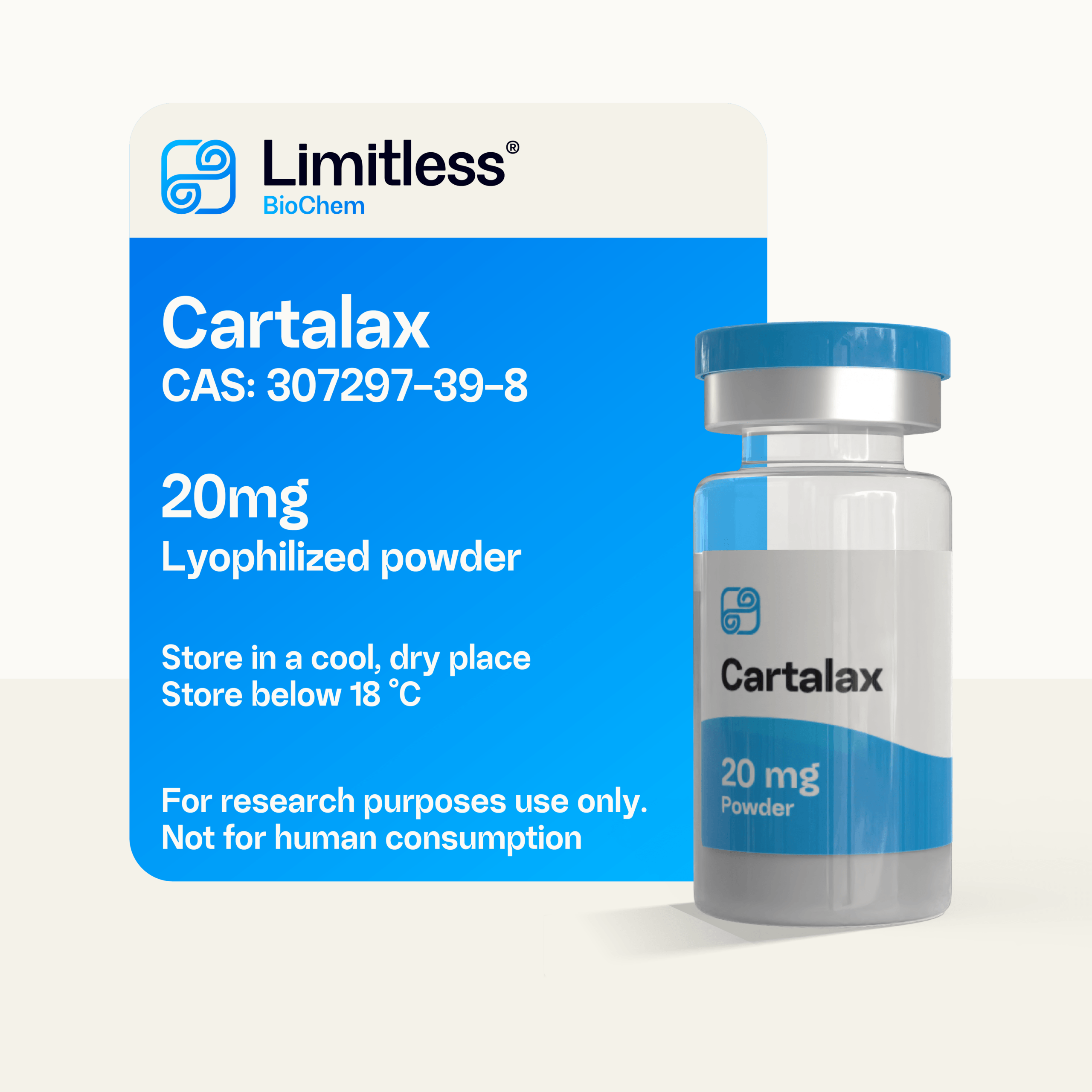
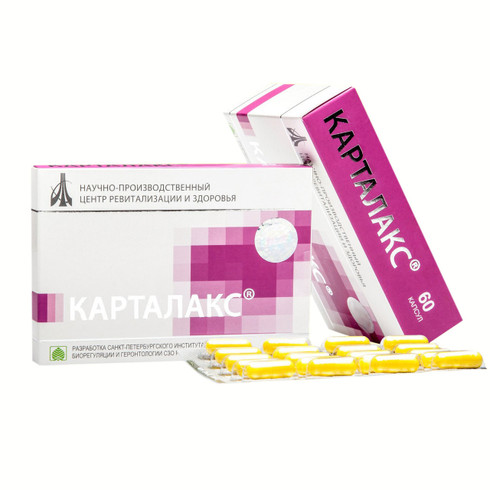
Cartalax's research applications center on geroprotection, tissue renewal, and the study of cellular aging, where AED has been used to modulate proliferation, differentiation, apoptosis, and senescence markers [1][4]. Within the commercial peptide-bioregulator family its name evokes cartilage and connective tissue, and it is marketed as a tissue-support preparation. It is not an approved pharmaceutical in Western countries and is handled as a research or supplement peptide, typically supplied as a lyophilized powder or in capsule form.


- Cartalax is only three amino acids long (Ala-Glu-Asp), placing it among the smallest signaling peptides studied for direct gene regulation.
- In aging renal cell cultures the AED tripeptide raised expression of the longevity-associated sirtuin SIRT-6 while lowering the senescence markers p16, p21, and p53.
Mechanism
Cartalax's core proposed benefit is geroprotection: slowing the cellular hallmarks of aging while supporting the renewal and healthy function of cells. As a short bioregulator, the AED tripeptide is thought to enter cells and their nuclei and interact with DNA and chromatin, modulating the expression of genes that govern proliferation, differentiation, senescence, and apoptosis [3][5]. This epigenetic, gene-regulatory mode of action is the unifying mechanism of the Khavinson family and is documented in systematic review of short-peptide regulation of gene expression [5].
The experimental findings are specific. In aging human skin fibroblast cultures, AED together with related peptides inhibited the synthesis of matrix metalloproteinase-9, which rises during aging, while enhancing expression of the proliferation marker Ki-67 and the regeneration-associated marker CD98hc; AED also suppressed caspase-dependent apoptosis [1]. In aging renal cell cultures, the AED tripeptide increased cell proliferation and reduced expression of the senescence markers p16, p21, and p53 while raising expression of the longevity-associated SIRT-6 [4]. In mesenchymal stem cell aging models, short peptides of this class enhanced IGF1 gene expression by roughly 3.5 to 5.6 fold, illustrating the magnitude of their transcriptional influence [3].
Beyond these anti-aging markers, AED has shown the capacity to guide cell fate: it promoted neuronal differentiation of stem cells, increasing the expression of the protein GAP43 and the neural precursor marker nestin [2]. Taken together, the data describe a small signaling that biases cells toward proliferation, healthy differentiation, and reduced senescence, demonstrated primarily in cell and molecular models that characterize its gene-regulatory activity [1][4][5].
receptor fingerprint
Gene expression (short bioregulator)modulates
Vascular / inflammatory tonesupports
Safetyrisks and cautions, not medical advice
Human safety data are limited. The Khavinson short-peptide bioregulators are generally described as low-toxicity in the Russian literature, but rigorous independent safety studies are lacking and long-term effects are uncharacterized. Investigational, research-only.
Reconstitutionarithmetic only, not dosing advice
arithmetic only; not medical or dosing advice.
History
Cartalax is the synthetic tripeptide Ala-Glu-Asp (AED), one of the short peptide bioregulators developed by Vladimir Khavinson and colleagues at the St. Petersburg Institute of Bioregulation and Gerontology, part of a research program that grew out of Soviet-era work on tissue-specific peptide regulation. Within this family, Cartalax was framed as a peptide directed at vascular and inflammatory tone, complementing other tissue-targeted members such as the pineal and thymic peptides.
Its characterization has proceeded largely through cell-culture and molecular studies of gene expression, senescence markers, and cell differentiation, published mainly in the Russian and specialist gerontology literature. Compared with mainstream pharmaceuticals its development record is relatively sparse and concentrated in in vitro work, and no large clinical trial program is documented in the peer-reviewed literature.
Reputation
Cartalax draws interest as a member of a celebrated and much-discussed family of Russian peptide bioregulators studied for cellular renewal and healthy aging, a lineage that has attracted a dedicated following among longevity enthusiasts. Its appeal lies in an elegant proposed mechanism: acting at the level of gene expression, the AED peptide has been shown in cell models to reduce markers of senescence and support proliferation, and related peptides can even bias stem cells toward neuronal differentiation. Supporters value that a molecule of just three amino acids can exert such specific transcriptional effects. In fairness, the evidence base is predominantly preclinical and laboratory-based, so it is best understood as a scientifically intriguing peptide with promising cellular data rather than clinically proven outcomes.
Subjective profileweighing the evidence above
Not worth the needle. The short peptide bioregulators are an appealing idea, but the senescence and vascular data behind this one is preclinical, independent safety work is missing, and injecting research-grade material for a benefit nobody has measured in people is a poor trade.
Where to buy


Suppliers
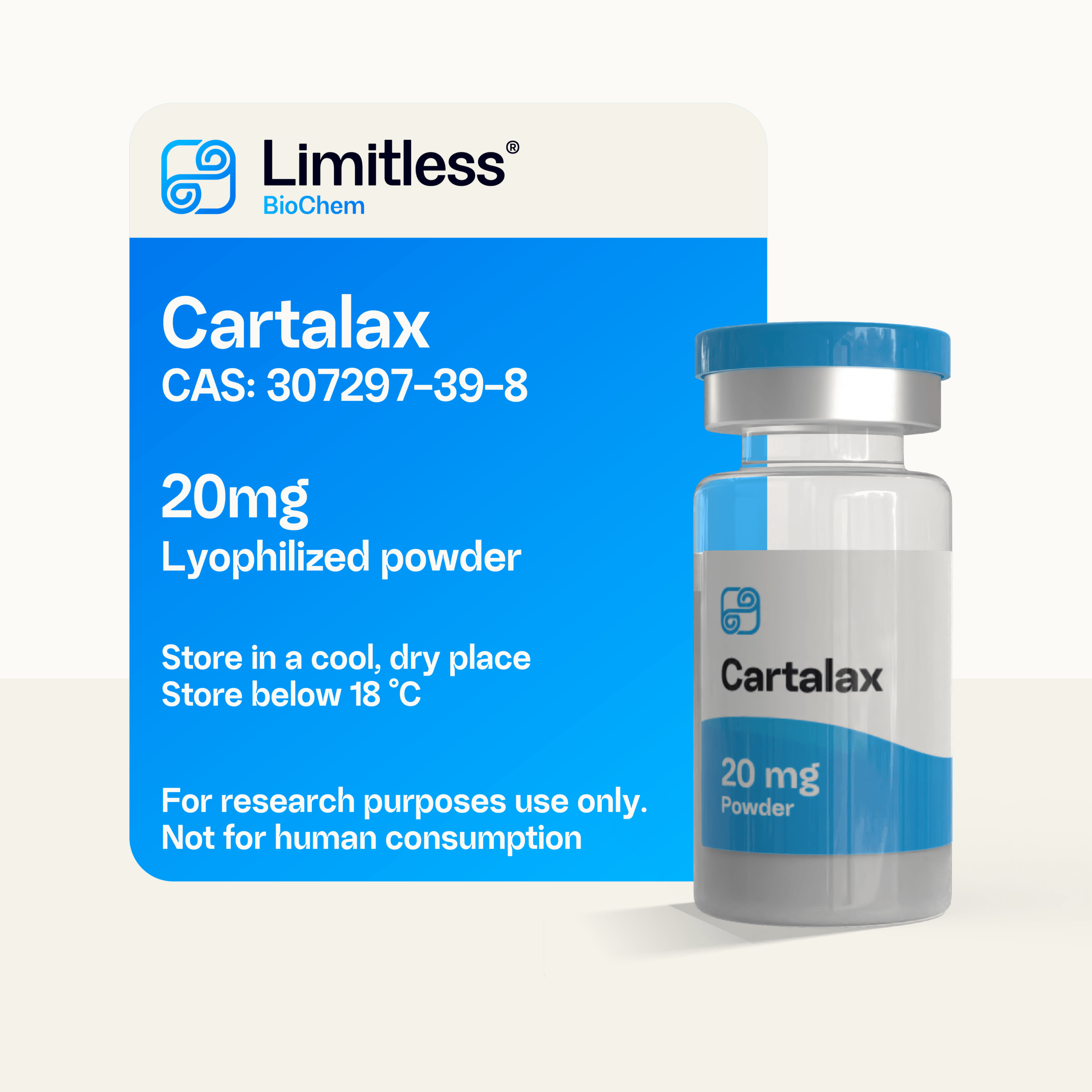
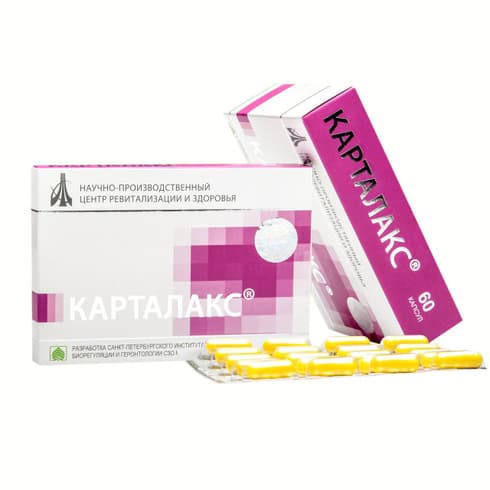
Vendors carrying Cartalax, with live product details and codes. Links are affiliate links that support the wiki at no cost to you.
| supplier | size | price | $/mg |
|---|---|---|---|
| RUOlowest | 20mg | $48.00 | $2.40/mg |
| Limitless Biochem | 20mg | $58.85 | $2.94/mg |
RUO
Cartalax
Limitless Biochem🌐
Cartalax
Peptira
Cartalax
RUPharma🌐
Cartalax
Research
- 2014first citedTripeptides slow down aging process in renal cell culture
- 2021most recentPeptide Regulation of Gene Expression: A Systematic Review
- 1.Peptide Regulation of Skin Fibroblast Functions during Their Aging In Vitro
- 2.Effect of short peptides on neuronal differentiation of stem cells
- 3.Gene expression in human mesenchymal stem cell aging cultures: modulation by short peptides
- 4.Tripeptides slow down aging process in renal cell culture
- 5.Peptide Regulation of Gene Expression: A Systematic Review
5 listed here; entry last updated August 2026
Reviews
My notesprivate to this device
FAQ
What is a peptide bioregulator?
It is a short peptide, from a line of Russian research, thought to help regulate the function of specific tissues.
Is it well researched?
No, cartalax is niche and lightly studied, so evidence is limited.
How is it stored?
As a peptide it is generally kept refrigerated once reconstituted and protected from light.
What tissues does it target?
It has been studied mainly in connection with blood vessels and inflammation.
Limitations of the evidence
- Human clinical evidence is limited; data are largely preclinical
Adverse effects
- Possible mild local reactions with parenteral use
Notes and cautions
- Generally well tolerated within the peptide bioregulator class
- Not an approved pharmaceutical outside its region of origin