
spec sheet12 rows
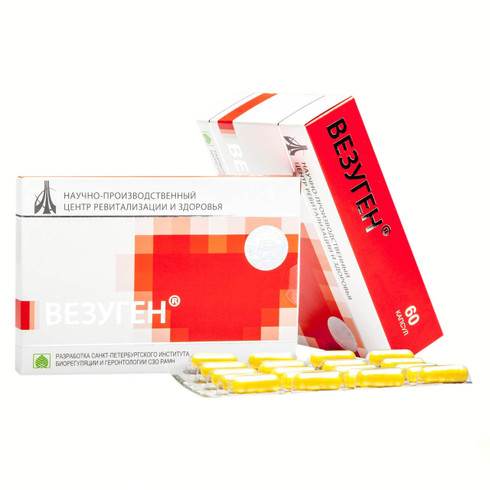
Vesugen is a synthetic tripeptide composed of lysine, glutamic acid and aspartic acid (Lys-Glu-Asp). It is one of the short peptide bioregulators developed in Russia and is described as a vascular peptide, meaning it is intended to support the blood vessels and their inner lining, especially in aging. Research on it comes mainly from Russian laboratories, and it is not an approved medicine in Western countries.
- Vascular peptide built for aging blood vessels
- Targets the delicate lining inside every artery
- Raised SIRT1 and dialed down senescence markers
- Older adults saw less bruising and purpura
- Lowered fibrinogen and E-selectin, markers tied to plaque
- Restored lost dendritic spines in lab models
- Long-term effects in people are not well established
Overview
Vesugen is a short synthetic peptide built from three amino acids, lysine, glutamic acid and aspartic acid, giving the sequence Lys-Glu-Asp [1][4]. It is one of the peptide bioregulators, sometimes called ultrashort peptides, developed at the Saint Petersburg Institute of Bioregulation and Gerontology by Vladimir Khavinson and colleagues [5][6]. In this framework Vesugen is designated a vascular peptide, meant to mirror the regulatory activity attributed to the tissues of the blood-vessel wall; the same tripeptide sequence appears in the research literature under the laboratory code T-38 [1][4].
Like other members of the family, Vesugen emerged from a long program of Russian research that began with complex peptide extracts of animal organs and progressed to short, defined peptides intended to carry tissue-specific effects [5]. The vascular peptide was created to target the endothelium, the inner lining of blood vessels, whose dysfunction is central to atherosclerosis and other age-related vascular disease [1][3].
Reported studies have centered on the blood vessels and on aging [1][3]. In laboratory work the tripeptide has been described as vasoprotective, said to renew vascular cells in culture and to lower markers linked to atherosclerotic plaque formation [1]. Small clinical reports from its originators have examined it in older adults, including its use in chronic arterial insufficiency of the legs and in vasculogenic erectile dysfunction arising from atherosclerosis, as well as broader assessments of biological aging [2][3]. Related experiments describe the same Lys-Glu-Asp peptide affecting tissue regeneration in models of accelerated aging [4].
Vesugen and related peptide bioregulators are used and sold mainly in Russia and some neighboring countries as bioregulator preparations, and they are not approved as medicines by regulators such as the U.S. Food and Drug Administration or the European Medicines Agency [5]. The available evidence consists largely of small studies and reviews from a narrow group of laboratories, frequently published in Russian, so the results are preliminary and have not been widely confirmed by independent researchers. Vesugen is generally encountered as a research peptide rather than an established treatment.
Mechanism
Vesugen is proposed to work as a regulatory that acts on gene activity rather than through a classical drug receptor [5][6]. In the bioregulator theory advanced by its developers, ultrashort peptides such as Lys-Glu-Asp are taken up by cells, in part through peptide transporters, and are thought to reach the cell nucleus, where they may bind DNA and influence the expression of specific genes and the synthesis of proteins in a tissue-selective way [6].
For Vesugen the proposed focus is the vascular system: laboratory studies report that the tripeptide encourages renewal of vascular cells, raising markers of cell proliferation while lowering a tumor-suppressor protein and reducing an adhesion molecule involved in the build-up of atherosclerotic plaque [1]. Through these actions its originators describe protective and geroprotective effects on the endothelium and blood-vessel wall [1][3]. As with other peptides in this family, the mechanism comes chiefly from the originating research program and remains incompletely defined and not broadly reproduced [5][6].
receptor fingerprint
TNKS2 (tankyrase-2)downregulates
p16 / p21 senescence markersreduces
SIRT1 / PGC1aactivates
Endothelin-1 / connexin signalingnormalizes
E-selectin / IL-1B, IL-6, IL-8suppresses
CXCL12 (SDF-1)upregulates
Vascular endothelial cellsProposed stimulation of proliferation markers (Ki-67)
Blood vessel wall (smooth muscle and endothelium)Tissue-specific gene expression modulation
Angiogenesis-related pathwaysModulation reported in cell studies
Dosingtypical ranges, not medical advice
interested in protocols and clinical dosages? make an account to see them! ^_^
Safetyrisks and cautions, not medical advice
The source literature does not flag much, and short bioregulator peptides like KED generally come across as low toxicity and well tolerated, without the hormonal or immune baggage of larger peptides. The honest caveat matters more here than usual though; nearly all of the data come from Khavinson-affiliated labs, mostly in cell culture, with little independent Western replication and no strong randomized human outcome trials. It is an experimental research peptide, not an approved medicine, so purity of what is actually sold is unverified, and standard injection site risks apply if you go that route. Best treated as an interesting bioregulator to watch rather than a proven therapy.
Subjective profileweighing the evidence above
The endothelial cell-study signals are interesting and the senile-purpura reports are at least human, but nearly all of it comes from one affiliated group with no independent replication. Low apparent risk, unproven benefit; treat it as an experiment rather than vascular protection you can count on.
Where to buy
1 other outlet
Suppliers
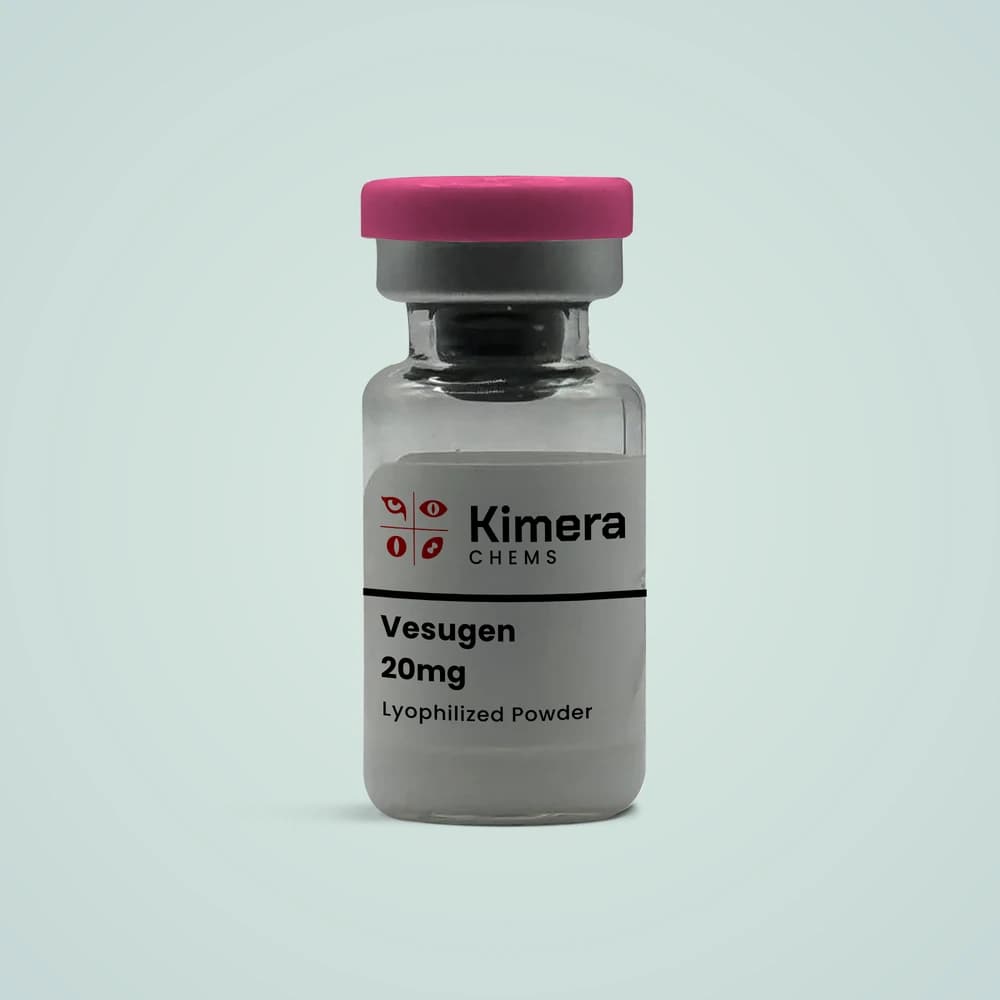
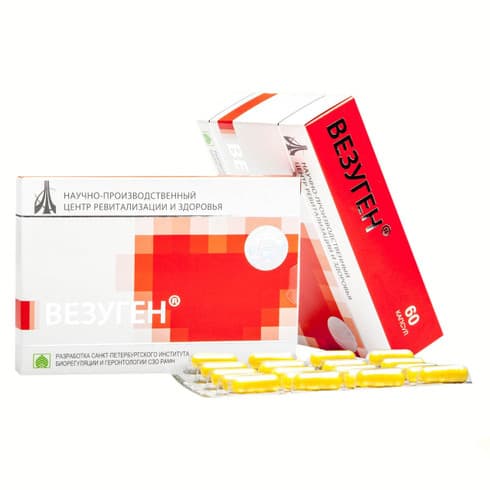
Vendors carrying Vesugen, with live product details and codes. Links are affiliate links that support the wiki at no cost to you.
Kimera Chems
Vesugen
RUPharma🌐
Vesugen
Research
- 2008first citedPeptidergic regulation of the pancreas function in the experimental model of rats with accelera…
- 2023most recentFeasibility of Transport of 26 Biologically Active Ultrashort Peptides via LAT and PEPT Family…
- 1.Molecular aspects of anti-atherosclerotic effects of short peptides
- 2.The efficacy of peptide bioregulators of vessels in lower limbs chronic arterial insufficiency treatment in old and elderly people
- 3.[EFFECT OF SYNTHETIC PEPTIDES ON AGING OF PATIENTS WITH CHRONIC POLYMORBIDITY AND ORGANIC BRAIN SYNDROME OF THE CENTRAL NERVOUS SYSTEM IN REMISSION].
- 4.Peptidergic regulation of the pancreas function in the experimental model of rats with accelerated aging
- 5.Transport of Biologically Active Ultrashort Peptides Using POT and LAT Carriers
- 6.Feasibility of Transport of 26 Biologically Active Ultrashort Peptides via LAT and PEPT Family Transporters
6 listed here; entry last updated August 2026
Reviews
My notesprivate to this device
FAQ
What is Vesugen supposed to do?
It is framed as a vascular bioregulator meant to support healthy blood vessel wall and endothelial function, especially in the context of aging.
How strong is the evidence?
Thin. Most data come from Khavinson-affiliated labs and cell studies, with limited independent replication and no robust human outcome trials.
What does bioregulator mean?
The Khavinson concept is that very short peptides act as tissue-specific signals that help cells behave more like their younger, healthier state.
Is it approved medicine?
No. It is an experimental peptide sold for research, not an approved treatment.
Limitations of the evidence
- Experimental peptide with limited human safety data
- Clinical reports are small and mostly from its developers
Adverse effects
- Long-term effects in people are not well established
Notes and cautions
- Not approved by Western regulators