
data + articles · 4 listed
newest 2015spec sheet12 rows
Crystagen is a short synthetic peptide from the Khavinson family of bioregulators, directed at the immune system and studied for its ability to help sustain immune defenses during aging [1]. In research on the aging spleen it acted on B-cells, part of a broader effort to keep immune signaling steadier as the body grows older [1]. For those assembling a peptide-based longevity routine, Crystagen offers a targeted, low-burden way to support immune resilience.
- a short synthetic peptide aimed squarely at immune aging
- part of the Khavinson bioregulator family from Russia
- source studies report effects on immune cytokine signalling
- reported as well tolerated in the literature it comes from
- stacks naturally with the other tissue specific peptides
- the human record is early; this one is a frontier pick
- Injection-site reactions are possible with reconstituted peptide
Overview
Crystagen is a short synthetic peptide belonging to the family of peptide bioregulators developed at the St. Petersburg Institute of Bioregulation and Gerontology, the research program led by Vladimir Khavinson. This family grew out of work on cytomedines, natural peptide complexes isolated from animal organs that appeared to regulate the tissue they came from; from these, chemists derived very short synthetic peptides, the cytogens, intended to reproduce the regulatory effect in a defined molecule. Within this family each peptide is associated with a particular system, and Crystagen is presented as an immune-directed member [1].
The published research specific to Crystagen is limited. The clearest report examined several short peptides in the spleen during aging and found that Crystagen activates B-cells of the immune system, distinguishing it from peptides that primarily act on T-helper cells; notably, in that study Crystagen influenced immune cell activity without driving cell renewal in the aging spleen [1]. More broadly, short peptides of this class have been shown to modulate immune cells such as thymocytes and lymphocytes and to alter gene expression and chromatin state, which is the general mechanism proposed to underlie their tissue-directed effects [2][3][4].
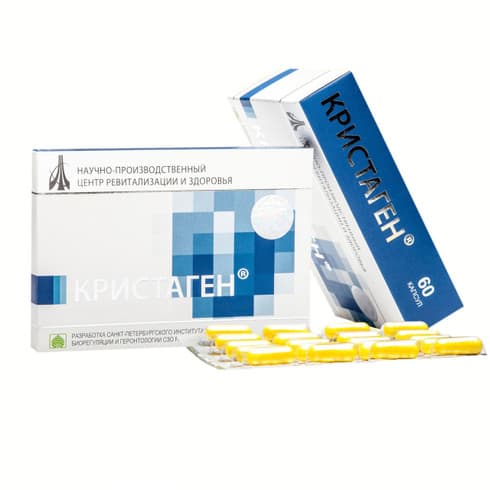
Crystagen is not an approved drug and is not a dietary supplement; it comes out of Russian gerontological research and circulates internationally as a research peptide, generally supplied as a lyophilized powder for reconstitution. In practice it is discussed alongside the other Khavinson bioregulators and is positioned within longevity routines as a supportive, immune-oriented addition rather than a treatment for any specific disease.


- Crystagen is part of the Khavinson family of ultra-short peptide bioregulators developed in Saint Petersburg, a lineage that grew out of research begun during the Soviet era.
- In a study of the aging spleen it selectively activated B-cells without driving renewal of aging spleen cells, distinguishing it from related peptides that acted on T-helper cells.
- These peptides are proposed to work not like hormones but by entering cells and binding regulatory regions of DNA to tune gene expression.
Mechanism
Crystagen is thought to work in the same way as the other ultra-short Khavinson peptides: rather than acting like a hormone or a drug that switches a receptor on or off, these peptides are proposed to enter cells and bind directly to regulatory regions of DNA, tuning the expression of specific genes and thereby restoring a more youthful pattern of protein synthesis in their target tissue [4]. For Crystagen, that target is the immune system, and the practical aim is to help immune cells maintain healthier function as the body ages [1].
The most direct evidence comes from a study of short peptides in the aging spleen, a key immune organ. There, Crystagen selectively activated B-cells, the lymphocytes responsible for antibody production, while other peptides in the comparison acted on T-helper cells or altered rates of proliferation and apoptosis [1]. Importantly, Crystagen changed immune cell activity without forcing cell renewal in the aging spleen, a profile consistent with a gentle, regulatory role rather than a strong proliferative stimulus [1]. This selectivity mirrors the wider behavior of the cytogen peptides, which tend to act on the tissue matching their design.
Supporting this picture, related short peptides of the same family have been shown to modulate the immune response of thymocytes and to change lymphocyte chromatin in elderly subjects, activating previously silenced genes through decondensation of tightly packed chromatin [2][3]. The same class has also been proposed to regulate immune-relevant genes involved in cell adhesion and defense [4]. Taken together, the reported benefits of Crystagen center on immune support during aging: steadier immune cell function and a proposed epigenetic mechanism that seeks to normalize, rather than overstimulate, the aging immune system [1][4]. Because the direct human evidence remains sparse, these effects are best regarded as promising and mechanistic rather than clinically proven.
receptor fingerprint
Immune cellsProposed modulation of immune cell activity
gene expressionReported influence on immune and pro-inflammatory cytokine expression
Thymus-related signalingTissue-oriented peptide regulation
Safetyrisks and cautions, not medical advice
Crystagen is a synthetic Khavinson-type short peptide bioregulator with essentially no published human safety data; considerations are inferred from its class rather than controlled trials. Peptide bioregulators are generally reported as well tolerated in the limited animal and small-cohort work available, but long-term effects, immunogenicity, and injection-site reactions have not been systematically characterized. It should be regarded as an experimental compound.
History
Crystagen is one of the short synthetic peptides created within the Russian school of peptide bioregulation founded by Professor Vladimir Khavinson at the Saint Petersburg Institute of Bioregulation and Gerontology. This research program, which began with tissue extracts (cytomedines) in the late Soviet period and evolved toward defined short peptides (cytogens), sought compounds that could help specific organs maintain function during aging. Crystagen belongs to the immune-directed members of this family and is built from a small sequence of amino acids designed to influence immune tissue.
It has been studied chiefly in Russian laboratory and cell-culture research, including work on the aging spleen in which it was reported to activate B-cells, the antibody-producing lymphocytes, without forcing renewal of aging spleen cells. Because the bulk of its documentation comes from this single research group and is published largely in Russian-language gerontology journals, the independent and clinical evidence base for Crystagen remains limited, and its history is best described as emerging rather than fully established.
Reputation
Crystagen is valued within the peptide-bioregulator community as a targeted, gentle option for supporting the immune system during aging. Its appeal lies in the guiding philosophy of the Khavinson peptides, which aim to normalize rather than overstimulate the tissue they address, offering a low-burden way to encourage steadier immune function. In laboratory studies of the aging spleen it acted selectively on B-cells, a profile consistent with a regulatory rather than forcing role, which enthusiasts see as a thoughtful, physiologic approach to longevity support.
For those assembling a peptide-based routine, it is often chosen precisely because it is designed to be mild and organ-specific. An honest appraisal notes that the human evidence is still sparse and largely confined to one research tradition, so Crystagen is best understood as a promising, mechanistically interesting bioregulator rather than a clinically proven therapy.
Subjective profileweighing the evidence above
The Khavinson bioregulators have an appealing story and very little independent evidence, and this one is no exception; the immune claims rest on the same small source literature that produced them. Fine to be curious about, not something worth paying to inject.
Where to buy
1 other outlet
Suppliers
Vendors carrying Crystagen, with live product details and codes. Links are affiliate links that support the wiki at no cost to you.
RUPharma🌐
Crystagen
RUO
Crystagen
Research
- 2002first citedEffects of short peptides on thymocyte blast transformation and signal transduction along the s…
- 2015most recent[Adhesion molecule JAM-A, its function and mechanism of epigenetic regulation]
- 1.[Molecular aspects of immunoprotective activity of peptides in spleen during the ageing process]
- 2.Effects of short peptides on thymocyte blast transformation and signal transduction along the sphingomyelin pathway
- 3.Effects of short peptides on lymphocyte chromatin in senile subjects
- 4.[Adhesion molecule JAM-A, its function and mechanism of epigenetic regulation]
4 listed here; entry last updated August 2026
Reviews
My notesprivate to this device
FAQ
Does Crystagen boost immunity?
The source reviews describe effects on immune-related gene expression, but there is no solid evidence it prevents illness; treat claims cautiously.
Is it safe for someone with an autoimmune condition?
There is not enough data to say; anyone with immune disease should talk to their doctor before considering it.
Is it an approved medicine?
No; it circulates as a research peptide rather than an approved immune drug.
Why is the evidence called weak?
Most of it comes from the same institute, with small samples and little independent replication.
Limitations of the evidence
- Very limited human safety data; effects are known mainly from small research studies
Adverse effects
- Injection-site reactions are possible with reconstituted peptide
Notes and cautions
- Not evaluated or approved by Western drug regulators
- Because it acts on immune signaling, caution is reasonable for anyone with an autoimmune condition