
spec sheet11 rows
Vilon is a synthetic dipeptide made of the amino acids lysine and glutamic acid (Lys-Glu). It is one of the short peptide bioregulators developed in Russia and is described as a thymus-associated immunomodulatory peptide intended to support immune function, particularly in aging. Most of the research on it comes from Russian laboratories, and it is not an approved medicine in Western countries.
- the simplest bioregulator there is; lysine plus glutamic acid
- a thymus linked peptide studied for immune support in aging
- Russian research points at immune and anti-aging signalling
- appears well tolerated everywhere it has been looked at
- the data is Russian lab work; western trials have not run yet
Overview
Vilon is a very short synthetic peptide made of just two amino acids, lysine and glutamic acid, giving the sequence Lys-Glu [1][5]. It belongs to a group of so-called peptide bioregulators, sometimes called ultrashort peptides, developed at the Saint Petersburg Institute of Bioregulation and Gerontology under the direction of Vladimir Khavinson [1]. Within this system Vilon is classed as a thymus-associated peptide, meaning it was designed to reproduce the regulatory activity attributed to extracts of the thymus gland, the organ central to immune development [1].
The peptide bioregulator concept grew out of decades of Russian work on complex peptide preparations extracted from animal tissues, from which shorter, defined peptides such as Vilon were later synthesized to carry tissue-specific effects [1]. Vilon was created as a dipeptide counterpart to the thymus preparation, and it has mainly been studied within this Russian research tradition [1][2].
Reported research has focused on immune modulation and aging [1][2]. Laboratory and animal studies describe Vilon as an immunomodulator, and it has been examined as an adjunct in areas such as the care of elderly cancer patients, where it was explored for possible effects on immunity, recovery and quality of life [3]. It has also been tested in experimental models, for example alongside surgery in a rat model of endometriosis and in studies of tumor development in mice [4][5]. Researchers propose that peptides of this type act by influencing gene expression [2].
Vilon and related peptide bioregulators are used and marketed chiefly within Russia and some neighboring countries, where they have been sold as bioregulator preparations; they are not approved as medicines by agencies such as the U.S. Food and Drug Administration or the European Medicines Agency [1]. Much of the published evidence consists of small studies and reviews from a limited number of laboratories, frequently published in Russian, so the findings are considered preliminary and have not been widely reproduced by independent groups. It is generally encountered as a research peptide rather than an established therapy.
- Vilon is one of the simplest bioregulator peptides, made of just two amino acids: lysine and glutamic acid.
- Its proposed mechanism is unusual: rather than binding a receptor, it is theorized to enter cells and interact directly with DNA to influence gene expression.
- Almost all published research on Vilon traces back to the St. Petersburg Institute of Bioregulation and Gerontology and its founder Vladimir Khavinson.
Mechanism
Vilon is proposed to act as a regulatory that influences the activity of genes rather than working through a conventional receptor like most drugs [1][2]. According to the bioregulator theory advanced by its developers, very short peptides such as Lys-Glu can enter cells and, because of their small size, interact with DNA and chromatin, where they are thought to modulate the expression of particular genes and thereby the synthesis of proteins in specific tissues [1].
For Vilon the proposed emphasis is on the immune system, in keeping with its classification as a thymus-related , and researchers have suggested it can adjust the expression of genes and signaling molecules tied to immunity, inflammation and aging [2]. Reviews from the developing laboratories describe geroprotective and immunomodulatory effects, including influences on -related genes [2]. These mechanisms come largely from the originating research program, and the precise molecular details remain incompletely characterized and not broadly confirmed by outside groups [1][2].
receptor fingerprint
Gene expression (short bioregulator)modulates
Cellular agingslows
Safetyrisks and cautions, not medical advice
Vilon is a synthetic dipeptide bioregulator from the Khavinson peptide research, promoted for immune and longevity effects, with essentially no rigorous, independently validated human safety data and no approval as a medicine. The evidence is largely limited to Russian studies, and its long-term safety is unknown. Its effects in people with immune or other chronic conditions are unstudied.
Reconstitutionarithmetic only, not dosing advice
arithmetic only; not medical or dosing advice.
History
Vilon is a synthetic dipeptide (Lys-Glu) developed within the Russian program of short peptide bioregulators led by Vladimir Khavinson at the St. Petersburg Institute of Bioregulation and Gerontology. The program grew out of earlier work on peptide extracts of the thymus, and Vilon was designed as a simplified, defined-sequence peptide intended to reproduce immunomodulatory and geroprotective effects attributed to those extracts.
Beginning around the late 1990s and into the 2000s, the originating laboratories published a series of experimental reports describing effects on immune parameters, gene expression, and lifespan in laboratory animals. It is important to note that essentially all of this research originates from a small group of affiliated Russian investigators, and the findings have not been broadly replicated or validated by independent groups outside that tradition. Vilon is not an approved medicine in the United States, the European Union, or other Western jurisdictions, and its status remains that of an experimental research peptide.
Reputation
Vilon occupies an intriguing niche in the world of longevity and immune-support peptides, drawing interest from enthusiasts attracted to the Russian peptide-bioregulator tradition and its unusually simple two-amino-acid design. Advocates point to the originating laboratories' reports of immunomodulatory and geroprotective activity, including experiments describing extended lifespan and reduced tumor incidence in aging mice.
The concept behind it, that very short peptides might influence gene expression in specific tissues, is a genuinely novel and thought-provoking hypothesis. At the same time, an honest appraisal must stress that the supporting evidence comes almost entirely from a single research lineage and has not been independently confirmed, and that human clinical data are sparse. Vilon is therefore best understood as a compelling but still unproven experimental peptide rather than an established therapy.
Subjective profileweighing the evidence above
Hard to recommend. The evidence is almost entirely from one Russian research group with no independent validation, no approval and no long-term human safety data. It appears well tolerated as far as anyone can tell, which is not the same thing as effective.
Where to buy
1 other outlet

Suppliers
Vendors carrying Vilon, with live product details and codes. Links are affiliate links that support the wiki at no cost to you.
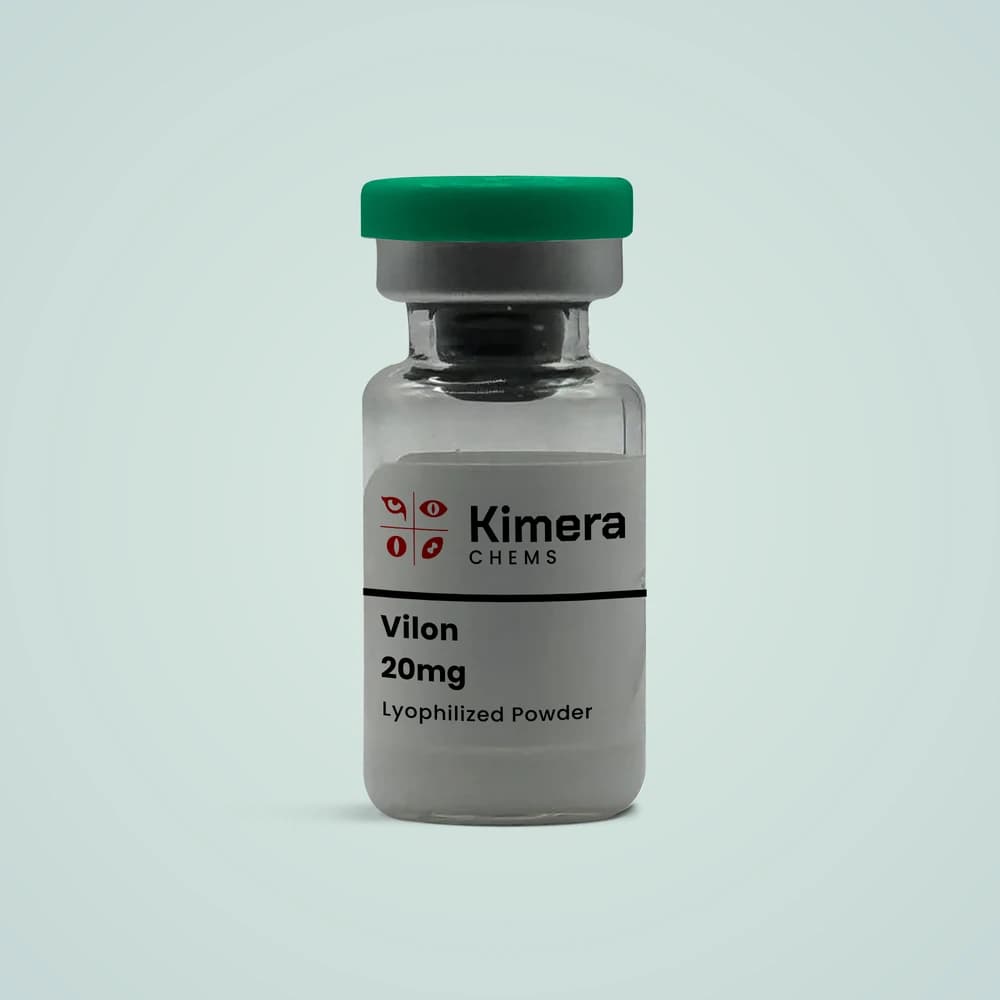
Kimera Chems
Vilon
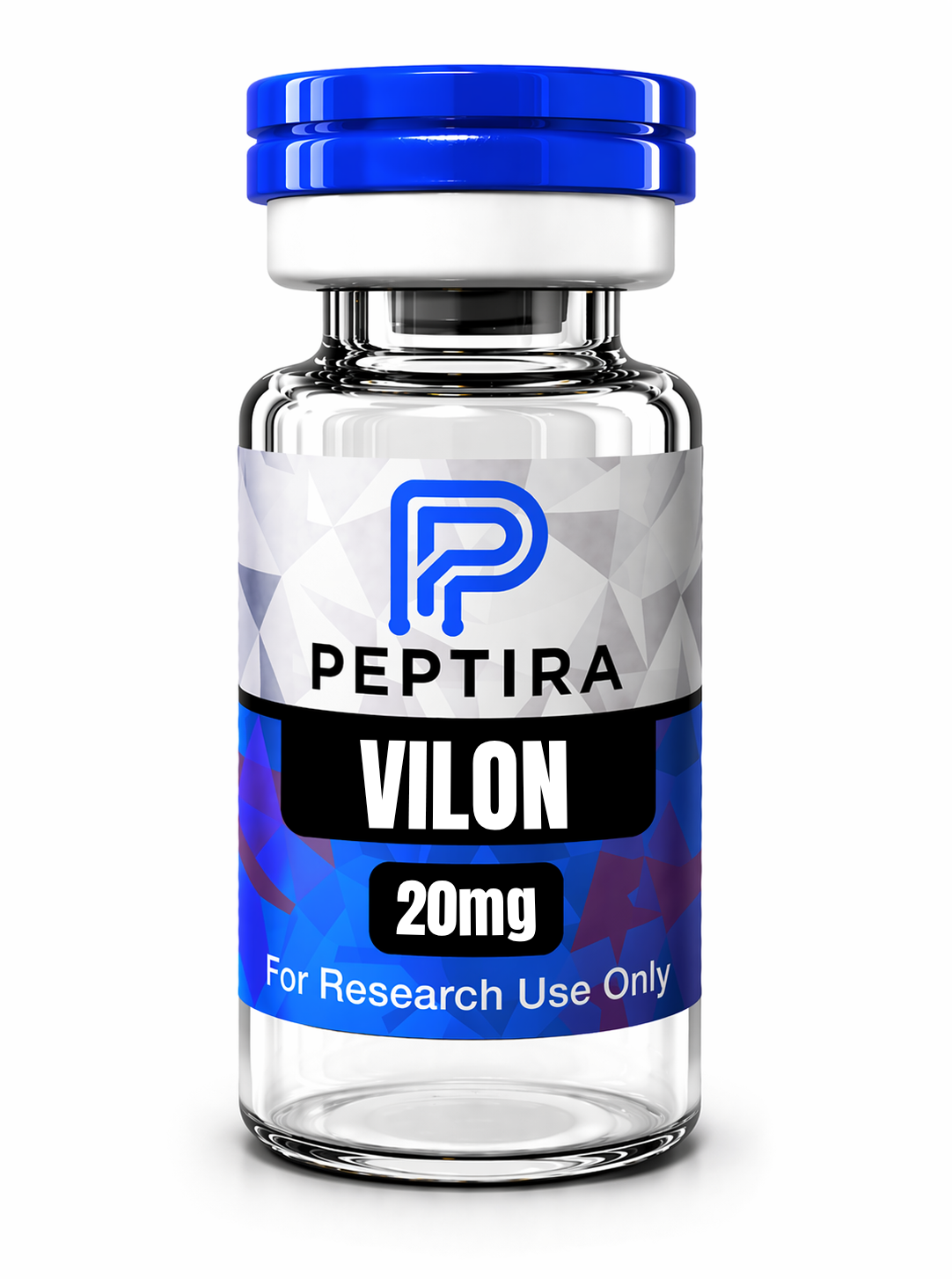
Peptira
Vilon
Research
- 2000first citedA synthetic dipeptide vilon (L-Lys-L-Glu) inhibits growth of spontaneous tumors and increases l…
- 2005controlled trialApplication of peptide bioregulator in complex treatment of elderly cancer patients
- 2015most recentComparison of treatment options for experimental endometriosis in rats
- 1.Peptides and Ageing
- 2.Peptides and CCL11 and HMGB1 as molecular markers of aging: literature review and own data
- 3.Application of peptide bioregulator in complex treatment of elderly cancer patients
- 4.Comparison of treatment options for experimental endometriosis in rats
- 5.Effect of Epitalon and Vilon treatment on mammary carcinogenesis in transgenic erbB-2/NEU mice
- 6.A synthetic dipeptide vilon (L-Lys-L-Glu) inhibits growth of spontaneous tumors and increases life span of mice
6 listed here; entry last updated August 2026
Reviews
My notesprivate to this device
FAQ
What is Vilon?
It is a short two-amino-acid peptide bioregulator from the Khavinson group, studied for immune and anti-aging effects.
What is a dipeptide bioregulator?
It is a very small peptide proposed to help regulate specific tissue functions, in this case immune-related.
Is it well studied in humans?
Most research comes from Russian sources and human evidence is limited, so findings remain preliminary.
How is it typically used?
Like other bioregulators, it is often used in short cycles rather than continuously.
Limitations of the evidence
- Long-term effects in people are not well established
Notes and cautions
- Experimental peptide with limited human safety data
- Most studies are small and come from a few laboratories
- Not approved by Western regulators