
spec sheet10 rows
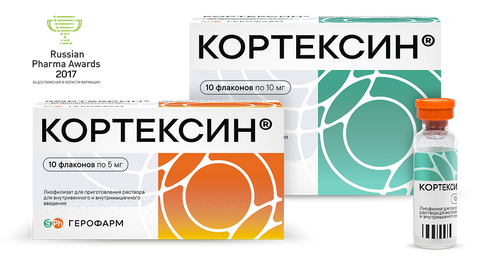
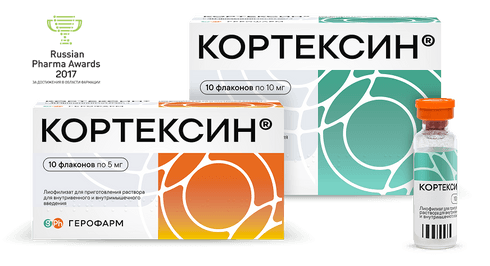
Cortexin is a polypeptide preparation made from the cerebral cortex of cattle, consisting of a mixture of low-molecular-weight peptides, amino acids, and trace elements. Marketed as a neuroprotective and nootropic medicine, it is registered and prescribed mainly in Russia and other post-Soviet countries, where it is given by intramuscular injection for stroke recovery, cognitive disorders, and other neurological conditions. It is not approved by Western drug regulators, and most clinical evidence for it comes from Russian-language literature.
- A prescription neurology medicine across Russia and its neighbours
- Used in hospital settings for stroke and brain injury recovery
- Trusted enough in its home countries to be given to children
- A peptide bioregulator, a category the West has barely touched
- The clinical record is Russian language; Western trials are absent
- Given by intramuscular injection; injection-site reactions possible
- Allergic or hypersensitivity reactions reported
Overview
Cortexin is a lyophilized (freeze-dried) extract prepared from the cerebral cortex of young cattle [1]. It is not a single molecule but a complex mixture containing neuropeptides, free amino acids, and trace elements, with the peptide fraction generally described as low in molecular weight, roughly in the range of 1 to 10 kilodaltons [3]. Preparations of this kind are sometimes grouped with other animal-derived brain peptide drugs and with the broader family of short regulatory peptides studied in Russian gerontology [2].
The preparation was developed in Russia, where it is described as a clinically approved, prescription cerebral-cortex polypeptide complex [2]. It is used across Russia and several other post-Soviet states, typically administered as an intramuscular injection rather than by mouth [3]. Cortexin has not been approved by regulators such as the US Food and Drug Administration or the European Medicines Agency, and it is not an established medicine in North America or Western Europe.
In the countries where it is licensed, Cortexin is prescribed for a range of neurological conditions, including recovery after ischemic stroke and other cerebrovascular disease, cognitive impairment, and disorders affecting children [3][5]. Reviews from Russian clinical groups report benefit in these settings, particularly when treatment is started early after a stroke and given as repeated courses [3]. Laboratory work has examined its actions on cultured neurons, where it and related peptides were reported to influence the expression of signaling molecules and markers of cell proliferation [4]. Independent large-scale trials outside the region are lacking, and the overall evidence base is regarded as limited and largely confined to Russian-language publications [5].
Proposed explanations for its activity emphasize tissue-specific, organotropic effects on the cerebral cortex and modulation of the molecular cascades involved in neuronal injury [1]. Some researchers have synthesized short peptide fragments derived from Cortexin and studied how they might interact with chromatin proteins to alter gene expression [2]. Commercially it is supplied as a sterile powder that is reconstituted before injection [3].
Mechanism
Cortexin is described as an organotropic, tissue-specific preparation whose components are thought to act on the same type of cortical neurons they are derived from [1]. Its proposed neuroprotective mechanism centers on intervening in the ischemic cascade, the sequence of , , and that damages brain tissue after blood flow is reduced [5]. Because its peptides are small, they are said to cross the and influence neuronal signaling even at low concentrations [3].
At the molecular level, investigators have proposed that Cortexin-derived short peptides such as EDR and DS can bind the histone H1.3 protein and modify chromatin structure, thereby changing transcription of genes such as Fkbp1b that regulate neuronal calcium handling [2]. In cell culture, Cortexin has been reported to stimulate neuronal expression of and proliferation markers, effects interpreted as support for neuronal viability and plasticity [4]. These mechanisms are drawn mainly from preclinical models and Russian clinical reports and are not considered firmly established [1][5].
receptor fingerprint
/ neurotrophic signalingproposed to upregulate
proposed to reduce
Antioxidant / free radical pathwaysmodulates
Neuronal gene expressionbioregulatory modulation
Dosingtypical ranges, not medical advice
interested in protocols and clinical dosages? make an account to see them! ^_^
Safetyrisks and cautions, not medical advice
Being an animal-derived injectable, the main theoretical concerns are allergic reactions, injection-site issues, and contamination or infectious risk if sourcing is poor. Reported side effects in the literature are generally mild, but the safety data is not held to the standard Western regulators expect. Pregnancy and known hypersensitivity are listed contraindications.
Subjective profileweighing the evidence above
A peptide bioregulator with a real clinical footprint in Russia but thin, hard-to-verify evidence elsewhere. Skepticism is warranted, and injecting an animal-derived brain extract is not worth doing without solid sourcing and medical oversight.
Where to buy
Suppliers
Vendors carrying Cortexin, with live product details and codes. Links are affiliate links that support the wiki at no cost to you.
RUPharma🌐
Cortexin
Research
- 1999first cited[Cortexin effectiveness in circulatory encephalopathy].
- 2026most recent[Efficacy and safety of Cortexin as additional therapy in patients with depressive disorder].
- 1.Cortexin. Molecular mechanisms and targets of neuroprotective activity
- 2.Epigenetic Mechanisms of Peptide-Driven Regulation and Neuroprotective Protein FKBP1b
- 3.Clinical efficacy of neuropeptides in cerebrovascular pathology
- 4.Peptides stimulate expression of signal molecules in neuronal cultures from animals of different age
- 5.Multimodal therapeutic strategies in the treatment of cerebrovascular disease
- 6.Neuroprotective action of Cortexin, Cerebrolysin and Actovegin in acute or chronic brain ischemia in rats.
- 7.[Peptide drug cortexin inhibits brain caspase-8].
- 8.Cortexin® Ameliorates High Glucose-Induced Neuropathy in Cultured Rat Sensory Neurons.
- 9.[Molecular mechanisms of brain peptide-containing drugs: cortexin].
- 10.Neurotropic Effects of Cortexin on Models of Mental and Physical Developmental Delay.
- 11.Efficacy of Cortexin and Methylprednisolone on Traumatic Facial Nerve Paralysis.
- 12.[Efficacy and safety of Cortexin as additional therapy in patients with depressive disorder].
22 listed here; entry last updated August 2026
Reviews
My notesprivate to this device
FAQ
What is Cortexin made from?
It's a peptide extract from the cerebral cortex of cattle or pigs, combined with amino acids, vitamins, and minerals.
Is it approved in the US or EU?
No. It's mainly registered and used in Russia and some post-Soviet and Asian markets, not by the FDA or EMA.
Does it actually work?
The evidence is mostly Russian-language studies that haven't been independently replicated to Western standards, so genuine effects remain uncertain.
Is it safe to inject?
Animal-derived injectables carry allergy and contamination risks, and it should only be used under medical supervision with trustworthy sourcing.
How is it different from Cerebrolysin?
Both are animal brain-derived peptide mixtures used similarly, but they differ in source tissue and formulation; neither has strong Western trial backing.
Limitations of the evidence
- Not approved by the FDA or EMA
Adverse effects
- Given by intramuscular injection; injection-site reactions possible
- Allergic or hypersensitivity reactions reported
Notes and cautions
- Animal-derived product carries theoretical contamination concerns
- Human evidence largely from Russian-language studies
- Cortexin is supplied as a lyophilisate for intramuscular injection, but delivery across the nasal mucosa has been studied. In rats, cortexin given intranasally as a nanoparticle complex produced a dose dependent antiepileptic effect in a chronic pentylenetetrazole seizure model [20]. Two Russian clinical studies delivered it endonasally by electrophoresis rather than as a spray; one in 76 patients with dyscirculatory encephalopathy reported improvement in attention, memory and neurological status [21], and one in primary open angle glaucoma found the endonasal route outperformed intramuscular cortexin on perimetric and electrophysiological measures [22]. Those studies used an iontophoresis device, so they do not show that plain nasal drops would deliver a comparable dose. No pharmacokinetic study of intranasal cortexin was found, and the trials are small and not replicated outside Russia.