
spec sheet10 rows
Cerebrolysin is a neuropeptide preparation that mimics the brain's own neurotrophic factors to support neuronal protection, repair, and plasticity. Widely used across Europe and Asia for stroke, dementia, and traumatic brain injury, it is one of the most established neurotrophic therapies in clinical practice. For those focused on brain health and neuroregeneration, Cerebrolysin is a uniquely biologically active peptide preparation.
- Mimics the brain's own growth factors
- Neurotrophic peptide blend that protects neurons
- Supports neuroplasticity and real repair
- Studied for stroke and brain injury recovery
- Established in European and Asian clinics
- Injection-site reactions such as redness, warmth, or burning
- Occasional dizziness, agitation, or headache
- A Cochrane review noted increased non-fatal serious adverse events in stroke trials
Overview
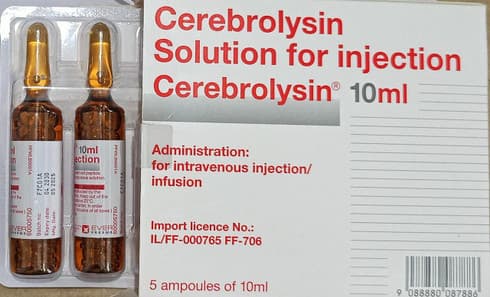
Cerebrolysin is a neuropeptide preparation composed of low-molecular-weight peptides and free amino acids produced by the enzymatic breakdown of purified pig brain proteins [2][4]. It is designed to mimic the action of endogenous neurotrophic factors on brain protection and repair, and molecular analysis of the mixture has identified active peptide fragments corresponding to signaling molecules such as nerve growth factor and other neuropeptides [3]. Manufactured by EVER Neuro Pharma, it is administered parenterally as a standardized solution [4].
The preparation is widely used in the treatment of acute ischaemic stroke, dementia including Alzheimer's disease, and traumatic brain injury across Russia, Eastern Europe, China, and other Asian and post-Soviet countries, where it has been part of neurological practice for decades [4]. Its rationale rests on the central role of neurotrophic factors in the pathophysiology of these disorders, which makes agents that resemble or upregulate them attractive therapeutic candidates [1].
Research applications span neuroprotection, neuroregeneration, neurogenesis, and neuroplasticity, studied in both cell and animal models and in clinical trials [1][2]. The clinical evidence is mixed: a Cochrane systematic review and an independent meta-analysis of randomized controlled trials in acute ischaemic stroke did not demonstrate clear clinical benefit on functional outcomes, and the Cochrane review noted an increase in non-fatal serious adverse events, though overall mortality was unchanged [4][5]. Cerebrolysin is an approved medicine in the countries where it is marketed and is supplied as an injectable solution [4].
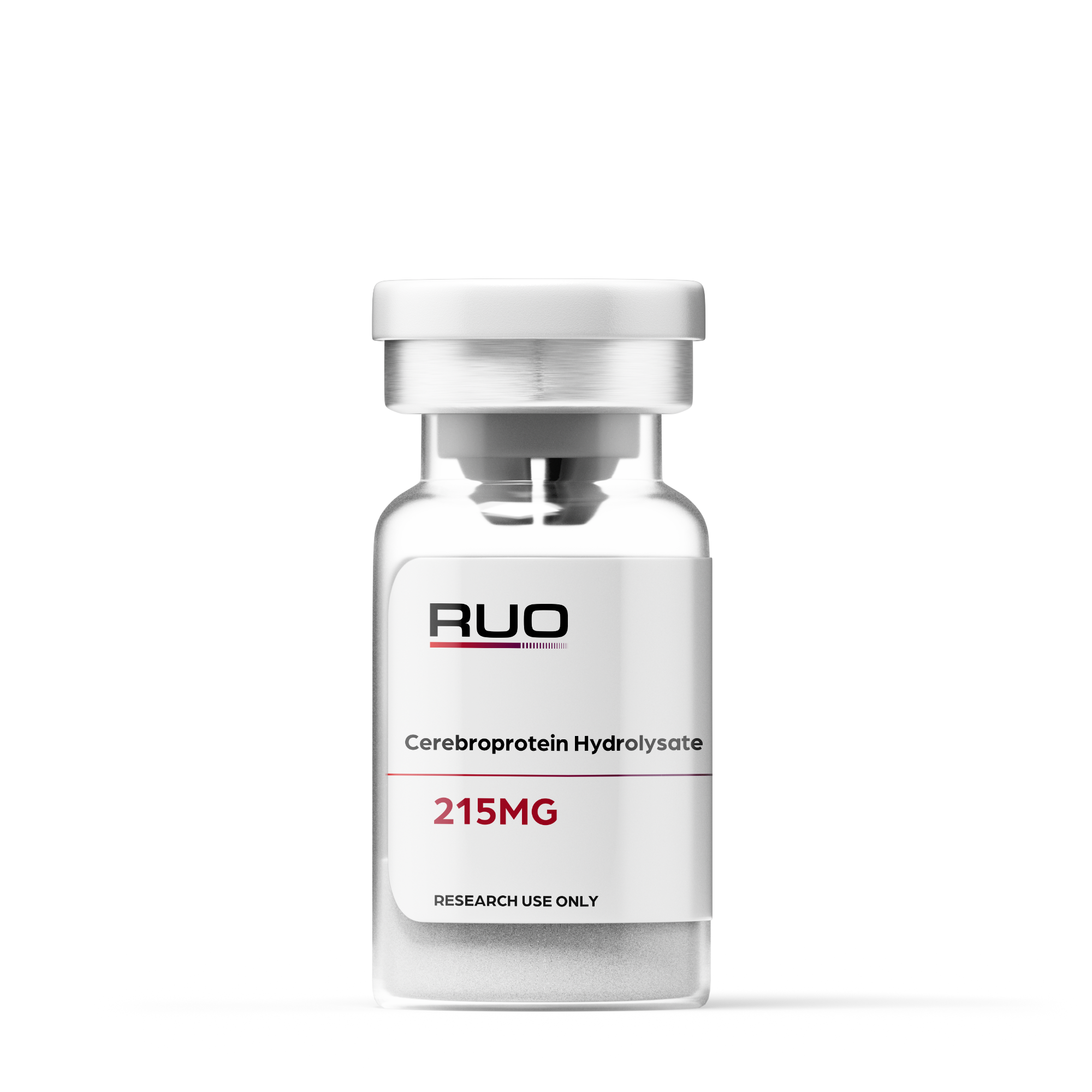

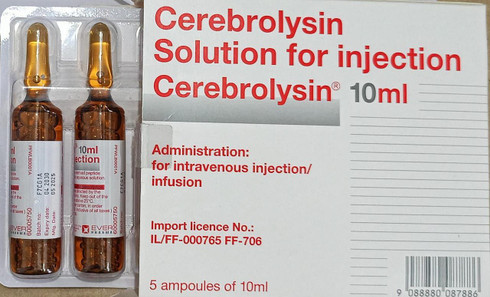
- Cerebrolysin is made by enzymatically digesting purified pig brain proteins into a standardized blend of small neuropeptides and amino acids.
- A published case series documented reactivation of hair pigmentation in patients receiving Cerebrolysin, linked to renewed expression of the melanocyte marker MART-1/Melan-A.
Mechanism
Cerebrolysin's proposed benefits center on protecting neurons from injury and promoting the brain's own repair processes, including , , and angiogenesis. Mechanistically it behaves like a neurotrophic mimetic: its mixture of small peptides resembles the activity of endogenous neurotrophic factors and can modulate the expression of the body's own factors such as nerve growth factor, brain-derived neurotrophic factor, -like growth factor 1, and vascular endothelial growth factor [1]. Molecular analysis of the preparation has confirmed the presence of active fragments of nerve growth factor and other neuropeptides, providing a biochemical basis for these effects [3].
In preclinical models the actions are wide-ranging. In dementia models, Cerebrolysin has been reported to reduce beta-amyloid deposition and tau phosphorylation by regulating glycogen synthase kinase-3beta and cyclin-dependent kinase 5 activity, to increase density, and to enhance in the dentate gyrus [2]. In stroke models it stabilized cellular integrity by inhibiting the protease calpain, reduced apoptosis after ischemic lesion, decreased infarct volume and edema, and promoted in the subventricular zone, supporting functional recovery [2][3]. A striking illustration of its biological activity is a case series in which patients receiving Cerebrolysin for neurological disease showed reactivation of hair pigmentation, linked to renewed expression of the melanocyte marker MART-1/Melan-A [6].
The translation to clinical outcomes is where the picture becomes nuanced. A Cochrane review of six randomized trials (1501 participants) in acute ischaemic stroke found no demonstrable benefit on functional outcome and reported all-cause death of 46 of 714 with Cerebrolysin versus 47 of 703 with placebo (risk ratio 0.91), while noting an increase in non-fatal serious adverse events [4]. A separate meta-analysis of seven trials involving 1779 patients likewise did not show significant superiority on standard efficacy scales, though it judged the treatment generally safe [5]. The compound therefore combines a robust, well-characterized neurotrophic mechanism with clinical stroke evidence that remains inconclusive, which is what continues to drive research into where it can help most [1][5].
receptor fingerprint
Neurotrophic factors ( / -like)mimics
Neuronal survival / plasticitysupports
Amyloid / apoptosisreduces
Dosingtypical ranges, not medical advice
interested in protocols and clinical dosages? make an account to see them! ^_^
Safetyrisks and cautions, not medical advice
Generally well tolerated in trials, with the main issues being mild injection-site reactions and occasional dizziness, headache or a hot, flushed feeling, plus rare allergic reactions. Because it is a brain-derived biological, source and purity genuinely matter and there is a theoretical immune or allergy risk. Avoid it if you react to the product, treat self-injection of research-grade material as a real hazard, and ideally use it under medical supervision.
Interactionsdocumented pairs only, not exhaustive
The Cerebrolysin product information advises against concurrent use with monoamine oxidase inhibitors because of the risk of additive or excessive stimulation, recommending a dose reduction or interruption of the MAOI if combined. The label also states that Cerebrolysin must not be mixed in the same infusion with balanced amino acid solutions, since combining it with a supplementary amino acid load could create an imbalance, and it is chemically incompatible with solutions that alter pH (for example those containing lipids) or with vitamin-containing infusions. Caution is advised when combining with antidepressants, where the manufacturer suggests reducing the antidepressant dose to avoid additive effects. Beyond these label statements there is little formal pharmacokinetic interaction data for this peptide preparation. This is research information, not medical advice.
Checking a whole stack? Run it through interactions + stacks.
History
Cerebrolysin is a peptide preparation produced by the controlled enzymatic breakdown of purified porcine brain proteins into a standardized mixture of low-molecular-weight neuropeptides and free amino acids. Its origins trace back to the mid-twentieth century, and it has been manufactured for decades by the Austrian company EVER Neuro Pharma (formerly Ebewe). Over that long history it has been adopted widely across Europe, Asia, and the states of the former Soviet Union as a treatment for stroke, dementia, and traumatic brain injury. Molecular analyses have since confirmed that the preparation contains active fragments resembling endogenous neurotrophic factors, providing a biochemical basis for its longstanding clinical use.
Reputation
Cerebrolysin is one of the most established neurotrophic therapies in clinical practice outside North America, valued for a mechanism that mimics the brain's own growth factors to support neuronal protection, repair, and plasticity. Its biological activity is well characterized in preclinical models, where it has been shown to reduce amyloid burden, limit apoptosis, and promote neurogenesis, which sustains ongoing research interest in stroke, dementia, and brain injury. Clinicians in many countries regard it as a generally well-tolerated adjunct with a favorable safety record. A balanced view recognizes that pooled clinical trial evidence, including Cochrane reviews in stroke and vascular dementia, has been mixed and often of limited quality, which is precisely what continues to drive rigorous study of where it helps most.
Subjective profileweighing the evidence above
The most established neurotrophic preparation there is, with real clinical use for stroke, dementia and brain injury behind it. It is also an injectable biological, and a Cochrane review found more non-fatal serious adverse events in stroke trials; under a clinician, reasonably, self-injected from a research vendor, no.
Where to buy



Suppliers
Vendors carrying Cerebrolysin, with live product details and codes. Links are affiliate links that support the wiki at no cost to you.
RUO
Cerebrolysin
PCT.Zone
Cerebrolysin
RUPharma🌐
Cerebrolysin
RUPharma🌐
Cerebrolysin
Kimera Chems
Cerebrolysin
Research
- 2009first citedCerebrolysin: a review of its use in dementia.
- 2012most active year4 papers
- 2017meta-analysisCerebrolysin for acute ischaemic stroke
- 2026most recentCerebrolysin Ameliorates Age-Induced Dendritic Spine Degeneration and Memory Decline in C57BL6…
- 1.Modulation of neurotrophic factors in the treatment of dementia, stroke and TBI: Effects of Cerebrolysin
- 2.The pharmacology of neurotrophic treatment with Cerebrolysin: brain protection and repair to counteract pathologies of acute and chronic neurological disorders
- 3.Mechanisms of neurotrophic and neuroprotective effects of cerebrolysin in cerebral ischemia
- 4.Cerebrolysin for acute ischaemic stroke
- 5.Efficacy and Safety of Cerebrolysin for Acute Ischemic Stroke: A Meta-Analysis of Randomized Controlled Trials
- 6.Cerebrolysin induces hair repigmentation associated to MART-1/Melan-A reactivation
- 7.Cerebrolysin for vascular dementia.
- 8.Cerebrolysin: a multi-target drug for recovery after stroke.
- 9.Cerebrolysin for stroke, neurodegeneration, and traumatic brain injury: review of the literature and outcomes.
- 10.Cerebrolysin after moderate to severe traumatic brain injury: prospective meta-analysis of the CAPTAIN trial series.
- 11.Cerebrolysin in the therapy of mild cognitive impairment and dementia due to Alzheimer's disease: 30 years of clinical use.
- 12.Cerebrolysin in mild-to-moderate Alzheimer's disease: a meta-analysis of randomized controlled clinical trials.
26 listed here; entry last updated August 2026
Reviews
- overrated but decent
I like cerebro, but honestly N-PEP-12 or something else is better. I think Dihexa is better from my experience as well. I had clearer thinking on it. Will be trying cerebro again soon, tried once and I felt like my cognition was "restored" and I felt similar to my old self again, but it wasn't worth noting and seemed to fade after a few weeks. Dihexa in contrast, helps way more and I can sleep less on it and still think clear lol. Plus it's cheaper. Not bad if you have neurodegeneration or a serious use case for cerebro.
0 - j-147 mogs for neuroprotection, still solid
cerebrolysin is okay in certain contexts, but the ROI is genuinely wack, i mean it's definitely worth the time, but for the quality concerns from everclear and whatnot are super weird. plus everyone fearmongers it, i've not seen a single verified source, i trust kimera but even then, i feel like the Prion risk is insanely scary too Prions are scary stuff man
0 - Neuroprotection
I used it while take Anavar and test. I can say it definitely did improve my memory noticeably, and I do believe it helped to minimize the potential neuro~toxic effects from my cycle.
0
My notesprivate to this device
FAQ
What is cerebrolysin made from?
It is a mixture of small neurotrophic peptides derived from purified pig brain protein.
What has it been studied for?
It has been researched for neuroprotection and for aiding recovery after strokes and traumatic brain injuries.
How is it given?
It is administered by injection, frequently in treatment courses rather than as a one-off.
Is it approved everywhere?
Its regulatory status varies by country, and this is general educational info, not medical advice.
Adverse effects
- Injection-site reactions such as redness, warmth, or burning
- Occasional dizziness, agitation, or headache
- A Cochrane review noted increased non-fatal serious adverse events in stroke trials
- Rarely, hypersensitivity reactions
Notes and cautions
- Cerebrolysin has been given intranasally in mice, though the published record contains no human nasal use. In a d-galactose model of accelerated ageing, 1 ml/kg daily intranasally for eight weeks restored spatial and recognition memory and raised brain antioxidant markers, performing comparably to a larger intraperitoneal dose [25]. The same laboratory gave 1 ml/kg intranasally for two weeks after photothrombotic prefrontal ischemia and reported recovery of memory alongside higher GAP-43, PSD-95 and synaptophysin in the lesion [26]. Both reports come from one group, so the finding has not been reproduced independently. The marketed preparation is an ampoule for intramuscular or intravenous injection; no human intranasal dose, absorption figure or safety series exists, so the animal work shows the route is possible without establishing what it does in people.