
spec sheet11 rows
Dihexa is a small angiotensin IV analogue engineered at Washington State University to do something most peptides cannot, which is survive oral dosing and cross into the brain. Where most cognitive compounds nudge neurotransmitter levels, it was designed to act on the machinery that physically builds connections between neurons, and the preclinical reports are striking: reversed amnesia in animal models, restored spatial learning in Alzheimer's-model mice, and measurable growth of new synapses. The mechanism originally proposed for that effect, amplification of the HGF and c-Met growth-factor system, no longer rests on its original evidence; the central paper was retracted in 2025 after image manipulation was found, two supporting papers from the same laboratory were retracted alongside it, and the paper that first introduced Dihexa carries an expression of concern that is still in force. What the compound does is therefore an open question rather than a settled one. It has never been through a registered human trial, and the clinical programme built on the same mechanism, using an injectable modified version, missed its main Alzheimer's endpoint in 2024.
- Built to physically grow new synapses
- Aimed squarely at memory and learning
- Rare peptide that survives oral dosing
- Crosses into the brain intact
- Engineered at Washington State University
- Explored for serious neuroprotection
Overview
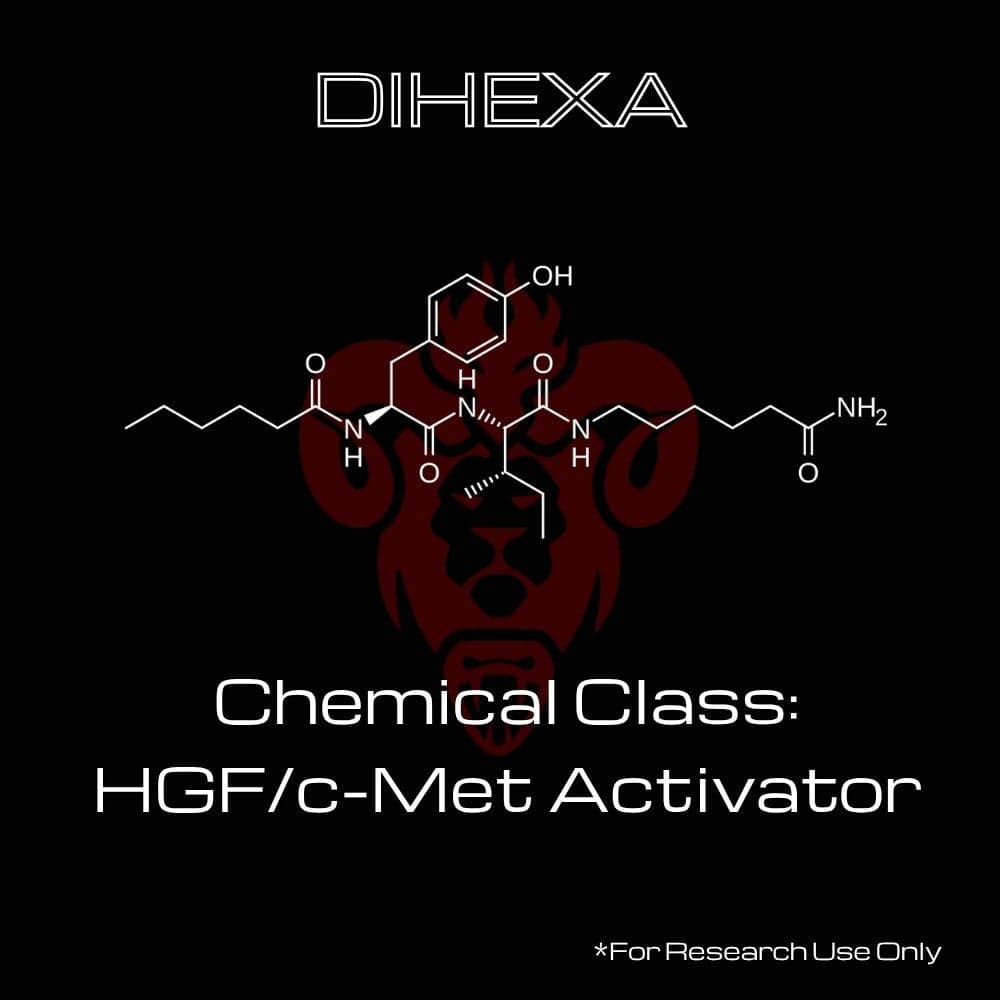
Dihexa is a synthetic oligopeptide derivative, chemically N-hexanoic-Tyr-Ile-(6)-aminohexanoic amide, developed as a candidate treatment for neurodegenerative disease. It belongs to a series of small molecules built from angiotensin IV, a fragment of the brain's renin-angiotensin system long recognized to carry procognitive properties [2]. The parent peptides were poor drug candidates because they were rapidly broken down and could not cross the gut wall or the blood-brain barrier; chemists at Washington State University, led by Joseph Harding and John Wright, therefore modified the three N-terminal amino acids of the active peptide to produce an orally active, metabolically stable, blood-brain-barrier-permeable analog, which they named Dihexa [1].
Research on Dihexa has centered on its ability to restore memory and rebuild synapses. In rodent models it reversed the cognitive deficits caused by the amnestic drug scopolamine and those seen in aged animals, while promoting the growth of new dendritic spines and functional synapses in the hippocampus [1]. Independent work in APP/PS1 transgenic mice, a model of Alzheimer's disease, reported that Dihexa improved spatial learning, increased synaptic proteins, and reduced brain inflammation [3]. Its activity is closely tied to the hepatocyte growth factor (HGF) and its receptor c-Met, a growth-factor system so central to the molecule that stem-cell researchers use Dihexa as a substitute for HGF when differentiating cells in the laboratory [4][5].
Dihexa is an investigational research compound; it is not an approved drug and is not a dietary supplement, and it is sold as a research chemical, usually as a powder. It has been examined primarily in the context of Alzheimer's and Parkinson's disease, and the broader angiotensin IV analog program it came from has informed the development of related clinical candidates aimed at augmenting synaptic connectivity [2].
- Dihexa was built from angiotensin IV specifically to solve two failures of its parent peptide: it was made both orally active and able to cross the blood-brain barrier.
- Stem-cell laboratories have used Dihexa in place of recombinant hepatocyte growth factor to drive liver-cell differentiation, direct evidence that it engages the HGF/c-Met system.
Mechanism
The benefits attributed to Dihexa flow from a single, unusual claim: that it is a potent promoter of synaptogenesis, the formation of new connections between neurons. Where most nootropics nudge neurotransmitter levels, Dihexa was described as acting upstream, on the machinery that physically rewires circuits, with reported effects on learning and memory accompanied by increases in dendritic spines and functional synapses in the [1]. In behavioural terms this was reported as reversal of scopolamine-induced amnesia and of the memory loss of aged rats, and, in an Alzheimer's disease mouse model, as restored spatial learning alongside higher levels of proteins [1][3].
Those founding results need reading with care. The paper describing the synaptogenic and procognitive effects carries a notice of concern that is still in force [1], and a companion paper from the same laboratory establishing the hepatocyte growth factor (HGF) and c-Met mechanism was retracted in 2025 after the originating university found falsified and fabricated data [7][17]. The mechanism itself is therefore proposed rather than established: Dihexa is understood to act as a positive modulator of HGF signalling, which in turn activates intracellular growth pathways, but the direct binding work behind that description has been withdrawn.
What survives is indirect and comes from other groups. In an Alzheimer's model the benefits tracked activation of the / pathway and disappeared when that pathway was blocked, alongside lower pro-inflammatory IL-1 beta and TNF-alpha and higher anti-inflammatory IL-10 [3]. Separately, laboratories that grow liver cells from stem cells use Dihexa in place of recombinant HGF to drive c-Met-dependent differentiation [4][5]. That is a different field with no stake in the claims, and it is the strongest remaining reason to think the molecule engages this receptor system at all.
Two engineered properties were the point of the design. Dihexa was built for oral activity and passage across the , addressing the pharmacokinetic failures of its angiotensin IV parents [1][2], and it retains the core procognitive fragment of the parent in a much more stable structure. The appeal is a compound aimed at structural neural change rather than temporary stimulation; the caution is that the human evidence is absent and the animal evidence has lost two of its foundations.
Two later results have to sit alongside that. An independent group outside the originating laboratory tested the compound under its other name, PNB-0408, against 3-nitropropionic acid neurotoxicity in rats and reported that it did not protect them [6]. And a second paper from the original laboratory was retracted in the same 2025 round [18], so the withdrawn work is two papers rather than one.
The most useful fact about Dihexa is one its own literature rarely states plainly: its active form has already been tested in people, and it failed. Fosgonimeton is Dihexa carrying a phosphate group on the tyrosine hydroxyl and nothing else; the two structures are otherwise identical down to their stereocentres, and the developer describes it as a that releases the parent as its active . That prodrug went into LIFT-AD, a randomised placebo-controlled phase 2/3 trial in mild-to-moderate Alzheimer's disease with 287 participants in the primary analysis and 549 dosed overall [19]. It missed its primary endpoint and every secondary one; the combined cognitive and function score differed by 0.08 points (p 0.70), ADAS-Cog11 by 0.70 points (p 0.35) and the daily-living scale by 0.67 points (p 0.61). The trial investigators note that the small differences all pointed the same way, toward the drug, and that one plasma biomarker moved, and they read that as a hint of real biological activity. That reading is available; so is the simpler one, which is that a well-powered trial of the active molecule found nothing.
None of that makes the animal work disappear. What it means is that the case for this compound now rests on behavioural results whose foundational paper carries an unresolved notice of concern, with the mechanism that explained them withdrawn and the human test of its active form negative.
receptor fingerprint
HGF / c-Metproposed positive modulator
/, MAPK/ERKactivates
/ signalling (downstream)Pathway activation; effects reversed by the PI3K inhibitor wortmannin
AT4 receptor / -regulated aminopeptidase (IRAP)Inherited from the parent angiotensin IV pharmacology; proposed but never demonstrated for Dihexa specifically
Hepatocyte growth factor (HGF), the Direct binding; source retracted
MET / c-Met receptor tyrosine kinase (HGF receptor)Proposed positive allosteric modulator; reported to promote c-Met phosphorylation only in the presence of sub-threshold HGF, not as a standalone agonist
Dosingtypical ranges, not medical advice
interested in protocols and clinical dosages? make an account to see them! ^_^
Safetyrisks and cautions, not medical advice
Human safety data for Dihexa as sold does not exist. No published toxicology, no long-term safety study in any species, and no human trial of the molecule itself.
Principal mechanistic concern: MET is a proto-oncogene and HGF/MET overactivation drives proliferation, invasion and metastasis in multiple tumour types. A compound whose entire selling point is sustained potentiation of that system carries a theoretical cancer-promotion risk, flagged by the Alzheimer's Drug Discovery Foundation's Cognitive Vitality assessment. This risk has never been characterized experimentally for Dihexa. Note the internal contradiction in the originating literature: the same laboratory published that close chemical relatives were HGF/Met ANTAGONISTS with anticancer activity (PMID 21859930, PMID 22129598), and both of those papers are now retracted, so neither the pro-tumour nor the anti-tumour direction is established.
Prodrug safety, by injection, not oral Dihexa: fosgonimeton was reported safe and well tolerated in phase 1 with no drug-related adverse events. Across later trials the dominant adverse event was injection-site reaction, with roughly 22% of enrollees in one trial discontinuing because of it; no deaths or serious adverse events were reported overall, though the SHAPE trial in Parkinson's disease dementia and Lewy body dementia was terminated and raised safety questions in higher-dose groups.
Efficacy reality check: the entire clinical program on this mechanism failed. ACT-AD (phase 2) missed its primary endpoint, SHAPE (phase 2) was terminated, and LIFT-AD (phase 2/3, 554 subjects, topline September 2024) missed its primary endpoint and all key secondary endpoints for cognition and function. An independent preclinical study also found Dihexa ineffective in a Huntington's model (PMID 38489193).
Interactions: not studied in humans. Post-hoc analysis of ACT-AD suggested acetylcholinesterase inhibitors may antagonize the effect of the prodrug, which is a hypothesis-generating signal only.
Regulatory status: not approved as a drug in any jurisdiction, and not a lawful dietary supplement ingredient; it is sold as a research chemical. Dihexa acetate was nominated for FDA's 503A bulk drug substances list; FDA placed a group of peptides including it into Category 2 (significant safety risks identified, compounding not permitted) in September 2023, the nomination subsequently lapsed, and FDA has scheduled a Pharmacy Compounding Advisory Committee review of dihexa acetate for before the end of February 2027. WADA: Dihexa is not named explicitly on the Prohibited List, but because it is not approved for human therapeutic use by any government regulatory health authority it falls under S0 (Non-Approved Substances), prohibited at all times both in and out of competition; the HGF mechanism gives a further argument for capture under S2.3 (growth factors and growth factor modulators). Athletes should treat it as banned.
History
Dihexa was engineered by John W. Wright, Joseph W. Harding, and colleagues at Washington State University as part of a long program to turn the pro-cognitive activity of the brain peptide angiotensin IV into a usable drug. The parent peptides showed procognitive promise but failed pharmacokinetically, being neither orally active nor able to cross the blood-brain barrier; the team's solution was N-hexanoic-Tyr-Ile-(6)-aminohexanoic amide, an orally active, brain-penetrant analogue they named Dihexa.
In animal work published around 2013 to 2014, Dihexa reversed chemically and age-induced memory deficits and promoted the formation of new dendritic spines and functional synapses in the hippocampus, and the group linked its activity to the hepatocyte growth factor (HGF) and its receptor c-Met.
The compound was advanced toward development through the spin-out company M3 Biotechnology (later Athira Pharma), and it has since become one of the most discussed synaptogenic molecules in the nootropic community.
Reputation
Dihexa enjoys an outsized reputation among cognitive-enhancement enthusiasts as a rare compound that appears to act on the machinery that physically rewires neural circuits rather than merely nudging neurotransmitter levels. Its appeal rests on striking preclinical reports of reversed amnesia, restored spatial learning in Alzheimer's-model mice, and measurable growth of new synapses, together with a purposeful design for oral activity and brain penetration. That distinctive synaptogenic angle has kept it prominent in both academic discussion and community circles. Honesty requires noting real caveats: the evidence remains preclinical, human safety and efficacy have not been established, potent synaptogenic activity invites questions about long-term effects, and a key mechanistic paper in the field was later retracted, so its promise, while genuine, is still unproven in people.
Subjective profileweighing the evidence above
The animal synaptogenesis data is genuinely striking, and that is exactly why the c-Met mechanism deserves respect: it is a growth pathway, so anyone with a personal or family cancer history should stay away. Rodent studies plus self-experimentation is the whole evidence base, with no long-term human profile.
Where to buy



Suppliers
Vendors carrying Dihexa, with live product details and codes. Links are affiliate links that support the wiki at no cost to you.
| supplier | size | price | $/mg |
|---|---|---|---|
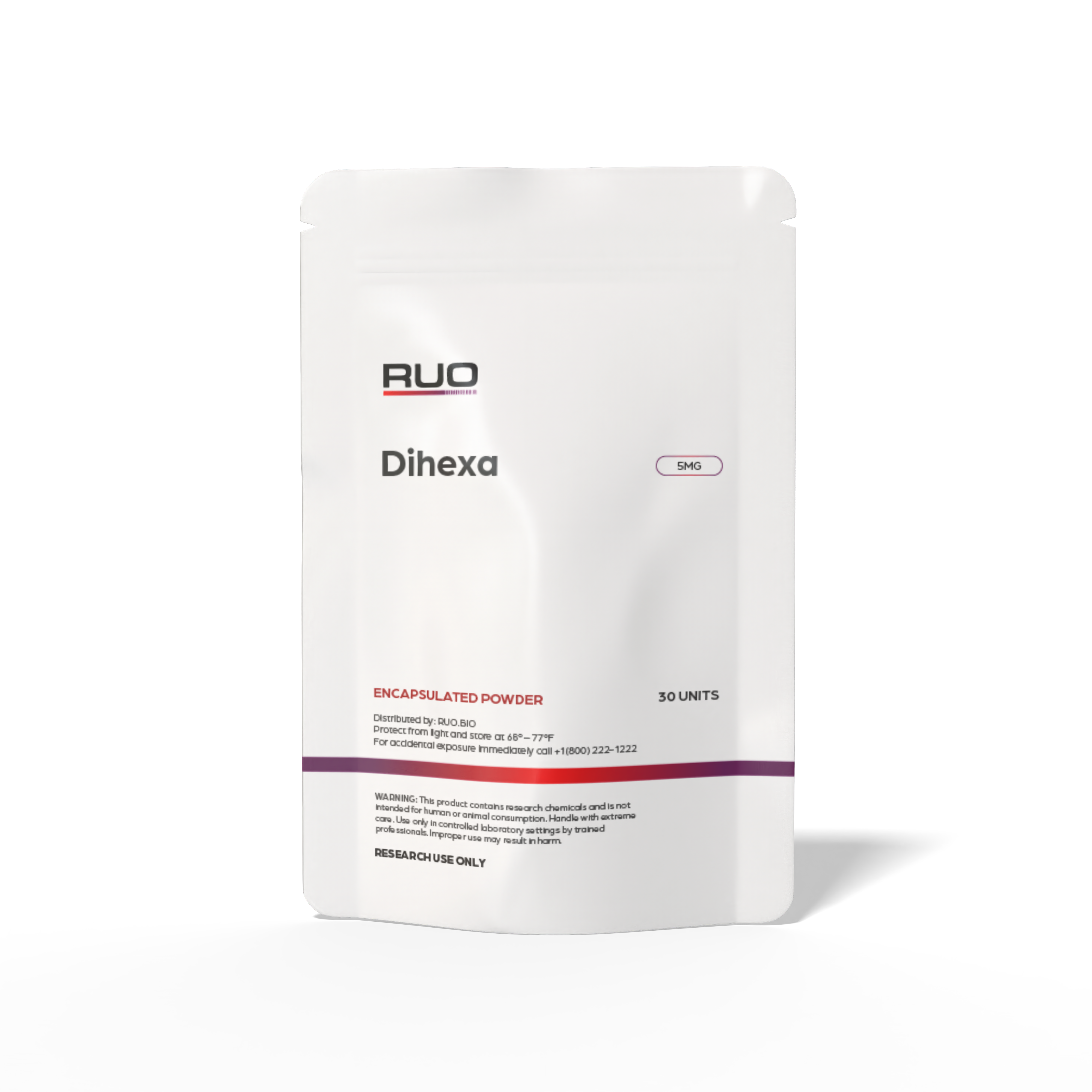
| RUOlowest | 5mg | $38.00 | $7.60/mg |
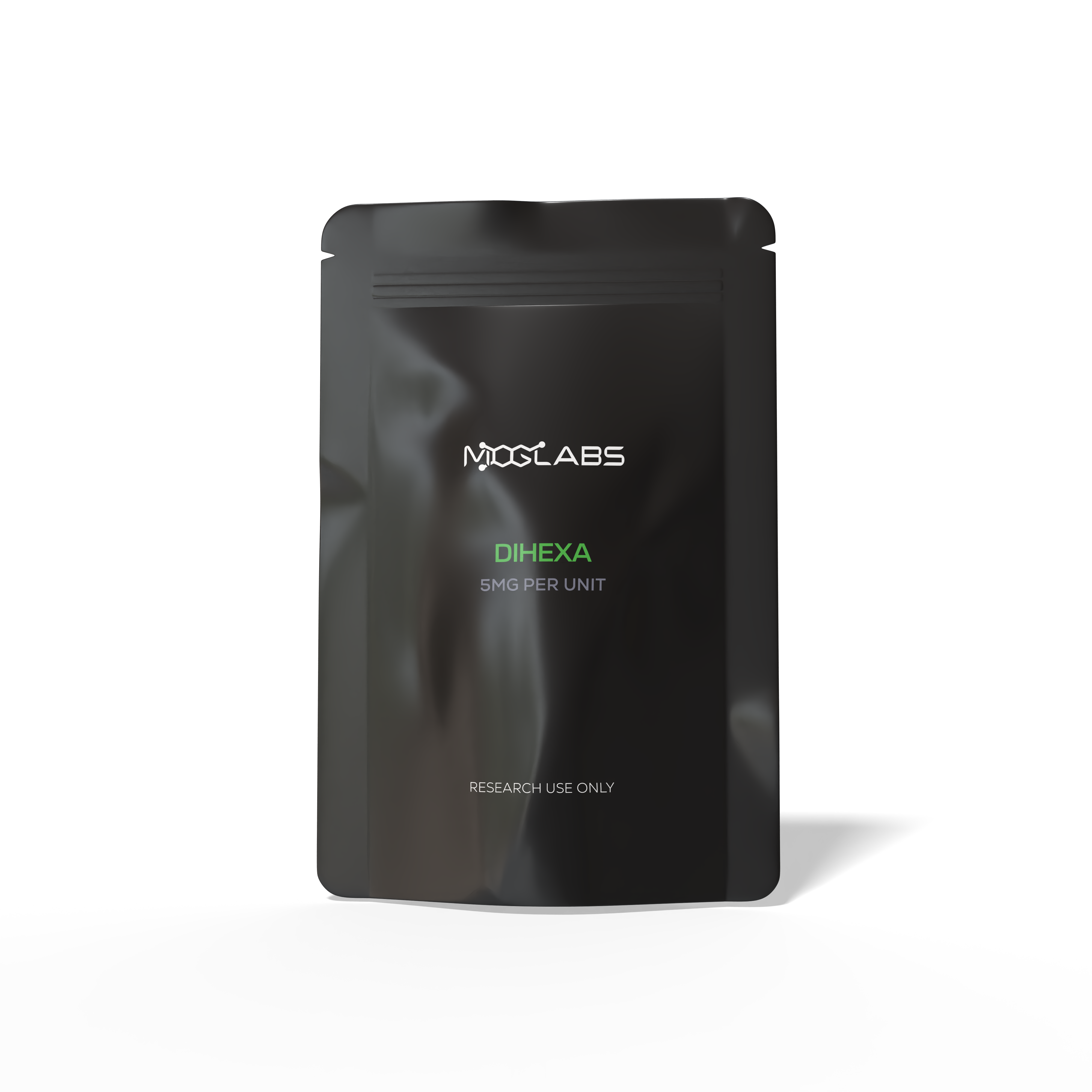
| Moglabs | 5mg | $40.00 | $8.00/mg |
RUO
Dihexa
Moglabs
Dihexa
Kimera Chems
Dihexa
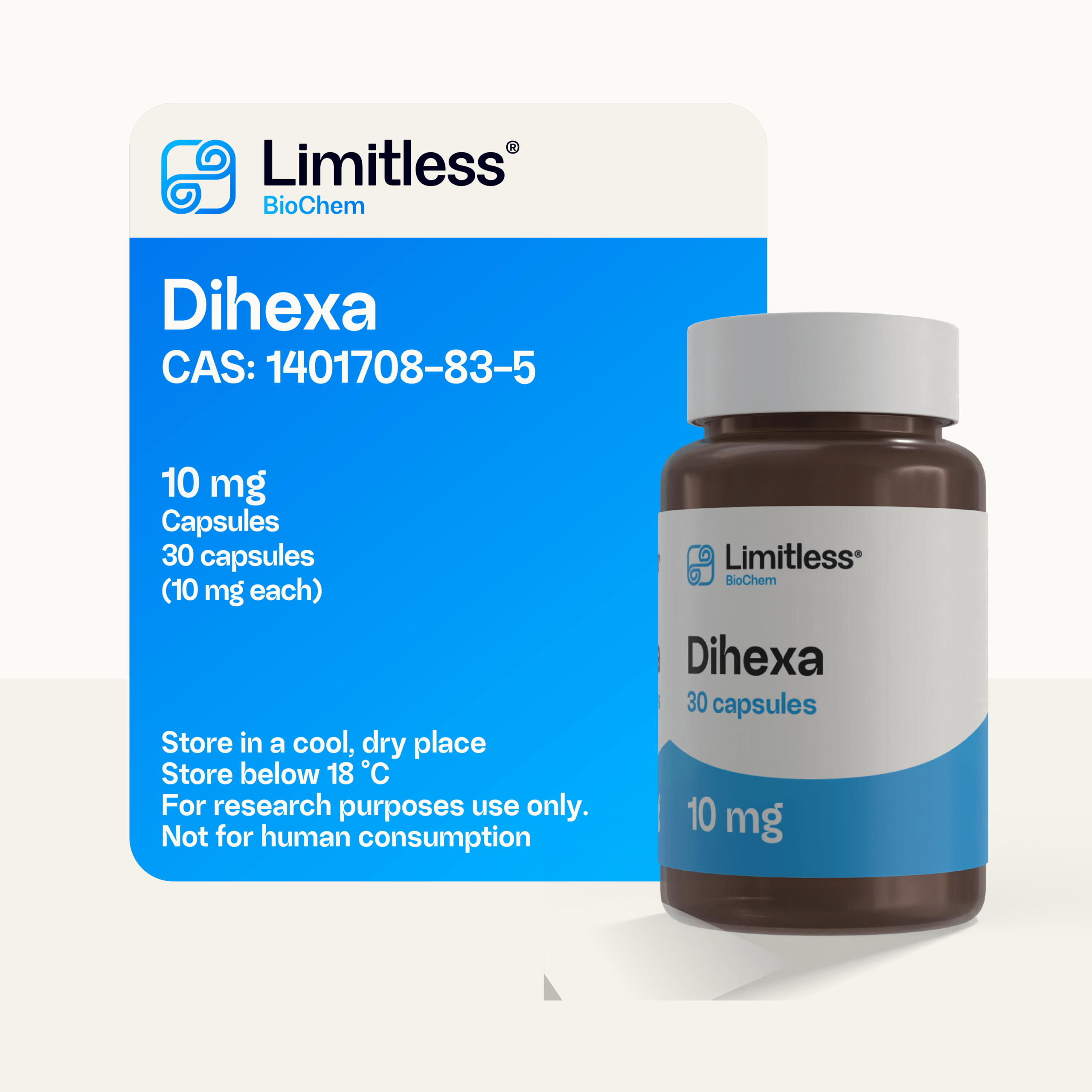
Limitless Biochem🌐
Dihexa
Research
- 2012first citedDevelopment of angiotensin IV analogs as hepatocyte growth factor/Met modifiers.
- 2015most active year4 papers
- 2022controlled trialSafety, Tolerability, Pharmacokinetics, and Pharmacodynamics of the Positive Modulator of HGF/M…
- 2026most recentTherapeutic Peptides in Orthopaedics: Applications, Challenges, and Future Directions.
- 1.Evaluation of metabolically stabilized angiotensin IV analogs as procognitive/antidementia agentsexpression of concernnotice of concern, J Pharmacol Exp Ther 2021 (PMID 34551989); still in force
- 2.The development of small molecule angiotensin IV analogs to treat Alzheimer's and Parkinson's diseases
- 3.AngIV-Analog Dihexa Rescues Cognitive Impairment and Recovers Memory in the APP/PS1 Mouse via the PI3K/AKT Signaling Pathway
- 4.Small-molecule-driven hepatocyte differentiation of human pluripotent stem cells
- 5.Efficiently generate functional hepatic cells from human pluripotent stem cells by complete small-molecule strategy
- 6.Effects of an Angiotensin IV Analog on 3-Nitropropionic Acid-Induced Huntington's Disease-Like Symptoms in Rats.
- 7.The procognitive and synaptogenic effects of angiotensin IV-derived peptides are dependent on activation of the hepatocyte growth factor/c-met system.retractedretracted 2025 (notice PMID 40312093), after image manipulation
- 8.Cognitive benefits of angiotensin IV and angiotensin-(1-7): A systematic review of experimental studies.
- 9.Stem cell, Granulocyte-Colony Stimulating Factor and/or Dihexa to promote limb function recovery in a rat sciatic nerve damage-repair model: Experimental animal studies.
- 10.Hepatocyte growth factor mimetic protects lateral line hair cells from aminoglycoside exposure.
- 11.The Brain Hepatocyte Growth Factor/c-Met Receptor System: A New Target for the Treatment of Alzheimer's Disease.
- 12.Small-Molecule-Directed Hepatocyte-Like Cell Differentiation of Human Pluripotent Stem Cells.
19 listed here; entry last updated August 2026
Reviews
- Pretty solid for brain fog
Helped with my brain fog. I felt like i could think way clearer and possibly it may have helped with my stimulant withdrawals rn but im not sure. Definitely good for brain fog, noticed my thinking and headspace felt better after 3 days i took 5mg capsules in the morning. Solid nootropic. Tried this and armoda, and god it was strong
0 - wiki is goated and meta
ts wiki so goated bro actual meta to read up on 🤫 gatekeeping
0 - Memory maxxing
Ran a dihexa cycle for a month, learning is pretty great, memory definitely improved, out of the few nootropics I’ve tried it’s probably ont of the best
0 - Dihexa experience
AMAZING cognitive effects, my favorite nootropic, I sourced from Kimera and it was absolutely awesome.. I remember EVERYTHING.
0 - my fave
(this is sean testing the review system) however, i love dihexa. i find 10mgs w/ a fat source to be AWESOME. i genuinely love it so much, i'm able to intake and recall information smoother, personally speaking very cheap too so yeah that's kewl
0
My notesprivate to this device
FAQ
What is Dihexa derived from?
It is a derivative of angiotensin IV engineered to cross into the brain.
What does it do in studies?
In animal research it promotes the formation of new synaptic connections, which underlies its memory-related interest.
Is there human evidence?
Robust human data is lacking, so its effects and safety in people are not established.
Is it an approved drug?
No; it remains an experimental research compound.
Limitations of the evidence
- Not an approved medicine or a dietary supplement
- The two papers establishing its HGF and c-Met mechanism were retracted in 2025 for falsified and fabricated data
- The surviving foundational behavioural paper carries a notice of concern that is still unresolved
- No binding measurement for it survives in any unretracted publication
- An independent laboratory found it did not protect rats against 3-nitropropionic acid neurotoxicity
- Fosgonimeton, which is this molecule plus a phosphate and releases it as the active species, missed every endpoint in a 549-patient phase 2/3 trial
Notes and cautions
- An investigational compound with essentially no controlled human safety data
- Because it strongly promotes cell-growth signaling through HGF and c-Met, a theoretical concern about unwanted growth or tumor promotion has been raised and is not resolved
- Reported effects come mainly from animal studies; long-term risks in people are unknown
- No published study administering dihexa by the nasal route was found. The molecule was designed specifically to survive oral dosing and reach the brain, and the animal work uses oral gavage or intraperitoneal injection; the parent angiotensin IV peptides were usually given directly into the ventricles. Searches under dihexa, PNB-0408 and N-hexanoic-Tyr-Ile-(6) aminohexanoic amide crossed with nasal terms returned nothing, and a full text phrase search returned nothing. There is no nasal dose, no nasal absorption figure and no nasal safety margin for this compound; absence of a study is not proof the route fails, it means nobody has measured it.