
spec sheet11 rows
BPC-157 (Body Protection Compound-157) is a stable synthetic pentadecapeptide derived from a protein found in human gastric juice, used as a research peptide for soft-tissue healing. Across a large body of preclinical work it has promoted repair of tendon, ligament, muscle, bone, gut, and nerve tissue, largely by driving angiogenesis through the VEGFR2-Akt-eNOS nitric-oxide pathway and by rerouting blood flow through pre-existing collateral vessels. Its evidence base is almost entirely animal studies, with minimal human data and unknown long-term safety, and it is prohibited in sport; it should be regarded as investigational.
- Speeds tendon and ligament repair in studies
- Soothes and rebuilds the gut lining
- Grows new blood vessels into injured tissue
- Calms inflammation where the damage is
- Broadly protective across muscle, bone and nerve
- Backed by a large preclinical body of work
- Mild injection-site irritation
Overview
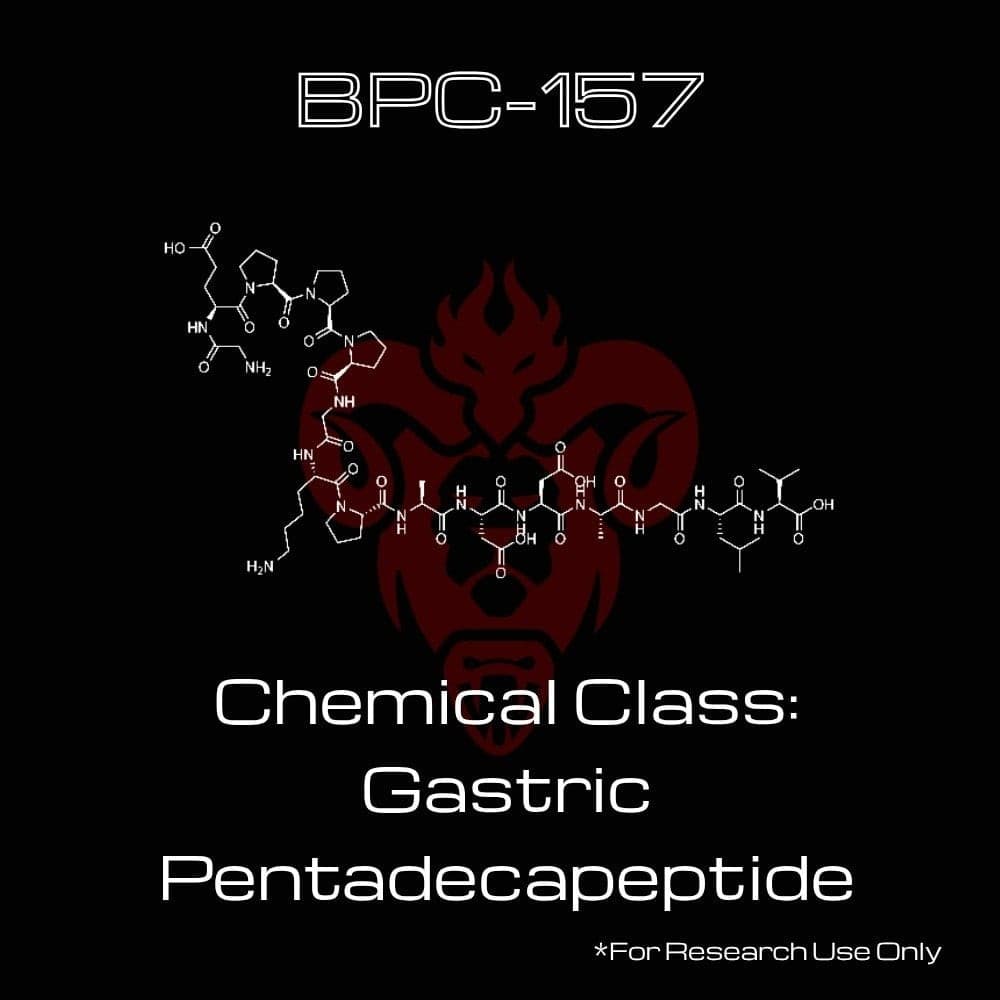
BPC-157, short for Body Protection Compound-157, is a synthetic peptide composed of fifteen amino acids (sequence GEPPPGKPADDAGLV) that corresponds to a partial sequence of a body-protective protein discovered in human gastric juice [6]. Unlike many peptides, it is notably stable, resisting degradation in gastric acid, which is part of what has driven interest in it. It was investigated clinically under names such as PL-14736 as a candidate for inflammatory bowel disease and other conditions [6], and it has since become one of the most popular research and wellness peptides for tissue repair.
The scientific literature on BPC-157 is extensive but overwhelmingly preclinical, consisting largely of rodent studies from a single principal research group in Croatia and their collaborators. Across these studies it has consistently accelerated healing in a remarkable range of tissues, including tendon, ligament, skeletal muscle, bone, the gastrointestinal tract, and the nervous system, and it has shown protective effects on the gut-brain axis, blood vessels, and after various toxic or traumatic insults [1][5]. Reported actions include promotion of angiogenesis through vascular endothelial growth factor (VEGF), interaction with the nitric oxide system, upregulation of the growth hormone receptor, and reduction of inflammatory cytokines [2][3][4].
BPC-157 has no marketing approval from the US Food and Drug Administration or comparable agencies and is not an approved medicine; a 2025 systematic review found essentially only preclinical evidence plus a single small clinical report, and noted the peptide is banned in professional sport [2]. It is sold as a research chemical, typically as a lyophilized powder for reconstitution, and although preclinical safety studies have been reassuring, human safety and efficacy data remain very limited [2].
- BPC-157 is derived from a protein naturally present in human stomach juice, and it stays stable there for more than 24 hours, where most peptides quickly degrade.
- Across published animal studies, researchers have not been able to establish even a minimal lethal dose for BPC-157.
Mechanism
BPC-157 is described as a cytoprotective and regenerative , and although its precise molecular target is not fully defined, several consistent mechanisms have emerged from preclinical work. The most prominent is promotion of angiogenesis, the growth of new blood vessels; BPC-157 upregulates vascular endothelial growth factor (VEGF) and, in models of muscle and tendon injury, adequately modulates angiogenesis to support more complete healing, even though it does not act as a direct angiogenic factor on cells in isolation [3]. By restoring blood supply to hypovascular tissues such as tendon and ligament, it helps injuries that ordinarily heal poorly [1].
A second core mechanism is its close relationship with the (NO) system; BPC-157 interacts with NO synthesis, competing with and complementing L-arginine and its inhibitors, which underlies its effects on vascular integrity, blood pressure regulation, and protection of the endothelium after injury [4]. It has additionally been reported to growth hormone receptor expression, activate healing-related pathways such as the egr-1 gene and downstream targets, reduce pro-inflammatory cytokines, and interact with the , , and gut-brain systems, which may explain its broad neuroprotective and organ-protective actions [2][5].
These mechanisms translate, in preclinical models, into faster and more complete recovery of muscle, tendon, ligament, and bone, and protection of the gut, brain, and blood vessels, with an unusually favorable animal safety profile [1]. Pharmacologically, the has a very short of less than 30 minutes and is cleared by the kidneys, yet still produces durable healing effects [2]. Direct human evidence remains thin; the strongest clinical signal to date is a small retrospective report in which 7 of 12 patients receiving an intraarticular injection for chronic knee pain experienced relief lasting more than 6 months [2].
receptor fingerprint
VEGFR2 / angiogenesisactivates
Growth factors (tendon, ligament, gut)promotes
systemmodulates
Dosingtypical ranges, not medical advice
interested in protocols and clinical dosages? make an account to see them! ^_^
Safetyrisks and cautions, not medical advice
BPC-157 is a synthetic peptide marketed for healing and recovery, but despite widespread anecdotal use there are essentially no controlled human trials establishing its safety or efficacy; it is sold as a research chemical and is prohibited in sport. Reported effects are largely anecdotal and mild, such as injection-site reactions, while its long-term safety, drug interactions, and effects on angiogenesis (a theoretical concern for tumor growth) are not established in humans.
Reconstitutionarithmetic only, not dosing advice
arithmetic only; not medical or dosing advice.
History
BPC-157 is a synthetic pentadecapeptide whose sequence corresponds to a fragment of Body Protection Compound (BPC), a protein identified in human gastric juice. It was discovered and has been characterized largely by Predrag Sikiric and colleagues at the University of Zagreb in Croatia, with work beginning in the early 1990s. Their group established the peptide's unusual stability in gastric juice and its wide-ranging cytoprotective and wound-healing activity across the gastrointestinal tract and musculoskeletal tissues. Over roughly three decades it has accumulated a large preclinical literature, yet it has never completed formal drug approval and remains investigational.
Reputation
BPC-157 has earned an enthusiastic following in the recovery and sports-medicine community, prized for preclinical reports of faster and more complete healing in tissues that ordinarily mend poorly, such as tendon and ligament. Researchers highlight its remarkable safety margin in animals, where a lethal dose has not been reached, and its capacity to drive new blood-vessel growth and reroute blood flow around injuries. Its appeal is amplified by an unusually broad protective profile that spans gut, brain, and vascular tissue. In fairness, the human evidence remains thin, long-term safety is not established, and it is prohibited in competitive sport, so it is best regarded as a promising but still experimental peptide.
Subjective profileweighing the evidence above
Worth trying with eyes open if you have a stubborn soft-tissue or gut injury; the preclinical record is broad and consistent and injection-site irritation is the only common complaint. Just know that controlled human trials do not exist, the pro-angiogenic mechanism is a theoretical concern with any tumour history, and it is banned in sport.
Where to buy




Suppliers
Vendors carrying BPC-157, with live product details and codes. Links are affiliate links that support the wiki at no cost to you.
| supplier | size | price | $/mg |
|---|---|---|---|
| Limitless Biochemlowest | 10 mg | $53.50 | $5.35/mg |
| Moglabs | 5mg | $28.00 | $5.60/mg |
Moglabs
BPC-157
Kimera Chems
BPC-157
Peptira
BPC-157
Limitless Biochem🌐
BPC-157
RUO
BPC-157
RUPharma🌐
BPC-157
RUO
BPC-157
Exceed Enhancement
BPC-157
Research
- 2006first citedStable gastric pentadecapeptide BPC 157 in trials for inflammatory bowel disease (PL-10, PLD-11…
- 2025most recentEmerging Use of BPC-157 in Orthopaedic Sports Medicine: A Systematic Review.
- 1.Gastric pentadecapeptide body protection compound BPC 157 and its role in accelerating musculoskeletal soft tissue healing.
- 2.Emerging Use of BPC-157 in Orthopaedic Sports Medicine: A Systematic Review.
- 3.Modulatory effect of gastric pentadecapeptide BPC 157 on angiogenesis in muscle and tendon healing.
- 4.Stable gastric pentadecapeptide BPC 157-NO-system relation.
- 5.Pentadecapeptide BPC 157 and the central nervous system.
- 6.Stable gastric pentadecapeptide BPC 157 in trials for inflammatory bowel disease (PL-10, PLD-116, PL 14736, Pliva, Croatia). Full and distended stomach, and vascular response.
- 7.Therapeutic potential of pro-angiogenic BPC157 is associated with VEGFR2 activation and up-regulation
- 8.The promoting effect of pentadecapeptide BPC 157 on tendon healing involves tendon outgrowth, cell survival, and cell migration
- 9.Stable Gastric Pentadecapeptide BPC 157 as a Therapy and Safety Key: A Special Beneficial Pleiotropic Effect Controlling and Modulating Angiogenesis and the NO-System
- 10.Stable Gastric Pentadecapeptide BPC 157: Prompt Particular Activation of Collateral Pathways
- 11.BPC 157 and Standard Angiogenic Growth Factors. Gastrointestinal Tract Healing, Lessons from Tendon, Ligament, Muscle and Bone Healing
- 12.BPC 157 and blood vessels
22 listed here; entry last updated August 2026
Reviews
My notesprivate to this device
FAQ
Where does BPC-157 come from?
It is a synthetic peptide based on a fragment of a protein naturally found in stomach juices.
Is the evidence human or animal?
Most of the encouraging healing data comes from animal studies; robust human clinical trials are lacking.
How is it stored after mixing?
Reconstituted peptides are generally kept refrigerated and protected from light to preserve stability.
Is it approved?
It is not an approved drug and is used experimentally, so general educational info is no substitute for professional guidance.
Limitations of the evidence
- Human evidence is still very limited
- Long-term safety not yet established
Adverse effects
- Mild injection-site irritation
Notes and cautions
- Not an approved drug and banned in sport
- No published study has administered BPC-157 by the intranasal route. Searches of PubMed under BPC 157, BPC157 and the development codes PL 14736 and PL-10, crossed against intranasal, nasal, nostril, sublingual and inhalation terms, return no paper in which the peptide itself was placed in the nose; published animal work doses it intraperitoneally, intragastrically or topically instead. Nasal absorption has not been measured in any species, so the fraction of a nasal dose reaching blood or brain is unknown. Intranasal use here is undocumented rather than tested and found wanting.