
data + articles · 4 listed
newest 2014spec sheet11 rows
Thymulin is a thymic peptide hormone, a nonapeptide produced by the epithelial cells of the thymus gland, that plays a role in the maturation and regulation of T lymphocytes. It was described in the 1970s, originally under the name serum thymic factor (facteur thymique serique, FTS), and its biological activity depends on being bound to the metal zinc, making it a zinc-dependent metallopeptide [1]. Beyond its classic immune role, thymulin also interacts with the neuroendocrine system and has shown anti-inflammatory and analgesic properties in experimental studies, which has prompted interest in its therapeutic potential [2].
- Natural thymic hormone, well characterised since the 1970s
- Central to T lymphocyte maturation and regulation
- Zinc bound nonapeptide, active only with its metal
- Reduces inflammation and pain in preclinical animal work
- Relevant to age related immune decline
- Neuroendocrine crosstalk explored in preclinical research
Overview
Thymulin is one of the thymic hormones, the signaling peptides secreted by the thymus, the gland responsible for the maturation of T lymphocytes. It is a nonapeptide, a chain of nine amino acids, and its defining feature is that it must be coupled to a zinc ion to be biologically active; the metal is required for both its activity and its recognition by antibodies, so thymulin is described as a zinc-dependent metallopeptide [1]. The molecule was first characterized in the 1970s by Jean-Francois Bach, Mireille Dardenne, and colleagues, initially under the name serum thymic factor or FTS, before the zinc-bound active form was named thymulin [1][3]. It is produced specifically by thymic epithelial cells and is available in synthetic form [1].
In its classic role, thymulin acts as a thymic hormone that promotes the differentiation of T cells and enhances the functions of the various T-cell subsets, both inside the thymus and in the periphery; among its effects, its action on regulatory, or suppressor, T cells was noted early as potentially useful [1]. Because its activity depends on zinc, thymulin levels in the blood fall in states of zinc deficiency, and the peptide has been used as a sensitive indicator of thymic function and of zinc status. Circulating thymulin also declines with age as the thymus involutes, paralleling the age-related weakening of immunity.
Later research broadened the picture beyond immunity. Thymulin production and secretion turned out to be strongly influenced by hormones of the neuroendocrine system, and thymulin in turn appears to act on the pituitary, so it is regarded as part of a two-way communication between the thymus and the hypothalamic-pituitary axis [2][3]. Interest has grown in its therapeutic potential: thymulin has shown anti-inflammatory and pain-relieving effects in the brain in animal studies, and experiments using gene-therapy vectors to make the brain produce thymulin have explored its ability to protect tissue and to counter endocrine and metabolic disturbances seen in thymus-deficient animals [2]. Reduced thymulin levels have also been reported in conditions such as anorexia nervosa.
Thymulin is chiefly a research and physiological molecule rather than a widely approved drug. It exists naturally in the body, can be synthesized, and has been investigated as an immunoregulatory and anti-inflammatory agent and as a tool in gene-therapy studies, but it is not an established, broadly marketed medicine. Its clear zinc dependence has made it a useful model for understanding how trace-metal status influences immune signaling, and its neuroendocrine links have made it a subject in the study of how the immune and hormonal systems interact [1][2].
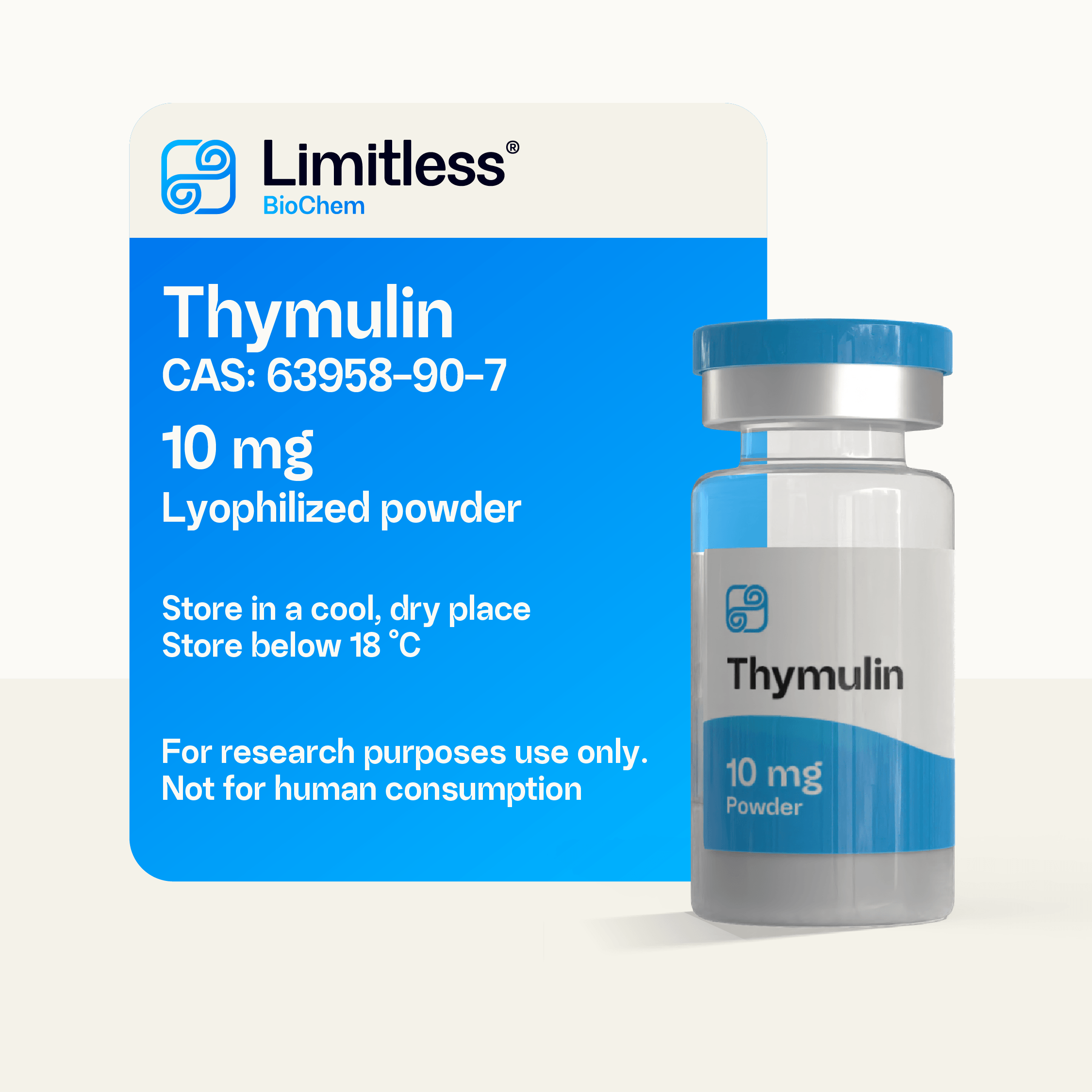
- Thymulin is completely inactive until it binds a zinc ion, which is why its measured activity falls in zinc deficiency and makes it a natural readout of the body's zinc status.
- First described in the 1970s under the name serum thymic factor (FTS), it is produced only by the epithelial cells of the thymus gland.
- Beyond immunity, thymulin has shown anti-inflammatory and analgesic effects in the brain, and researchers have tested adenoviral gene therapy to drive its local production.
Mechanism
Thymulin's activity begins with zinc. The nonapeptide is essentially inactive on its own and becomes biologically functional only when it binds a zinc ion, which fixes the molecule in the shape needed for its effects; this is why thymulin is classed as a zinc-dependent metallopeptide and why its measurable activity tracks the availability of zinc [1]. As a thymic hormone, active thymulin signals to T lymphocytes to promote their differentiation and to enhance the specialized functions of T-cell subsets, including helper and suppressor populations, both within the thymus and after the cells leave it; through these actions it helps set the balance and competence of the T-cell arm of immunity [1].
Its production is embedded in a wider regulatory network: secretion of thymulin by thymic epithelial cells is modulated by hormones of the neuroendocrine system, such as those of the pituitary, while thymulin itself can act back on the pituitary, placing it within a bidirectional thymus-pituitary axis that links immune and hormonal regulation [2][3].
Separately from its classic immune signaling, thymulin has demonstrated anti-inflammatory and analgesic effects in the central nervous system in experimental models, an activity that appears to involve damping of inflammatory processes and that underlies its exploration as a neuroprotective agent, including through gene-therapy approaches that drive local thymulin production [2]. Because circulating thymulin falls with zinc deficiency and with the age-related shrinkage of the thymus, its levels also serve as a readout of thymic activity and zinc status [1].
receptor fingerprint
T lymphocytesPromotes differentiation and maturation of T cell subsets
Zinc-dependent signalingForms active zinc-peptide complex needed for receptor binding
Inflammatory signalingModulates cytokine output and NF-kB activity
Safetyrisks and cautions, not medical advice
Thymulin is a zinc-dependent thymic peptide involved in T-cell maturation; as a therapeutic it has minimal human clinical data and no regulatory approval. Its safety profile in people is largely uncharacterized, and because it modulates immune function, its use is unstudied in autoimmune conditions or alongside immune-active drugs. Its long-term risks are unknown.
History
Thymulin was first described in the 1970s by the French immunologist Jean-Francois Bach and colleagues, who originally named it serum thymic factor (facteur thymique serique, or FTS). It was identified as a nonapeptide produced exclusively by the epithelial cells of the thymus gland and involved in the differentiation and regulation of T lymphocytes. A pivotal early insight was that the peptide is biologically inactive on its own and becomes functional only when bound to a zinc ion, which fixes it in the shape required for activity; this established thymulin as a zinc-dependent metallopeptide whose measurable activity tracks zinc availability.
Over subsequent decades, researchers such as Mireille Dardenne and Rodolfo Goya showed that thymulin secretion is closely regulated by the neuroendocrine system and that the peptide can in turn act back on the pituitary, defining a bidirectional thymus-pituitary axis. More recent work has explored a synthetic thymulin analog and adenoviral gene-therapy approaches, motivated by the discovery that the peptide also has anti-inflammatory and analgesic actions in the central nervous system.
Reputation
Thymulin is a well-characterized natural thymic hormone with a distinguished research pedigree, valued both for its classic role in T-cell maturation and for the elegant biology of its zinc dependence. It is scientifically appealing because its circulating levels serve as a readout of both thymic activity and zinc status, linking nutrition, immunity, and aging in a single molecule. Interest has broadened considerably in recent years as experimental studies revealed anti-inflammatory and analgesic properties in the brain, prompting exploration of thymulin and its synthetic analogs as neuroprotective agents, including through gene-therapy strategies.
It is honest to note that these newer therapeutic applications remain largely at the experimental and preclinical stage rather than established clinical practice. Nonetheless, as a genuine endogenous peptide hormone with decades of solid mechanistic study behind it, thymulin stands on firmer scientific ground than many peptides marketed for similar purposes, and it continues to attract serious research attention.
Subjective profileweighing the evidence above
Fascinating thymic biology and not a product. There is essentially no human clinical data, no approval, and no read on what nudging immune tone with it does over months, which matters most for the older users it appeals to. Nothing to buy here yet.
Where to buy

1 other outlet
Suppliers
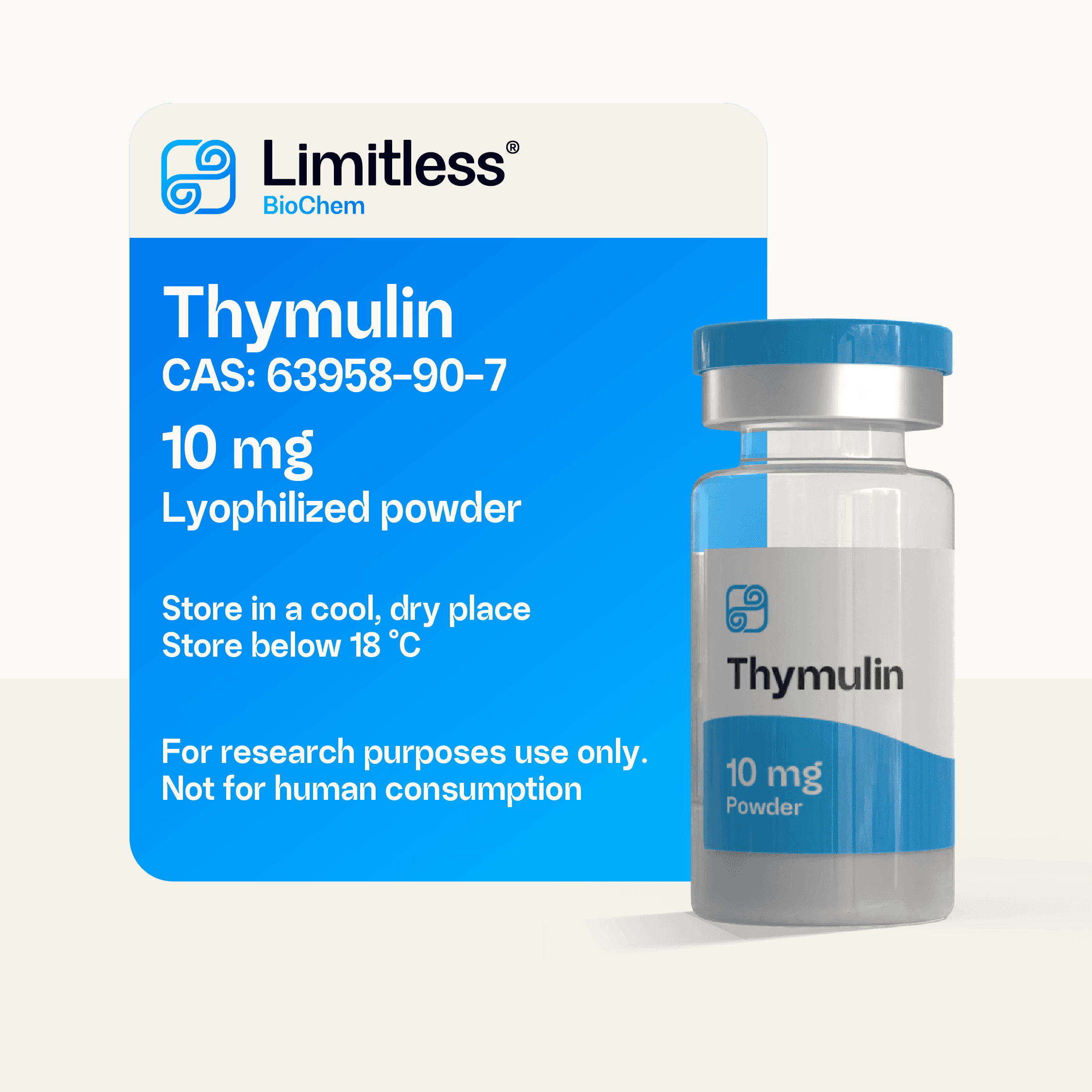
Vendors carrying Thymulin, with live product details and codes. Links are affiliate links that support the wiki at no cost to you.
| supplier | size | price | $/mg |
|---|---|---|---|
| Kimera Chemslowest | 10mg | $34.99 | $3.50/mg |
| Limitless Biochem | 10mg | $37.45 | $3.75/mg |
Kimera Chems
Thymulin
Limitless Biochem🌐
Thymulin
Research
- 1989first citedThymulin, a zinc-dependent hormone.
- 2014most recentPhysiology and therapeutic potential of the thymic peptide thymulin
- 1.Thymulin, a zinc-dependent hormone.
- 2.The thymus-neuroendocrine axis: physiology, molecular biology, and therapeutic potential of the thymic peptide thymulin.
- 3.Thymulin and the neuroendocrine system.
- 4.Physiology and therapeutic potential of the thymic peptide thymulin
4 listed here; entry last updated August 2026
Reviews
My notesprivate to this device
FAQ
Why is zinc important for thymulin?
Thymulin only becomes biologically active when it binds zinc, so zinc status directly affects how well it works.
Why do thymulin levels drop with age?
The thymus shrinks and becomes less active with age, so thymulin output falls, which researchers link to weaker immunity.
What is thymulin studied for?
Mainly T cell support, immune modulation, and inflammation, plus some neuroendocrine and pain research.
Notes and cautions
- An endogenous hormone whose activity depends on zinc
- Blood levels fall with zinc deficiency and with age
- Chiefly a research molecule rather than a broadly approved drug
- Human therapeutic safety data are limited
- Effects are tied to immune and neuroendocrine regulation