
spec sheet12 rows
Pterostilbene is a naturally occurring stilbenoid closely related to resveratrol, from which it differs by carrying two methoxy groups in place of hydroxyl groups. It is found chiefly in blueberries, grapes, and the heartwood of certain trees, where it serves as a defensive phytoalexin. The methoxy substitution makes it substantially more lipophilic, metabolically stable, and blood-brain-barrier permeable than resveratrol; in Alzheimer's-model mice it improved cognition and reduced neuroinflammation at dietary doses that were ineffective for resveratrol, apparently acting through PPAR-alpha rather than the sirtuins. It has been studied in humans in combination with nicotinamide riboside to raise NAD+ levels, and is sold as a dietary supplement rather than an approved medicine.
- the blueberry polyphenol that beats resveratrol on absorption
- two methoxy groups make it far more brain-penetrant and stable
- in Alzheimer's-model mice it lifted cognition where resveratrol did not
- studied in humans with nicotinamide riboside to raise NAD+
- a strong antioxidant found in blueberries, grapes and heartwood
- the pharmacology is the standout; human trials are still early
- Some research has reported changes in blood cholesterol, including higher LDL cholesterol, at higher intakes
Overview
Pterostilbene is a stilbenoid, one of a family of plant polyphenols built on a two-ring stilbene skeleton [1][2]. It is the dimethylated analogue of resveratrol, meaning two of resveratrol's hydroxyl groups are replaced by methoxy groups, which gives the formal name trans-3,5-dimethoxy-4-hydroxystilbene and the molecular formula C16H16O3 [2]. In plants it acts as a phytoalexin, a protective substance produced in response to infection or stress, and its name reflects its discovery in the wood of Pterocarpus trees.
The compound occurs naturally in blueberries and other Vaccinium berries, in grapes and grape leaves, in almonds, and especially in the heartwood of Pterocarpus marsupium, a tree used in traditional Indian medicine [2]. It is formed biologically when enzymes add two methyl groups to resveratrol, using S-adenosylmethionine as the methyl donor [1]. Those methyl groups make pterostilbene more fat-soluble than resveratrol, which improves how well it crosses cell membranes and how it resists rapid breakdown in the body; as a result its oral bioavailability is considerably higher than that of resveratrol, a difference often cited as one of its main advantages [1][2][3].
Most of what is known about pterostilbene comes from laboratory and animal studies, with a smaller amount of human data. Reviews of this literature describe antioxidant and anti-inflammatory activity and report effects, mainly in cell and animal models, on cancer cell growth, insulin sensitivity, blood sugar and lipids, cardiovascular measures, aging, and memory and cognition [1][2]. In cancer research it has been studied as a chemopreventive agent, shown in the laboratory to influence cell-cycle control, programmed cell death, and tumour signalling pathways [2]. Because stilbenes are poorly soluble in water, researchers have also developed specialized delivery systems, such as liposomes and nanoparticles, in an effort to raise absorption further [3]. Much of this work is preliminary, and firm conclusions about clinical benefit in humans await larger trials [1].
Pterostilbene is marketed as a dietary supplement, often in capsule form and sometimes combined with resveratrol or other polyphenols. Unlike resveratrol, which has been granted generally recognized as safe status and other regulatory clearances in some jurisdictions, pterostilbene has not received the same formal approvals and is not licensed as a drug [1]. A review of the evidence describes it as generally well tolerated in the amounts studied while flagging its effects on blood lipids as an area needing further attention, and its long-term safety in humans has not been fully established [1].


Mechanism
Pterostilbene's biological effects are attributed largely to its antioxidant chemistry and its ability to modulate cell-signalling pathways, in a manner broadly similar to resveratrol [1][2]. As a polyphenol it can neutralize reactive oxygen species and influence the body's own antioxidant defences, and it has been reported to activate pathways associated with cellular stress resistance and metabolism [1]. In experimental models it modulates transcription factors and signalling molecules involved in inflammation and cancer, affecting the cell cycle, promoting programmed cell death in tumour cells, and interfering with tumour blood-vessel growth and spread [2].
The two methoxy groups that distinguish it from resveratrol are central to its pharmacology: by making the molecule more they increase its passage across cell membranes and slow the rapid conjugation reactions that quickly clear resveratrol, so more of the active compound reaches the tissues and stays there longer [1][2][3]. Much of this mechanistic work has been done in cells and animals, and how fully it translates to people is still under investigation [1].
receptor fingerprint
Free radicalsscavenges
SIRT1activates
activates
NF-kBinhibits
Cognitive/neuroprotective pathwayssupports
Dosingtypical ranges, not medical advice
interested in protocols and clinical dosages? make an account to see them! ^_^
Safetyrisks and cautions, not medical advice
Pterostilbene is generally well tolerated in studies; at high doses some trials noted increases in LDL cholesterol, so that's worth watching, especially when taken alone. Other side effects are uncommon. Long-term human safety data is still limited, so moderate dosing is sensible.
Subjective profileweighing the evidence above
A promising, better-absorbed polyphenol for longevity and cognition, but the human evidence is still early. It beats plain resveratrol on bioavailability grounds.
Where to buy
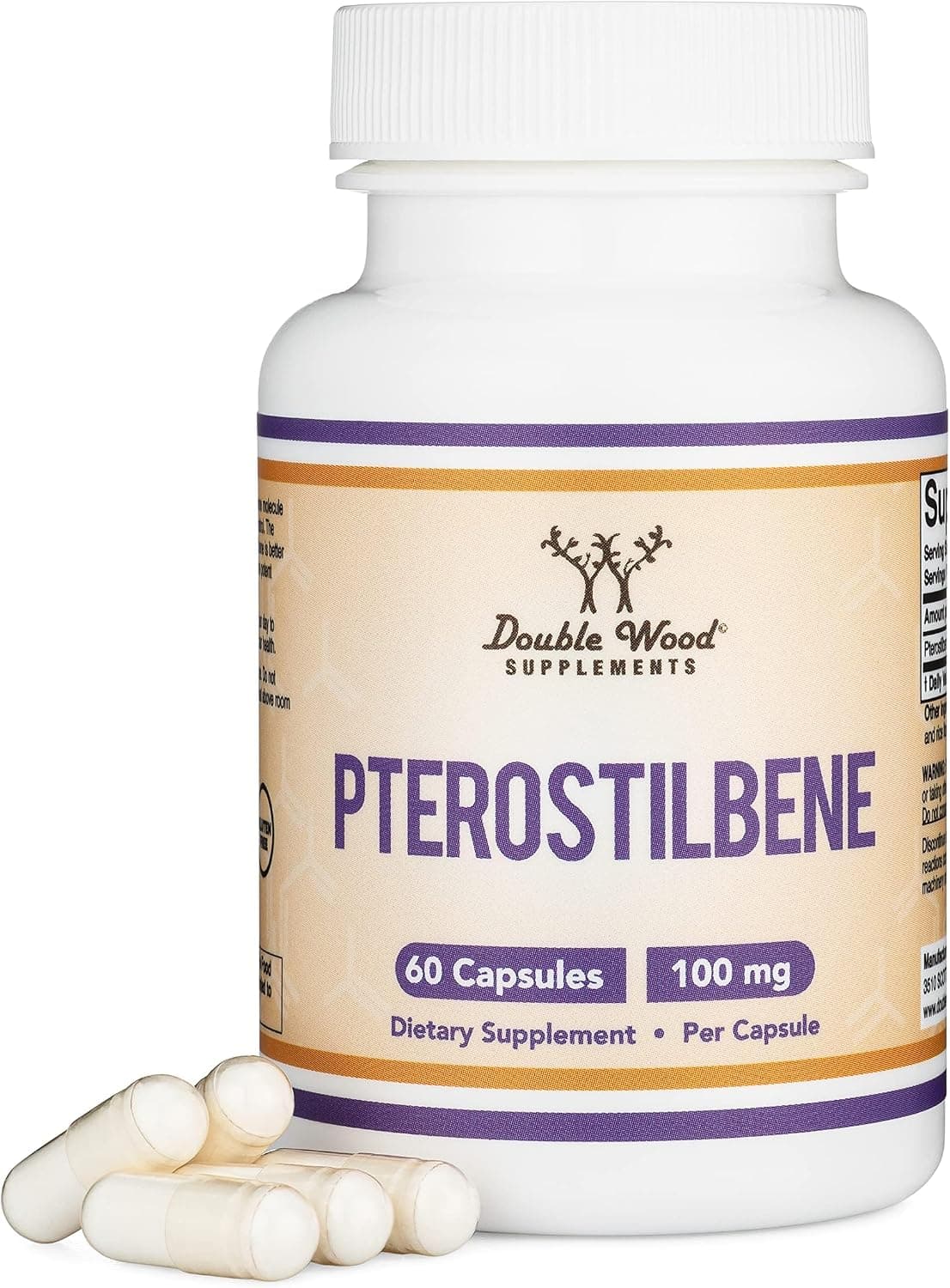
2 other outlets

Suppliers
Vendors carrying Pterostilbene, with live product details and codes. Links are affiliate links that support the wiki at no cost to you.
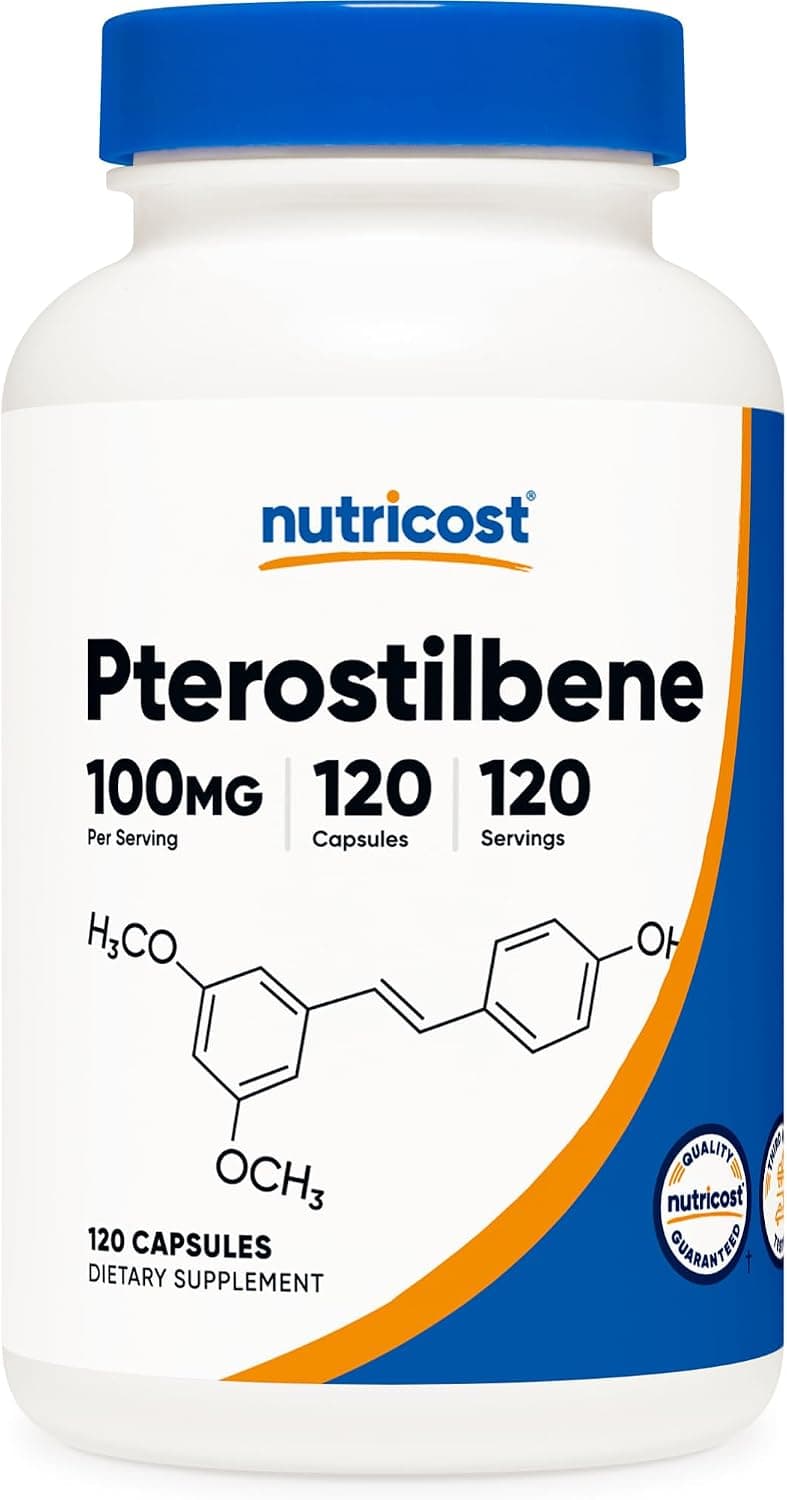
Amazon
Pterostilbene
Amazon
Pterostilbene
iHerb
Pterostilbene
Research
- 2008first citedCellular and behavioral effects of stilbene resveratrol analogues: implications for reducing th…
- 2017controlled trialRepeat dose NRPT (nicotinamide riboside and pterostilbene) increases NAD+ levels in humans safe…
- 2018most active year3 papers
- 2023most recentNicotinamide riboside and pterostilbene reduces markers of hepatic inflammation in NAFLD: A dou…
- 1.Pterostilbene: Biomedical applications.
- 2.Occurrence, Bioavailability, Anti-inflammatory, and Anticancer Effects of Pterostilbene.
- 3.Oral delivery system enhanced the bioavailability of stilbenes: Resveratrol and pterostilbene.
- 4.Low-dose pterostilbene, but not resveratrol, is a potent neuromodulator in aging and Alzheimer's disease
- 5.Cellular and behavioral effects of stilbene resveratrol analogues: implications for reducing the deleterious effects of aging
- 6.Anxiolytic action of pterostilbene: involvement of hippocampal ERK phosphorylation
- 7.Pterostilbene Improves Cognitive Performance in Aged Rats: An in Vivo Study
- 8.Pterostilbene ameliorates intracerebroventricular streptozotocin induced memory decline in rats
- 9.Repeat dose NRPT (nicotinamide riboside and pterostilbene) increases NAD+ levels in humans safely and sustainably: a randomized, double-blind, placebo-controlled study
- 10.Nicotinamide riboside and pterostilbene reduces markers of hepatic inflammation in NAFLD: A double-blind, placebo-controlled clinical trial
- 11.A randomized placebo-controlled trial of nicotinamide riboside and pterostilbene supplementation in experimental muscle injury in elderly individuals
- 12.Nicotinamide riboside with pterostilbene (NRPT) increases NAD+ in patients with acute kidney injury (AKI): a randomized, double-blind, placebo-controlled, stepwise safety study of escalating doses of NRPT in patients with AKI
18 listed here; entry last updated August 2026
Reviews
My notesprivate to this device
FAQ
How is it different from resveratrol?
It's structurally similar but much better absorbed thanks to two methyl groups, so lower doses can be effective.
Does it really help longevity?
It activates SIRT1 and AMPK pathways linked to longevity, but human longevity data is still emerging. Don't overpromise.
Can it raise cholesterol?
Some high-dose trials saw LDL go up, especially when used alone. Keep doses moderate and monitor lipids.
Should I take it with NMN?
It's a common pairing in NAD-focused stacks, combining sirtuin activation with NAD precursors.
Does it need to be taken with food?
Yes, taking it with dietary fat improves absorption of this lipophilic compound.
Limitations of the evidence
- Most safety information comes from short studies, so long-term effects are not well characterized
Adverse effects
- Some research has reported changes in blood cholesterol, including higher LDL cholesterol, at higher intakes
Notes and cautions
- Human studies to date suggest it is generally well tolerated
- As a supplement it is not regulated as a medicine, and product quality can vary between brands