
spec sheet12 rows
Dragon fruit (pitaya) is the fruit of several climbing cactus species in the Hylocereus/Selenicereus genus. The red-fleshed types are rich in betalains (betacyanins), the same pigment family that colors beets, alongside soluble and insoluble fiber, some vitamin C, magnesium, and tiny omega-rich seeds. It is eaten mostly as a whole food; its bioactive draw is the betalain antioxidants and the prebiotic fiber, not any single concentrated drug-like compound.
- Red flesh packs betalains, the pigments that color beets
- Soluble prebiotic fiber that feeds friendly gut bacteria
- A small crossover trial nudged vascular markers the right way
- Softens the post meal glucose spike and adds real fullness
- Low calorie, high water, and genuinely easy to eat
- Delivers vitamin C, magnesium and iron in whole food form
- Gas, bloating, or loose stools if you eat a lot of the fiber at once
- Rare true allergic reactions
Overview
Dragon fruit, also called pitaya or pitahaya, is the fruit of several climbing cactus species in the Hylocereus and Selenicereus genera. It is eaten primarily as a whole food rather than taken as a concentrated supplement, and its nutritional interest comes from a combination of pigments and fiber rather than any single drug-like molecule. The red-fleshed and magenta-fleshed varieties are rich in betalains, chiefly betacyanins; this is the same class of pigment that colors beets and is chemically distinct from the anthocyanins that redden berries and citrus. Alongside the pigment, the fruit supplies soluble and insoluble fiber, modest amounts of vitamin C, magnesium and iron, and small omega-rich seeds, packaged in a low-calorie, high-water form.
Mechanistically, dragon fruit is thought to act along two main lines. The betalains are direct free-radical scavengers and also appear to work indirectly by activating the Nrf2 antioxidant pathway and tempering NF-kB-driven inflammatory signaling, which is the antioxidant and anti-inflammatory rationale that review literature leans on [3]. Notably, betalains have low oral bioavailability, so only a small fraction is recovered intact in the blood; much of the proposed benefit is credited to circulating metabolites and to activity within the gut lumen rather than to high systemic pigment levels [3]. The second line is fiber: soluble oligosaccharides resist digestion and are fermented by colonic bacteria, feeding taxa such as Bifidobacterium and Faecalibacterium and yielding short-chain fatty acids, while also blunting the post-meal glucose curve and adding satiety.
The human evidence is early and modest in scale. A double-blind, randomized controlled crossover trial reported that consuming betalain-rich dragon fruit improved markers of vascular function, including flow-mediated dilation and arterial stiffness, in healthy men and women [1]; the finding is encouraging but rests on a single small study, so it is best read as promising rather than settled. On the gut side, a randomized double-blind placebo-controlled study of isolated dragon fruit oligosaccharides in healthy adults found shifts in the microbiome and immune markers, including increases in beneficial bacteria and secretory IgA [2], though this used a purified extract dosed at several grams per day rather than the whole fruit. Taken together the data support a general wellness and prebiotic profile more than any dramatic targeted effect, and the honest limits are small sample sizes and reliance on surrogate markers.
In terms of status, dragon fruit is an ordinary edible fruit with a long history of food use and no meaningful toxicity signal, so it is regulated and treated as a food rather than a supplement; there is no established supplement dose. Its most conspicuous effect is harmless, as the poorly absorbed red betacyanins can tint urine or stool pink, an effect analogous to the beeturia sometimes seen with beets. Because it is fiber-rich it can cause gas or loose stools if a large amount is eaten at once, true allergy is rare but reported, and it still contains real carbohydrate that counts toward blood-sugar goals despite the fiber softening the glucose response. As with any food, the safety of the whole fruit does not automatically extend to concentrated extracts or megadosed powders.

- The bright red-purple flesh comes from betalains, the very same pigment family that makes beets red; citrus fruits and berries get their red from a completely different class (anthocyanins) instead.
- Those red betalains are so poorly absorbed that they can pass through and turn your urine or stool pink, a harmless effect doctors call beeturia when it happens with beets.
- The fruit grows on a night-blooming climbing cactus; the flowers open for a single night and are pollinated by bats and moths.
- White-fleshed dragon fruit looks striking but has far fewer betalains than the red-fleshed kind, so if you are chasing the antioxidant angle, color matters.
Mechanism
Dragon fruit's headline actives are betalains, chiefly betacyanins in the red-fleshed species. These are direct radical scavengers and also appear to work indirectly by activating the Nrf2 pathway and tempering NF-kB-driven inflammation, which is the antioxidant/anti-inflammatory story most reviews lean on. Interestingly, betalains have quite low oral , so much of the benefit is thought to come from circulating metabolites and from activity in the gut lumen rather than high blood levels of the intact pigment.
The second mechanism is fiber: the soluble oligosaccharides resist digestion and are fermented by colonic bacteria, feeding Bifidobacterium and Faecalibacterium and producing short-chain fatty acids, which is the prebiotic and immune-modulating angle. On top of that, the soluble fiber blunts the glucose curve and adds satiety, and the modest vitamin C and mineral content round out a general wellness profile.
receptor fingerprint
Reactive oxygen species / Nrf2 pathwayBetacyanins scavenge radicals and upregulate antioxidant defenses
Gut microbiota (Bifidobacterium, Faecalibacterium)Oligosaccharides fermented as prebiotics, raising beneficial bacteria and IgA
Vascular endothelium (NO / arterial stiffness)Improved flow-mediated dilation and reduced pulse wave velocity in a crossover trial
NF-kB inflammatory signalingBetalains temper pro-inflammatory pathway activity
Post-meal glucose responseSoluble fiber slows carbohydrate absorption
Dosingtypical ranges, not medical advice
interested in protocols and clinical dosages? make an account to see them! ^_^
Safetyrisks and cautions, not medical advice
For nearly everyone, dragon fruit is very safe; it is an ordinary edible fruit with a long history of food use and no meaningful toxicity signal. The most common "side effect" is harmless: the red betacyanins can tint urine or stool pink-red (pseudohematuria), which can startle people but is not blood. True allergy is rare but has been reported. Because it is fiber-rich, eating a lot at once can cause gas or loose stools in sensitive guts; ramp up gradually. It is a real food with real carbohydrate, so people managing blood sugar should still count it, even though the fiber softens the glucose response. As always, whole-fruit safety does not automatically extend to concentrated extracts or megadosed powders.
Subjective profileweighing the evidence above
Best treated as a genuinely nice fruit, not a supplement. The red-fleshed kind carries real betalains, and a small crossover trial showed whole dragon fruit powder nudged vascular markers in the right direction; that is promising but it is one 19-person study, so expectations should stay grounded. Where it earns its place in a rotation is fiber and gut feeding plus a low-sugar, high-water package that is easy to eat. If you want a fruit that does a bit more than fill space, this is a good pick; just don't expect it to move the needle like a targeted supplement.
Where to buy
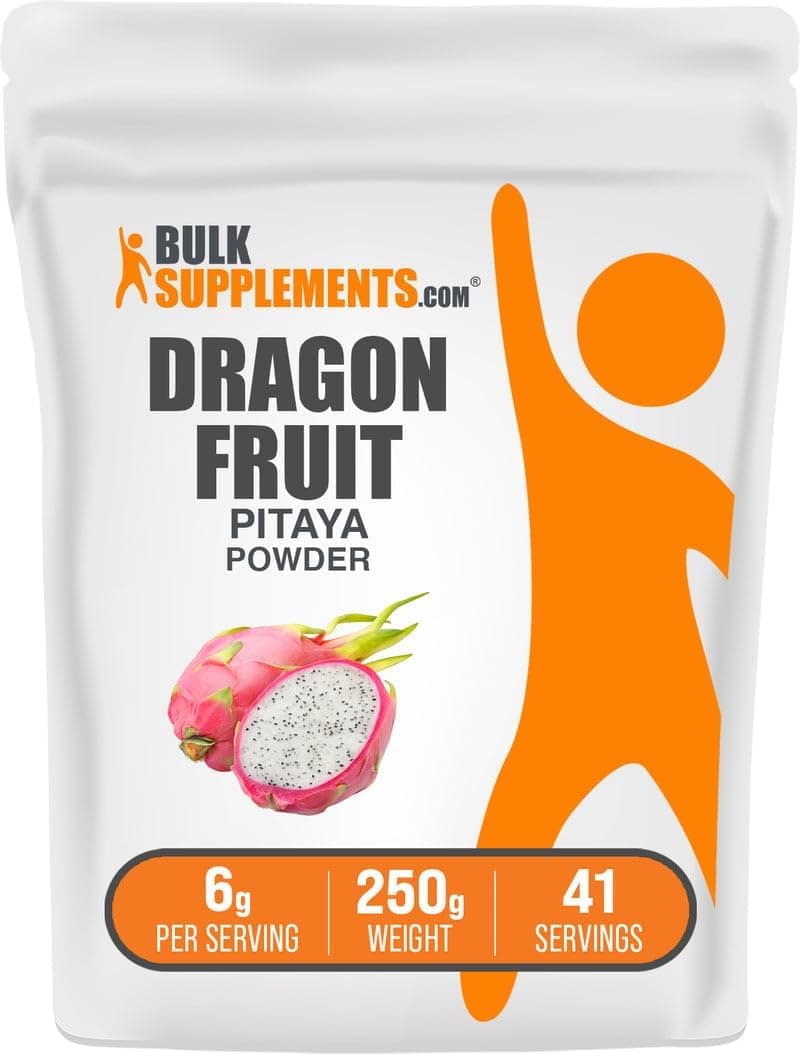
Suppliers
Vendors carrying Dragon Fruit, with live product details and codes. Links are affiliate links that support the wiki at no cost to you.
Amazon
Dragon Fruit
Research
- 1.Betalain-rich dragon fruit (pitaya) consumption improves vascular function in men and women: a double-blind, randomized controlled crossover trial
- 2.Effects of dragon fruit oligosaccharides on immunity, gut microbiome, and their metabolites in healthy adults - A randomized double-blind placebo controlled study
- 3.Anti-Inflammatory, Antioxidant, and Other Health Effects of Dragon Fruit and Potential Delivery Systems for Its Bioactive Compounds
3 listed here; entry last updated August 2026
Reviews
My notesprivate to this device
FAQ
Is dragon fruit actually high in vitamin C?
It has some, but it is not a standout; a serving gives a modest fraction of your daily need, well below citrus or kiwi. Its more distinctive assets are betalains and fiber, not vitamin C.
Why did my pee turn pink after eating it?
That is the red betacyanin pigment passing through, the same thing beets do. It is harmless and clears within a day. If pink urine appears without eating red pigments, that is worth a doctor's look.
Red flesh or white flesh; does it matter?
For antioxidants, yes. Red/magenta-fleshed varieties carry far more betalains than the white-fleshed ones. If you are eating it for the pigment benefits, choose the red kind.
Is it good for blood sugar?
It is a reasonable fruit choice because the fiber softens the glucose response, and some early research is looking at metabolic benefits. But it still contains sugar, so portion it like any fruit rather than treating it as free.
Adverse effects
- Gas, bloating, or loose stools if you eat a lot of the fiber at once
- Rare true allergic reactions
Notes and cautions
- Harmless pink-red discoloration of urine or stool from betacyanins
- Still contains real sugar and carbohydrate; portion matters for blood-sugar goals