
spec sheet12 rows
Quercetin is a plant flavonoid, specifically a flavonol, and one of the most abundant polyphenols in the human diet, found in foods such as onions, apples, capers, berries, and tea. It is a potent antioxidant in laboratory tests and acts as a zinc ionophore, carrying zinc across cell membranes, and it is best known in aging research as one half of the original senolytic combination, dasatinib plus quercetin, which clears senescent cells and has entered first-in-human trials. Oral quercetin is nonetheless poorly absorbed, and it has not been shown in humans to treat or prevent any disease; it is sold as a dietary supplement.
- One of the diet's most abundant polyphenols
- Potent antioxidant in laboratory testing
- Half of the original senolytic combination
- Zinc ionophore that ferries zinc into cells
- Calms the inflammatory response
- Popular for recovery after hard training
- Its very low absorption means oral intake reaches the bloodstream only in small amounts
Overview
Quercetin is a flavonol, a subclass of the flavonoid group of plant polyphenols [2]. Its chemical name reflects five hydroxyl groups arranged on the flavone ring system, giving the formula C15H10O7 [2]. In plants it usually exists bound to sugars as glycosides rather than in its free aglycone form, and the particular sugar attached affects how well the compound is absorbed when eaten [1]. The name derives from the Latin word for an oak forest, reflecting its plant origins.
Quercetin is one of the most common flavonoids in the human diet, present in many fruits, vegetables, leaves, and grains [1][2]. Especially rich sources include capers, onions, particularly red onions, kale, apples, berries such as cranberries, buckwheat, and various herbs and teas. Because these foods are widely eaten, quercetin makes up a meaningful share of everyday flavonoid intake, most of it consumed as the naturally occurring glycosides [1].
In the laboratory, quercetin shows strong antioxidant and anti-inflammatory activity and has been investigated for a long list of possible effects, including on cardiovascular health, blood pressure, cancer cells, allergy, and infection [2]. Translating these findings to people has proven difficult, largely because quercetin is poorly bioavailable: taken by mouth, only a small fraction is absorbed, and what does enter the body is rapidly transformed by the liver and gut into conjugated metabolites that differ from the parent molecule [1][2]. Reviews of the human evidence conclude that, despite the promising test-tube data, oral quercetin has not reliably produced the hoped-for clinical benefits, and researchers continue to explore delivery systems and formulations intended to improve its absorption [1][2].
Quercetin is sold as a dietary supplement, commonly in the free aglycone form and sometimes paired with agents said to aid its absorption. In the United States, high-purity quercetin has been recognized as generally recognized as safe for use in certain foods, and reviews of its safety generally describe it as well tolerated when consumed in ordinary dietary amounts [3]. Regulators, however, have not authorized health claims presenting it as a treatment for disease; European and United States authorities have found insufficient high-quality evidence to support such claims, and manufacturers have been warned against marketing it as a cure [3]. Safety questions focus mainly on the effects of concentrated, long-term supplement use rather than on quercetin in food [3].

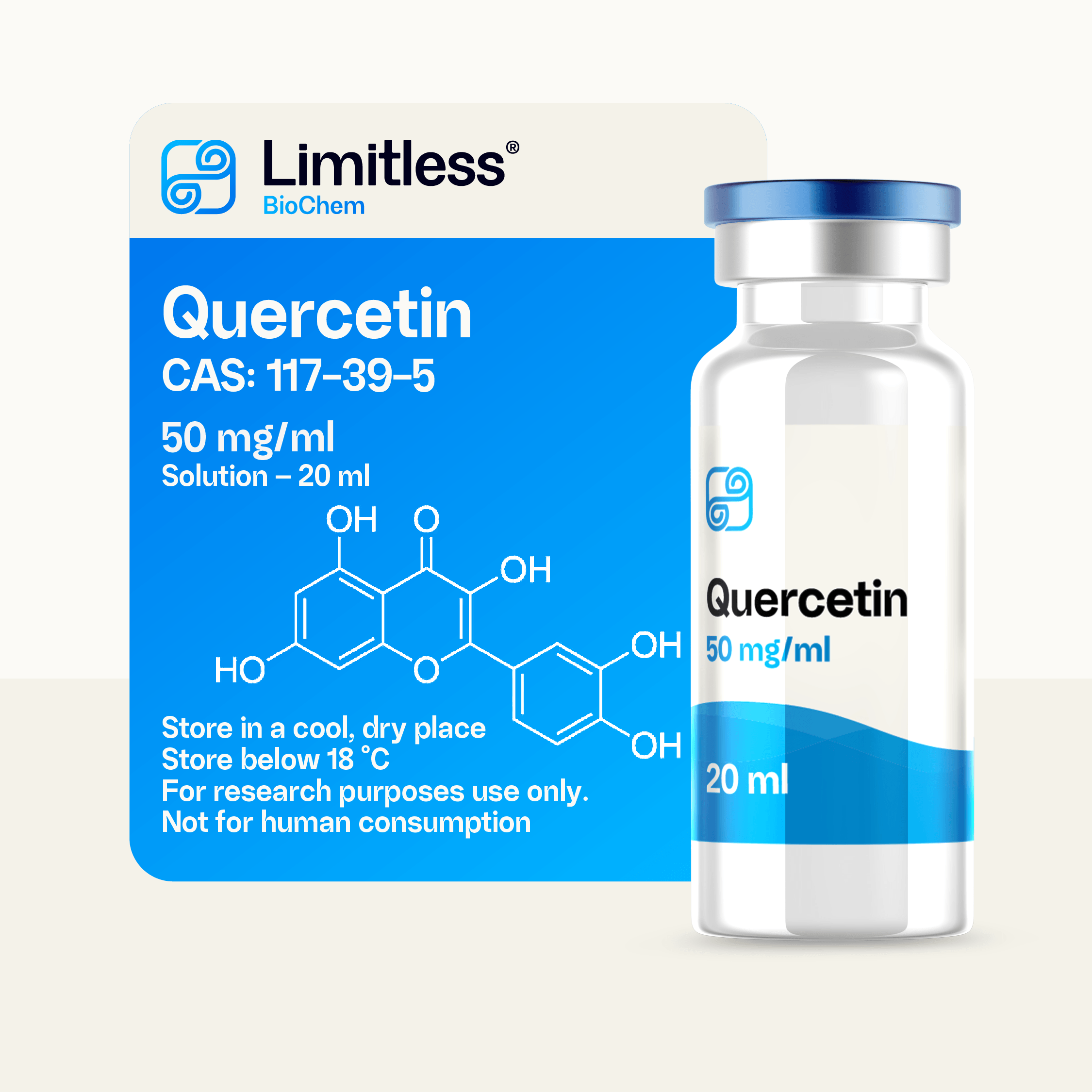
- Quercetin is one half of the original senolytic combination, dasatinib plus quercetin, which opened the field of drugs that clear senescent cells.
- A 2019 pilot trial showed that just three days of dasatinib plus quercetin measurably reduced senescent cell burden in humans, the first direct demonstration of its kind.
- It acts as a zinc ionophore, helping to shuttle zinc across cell membranes, and its name comes from the Latin word for an oak forest.
Mechanism
Quercetin's biological activity is usually explained by its chemistry as a polyphenol [2]. The arrangement of hydroxyl groups on its ring system lets it donate hydrogen atoms and electrons, so it can neutralize reactive oxygen species and bind metal ions, the basis of its antioxidant reputation; under some conditions, however, the same chemistry can make it act as a pro-oxidant [2]. Beyond simple radical scavenging, quercetin has been shown in cell studies to interact with signalling molecules and enzymes, dampening inflammatory pathways, influencing the activity of kinases and transcription factors, and affecting the cell cycle and programmed cell death in cancer cells [2].
It is often described less as a straightforward antioxidant and more as a compound that modulates cell signalling. A central caveat runs through all of this: because so little intact quercetin reaches the bloodstream and tissues after oral intake, and because its circulating metabolites behave differently from the parent compound, the mechanisms demonstrated in concentrated laboratory settings may not operate to the same degree in the body [1][2].
receptor fingerprint
NF-kB signalingInhibits pro-inflammatory transcription
Free radicalsScavenges reactive oxygen species
Senescent cellsPromotes clearance of aged cells
Dosingtypical ranges, not medical advice
interested in protocols and clinical dosages? make an account to see them! ^_^
Safetyrisks and cautions, not medical advice
Quercetin is a plant flavonoid consumed widely in foods and generally well tolerated as a supplement, though the safety of high-dose, long-term use is not well characterized. It inhibits CYP3A4 and P-glycoprotein and can alter blood levels of many medications, including some chemotherapy agents, cyclosporine, and anticoagulants. High intravenous doses in older studies were linked to kidney toxicity, so caution is warranted in people with renal impairment.
History
Quercetin is a naturally occurring flavonol, one of the most abundant polyphenols in the human diet, and its chemistry was characterized during the early development of flavonoid science; its name derives from the Latin quercetum, meaning oak forest. For much of the twentieth century it was studied chiefly as a dietary antioxidant and plant pigment found in onions, apples, capers, berries and tea. Its scientific profile changed markedly in 2015, when researchers at the Mayo Clinic and Scripps identified quercetin, in combination with the cancer drug dasatinib, as the founding senolytic combination, a pairing shown to selectively clear senescent cells implicated in aging and chronic disease.
This discovery propelled quercetin into first-in-human senolytic trials; a 2019 pilot study reported that dasatinib plus quercetin reduced the burden of senescent cells in patients with diabetic kidney disease, and further early trials have since explored the combination in idiopathic pulmonary fibrosis and Alzheimer's disease. Quercetin itself is sold as a dietary supplement and has not been approved to treat any disease.
Reputation
Quercetin has become one of the most talked-about molecules in aging research, celebrated as half of the original senolytic combination that helped launch an entire field. Scientists find it compelling because, paired with dasatinib, it can selectively clear worn-out senescent cells, and a landmark 2019 trial provided the first direct human evidence that such treatment actually reduces senescent cell burden in the body.
Beyond longevity science it is valued as a versatile dietary flavonoid with antioxidant and anti-inflammatory activity, and as a zinc ionophore that helps carry zinc into cells. Intellectual honesty is important here: quercetin is poorly absorbed when taken orally, its circulating metabolites behave differently from the parent molecule, and it has not been shown in humans to treat or prevent any disease. As an abundant, well-studied nutrient with a starring role in cutting-edge senolytic research, it nonetheless remains genuinely exciting and worth watching.
Subjective profileweighing the evidence above
The mechanism is far better than the delivery. Plain oral quercetin barely reaches the bloodstream, so the senolytic and anti-inflammatory claims outrun what a capsule can do; only a better-absorbed form is worth paying for. It also inhibits CYP3A4, which matters if you take medication.
Where to buy

1 other outlet
Suppliers
Vendors carrying Quercetin, with live product details and codes. Links are affiliate links that support the wiki at no cost to you.
Amazon
Quercetin
Limitless Biochem🌐
Quercetin
Research
- 2005first citedBioavailability and bioefficacy of polyphenols in humans. I. Review of 97 bioavailability studi…
- 2017most active year3 papers
- 2023controlled trialSenolytics dasatinib and quercetin in idiopathic pulmonary fibrosis: results of a phase I, sing…
- 2024most recentTherapeutic targeting of senescent cells in the CNS
- 1.Bioavailability and bioefficacy of polyphenols in humans. I. Review of 97 bioavailability studies.
- 2.Recent Advances in Potential Health Benefits of Quercetin.
- 3.Safety Aspects of the Use of Quercetin as a Dietary Supplement.
- 4.The Achilles' heel of senescent cells: from transcriptome to senolytic drugs
- 5.Senolytics improve physical function and increase lifespan in old age
- 6.Senolytics in idiopathic pulmonary fibrosis: Results from a first-in-human, open-label, pilot study
- 7.Senolytics decrease senescent cells in humans: Preliminary report from a clinical trial of Dasatinib plus Quercetin in individuals with diabetic kidney disease
- 8.Senolytic drugs: from discovery to translation
- 9.Cellular senescence mediates fibrotic pulmonary disease
- 10.Cellular senescence drives age-dependent hepatic steatosis
- 11.Targeting senescent cells alleviates obesity-induced metabolic dysfunction
- 12.Long-term treatment with senolytic drugs Dasatinib and Quercetin ameliorates age-dependent intervertebral disc degeneration in mice
20 listed here; entry last updated August 2026
Reviews
My notesprivate to this device
FAQ
Why is quercetin often paired with something for absorption?
Plain quercetin is poorly absorbed; blends with bromelain, vitamin C, or phytosome formulations aim to raise how much reaches your blood.
Is quercetin a senolytic by itself?
Most senolytic research uses it alongside dasatinib; quercetin alone has weaker senolytic data, so treat solo use as general antioxidant support.
Can I get it from food?
Yes; onions, apples, berries, and capers are good sources, though supplement doses are far higher than a normal diet.
Does it help with allergies?
Some people use it for seasonal comfort thanks to its effect on mast cells, but the human evidence there is limited.
Adverse effects
- Its very low absorption means oral intake reaches the bloodstream only in small amounts
Notes and cautions
- In ordinary dietary amounts from food, quercetin is considered safe and well tolerated
- Concentrated supplements are generally well tolerated in the short term, with occasional headache or stomach upset reported
- Regulators have not approved it as a treatment for any disease, and the long-term safety of high-intake supplements is not fully established