
data + articles · 4 listed
newest 2018spec sheet11 rows
Cyanidin is a naturally occurring flavonoid pigment belonging to the anthocyanidin class, responsible for many of the red, purple, and magenta colors seen in fruits, flowers, and leaves. It is widespread in plants and especially abundant in berries, red cabbage, red grapes, and other deeply colored produce, usually present as sugar-bound forms called anthocyanins such as cyanidin-3-glucoside. Like other anthocyanidins its color shifts with acidity, and it is studied for antioxidant and other biological activities. In food it is recognized as the natural colorant designated E163a.
- The pigment behind deep red and purple berries
- Plant polyphenol with real antioxidant potential
- Abundant in berries, red cabbage, and red grapes
- Anthocyanin research spans eye, metabolic, and vascular health
- Recognized as the natural food colorant E163a
- Color shifts beautifully with acidity, a chemistry favorite
- Poorly absorbed; circulates mainly as metabolites
- Concentrated berry extracts may cause mild digestive upset
- Colored produce can temporarily tint urine or stool
Overview
Cyanidin is an organic compound in the anthocyanidin subgroup of flavonoids, a large family of plant pigments [4]. In plants it rarely occurs as the free pigment; instead it is usually found bound to one or more sugars, forming water-soluble glycosides known as anthocyanins, among them cyanidin-3-glucoside (chrysanthemin), cyanidin-3-galactoside, and cyanidin-3-rutinoside [3]. As a flavylium-type molecule, cyanidin carries a positive charge and changes color with pH, appearing red under acidic conditions and shifting toward purple and blue as acidity falls, a property that lets anthocyanins serve as natural pH indicators [4].
Cyanidin and its glycosides are among the most common anthocyanins in the human diet [1]. They concentrate in the skins and seeds of many berries, including blackberry, blueberry, bilberry, cherry, chokeberry, elderberry, cranberry, and raspberry, and also occur in red grapes, red cabbage, red onion, plums, and apples [3]. In black raspberry, for instance, cyanidin rutinosides make up the bulk of the fruit's anthocyanins and its principal phenolic antioxidants [3].
Diets rich in anthocyanins have been linked in observational studies with lower risk of cardiovascular disease and other conditions, and cyanidin glycosides are frequently cited as representative dietary anthocyanins [1]. Their absorption follows an unusual pattern; anthocyanins can be taken up in both the stomach and the intestine, undergo extensive first-pass metabolism, and circulate largely as phenolic acid metabolites, while much of the intact pigment reaches the large intestine to be transformed by gut microbes [1]. These metabolites and breakdown products are thought to carry much of any resulting health effect [1]. In laboratory screening, cyanidin stood out among plant polyphenols as a strong activator of the enzyme sirtuin 6 (SIRT6), a target of interest in metabolism, DNA repair, and aging research [2].
Cyanidin-based pigments are also central to the color of red wine, where they and related anthocyanins are extracted from grape skins and undergo further reactions during fermentation and aging [4]. In the European food-additive system, anthocyanin colorants are grouped under the E number E163, with cyanidin corresponding to E163a, and are used as natural coloring agents. Cyanidin is not a drug and is consumed mainly as an ordinary constituent of fruits, vegetables, and their extracts, including berry supplements [1].

Mechanism
Cyanidin's best-known property is antioxidant activity: its catechol-bearing structure lets it donate hydrogen atoms and electrons to neutralize reactive free radicals, and in berry studies cyanidin glycosides ranked among the most potent contributors to a fruit's total antioxidant capacity [3]. Beyond direct radical scavenging, cyanidin and its metabolites can influence cell-signaling and gene-regulating pathways; a striking example is its unusually strong activation of 6 (SIRT6), an NAD-dependent enzyme that removes acetyl groups from histones and is tied to metabolic control, DNA repair, and inflammation [2].
The compound's reach within the body is shaped by its metabolism, since ingested cyanidin glycosides are largely converted to phenolic acids and other metabolites that may carry much of the activity credited to the parent pigment [1]. Its characteristic color and pH sensitivity arise from reversible structural changes of the flavylium cation as acidity varies [4].
receptor fingerprint
Nrf2 antioxidant pathwayactivates
Free radicalsscavenges
sensitivitysupports
signalingactivates
Dosingtypical ranges, not medical advice
interested in protocols and clinical dosages? make an account to see them! ^_^
Safetyrisks and cautions, not medical advice
As a food-derived pigment it has a strong safety record and is generally well tolerated. Concentrated supplements have less long-term data, but no major toxicity is reported. Very high intakes could theoretically upset the stomach, and quality of extracts varies.
Subjective profileweighing the evidence above
A healthy plant polyphenol with real antioxidant potential, but poor absorption makes the isolated supplement hard to justify. Eat the berries.
Where to buy
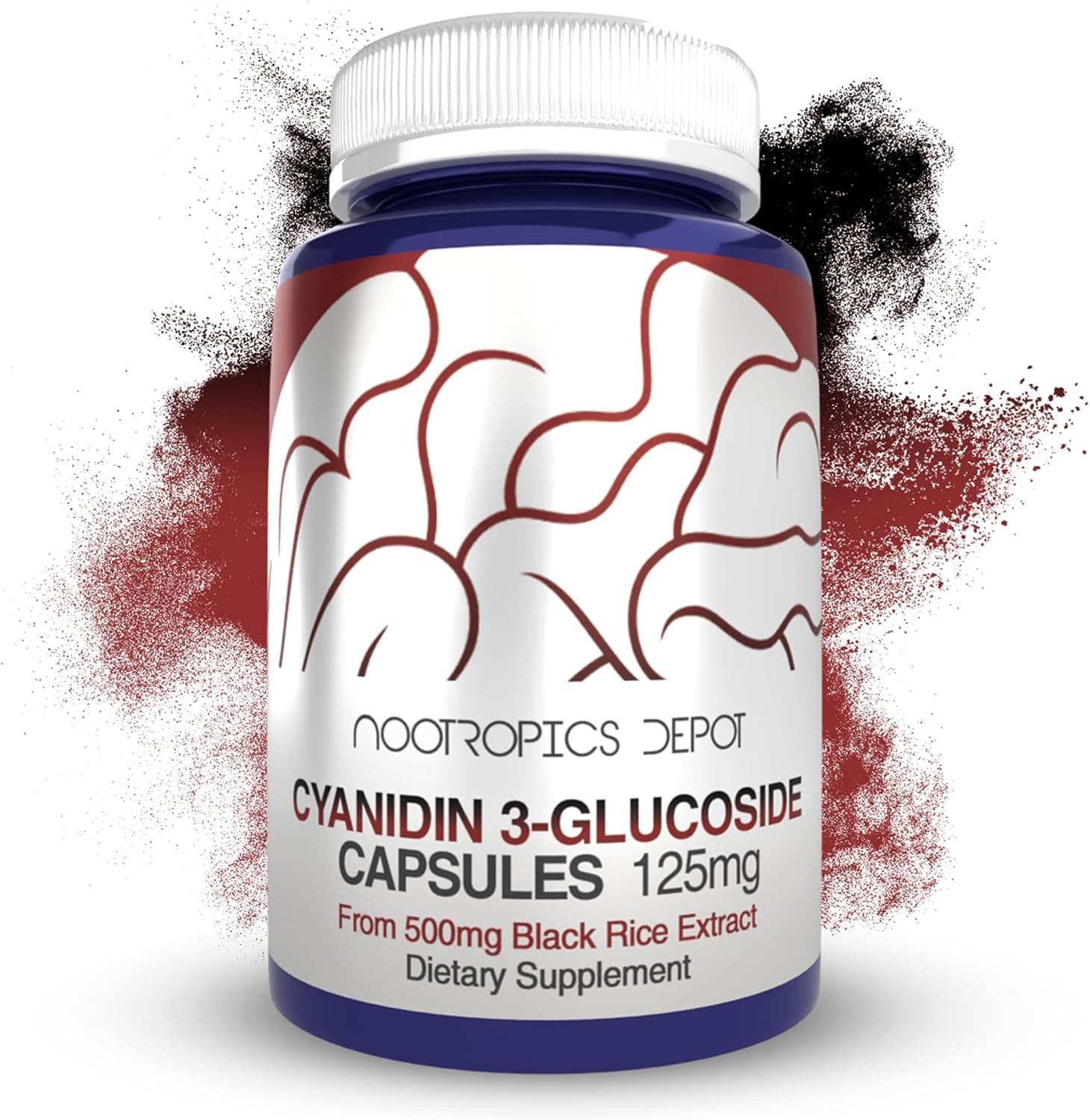
Suppliers
Vendors carrying Cyanidin, with live product details and codes. Links are affiliate links that support the wiki at no cost to you.
Amazon
Cyanidin
Research
- 2008first citedCyanidin 3-rutinoside and cyanidin 3-xylosylrutinoside as primary phenolic antioxidants in blac…
- 2018most recentNatural polyphenols as sirtuin 6 modulators
- 1.Bioavailability of anthocyanins
- 2.Natural polyphenols as sirtuin 6 modulators
- 3.Cyanidin 3-rutinoside and cyanidin 3-xylosylrutinoside as primary phenolic antioxidants in black raspberry
- 4.Anthocyanins and their variation in red wines I. Monomeric anthocyanins and their color expression
4 listed here; entry last updated August 2026
Reviews
My notesprivate to this device
FAQ
What foods have cyanidin?
Blackberries, blackcurrants, black rice, elderberries, and other deeply purple or red plants.
Is the supplement worth it over food?
Debatable; absorption of intact cyanidin is low, so eating pigmented fruit may be just as good.
What's the best-studied benefit?
Antioxidant and metabolic effects, though a lot of that is still preclinical.
Does it help vision?
Anthocyanins have some support for retinal and eye health, but don't expect dramatic effects.
Is it safe?
As a food pigment, yes. Concentrated extracts have less long-term data but no notable toxicity.
Adverse effects
- Poorly absorbed; circulates mainly as metabolites
- Concentrated berry extracts may cause mild digestive upset
- Colored produce can temporarily tint urine or stool
Notes and cautions
- A normal dietary component of many fruits and vegetables
- Generally regarded as safe as a food pigment