
Article and paper data contributed by Molecular
spec sheet13 rows
Turmeric (Curcumin) Curcumin is a bright yellow polyphenol, the principal curcuminoid of turmeric, the spice ground from the rhizome of Curcuma longa in the ginger family. It has long been used as a food colouring and flavouring and is widely sold as a herbal supplement, but it is chemically unstable and very poorly absorbed by mouth. In medicinal chemistry it is regarded as a difficult, likely misleading lead compound, and despite extensive study no rigorous clinical trial has established it as an effective medical treatment [1][2].
- one of the very few botanicals that earns staple status
- the anti inflammatory workhorse for joints and recovery
- antioxidant support from an everyday kitchen spice
- possible mood benefits sitting alongside the joint case
- use an absorbable form; plain powder mostly passes through
- Reports of liver injury with concentrated supplements
- Mild digestive upset
- Poor oral absorption
Overview
Curcumin is the main curcuminoid of turmeric and gives the spice its characteristic yellow colour. Chemically it is a diarylheptanoid polyphenol, two aromatic phenolic rings joined by a seven-carbon chain bearing an alpha,beta-unsaturated diketone; it undergoes keto-enol tautomerism, favouring the enol form in organic solvents and the keto form in water. Turmeric itself is the ground rhizome of Curcuma longa, a plant of the ginger family, and curcumin makes up only a few percent of it.
Turmeric has been used for centuries as a culinary spice, a textile dye and a component of traditional medicine, and curcumin was first isolated in the early nineteenth century and characterised chemically in the early twentieth. Today curcumin serves as a food colouring, designated E100 in the European Union, as well as a flavouring and a cosmetic ingredient, and it is sold in concentrated form as a dietary supplement.
A defining feature of curcumin is its poor drug-like behaviour. Little of an oral dose reaches the bloodstream because it is poorly absorbed, rapidly metabolised and quickly eliminated, and much is excreted unchanged; it is also chemically unstable and readily degrades [2]. Numerous strategies have been tried to raise its exposure, including combining it with piperine from black pepper to slow its breakdown, and formulating it as nanoparticles, liposomes or phospholipid complexes [2].
Curcumin has been the subject of a very large research effort and well over a hundred clinical trials, yet the results have been disappointing. In medicinal chemistry it is classified as a pan-assay interference compound and an invalid metabolic panacea, meaning it tends to produce false positive signals across many assays; reviewers conclude that it is an unstable, reactive and non-bioavailable molecule that is a highly improbable drug lead, and that no well-designed, double-blind, placebo-controlled trial has shown it to work [1]. Commentators have used curcumin as a cautionary example of how an apparently promising natural product can mislead [3].
As a food additive, curcumin is generally recognised as safe by United States regulators, and turmeric is a familiar dietary ingredient. It is not approved as a drug, and regulators have acted against unsupported disease-prevention claims for curcumin products. While usually well tolerated, concentrated turmeric and curcumin supplements have been linked to a growing number of cases of liver injury, in some instances serious, an effect associated with certain genetic backgrounds and sometimes with added piperine [4].

Mechanism
Curcumin is chemically reactive rather than a clean, target-selective drug, which shapes both its reported bioactivity and the scepticism surrounding it. In laboratory assays it appears to influence a wide range of molecular targets and inflammatory and antioxidant pathways, but much of this apparent activity is now attributed to its behaviour as a pan-assay interference compound; its structure, including the reactive alpha,beta-unsaturated diketone and phenolic groups, lets it chelate metals, react covalently with proteins, disrupt membranes and interfere with assay readouts, producing signals that do not translate into genuine, selective pharmacology [1].
Compounding this, curcumin is unstable and degrades readily under physiological conditions, and it is very poorly absorbed, extensively metabolised by conjugation in the gut and liver, and rapidly cleared, so meaningful concentrations rarely reach tissues after oral intake [2]. These pharmacokinetic limits are why formulation tricks and absorption enhancers such as piperine are used, and why reviewers regard the molecule as an improbable therapeutic lead despite decades of study [1][3]. The same reactivity and, in some cases, added piperine may also contribute to the liver injury reported with high-dose turmeric and curcumin supplements [4].
receptor fingerprint
NF-kB signalinginhibits
reduces
COX-2 and inflammatory enzymesinhibits
supports
Blood sugar/lipid handlingmodulates
Dosingtypical ranges, not medical advice
interested in protocols and clinical dosages? make an account to see them! ^_^
Safetyrisks and cautions, not medical advice
Curcumin is well tolerated, with occasional digestive upset or, rarely, a mild headache. It can have mild blood-thinning effects and may interact with anticoagulants, so caution before surgery is wise. High doses or certain formulations have rarely been linked to liver issues, and piperine can alter how other drugs are metabolized.
Where to buy
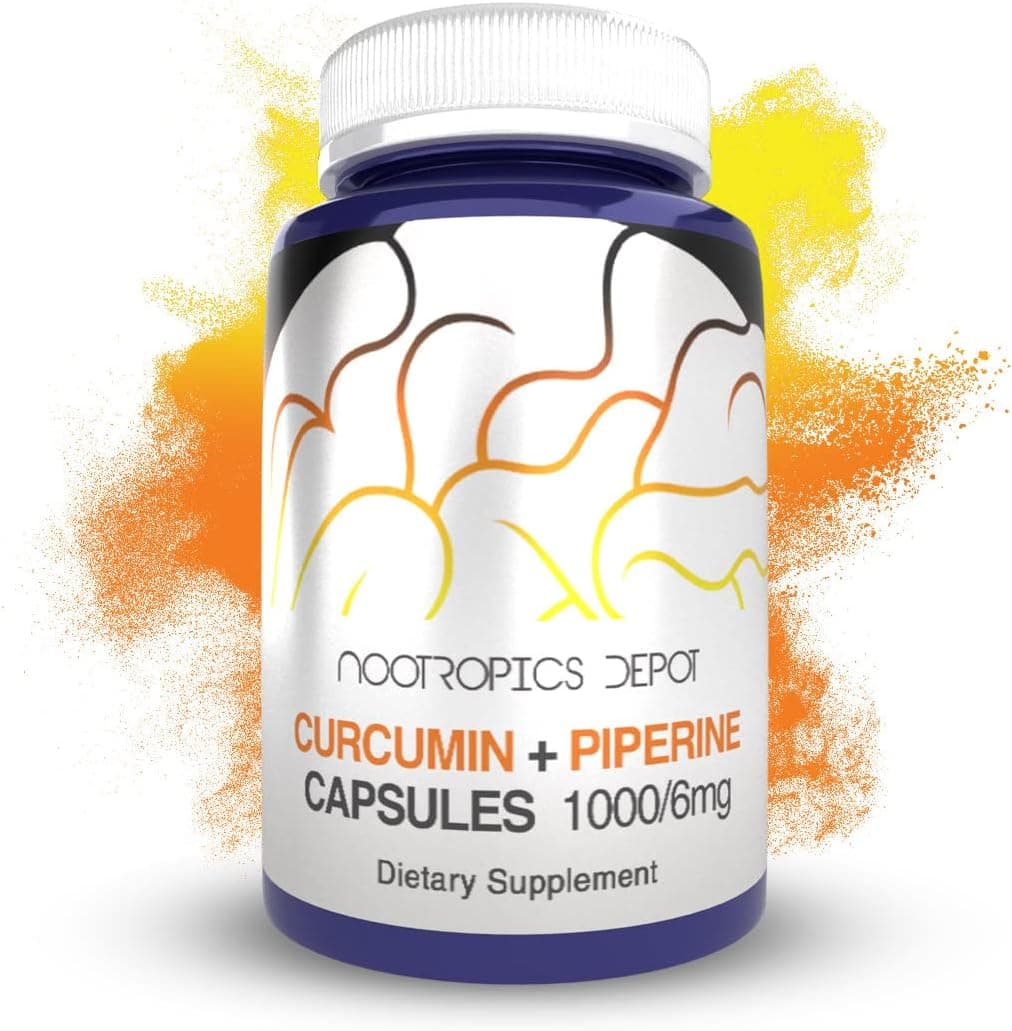
Suppliers
Vendors carrying Turmeric (Curcumin), with live product details and codes. Links are affiliate links that support the wiki at no cost to you.
Amazon
Turmeric Curcumin
Research
- 2007first citedBioavailability of curcumin: problems and promises
- 2023most recentLiver Injury Associated with Turmeric-A Growing Problem: Ten Cases from the Drug-Induced Liver…
- 1.The Essential Medicinal Chemistry of Curcumin
- 2.Bioavailability of curcumin: problems and promises
- 3.Deceptive curcumin offers cautionary tale for chemists
- 4.Liver Injury Associated with Turmeric-A Growing Problem: Ten Cases from the Drug-Induced Liver Injury Network (DILIN)
- 5.Inhibition of boldenone-induced aggression in rats by curcumin: Targeting TLR4/MyD88/TRAF-6/NF-κB pathway
5 listed here; entry last updated August 2026
Reviews
My notesprivate to this device
FAQ
Why do I need black pepper with it?
Curcumin absorbs poorly on its own; piperine from black pepper can boost its bioavailability substantially.
Is turmeric the same as curcumin?
Curcumin is the main active in turmeric, but turmeric powder only contains a few percent curcumin, so extracts are stronger.
Can I take it with blood thinners?
Be cautious; curcumin has mild antiplatelet effects, so check with your doctor first.
How long until it helps joints?
Many trials show benefits over four to eight weeks of consistent use.
Does it really help mood?
There's some trial evidence for mild antidepressant effects, likely via inflammation and BDNF, but it's a supporting player, not a primary treatment.
Adverse effects
- Reports of liver injury with concentrated supplements
- Mild digestive upset
- Poor oral absorption
- Reactivity can interfere with some lab assays
Notes and cautions
- Generally well tolerated in food amounts