
spec sheet11 rows
Oroxylin A is a plant flavonoid from the bark of the Indian trumpet tree (Oroxylum indicum) and from Chinese skullcap; consumers almost never buy the pure compound, they buy Sabroxy, a standardised bark extract in which oroxylin A is one of three flavonoids. It is marketed for memory and focus, and the animal work points to two mechanisms: it blocks the benzodiazepine site on the GABA-A receptor, releasing the brain's main braking signal, and it slows dopamine reuptake in roughly the way ADHD stimulants do. Human evidence is thin and rests on a single 12-week trial in 82 older adults with memory complaints; that trial was paid for by the ingredient's manufacturer, had a company founder as a co-author, found gains on some memory tasks but not most other measures, and applied no statistical correction for testing many outcomes at once. A separate Phase I study showed pure oroxylin A is tolerated up to 2400 mg in healthy volunteers, but no trial has ever shown the pure compound improves cognition in people.
- A dopaminergic lift; it slows dopamine reuptake as stimulants do
- Focus and motivation without the usual stimulant feel
- Lifts the brain's own brake at the benzodiazepine site
- A 12 week trial found memory gains in older adults
- Its lead flavonoid was well tolerated up to 2400 mg in volunteers
- Early and promising rather than settled, which is the appeal
- Possible mild digestive upset
- Nausea
- Headache
Overview
Sabroxy is a proprietary extract made from the dried stem bark of Oroxylum indicum, a tree in the family Bignoniaceae that grows across the Indian subcontinent and Southeast Asia and has a long history in traditional medicine [2]. The extract is standardized to defined levels of hydroxyflavones, reported as roughly 10 percent oroxylin A together with smaller amounts of chrysin and baicalein, the flavonoids thought to carry most of its biological activity [1]. Oroxylin A, the marker compound, is a naturally occurring flavone that is also found in related plants [1].
Oroxylum indicum has been used for generations in traditional Indian and Southeast Asian systems of medicine, where various parts of the plant were applied to complaints ranging from cough and sore throat to digestive and inflammatory problems [2]. Standardized bark extracts such as this one were developed to concentrate the plant's active flavonoids for use as a modern dietary supplement, and they are marketed principally for memory and cognitive support [2].
Scientific study of the extract has centered on the nervous system. In cultured nerve cells it has been reported to raise levels of brain-derived neurotrophic factor, a protein important for the growth and survival of neurons, and to blunt the damage caused by inflammation [1]. In mice, an Oroxylum indicum extract lessened the memory and learning problems produced by chemotherapy, an effect linked to reduced oxidative stress and improved mitochondrial function in the brain [3]. Other laboratory work has found that extracts of the plant protect nerve cells against the toxicity of amyloid-beta, the protein associated with Alzheimer's disease [4]. This research is preclinical, so its relevance to human cognition is still being explored [1].
Sabroxy and similar Oroxylum indicum bark extracts are sold as oral dietary supplements, usually in capsule form, and are sometimes included in blends aimed at focus and memory. As supplements they are regulated differently from medicines. A toxicological evaluation of a standardized bark extract in rodents reported no adverse effects at the doses tested and found no evidence of genetic toxicity, supporting its safety as a supplement ingredient [2].

Mechanism
The effects attributed to Sabroxy are thought to arise from its flavonoid constituents, chiefly oroxylin A, acting through several complementary routes. In nerve cells the extract has been shown to increase the expression of brain-derived neurotrophic factor, a growth factor that supports neuronal health and connections, an action proposed to involve targets such as , , and receptors [1].
The flavonoids are also antioxidants, scavenging reactive oxygen species and easing the that contributes to nerve cell damage, while lowering inflammatory signaling [1][4]. In animal and cell studies these combined actions preserved memory and protected neurons against insults such as chemotherapy toxicity and amyloid-beta, with added support of function in the brain [3][4]. Oroxylin A itself has separately been described as a modulator of neurotransmitter systems and related enzymes [4].
receptor fingerprint
()inhibits reuptake
reduces
-A receptor, benzodiazepine siteAntagonist. Blocks the site rather than enhancing it, reducing GABA-driven chloride conductance and lifting inhibitory tone; this is the opposite sign of action to a benzodiazepine.
( / SLC6A3)Reuptake inhibitor. This is the mechanism the product is actually marketed on.
transporter (NET / SLC6A2)No measurable effect (genuine negative finding)
expression via ERK1/2- signallingIncreases BDNF. Downstream signalling consequence, NOT direct target binding.
P-glycoprotein (ABCB1) efflux transporterInhibitor
OATP2B1 uptake transporter (SLCO2B1)Inhibitor
increases
Inflammatory pathwaysinhibits
Dosingtypical ranges, not medical advice
interested in protocols and clinical dosages? make an account to see them! ^_^
Safetyrisks and cautions, not medical advice
HUMAN ADVERSE EFFECTS, extract, 12 weeks (PMID 34531736): 10 events among 42 on active vs 6 among 40 on placebo. Active arm: headache 2, nausea 2, bloating 2, loose stools 1, skin rash 1, shortness of breath 1. Placebo arm: headache 2, increased thirst 2, skin rash 1, worsened sleep 1. One active-arm participant withdrew for ongoing headaches. The authors characterise it as well tolerated with a tendency toward mild digestive complaints and headaches. This is a 12-week safety window in 42 people; nothing longer exists.
HUMAN ADVERSE EFFECTS, pure compound (PMID 40903694): no dose-limiting toxicity, no serious adverse events and no deaths up to 2400 mg single dose and 2400 mg daily for 10 days; gastrointestinal adverse events were more frequent on repeat than single dosing.
ANIMAL TOXICOLOGY: NOAEL 400 mg/kg body weight in subacute, subchronic and reproductive/developmental studies, with negative Ames and mouse bone-marrow micronucleus assays (PMID 40394874). A separate 4-week mouse feeding study at 500 mg/kg found no change in liver histology, ALT, AST, ALP, bilirubin, albumin, globulin or total protein (PMID 34306298). BOTH studies were authored by Sabinsa personnel; there is no independent toxicology.
INTERACTIONS (all theoretical in humans, none tested): oroxylin A inhibits P-glycoprotein and raised the oral Cmax and AUC of paclitaxel in rats (PMID 19739602), and inhibits OATP2B1 with IC50 7.1 microM (PMID 37252098). Both raise a plausible risk of elevating blood levels of co-administered P-gp or OATP2B1 substrate drugs. Because it is a benzodiazepine-site ANTAGONIST it can be expected to oppose benzodiazepines and Z-drugs; in mice it abolished diazepam's anxiolytic and muscle-relaxant effects (PMID 12818372). Reassuringly, it was not itself convulsant in electroshock or pentylenetetrazole seizure models, although it did block muscimol-driven chloride flux (PMID 21440538). Caution is reasonable for anyone taking benzodiazepines, and for anyone with a seizure disorder, on mechanism alone. No human interaction study of any kind exists.
REGULATORY: Not an approved drug anywhere. A direct search of the FDA GRAS Notice Inventory for "Oroxylum" returns zero records, so there is no GRAS notice on file for the extract or the compound; Sabroxy is sold in the US as a dietary supplement ingredient under DSHEA, which requires no pre-market efficacy or safety approval. Pure oroxylin A is investigational in China (ChiCTR2100051434, oncology). EU novel-food status could not be confirmed either way from public sources.
WADA: oroxylin A, baicalein and chrysin are NOT named on the 2026 Prohibited List. However this is not the same as cleared. Section S4.1 (aromatase inhibitors) is explicitly non-exhaustive, the 2026 list newly added a flavone (2-phenylbenzo[h]chromen-4-one, alpha-naphthoflavone / 7,8-benzoflavone) as an example aromatase inhibitor, and chrysin, present in Sabroxy at 6%, is a documented weak flavone aromatase inhibitor. Tested athletes should treat Sabroxy's status as unresolved rather than safe, and consult their national anti-doping organisation. No aromatase data was found for oroxylin A itself.
History
Sabroxy is not a novel drug but a branded, standardized extract of the bark of Oroxylum indicum, a tree long used in Ayurvedic and other South Asian folk traditions and included in classical tonic preparations such as Chyawanprash and Dashamoolarishta. The extract is produced by the Sabinsa Corporation and standardized to defined levels of its flavones, roughly 10% oroxylin A along with chrysin and baicalein, which frames its modern positioning as a dopamine and BDNF nootropic.
Unlike a discovery-driven pharmaceutical, its history is one of standardization and commercialization of a traditional botanical for the supplement market. A 2021 randomized, double-blind, placebo-controlled trial published in Frontiers in Aging Neuroscience examined Sabroxy for cognitive function in adults with self-reported mild cognitive impairment, reflecting the effort to build clinical support for the ingredient.
Subjective profileweighing the evidence above
A promising dopaminergic nootropic with a plausible mechanism, but the human evidence is early. Worth a cautious try for focus and mood, not a sure thing.
Where to buy
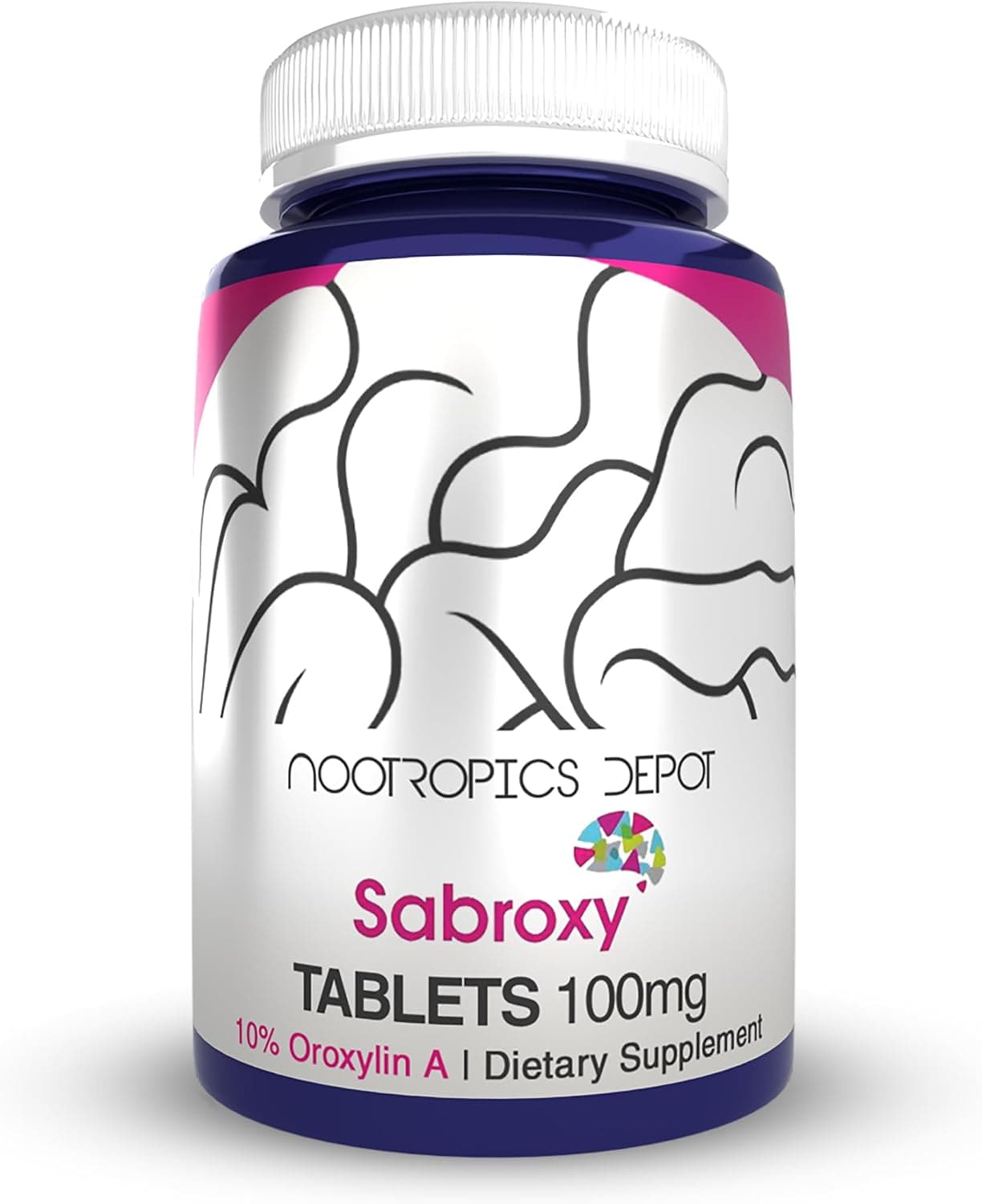
Suppliers
Vendors carrying Sabroxy, with live product details and codes. Links are affiliate links that support the wiki at no cost to you.
Amazon
Sabroxy
Research
- 1998first citedBenzodiazepine binding site-interactive flavones from Scutellaria baicalensis root.
- 2026most recentSafety and pharmacokinetics evaluation of oroxylin A in Chinese healthy volunteers: a phase I,…
- 1.The Neuroprotective Effects of Oroxylum indicum Extract in SHSY-5Y Neuronal Cells by Upregulating BDNF Gene Expression under LPS Induced Inflammation.
- 2.Evaluation of acute, subacute, subchronic, reproductive, and genotoxicity of a standardized extract from the bark of Oroxylum indicum.
- 3.Oroxylum Indicum ameliorates chemotherapy induced cognitive impairment.
- 4.Oroxylum indicum (L.) Leaf Extract Attenuates β-Amyloid-Induced Neurotoxicity in SH-SY5Y Cells.
- 5.Effects of an Oroxylum indicum Extract (Sabroxy®) on Cognitive Function in Adults With Self-reported Mild Cognitive Impairment: A Randomized, Double-Blind, Placebo-Controlled Study.
- 6.Safety and pharmacokinetics evaluation of oroxylin A in Chinese healthy volunteers: a phase I, double-blind, placebo-controlled, single ascending dose, multiple dose, and food effect study.
- 7.5,7-Dihydroxy-6-methoxyflavone, a benzodiazepine site ligand isolated from Scutellaria baicalensis Georgi, with selective antagonistic properties.
- 8.Benzodiazepine binding site-interactive flavones from Scutellaria baicalensis root.
- 9.Oroxylin A improves attention deficit hyperactivity disorder-like behaviors in the spontaneously hypertensive rat and inhibits reuptake of dopamine in vitro.
- 10.Oroxylin A increases BDNF production by activation of MAPK-CREB pathway in rat primary cortical neuronal culture.
- 11.The ameliorating effect of oroxylin A on scopolamine-induced memory impairment in mice.
- 12.Brain Uptake of Bioactive Flavones in Scutellariae Radix and Its Relationship to Anxiolytic Effect in Mice.
13 listed here; entry last updated August 2026
Reviews
My notesprivate to this device
FAQ
How does Sabroxy work?
Its active oroxylin A acts as a mild dopamine reuptake inhibitor and appears to support BDNF, aiding focus, mood, and memory.
Is it like a stimulant?
It raises dopamine tone but is gentler than classic stimulants. Still, avoid taking it late to protect sleep.
Is the evidence solid?
Not yet. Most data is preclinical, so it's promising but unproven in humans.
Can I stack it with other nootropics?
Many pair it with cholinergics or other focus aids. Be cautious combining with other dopaminergics or MAOIs.
When should I take it?
Earlier in the day, since its dopaminergic effect can interfere with sleep if taken late.
Limitations of the evidence
- Limited long-term human safety data
Adverse effects
- Possible mild digestive upset
- Nausea
- Headache
Notes and cautions
- Generally well tolerated in studies