
spec sheet8 rows
9-Me-BC is a small synthetic molecule from the beta-carboline family, chemically close to compounds that occur naturally in coffee, cooked meat and tobacco smoke; it is sold online as a nootropic and has never been approved as a medicine anywhere. In cell cultures and in rodents it raises dopamine levels, protects and partly regrows dopamine-producing neurons, and improved maze learning in rats, which is why it was proposed as a possible Parkinson's disease drug. The evidence is entirely preclinical; there is no human trial, no human dosing study and no human safety data at all, and almost every positive finding comes from a single research group in Germany. Two specific concerns remain unresolved: it inhibits the enzyme MAO-A at low concentrations, the same mechanism that makes prescription MAOI antidepressants risky with certain foods and drugs, and enzymes in the brain can convert it into a closely related molecule that is itself an established nerve toxin.
- Restores dopamine drive and motivation
- Protects dopamine neurons in preclinical work
- Sharper memory and faster learning
- Raises BDNF and GDNF
- Upbeat, driven mood
- MAO inhibition could interact with foods and with serotonergic or dopaminergic drugs
Overview
9-Me-BC (9-methyl-beta-carboline, chemically 9-methyl-9H-pyrido[3,4-b]indole) is a methylated member of the beta-carboline family, a group of pyridoindole alkaloids built on a tryptophan-derived tricyclic ring system. Beta-carbolines occur both endogenously in human brain, plasma, and cerebrospinal fluid and exogenously in foods such as cooked meat, coffee, and tobacco smoke [1]. Most members of the family were historically studied as potential neurotoxins, and elevated levels have been associated with Parkinson's disease. Against that backdrop, 9-Me-BC stands out as the exception; it was the first beta-carboline identified as exerting neuroprotective and neuron-differentiating rather than toxic effects [1].
The compound's structure, a beta-carboline core carrying a methyl group at the 9-nitrogen position, is central to its unusual profile, and its photophysical and chemical behavior have been characterized alongside related N-methyl-beta-carbolines [6]. Research on 9-Me-BC has centered on the dopaminergic system. In cell culture it increases the number of mature dopaminergic neurons and switches on a broad program of neurotrophic and transcription factors that guide dopaminergic differentiation [1]. In living animals it has shown restorative effects, reversing dopamine loss in a toxin model of Parkinson's disease and improving mitochondrial respiratory-chain function [3]. Separate work found that it acts as a cognitive enhancer, improving spatial learning while raising hippocampal dopamine and promoting the growth of dendrites and synapses [4].
Because of this rare multimodal profile, 9-Me-BC has been proposed as a candidate anti-Parkinson drug and is widely discussed as a dopaminergic nootropic [2]. Its regulatory status is that of an experimental research compound; it is not an approved medicine or dietary supplement and is sold chiefly as a research chemical in powder or capsule form. Investigations remain preclinical, spanning cell cultures, astrocytes, and rodent models, with no completed human clinical trials reported in the reviewed literature [2][5].
- Most beta-carbolines are studied as potential neurotoxins linked to Parkinson's disease; 9-Me-BC is the notable exception that actually stimulates and protects dopamine neurons.
- In a rat Parkinson's model, 9-Me-BC raised the activity of mitochondrial respiratory-chain complex I by roughly 80 percent while restoring striatal dopamine.
Mechanism
9-Me-BC acts on the brain's system through several complementary mechanisms, which together explain its neuroprotective, restorative, and cognition-enhancing effects. First, it is a direct stimulator of dopaminergic neurons; in primary midbrain cultures it increased the number of tyrosine-hydroxylase-positive (dopamine-producing) neurons and up-regulated a wide panel of neurotrophic and transcription factors, including Shh, Wnt1, Nurr1, and Pitx3, that drive dopaminergic maturation, while lowering markers of apoptosis such as caspase-3 activity [1]. Second, it raises availability by inhibiting monoamine oxidase, the enzyme that breaks dopamine down; in studies it inhibited MAO-A with an IC50 near 1 micromolar and MAO-B near 15.5 micromolar, and stimulated astrocytes to secrete neurotrophic factors such as and artemin through the signaling pathway [5].
Third, 9-Me-BC improves energy production. In a rat model of Parkinson's disease produced by the neurotoxin MPP+, delivery of 9-Me-BC reversed the roughly 50 percent drop in striatal and restored the number of dopaminergic neurons in the substantia nigra to normal, and this was accompanied by an increase of about 80 percent in the activity of mitochondrial respiratory-chain complex I, alongside induced expression of neurotrophins including and CDNF [3]. It also lowers alpha-synuclein protein levels and dampens by inhibiting microglial proliferation and reducing chemotactic cytokines [2].
Beyond protection and repair, these mechanisms translate into functional benefits. Rats treated for ten days showed improved spatial learning together with elevated hippocampal and measurable growth of dendritic trees and dendritic spines, a structural correlate of enhanced plasticity [4]. In sum, 9-Me-BC combines dopaminergic stimulation, monoamine-oxidase inhibition, neurotrophic induction, enhancement, and anti-inflammatory activity, a multimodal signature that distinguishes it from single-target dopaminergic drugs [2].
receptor fingerprint
MAO-A / MAO-Binhibits
/ GDNFupregulates
synthesis (TH, AADC)boosts
Hippocampal promotes
Monoamine oxidase A (MAO-A)Inhibition; the most potent measured activity of this compound
Monoamine oxidase B (MAO-B)Inhibition; weaker than at MAO-A
(, SLC6A3)Uptake route into dopaminergic neurons, not an inhibitor; DAT blockade abolished the increase in TH-positive neuron number
Organic cation transporters (OCT1/2/3, SLC22A1-3)Uptake route into astrocytes; the OCT inhibitor disprocynium 24 at 50 nM blocked roughly half the anti-proliferative effect
/ signalling pathwayRequired downstream pathway rather than a direct binding target; the PI3K inhibitor LY294002 at 10 µM completely abolished the increase in TH-positive neurons
and its transcription factor programme (Gata2, Gata3, Creb1, Crebbp, Nurr1, Pitx3, En1/En2)Upregulation of gene and protein expression in pre-existing DOPA-decarboxylase-positive neurons
Brain β-carboline-2-N-methyltransferase / phenylethanolamine N-methyltransferase (PNMT)9-Me-BC is a SUBSTRATE, not an inhibitor; these enzymes 2N-methylate it into the neurotoxic quaternary cation 2,9-dimethyl-β-carbolinium
and D3 receptorsNo detectable involvement; this is a negative result worth recording because 9-Me-BC is often loosely described as dopaminergic
Dosingtypical ranges, not medical advice
interested in protocols and clinical dosages? make an account to see them! ^_^
Safetyrisks and cautions, not medical advice
HUMAN SAFETY DATA: none. No published human pharmacokinetics, no bioavailability, no half-life, no brain-penetration data, no organ toxicity data, no drug-interaction studies and no adverse-event series. Every risk below is inferred from in vitro or animal work and is labelled as such.
1. MAO-A inhibition and its interaction class. 9-Me-BC inhibits human MAO-A with an IC50 of 1 µM (PMID 32285253). Whether the doses people take produce meaningful MAO-A inhibition in a living human has never been measured. If it does, the standard MAO-A hazards apply: hypertensive reaction with tyramine-rich foods, and serotonin toxicity when combined with SSRIs, SNRIs, MAOIs, triptans, tramadol, dextromethorphan, linezolid or St John's wort. This is a mechanistic inference, not an observed event.
2. Metabolic conversion into a known neurotoxin. This is the most serious and least discussed risk. Brain β-carboline-2-N-methyltransferase, identified as phenylethanolamine N-methyltransferase, uses 9-Me-BC as a substrate (KM 75 µM) and 2N-methylates it into 2,9-dimethyl-β-carbolinium, a quaternary MPP+-like cation that inhibits mitochondrial complex I and kills dopaminergic neurons (PMID 9016836, PMID 11900856). The same research group that reports 9-Me-BC's benefits uses 2,9-dimethyl-β-carbolinium as the toxin they are protecting against. How much of an oral dose is converted in humans has never been measured.
3. Photosensitisation and DNA damage. Under UVA light, 9-methyl-norharmane damages DNA, producing oxidised purine bases in large excess over pyrimidines, single-strand breaks, abasic sites, and cyclobutane pyrimidine dimers by triplet energy transfer (PMID 23842892). Beta-carbolines are efficient photosensitisers. This is the basis for the widespread sun-avoidance advice, though whether it is relevant at oral supplement doses in skin has not been quantified.
4. Narrow window in vitro. 90 µM was optimal but 150 µM cut TH-positive neuron numbers by 50% in astrocyte-depleted cultures (PMID 32285253); the authors attribute this to loss of astrocytic shielding at overdose.
REGULATORY STATUS: - Not approved as a medicine in any jurisdiction. European and Australian official medicines control laboratories classify it as a research chemical with no approved status in the EU or Australia, and found it circulating largely on the illegal market presented as a dietary supplement (PMID 40558871). - Not a scheduled or controlled substance in the US or UK in any source located. - WADA: NOT named on the Prohibited List. A 2025 review co-authored by the Polish Anti-Doping Agency places 9-Me-BC in its table of substances with "unclear" status, and notably does not list it as presumed to meet WADA criteria by analogy to any prohibited substance (PMID 41048238). Because the Prohibited List is open-ended and section S0 covers non-approved substances with no current regulatory approval for human therapeutic use, an unapproved research chemical can fall under S0. Athletes should treat 9-Me-BC as unresolved and risky, not as cleared.
History
Beta-carbolines were first studied as suspected endogenous and dietary neurotoxins thought to contribute to Parkinson's disease, which made the discovery that one member of the family did the opposite especially notable. Working at the Technical University of Dresden in Germany, Gabriele Gille, Heinz Reichmann and colleagues characterized 9-methyl-beta-carboline through the late 2000s and found that this simple methylated derivative stimulated, protected and even helped regenerate dopaminergic neurons in cell and animal models rather than harming them. The wider evidence for its stimulatory, neurotrophic, monoamine-oxidase-inhibiting and anti-inflammatory actions was consolidated in a 2011 review by Polanski, Reichmann and Gille that framed it as a possible new anti-Parkinson agent. It has never advanced to human clinical trials and remains an experimental research compound.
Reputation
9-Me-BC enjoys a distinctive reputation as the rare beta-carboline that flips the family's usual toxicity into benefit, and it is often described as one of the most intriguing dopaminergic nootropics under study. Enthusiasts and researchers alike point to its unusual multimodal profile; in a single molecule it appears to raise dopamine, induce neurotrophic factors such as BDNF, improve mitochondrial complex I activity and dampen neuroinflammation, a combination that sets it apart from single-target dopaminergics. That said, essentially all of the supporting data come from cell cultures and rodents, so its effects and safety in people are genuinely unproven. It remains best regarded as a promising but early-stage compound whose appeal rests on a compelling preclinical story.
Subjective profileweighing the evidence above
One of the more genuinely interesting dopaminergic nootropics, with neuroprotection and BDNF signals that ordinary stimulants cannot claim. The catch is real reversible MAO-A inhibition, so it must not be stacked with SSRIs, tryptamines, 5-HTP or St John's Wort, and the human safety record is essentially empty.
Where to buy



Suppliers
Vendors carrying 9-Me-BC, with live product details and codes. Links are affiliate links that support the wiki at no cost to you.
| supplier | size | price | $/mg |
|---|---|---|---|
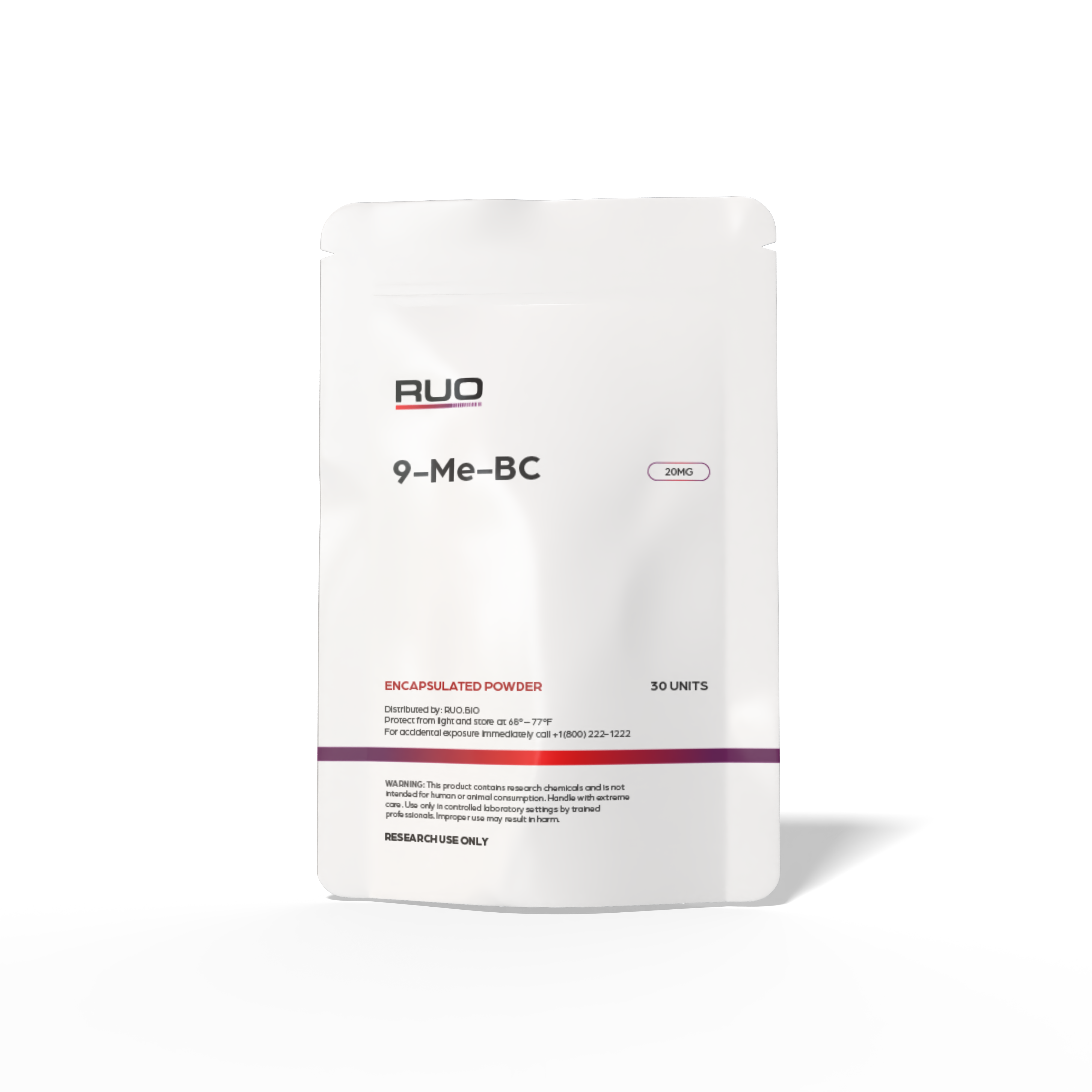
| RUOlowest | 20mg | $36.00 | $1.80/mg |
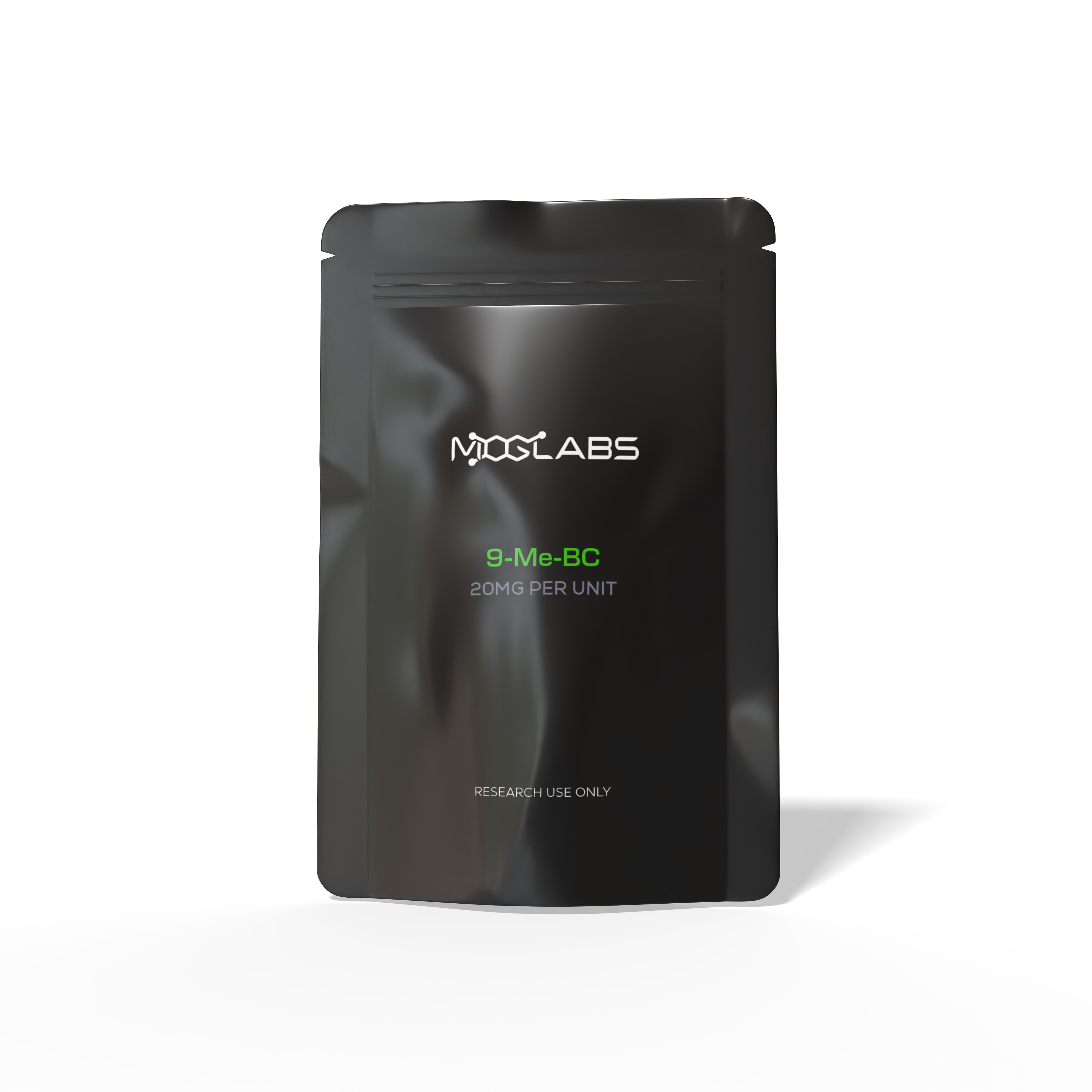
| Moglabs | 20mg | $40.00 | $2.00/mg |
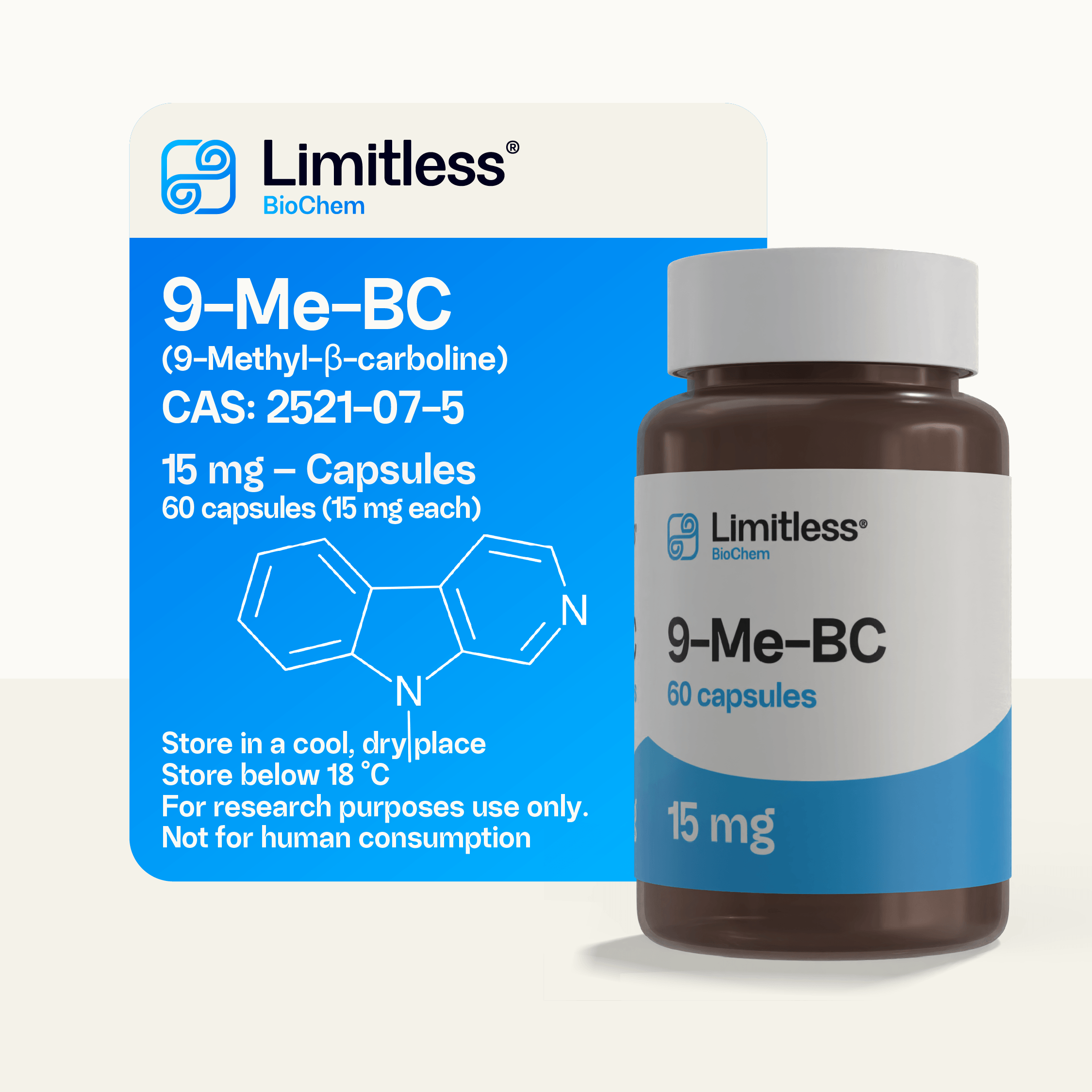
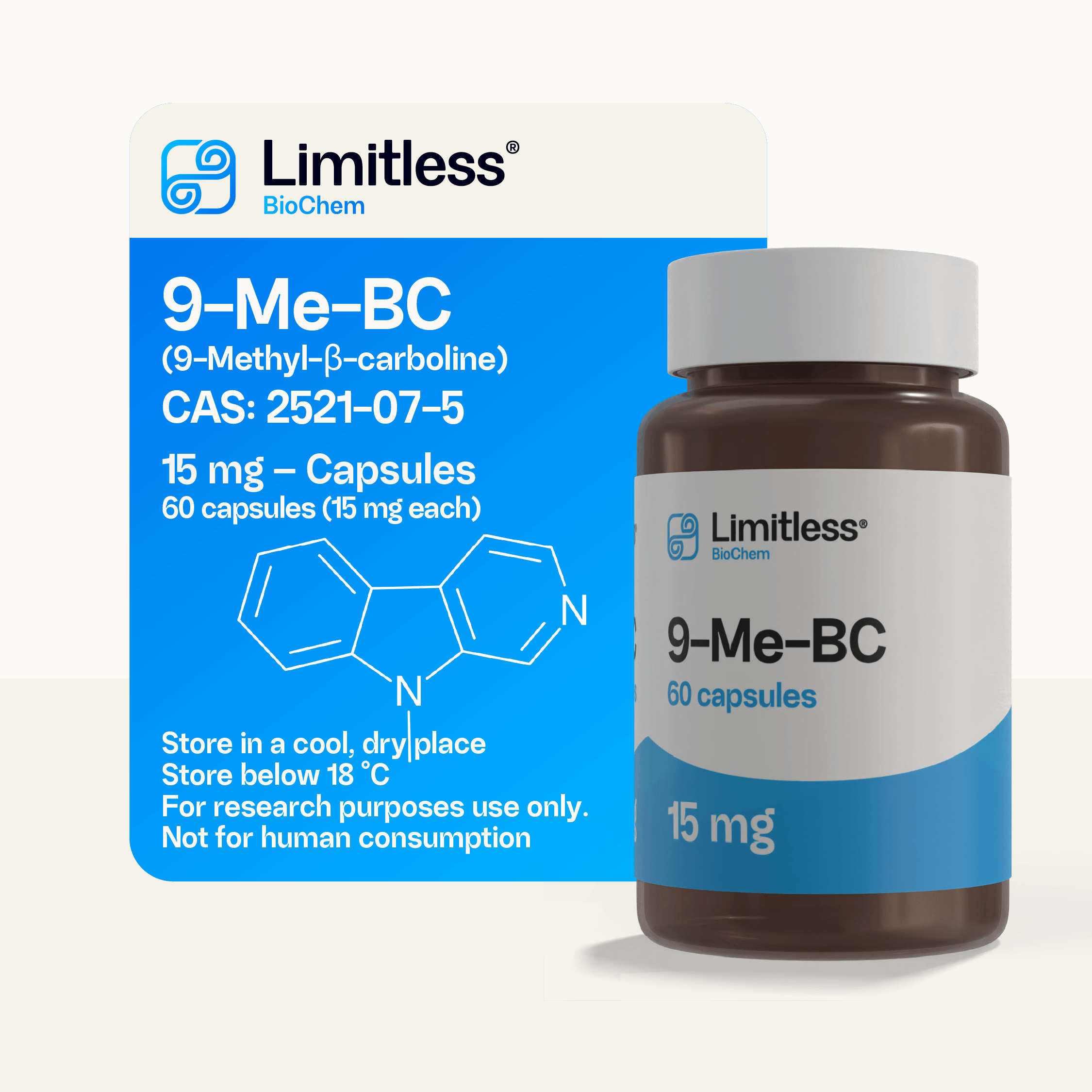
| Limitless Biochem | 15mg | $69.55 | $4.64/mg |
RUO
9-Me-BC
Moglabs
9-Me-BC
Limitless Biochem🌐
9-Me-BC
Kimera Chems
9-Me-BC
Research
- 1997first citedCharacterization of brain beta-carboline-2-N-methyltransferase, an enzyme that may play a role…
- 2025most recentThe Occurrence of Illicit Smart Drugs or Nootropics in Europe and Australia and Their Associate…
- 1.9-Methyl-beta-carboline up-regulates the appearance of differentiated dopaminergic neurones in primary mesencephalic culture
- 2.Stimulation, protection and regeneration of dopaminergic neurons by 9-methyl-β-carboline: a new anti-Parkinson drug?
- 3.9-Methyl-beta-carboline has restorative effects in an animal model of Parkinson's disease
- 4.9-Methyl-β-carboline-induced cognitive enhancement is associated with elevated hippocampal dopamine levels and dendritic and synaptic proliferation.
- 5.9-Methyl-β-carboline inhibits monoamine oxidase activity and stimulates the expression of neurotrophic factors by astrocytes.
- 6.Photophysical and Photochemical Properties of Naturally Occurring normelinonine F and Melinonine F Alkaloids and Structurally Related N(2)- and/or N(9)-methyl-β-carboline Derivatives.
- 7.The exceptional properties of 9-methyl-beta-carboline: stimulation, protection and regeneration of dopaminergic neurons coupled with anti-inflammatory effects.
- 8.Inhibition of the bioactivation of the neurotoxin MPTP by antioxidants, redox agents and monoamine oxidase inhibitors.
- 9.Mechanisms of DNA damage by photoexcited 9-methyl-β-carbolines.
- 10.Characterization of brain beta-carboline-2-N-methyltransferase, an enzyme that may play a role in idiopathic Parkinson's disease.
- 11.Phenylethanolamine N-methyltransferase has beta-carboline 2N-methyltransferase activity: hypothetical relevance to Parkinson's disease.
- 12.The Occurrence of Illicit Smart Drugs or Nootropics in Europe and Australia and Their Associated Dangers: Results from a Market Surveillance Study by 12 Official Medicines Control Laboratories.
12 listed here; entry last updated August 2026
Reviews
- lowkey GREAT for stim recovery
ran 20mgs oral from RUO for 30 days, and by around day 7ish? i felt as if I had more motivation. I recently stopped taking my ritalin (dependency) and was sluggish as of late, ran this because i'd seen a video, definitely helped pairs well with bromantane too for more drive, but also i did get minor eye floaters (seems to be common) while running it, and i lowkey enjoyed the whole run. day 25 i felt great. hopping off, felt a little less energetic for the first day, but OML. i felt WAAAY better after getting beat up by dependency ngl. good stuff. 9/10.
0 - pretty nice i like this
i did 20mgs oral from RUO for 30 days, day 10 is when things picked up for me and i felt more motivated. i rawdogged it with ZERO stimulants, but it was awesome lol
0
My notesprivate to this device
FAQ
What is 9-Me-BC used for?
It is researched as a nootropic for dopamine support, memory, and neuroprotection, mostly in animal studies.
How does 9-Me-BC work?
This beta-carboline acts on dopamine signaling and appears to raise growth factors like BDNF and GDNF in animal models.
Is 9-Me-BC well-researched?
Evidence is largely preclinical, with little controlled human data available.
What are the main side effects?
Because it is dopaminergic and stimulating, overstimulation, trouble sleeping, or headache are possible.
Limitations of the evidence
- Human safety data are lacking; evidence is preclinical
- Long-term effects and appropriate human exposure are unknown
Adverse effects
- MAO inhibition could interact with foods and with serotonergic or dopaminergic drugs
Notes and cautions
- Overstimulation or restlessness is plausible given dopaminergic activity
- Sleep disturbance if taken late in the day