
spec sheet11 rows
Uridine monophosphate (UMP) is the nucleotide form of uridine and the most common way uridine is sold as a nootropic. It feeds the pathway that builds neuronal membranes and supports acetylcholine and dopamine signaling; it is the uridine in the popular Mr Happy stack alongside omega-3s and a choline source.
- feeds the pathway that builds neuronal membranes
- backs acetylcholine and dopamine signaling
- the uridine leg of the classic Mr Happy stack
- pairs with DHA and choline to build synapses
- gentle and well tolerated as a daily base
- a foundational nootropic rather than a firework
- Mild GI upset possible
Overview
Uridine monophosphate is one of the four nucleotides that make up RNA, and in the body it functions as a central precursor in the CDP-choline (Kennedy) pathway used to synthesize phosphatidylcholine and phosphatidylethanolamine, the principal phospholipids of neuronal membranes. By increasing the availability of these substrates, supplemental uridine is proposed to support the formation and maintenance of synaptic membranes, which has made it a subject of interest for cognition, mood, and neurodevelopment. It also feeds into the production of uridine diphosphate derivatives that participate in cellular signaling and glycogen and glycoprotein metabolism, giving it roles beyond the nervous system.
As a nootropic it is most commonly discussed as part of a combination approach rather than in isolation. The rationale for pairing uridine with a choline source and an omega-3 fatty acid such as DHA is that the three together supply the complementary substrates the brain needs to build membrane phospholipids, and much of the supportive preclinical research has used such combinations. Reported subjective effects include improvements in mood, motivation, and memory, though the strength of the human evidence varies by outcome and many findings derive from animal models or from multi-ingredient formulations rather than controlled trials of uridine alone.
In practical terms uridine monophosphate is regarded as well tolerated, and it is often taken sublingually on the theory that this improves absorption, although the extent to which oral or sublingual uridine raises central nervous system uridine levels in humans remains a point of genuine scientific debate. Because it interacts with cholinergic and membrane-synthesis pathways, it is frequently combined with other cholinergic agents in stacks, and users are generally advised to treat dosing conservatively given the limited formal clinical guidance. Overall it is best characterized as a mechanistically plausible and popular supplement whose specific human benefits are supported more by theory and anecdote than by large, definitive trials.

- UMP is the uridine in the famous Mr Happy stack; the recipe pairs it with fish-oil DHA and a choline source because the three feed the same membrane-building (Kennedy) pathway from different angles.
- Much of the interest traces back to Richard Wurtman's lab at MIT, which showed that oral uridine plus DHA and choline raises brain CDP-choline and increases dendritic spine density (the number of synapse contact points) in animals.
- It's the same uridine your body already makes from scratch and that shows up in breast milk and infant formula; the monophosphate is just the salt form that survives the gut and gets absorbed as uridine.
Mechanism
UMP is uridine plus a phosphate group; taken by mouth it is dephosphorylated and absorbed as uridine, then used as a pyrimidine substrate. Uridine drives the CDP- (Kennedy) pathway to make phosphatidylcholine for membranes, raises brain CDP-choline, and supports and release; combined with DHA and a choline source it increases synaptic proteins and dendritic spine density in animal work. It also signals through P2Y pyrimidinergic receptors, which are involved in neuroprotective signaling.
receptor fingerprint
CDP- / membrane synthesissubstrate (via uridine)
supports synthesis and release
supports release
P2Y pyrimidinergic receptorsagonist (via uridine)
Dosingtypical ranges, not medical advice
interested in protocols and clinical dosages? make an account to see them! ^_^
Safetyrisks and cautions, not medical advice
Generally well tolerated at supplement doses (roughly 150 to 300 mg a day), with occasional mild stomach upset the main complaint; it's a legal OTC supplement with no serious documented interactions, though human trial data on UMP alone are modest. There's a theoretical caution for anyone with a pyrimidine metabolism disorder (such as orotic aciduria) or active cancer, since uridine is a nucleotide building block that could in theory feed fast-dividing cells; whether that matters at supplement doses is unestablished. Not medical advice.
History
Uridine monophosphate is a naturally occurring pyrimidine nucleotide that serves as a building block of RNA and as a key intermediate in the synthesis of membrane phospholipids. Its relevance to brain function was clarified largely through research at the Massachusetts Institute of Technology, notably by Richard Wurtman and colleagues, who studied how dietary uridine, together with choline and omega-3 fatty acids, supplies the substrates the brain uses to build phosphatidylcholine and other membrane components through the Kennedy pathway. This work established the rationale for supplementing uridine to support synaptic membrane formation and cholinergic signaling, and it underpins the compound's later adoption as a nootropic ingredient.
Reputation
Among nootropics users, uridine monophosphate is a well-liked and relatively affordable staple, most famous as a component of the widely shared stack that pairs it with a source of DHA and a choline donor. Enthusiasts report benefits to mood, motivation, and memory, and it is generally considered gentle and well tolerated. More cautious reviewers point out that much of the supporting evidence comes from animal studies or from combination formulas rather than isolated human trials of the compound, and that oral uridine's ability to raise brain levels has been debated, so its reputation rests on a mixture of mechanistic plausibility and consistent but largely anecdotal user experience.
Where to buy
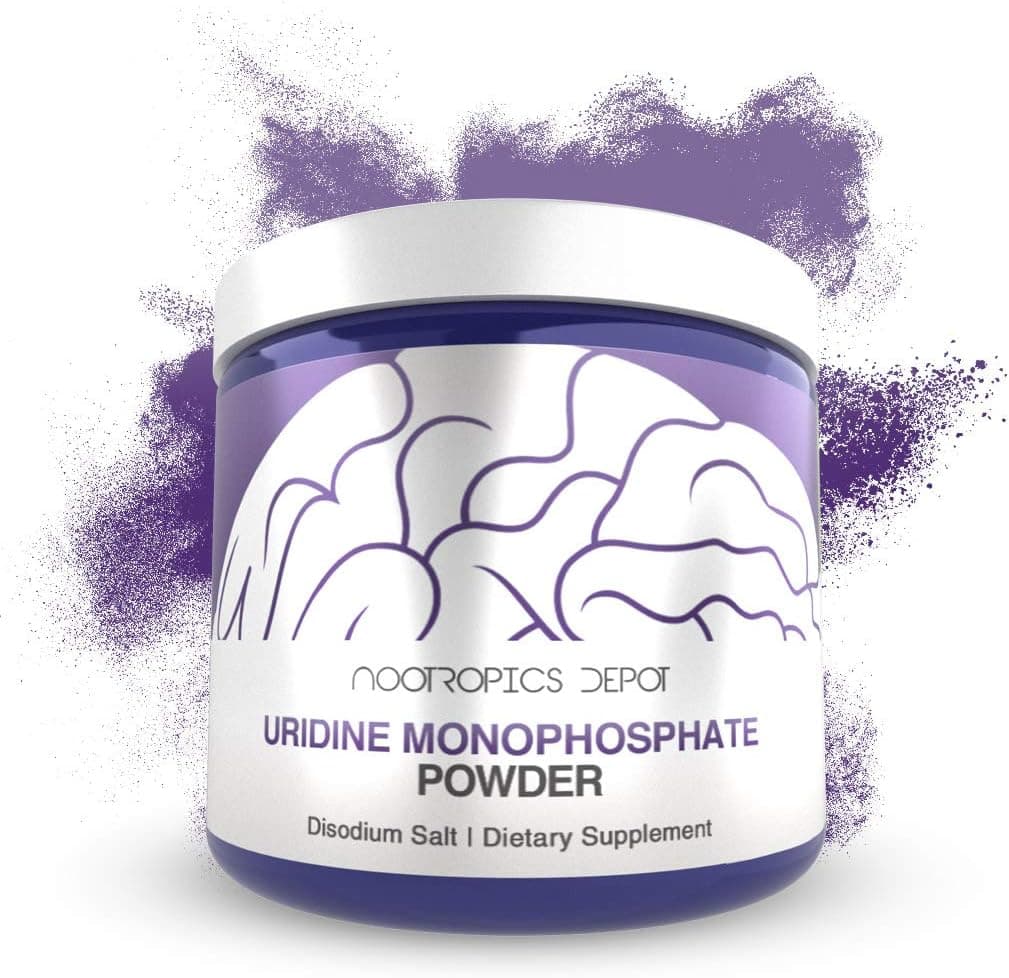
Suppliers
Vendors carrying Uridine Monophosphate, with live product details and codes. Links are affiliate links that support the wiki at no cost to you.
Amazon
Uridine Monophosphate
Research
- 2005first citedAntidepressant-like effects of uridine and omega-3 fatty acids are potentiated by combined trea…
- 2008most recentOral administration of circulating precursors for membrane phosphatides can promote the synthes…
- 1.Oral uridine-5'-monophosphate (UMP) increases brain CDP-choline levels in gerbils
- 2.Dietary uridine-5'-monophosphate supplementation increases potassium-evoked dopamine release and promotes neurite outgrowth in aged rats
- 3.Dietary supplementation with uridine-5'-monophosphate (UMP), a membrane phosphatide precursor, increases acetylcholine level and release in striatum of aged rat
- 4.Oral supplementation with docosahexaenoic acid and uridine-5'-monophosphate increases dendritic spine density in adult gerbil hippocampus
- 5.Antidepressant-like effects of uridine and omega-3 fatty acids are potentiated by combined treatment in rats
- 6.Oral administration of circulating precursors for membrane phosphatides can promote the synthesis of new brain synapses
6 listed here; entry last updated August 2026
Reviews
My notesprivate to this device
FAQ
Is UMP the same as uridine?
Practically yes; UMP is the nucleotide form and is absorbed as uridine, which is why it is the usual supplement form.
What is the Mr Happy stack?
A popular combination of a uridine source (like UMP), omega-3 DHA, and a choline source, aimed at membrane synthesis, memory, and mood.
What does it actually do?
It feeds the CDP-choline (membrane-building) pathway that constructs synaptic membranes and supports acetylcholine and dopamine signaling.
How much should I take?
Most people use about 150 to 300 mg a day, once in the morning or midday; it works best paired with a choline source and DHA rather than taken alone.
Is sublingual worth it?
It's popular on the idea that under-the-tongue dosing improves delivery, but whether that meaningfully raises brain uridine over just swallowing it is still debated; either way it's cheap to try.
Limitations of the evidence
- Human trial data on UMP alone are modest
- Brain uptake from oral dosing is debated
Adverse effects
- Mild GI upset possible
Notes and cautions
- Effects are subtle, especially taken solo