
spec sheet12 rows
Phosphatidylserine is a phospholipid that is a normal building block of cell membranes, where it is concentrated on the inner surface and is especially abundant in the membranes of nerve cells. It takes part in cell signaling and blood clotting, and its externalization onto the cell surface serves as the principal signal that flags dying cells for removal, a signal that some tumors and pathogens exploit to evade immune clearance. As a dietary supplement, usually derived from soy or sunflower, it is marketed chiefly for memory and age-related cognitive decline and has been reported to blunt the cortisol response to stress, although the supporting evidence for cognitive benefit is regarded as limited.
- blunts the cortisol spike stress throws at you
- the cortisol effect is the part with real evidence
- a native building block of every nerve cell membrane
- safe, cheap and very well tolerated at 100 to 300 mg
- builds quietly over weeks of daily use
- a sensible stress adjunct rather than a stimulant
- Because it contributes to the clotting surface, it could in theory add to the effect of blood-thinning medications
- Soy-derived and sunflower-derived forms are preferred over the historical bovine-brain source, which carried a theoretical risk of prion disease
- The evidence for cognitive benefit is considered limited, and European regulators did not accept memory claims
Overview
Phosphatidylserine is an anionic, or acidic, glycerophospholipid built from a glycerol backbone carrying two fatty acids and the amino acid serine attached through a phosphate group [1]. It is a normal component of cell membranes and is concentrated on the inner, cytoplasmic leaflet; it is the major acidic phospholipid of nervous tissue, making up a notable fraction of the phospholipids in the human cerebral cortex, and brain phosphatidylserine is particularly rich in the omega-3 fatty acid docosahexaenoic acid (DHA) [1].
The molecule has several distinct biological roles. On the inside of the membrane its negative charge helps recruit and activate signaling proteins such as Akt, Raf-1, and protein kinase C, interactions that in neurons support cell survival, differentiation, and the release of neurotransmitters [1]. When phosphatidylserine that is normally kept on the inner surface is displayed on the outer surface, it acts as an important signal in two situations: on activated platelets it provides the surface on which blood-clotting factors assemble, and on dying cells it serves as an 'eat me' signal that prompts scavenger cells to engulf them [1]. In the body it is manufactured by exchanging the head group of phosphatidylcholine or phosphatidylethanolamine for serine, a reaction carried out by phosphatidylserine synthase enzymes in the endoplasmic reticulum [1].
Phosphatidylserine is obtained in small amounts from the diet, with soy, sunflower, and animal tissues such as brain, liver, and fish among the sources [2]. Commercial supplements were originally extracted from bovine brain cortex, but production shifted to soy-derived and sunflower-derived material because of concerns about transmitting prion disease from brain tissue [2].
As a supplement it is promoted mainly for memory and cognition, especially age-related decline. In 2003 the United States Food and Drug Administration allowed a qualified health claim stating that phosphatidylserine may reduce the risk of dementia and cognitive dysfunction in the elderly, while requiring a disclaimer that the supporting evidence is very limited and preliminary [3]. European regulators reviewing the same kind of claims did not find the evidence sufficient to establish a cause-and-effect relationship for cognitive function [4]. It has also been studied in exercise, where supplementation blunted the cortisol and stress-hormone response to heavy training and was reported to affect exercise capacity, and a broad review of memory supplements placed phosphatidylserine among the ingredients with at least some supporting evidence [2][3]. It is sold as an oral dietary supplement rather than a licensed medicine [3].

Mechanism
Phosphatidylserine is an acidic phospholipid that gathers on the inner face of the cell membrane, where its negative charge forms docking sites that recruit and switch on signaling proteins such as , Raf-1, and protein kinase C; in nerve cells these interactions promote survival, differentiation, and neurotransmitter release, which is the theoretical rationale for its cognitive uses [1]. The brain preferentially builds phosphatidylserine using the omega-3 fatty acid DHA, and DHA in turn promotes the synthesis and accumulation of phosphatidylserine in neuronal membranes [1].
Elsewhere in the body, phosphatidylserine that is normally hidden on the inner membrane becomes exposed on the outer surface in two important settings: on activated platelets, where it provides the platform on which clotting factors assemble, and on dying cells, where it acts as a recognition signal for the immune cells that clear them [1]. How oral supplementation produces cognitive effects is not well established, though it is presumed to modestly raise the phosphatidylserine content of membranes [2].
receptor fingerprint
Neuronal membrane (fluidity, PKC)supports
/ blunts
supports
Dosingtypical ranges, not medical advice
interested in protocols and clinical dosages? make an account to see them! ^_^
Safetyrisks and cautions, not medical advice
Phosphatidylserine is well tolerated with an excellent safety profile at normal doses (100 to 300 mg a day), and the FDA even gave it a Qualified Health Claim for cognition. The main contraindication is an allergy to the source (most PS is made from soy, though sunflower-derived PS is an easy alternative). Higher doses can bring mild stomach upset (nausea, discomfort), which taking it with meals usually settles. Because it plays a role in clotting signals, there's a theoretical caution with blood thinners (warfarin, heparin), though it's not clearly an issue at supplement doses. No serious drug interactions at typical doses, and no scheduling restrictions.
History
Phosphatidylserine is an aminophospholipid concentrated in the inner leaflet of cell membranes, especially abundant in neural tissue, where it contributes to membrane fluidity and signaling. Scientific interest in supplementation grew in the 1980s and 1990s, when European researchers studied a bovine-cortex-derived form (often abbreviated BC-PS) in age-related memory decline and dementia and reported encouraging results. Concerns about transmissible spongiform encephalopathy from bovine brain tissue subsequently prompted a shift to plant-based manufacturing, and modern commercial phosphatidylserine is produced enzymatically from soy or sunflower lecithin. On the strength of the cognitive-aging literature, it became a staple ingredient in memory and brain-health supplements worldwide.
Reputation
Phosphatidylserine is among the better-regarded cognitive supplements, in part because it carries a qualified health claim from United States regulators acknowledging very limited evidence for reducing the risk of cognitive dysfunction in the elderly. It is commonly valued for supporting memory in aging, for possible attention benefits, and for a reported ability to blunt exercise-induced cortisol, the last of which underpins its use in some sports and stress formulas. The evidence is stronger for the older bovine-derived material than for the soy-derived product now sold, a distinction critics emphasize when cautioning that results may not fully transfer between forms. On balance it is seen as safe and plausibly helpful rather than dramatically effective, with expectations best kept modest.
Subjective profileweighing the evidence above
Safe, well tolerated and cheap, and the cortisol-blunting effect is the part with the most behind it, so it makes a reasonable stress adjunct at 100 to 300 mg daily. The memory story is much weaker than the marketing, weak enough that European regulators rejected the claims. Keep expectations modest.
Where to buy
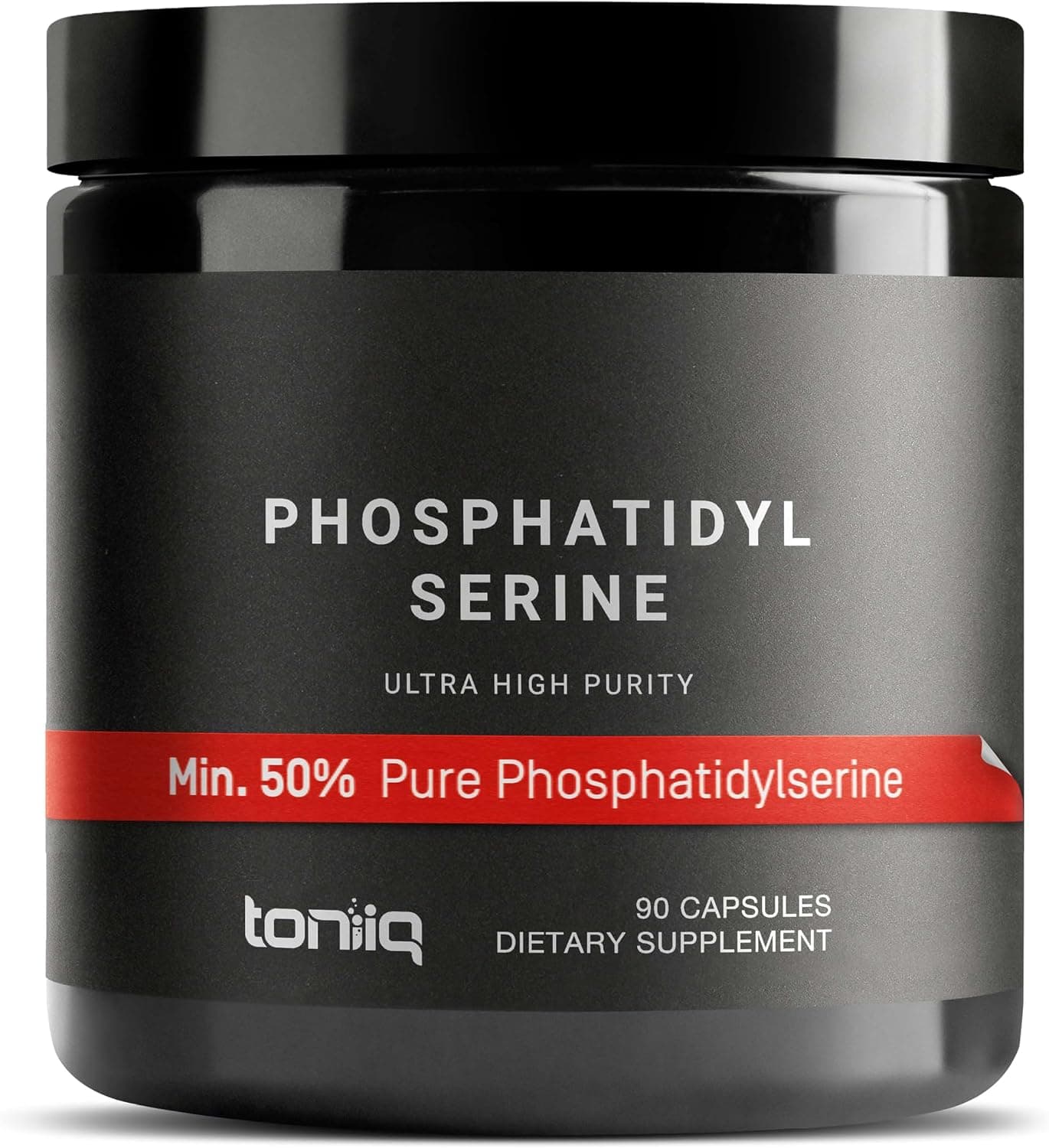
1 other outlet

Suppliers
Vendors carrying Phosphatidylserine, with live product details and codes. Links are affiliate links that support the wiki at no cost to you.
Amazon
Phosphatidylserine
iHerb
Phosphatidylserine
Research
- 1992first citedBlunting by chronic phosphatidylserine administration of the stress-induced activation of the h…
- 2026most recentDifferential cognitive effects of DHA-enriched and standard phosphatidylserine formulations in…
- 1.Phosphatidylserine in the brain: metabolism and function.
- 2.Effects of phosphatidylserine supplementation on exercising humans.
- 3.Over the Counter Supplements for Memory: A Review of Available Evidence.
- 4.Scientific Opinion on the substantiation of health claims related to phosphatidylserine (EFSA).
- 5.Flipping the dogma - phosphatidylserine in non-apoptotic cell death
- 6.Phosphatidylserine is a global immunosuppressive signal in efferocytosis, infectious disease, and cancer
- 7.Blunting by chronic phosphatidylserine administration of the stress-induced activation of the hypothalamo-pituitary-adrenal axis in healthy men
- 8.Effects of phosphatidylserine on the neuroendocrine response to physical stress in humans
- 9.The influence of phosphatidylserine supplementation on mood and heart rate when faced with an acute stressor
- 10.The effects of IQPLUS Focus on cognitive function, mood and endocrine response before and following acute exercise
- 11.The effects of phosphatidylserine on endocrine response to moderate intensity exercise
- 12.Effects of phosphatidylserine on oxidative stress following intermittent running
19 listed here; entry last updated August 2026
Reviews
My notesprivate to this device
FAQ
What is phosphatidylserine?
It is a phospholipid found in cell membranes, especially in the brain, and is used to support memory and focus.
How quickly does it work?
Its effects tend to build gradually over a few weeks rather than being felt immediately.
How does it relate to stress?
It has been studied for blunting the cortisol stress response, which is one reason people use it.
Why take it with food?
Taking fat-soluble supplements with meals may support absorption and reduce stomach upset.
Adverse effects
- Because it contributes to the clotting surface, it could in theory add to the effect of blood-thinning medications
- Soy-derived and sunflower-derived forms are preferred over the historical bovine-brain source, which carried a theoretical risk of prion disease
- The evidence for cognitive benefit is considered limited, and European regulators did not accept memory claims
- Its safety with long-term use and during pregnancy has not been well studied
Notes and cautions
- Phosphatidylserine is generally well tolerated; the most common effects are mild gastrointestinal upset or insomnia, particularly at higher doses