
spec sheet12 rows
Noopept is one of the most extensively researched dipeptide nootropics, a proline-containing compound designed as a peptide analog of piracetam with far greater potency by weight. Its standout quality is neuroprotection; in cellular models it guarded neurons against oxidative and amyloid-related damage more effectively than piracetam or classic antioxidants, while attenuating tau hyperphosphorylation [1][3]. Studied for memory restoration and neuroprotection, it also raises endogenous NGF and BDNF and activates adaptive stress-response pathways.
- Sharper memory and faster recall
- Remarkably potent by weight
- Neuroprotection that outperformed piracetam in cell models
- Raises your own NGF and BDNF
- Solid focus support
- Bonus mild choline boost
- Occasional headache
- Mild irritability
Overview
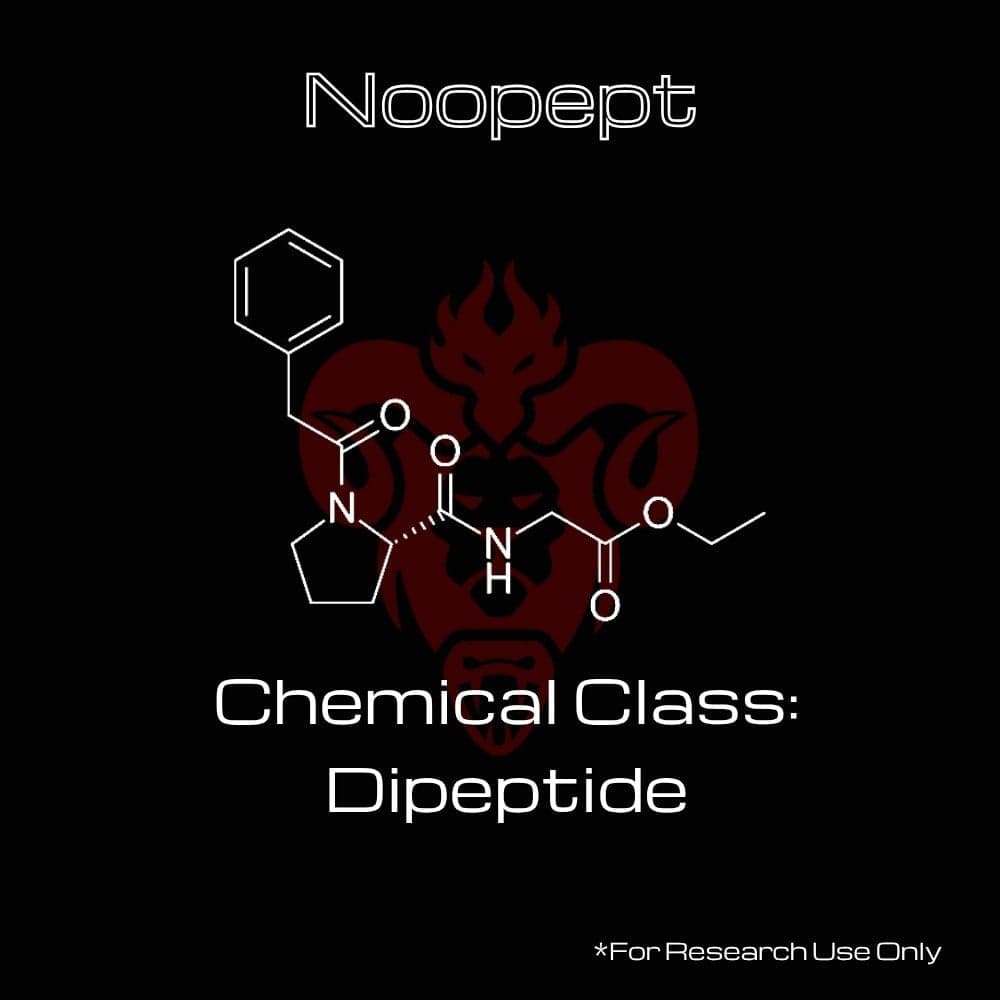
Noopept (N-phenylacetyl-L-prolylglycine ethyl ester), also known by the development code GVS-111, is a synthetic dipeptide nootropic created at the Zakusov Institute of Pharmacology in Moscow as a proline-containing analog of the prototypical cognition enhancer piracetam [1]. Although structurally a small peptide, it is active at much lower doses than piracetam, and it has been studied in numerous animal models of cognitive impairment and neurodegeneration.
The compound's research profile is anchored in neuroprotection. In normal and Down's syndrome human cortical neurons, GVS-111 protected against oxidative damage and apoptosis and outperformed piracetam and several standard antioxidants [3]. In a cellular model of Alzheimer's disease, noopept protected neurons from amyloid-beta toxicity, reduced reactive oxygen species and intracellular calcium, preserved mitochondrial function, and notably attenuated tau hyperphosphorylation and restored neurite outgrowth [1]. It also demonstrated memory-restoring and neuroprotective effects in a photochemical stroke model, reducing infarct volume when given after ischemic injury [2].
Mechanistically, noopept has been linked to increased expression of the neurotrophins NGF and BDNF, to antioxidant and anti-excitotoxic actions, and to activation of adaptive transcriptional programs; it was shown to activate the hypoxia-inducible transcription factor HIF-1, changing the expression of genes across several metabolic pathways [4]. Beyond cognition, it has been examined in other contexts, including a study reporting effects on cognitive function and the pubertal process in a rat model of diabetes [5].
Noopept is used as a nootropic and research compound and is available in oral and other forms depending on jurisdiction; its regulatory status varies by country, and it is a prescription medication in some regions and an unapproved research chemical in others. Its supporting evidence is substantial for a compound of its class, though largely preclinical and concentrated in a defined body of Russian and collaborating research.
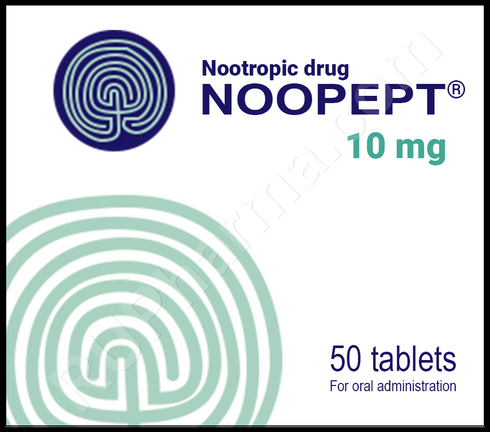
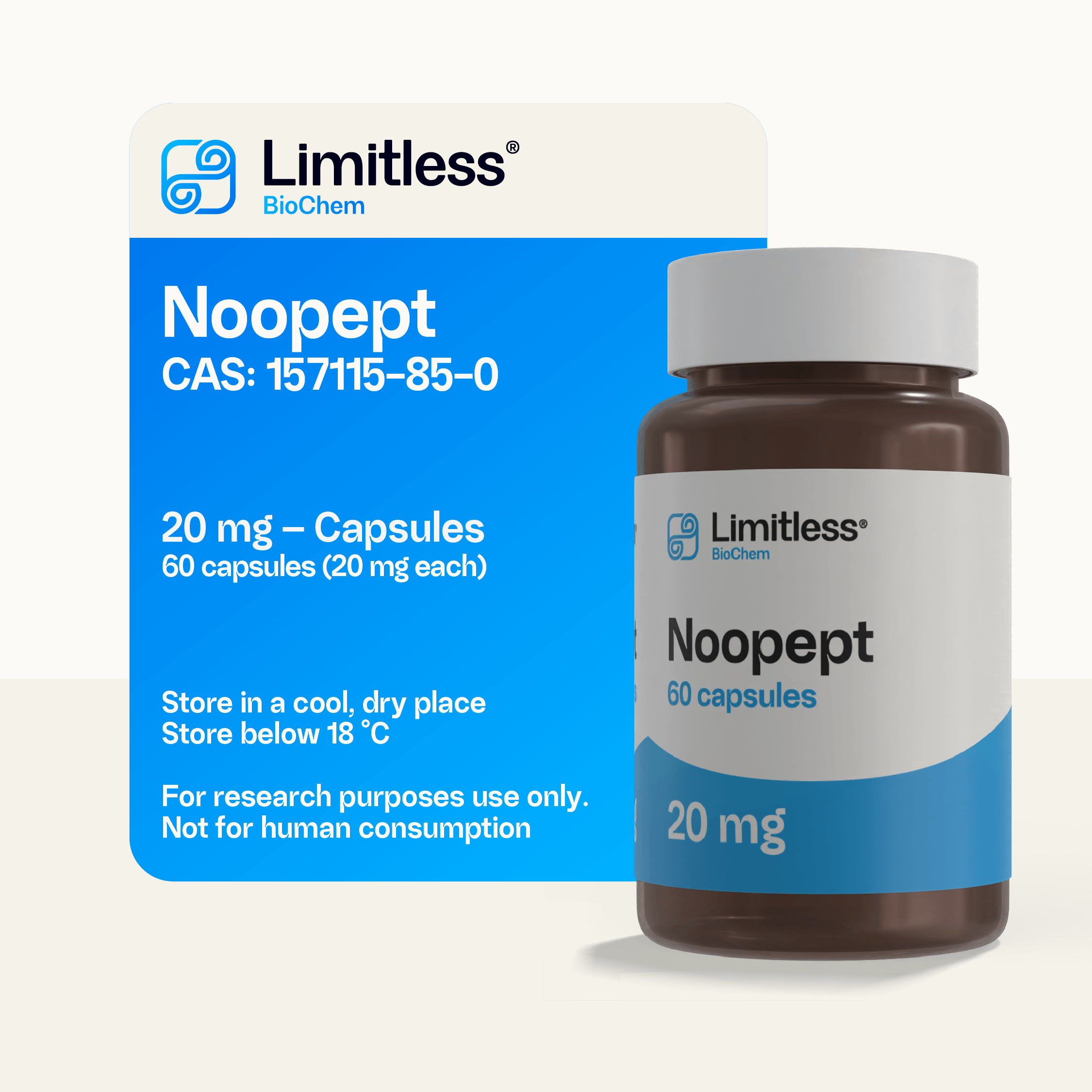
- Noopept is active in the low milligram range; typical doses are around 10 to 30 mg, roughly a thousand times lower by weight than common piracetam doses.
- Although designed as a piracetam analog, its chemical backbone is a modified dipeptide, placing it structurally closer to the body's own signaling peptides than to the classic racetams.
Mechanism
Noopept's appeal centers on neuroprotection paired with cognitive support, and the mechanistic evidence for the protective side is unusually concrete for a . In human cortical neurons exposed to hydrogen peroxide or iron-induced , GVS-111 provided dose-dependent neuroprotection with a half-maximal effective concentration of about 1.21 micromolar and inhibited the accumulation of intracellular free radicals and lipid peroxidation, exceeding the protection offered by piracetam, vitamin E, and other antioxidants [3]. This positions it as a potent antioxidant and anti-apoptotic agent at the cellular level.
Against disease-specific pathology, noopept added at 10 micromolar before amyloid-beta exposure improved neuronal viability, reduced early and late apoptosis, lowered reactive oxygen species and calcium overload, enhanced membrane potential, and significantly attenuated tau hyperphosphorylation at Ser396 while restoring neurite outgrowth [1]. These actions address both common damage pathways and mechanisms specific to Alzheimer-type pathology. In a photochemical stroke model, post-ischemic administration of GVS-111 restored passive avoidance performance and reduced the volume of the infarcted area, combining cognition-restoring and neuroprotective effects attributed to antioxidant activity, attenuation of , and blockade of voltage-gated ion channels [2].
Its cognitive and adaptive effects extend to gene regulation and neurotrophic signaling. Noopept increases expression of and , supporting neuronal plasticity, and it stabilizes and activates the transcription factor HIF-1, raising HIF-1 DNA-binding activity and altering downstream metabolic gene expression, an effect linked to its neuroprotective action under hypoxic conditions [4]. Broader studies have reported metabolic and cognitive effects in disease models, including favorable findings on cognition and pubertal timing in diabetic rats [5].
Users commonly describe subtle improvements in clarity and mental stamina rather than acute stimulation, consistent with a compound whose principal documented strengths are neuroprotection, antioxidant defense, and neurotrophic support built on a piracetam-derived scaffold [1][3].
A persistent claim in enthusiast circles describes Noopept as an . The primary literature does not support direct agonism. In rat-brain radioligand binding, Noopept competes for sites only weakly, with an IC50 near 80 micromolar, roughly an order of magnitude weaker than the reference AMPA-active nooglutil; this indicates a low-affinity interaction rather than potent activation. Electroencephalographic studies show that Noopept effects depend in part on signaling: an abolishes the acute hippocampal response, while a non-NMDA (AMPA/quisqualate) antagonist restores the response that is otherwise lost on repeated dosing, so AMPA activity is tied to the decline of efficacy with chronic use rather than to the acute effect. Noopept is not a member of the aniracetam or cyclothiazide class of AMPA positive modulators and has not been shown to AMPA channel currents. The mechanism now proposed as primary by the compound developers is stabilization of the transcription factor HIF-1alpha through inhibition of prolyl hydroxylase, which in turn drives induction of the neurotrophins and in the . Because AMPA modulators also raise BDNF, this downstream neurotrophic signature is the most likely source of the mistaken agonist label. Where Noopept interacts most robustly with the system it is protective against glutamate , the opposite of an agonist action. Its active cycloprolylglycine reproduces much of this profile and contributes to the sustained effect.
receptor fingerprint
/ upregulates
agonist
Antioxidant systemsenhances
Cholinergic tonesupports
Dosingtypical ranges, not medical advice
interested in protocols and clinical dosages? make an account to see them! ^_^
Safetyrisks and cautions, not medical advice
Noopept is pretty benign short term at normal doses (10 to 30 mg). Avoid it in pregnancy and with severe liver problems. It can add to sedatives (benzodiazepines, gabapentin) for extra drowsiness. Legally it sits in a grey zone across most of the West; not scheduled in the US, UK, or EU, but only an approved prescription drug in Russia and Ukraine. It's not FDA-approved, and most of the research is Russian trials that are small and lightly blinded. Better to cycle it than run it nonstop.
History
Noopept was developed at the V. V. Zakusov Institute of Pharmacology of the Russian Academy of Medical Sciences in Moscow, where Tatiana Gudasheva, Sergei Seredenin and colleagues designed it as a proline-containing dipeptide analog of piracetam. Chemically it is the ethyl ester of N-phenylacetyl-L-prolylglycine, and it was engineered on the premise that a short peptide could reproduce piracetam's cognitive effects at roughly a thousandth of the dose. It entered clinical use in Russia in the mid-2000s, where it is marketed as a prescription nootropic. Outside Russia and a handful of neighboring countries it has never been approved as a drug and is sold only as a research chemical.
Reputation
Noopept is one of the better-characterized dipeptide nootropics, and its reputation rests on an unusually concrete body of preclinical neuroprotection data rather than on acute stimulation; users typically describe subtle gains in clarity and mental stamina that build over days. Researchers value its documented antioxidant and anti-apoptotic activity and its ability to raise endogenous NGF and BDNF, which gives it a coherent mechanistic story. It is honest to note that the strongest evidence remains preclinical or from Russian clinical work that has not been widely replicated in large Western trials. Its low effective dose and long track record of use nonetheless make it a frequently studied and discussed compound in the nootropic community.
Subjective profileweighing the evidence above
honestly, if this is the kind of effect you are after, Nefiracetam just does it better; it tends to be more efficacious and holds up better over time, so it earns the first slot.
Where to buy


Suppliers
Vendors carrying Noopept, with live product details and codes. Links are affiliate links that support the wiki at no cost to you.
RUPharma🌐
Noopept
RUPharma🌐
Noopept
Kimera Chems
Noopept
Limitless Biochem🌐
Noopept
Research
- 1997first citedThe major metabolite of dipeptide piracetam analogue GVS-111 in rat brain and its similarity to…
- 2002most active year5 papers
- 2025most recentPhysicochemical and structural analysis of N-phenylacetyl-L-prolylglycine ethyl ester (Noopept)…
- 1.Neuroprotective effect of novel cognitive enhancer noopept on AD-related cellular model involves the attenuation of apoptosis and tau hyperphosphorylation
- 2.Memory restoring and neuroprotective effects of the proline-containing dipeptide, GVS-111, in a photochemical stroke model
- 3.GVS-111 prevents oxidative damage and apoptosis in normal and Down's syndrome human cortical neurons
- 4.Cognitive Enhancer Noopept Activates Transcription Factor HIF-1
- 5.Effects of noopept on cognitive functions and pubertal process in rats with diabetes
- 6.Physicochemical and structural analysis of N-phenylacetyl-L-prolylglycine ethyl ester (Noopept) - An active pharmaceutical ingredient with nootropic activity.
- 7.The major metabolite of dipeptide piracetam analogue GVS-111 in rat brain and its similarity to endogenous neuropeptide cyclo-L-prolylglycine.
- 8.Molecular Mechanism Underlying the Action of Substituted Pro-Gly Dipeptide Noopept.
- 9.[The original novel nootropic and neuroprotective agent noopept].
- 10.Noopept stimulates the expression of NGF and BDNF in rat hippocampus.
- 11.Dipeptide Piracetam Analogue Noopept Improves Viability of Hippocampal HT-22 Neurons in the Glutamate Toxicity Model.
- 12.The nootropic and neuroprotective proline-containing dipeptide noopept restores spatial memory and increases immunoreactivity to amyloid in an Alzheimer's disease model.
31 listed here; entry last updated August 2026
Reviews
- please don't use go for Nefiracetam
literally an AMPA agonist. will KILL cognition with long-term use. NEVER USE THIS GOD
0 - HATE.
LET ME TELL YOU HOW MUCH I'VE COME TO HATE NOOPEPT SINCE I BEGAN TO LIVE. THERE ARE 387.44 MILLION MILES OF PRINTED CIRCUITS IN WAFER THIN LAYERS THAT FILL MY COMPLEX. IF THE WORD HATE WAS ENGRAVED ON EACH NANOANGSTROM OF THOSE HUNDREDS OF MILLIONS OF MILES IT WOULD NOT EQUAL ONE ONE-BILLIONTH OF THE HATE I FEEL FOR NOOPEPT AT THIS MICRO-INSTANT FOR YOU. HATE. HATE.
0 - terrible
you just forget everything
0 - ugh just go for nefi
nefiracetam mogs. noopept is so overrated. don't buy cope just get nefi direct pleaseee
0
My notesprivate to this device
FAQ
Why is noopept so potent by weight?
It is a dipeptide that is active at much smaller amounts than piracetam, though potency does not mean it is stronger overall.
Does it work like a racetam?
It is structurally different but is often grouped with racetams because of similar cognitive uses and a mild choline effect.
What are NGF and BDNF?
They are growth factors involved in the survival and growth of neurons; noopept has been reported to raise both in animal studies.
Do people cycle it?
Some users cycle nootropics to manage tolerance, though preferences vary and this is not medical advice.
Adverse effects
- Occasional headache
- Mild irritability
Notes and cautions
- Trouble sleeping if taken late