
spec sheet10 rows
PRL-8-53 is a classic research nootropic famous for a single striking human study in which low oral doses significantly improved the retention of newly learned verbal information [1]. Chemically a methyl benzoate compound developed in the 1970s, it was reported to sharpen memory while potentiating the brain's dopaminergic and stimulant signaling [1][2]. Its reputation rests almost entirely on that early double-blind trial, as PRL-8-53 has never been independently replicated or brought to market, and it remains an obscure but intriguing research chemical [1][2].
- Striking verbal memory jump in a human trial
- Recall of new material, noticeably sharpened
- Works through dopamine and acetylcholine
- Potentiates the brain's stimulant signaling
- A legendary 1970s research nootropic
- PRL-8-53 has essentially no modern safety data, resting on a single small human study
- Because it shows anticholinergic activity in animals, dry mouth or related effects are plausible
Overview
PRL-8-53 is a synthetic nootropic compound, chemically 3-(2-(benzyl(methyl)amino)ethyl)benzoic acid methyl ester hydrochloride, a methyl ester of a benzoic acid derivative bearing a benzyl-methyl-aminoethyl side chain [1][2]. It was created by the pharmacologist Nikolaus R. Hansl, who patented it in the 1970s, and its name derives from his laboratory designation [2]. Structurally and pharmacologically it is unrelated to the racetams; it was first described as a spasmolytic and central-nervous-system-active agent before attention focused on its effects on learning and memory [2].
The scientific literature on PRL-8-53 is remarkably small, consisting essentially of two papers by Hansl. The first, published in 1974, characterized the compound in animals as a novel spasmolytic and CNS-active agent and reported that it potentiated responses to dopaminergic and stimulant drugs while showing parasympatholytic, or anticholinergic, and antispasmodic activity [2]. The second, a 1978 double-blind, placebo-controlled study in human volunteers, is the source of the compound's nootropic reputation: using a serial-anticipation verbal learning method, it found that PRL-8-53 produced a slight improvement in acquisition and a statistically significant improvement in the retention of verbal information, with no change in visual reaction time or motor control [1].
It is important to emphasize that this single small human trial has never been independently replicated, and PRL-8-53 has not undergone the larger or longer studies needed to establish its efficacy, safety, or long-term effects [1]. It has never been approved as a medicine anywhere and is not a recognized dietary ingredient; today it exists almost solely as a research chemical, sold as a powder for laboratory and self-experimentation use [1][2]. Its enduring interest among nootropic enthusiasts stems from the size of the reported memory effect relative to how little the compound has otherwise been studied [1].

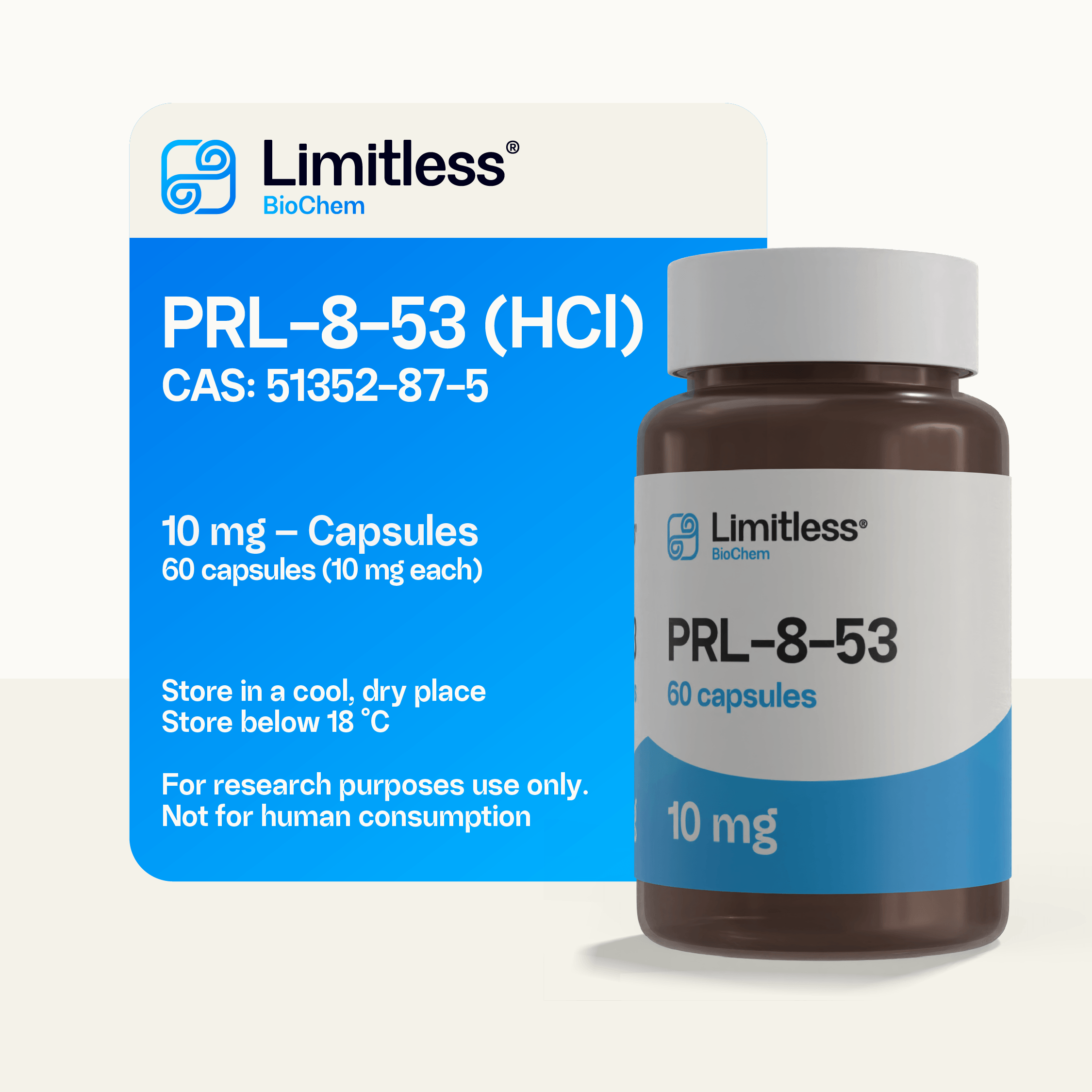
- PRL-8-53's fame rests on a single 1978 double-blind study; in that trial some memory-retention improvements reached statistical significance better than P = 0.001, yet the result has never been independently replicated.
- In the same study the compound improved retention of verbal information while producing no significant change in visual reaction time or motor control, suggesting a selective effect on memory.
Mechanism
The mechanism of PRL-8-53 is only partially characterized, and what is known comes from Hansl's original pharmacological work rather than from modern receptor studies. In animal experiments, PRL-8-53 behaved as a compound that potentiates the actions of biogenic-amine systems: it enhanced responses to the apomorphine and to the stimulant methamphetamine, while also displaying parasympatholytic, or anticholinergic, and spasmolytic properties [2]. This profile suggests that PRL-8-53 amplifies dopaminergic and signaling and modulates cholinergic tone, a combination that Hansl proposed could underlie an effect on learning and memory, though the precise molecular targets were never definitively identified [2].
The compound's signature benefit, improved memory retention, was demonstrated in Hansl and Mead's 1978 human study. Under double-blind conditions using a serial-anticipation method for verbal learning, low oral doses of PRL-8-53 produced a slight improvement in the acquisition of new information and a clearly significant improvement in its later retention, with reported statistical significance for retention reaching most P values better than 0.01 and some better than 0.001 [1]. Notably, the same study found no significant effect on visual reaction time or on motor control, indicating that the compound acted selectively on memory processes rather than by generalized stimulation of reaction speed or movement [1].
Beyond these findings, the mechanistic picture remains speculative. No published work has mapped PRL-8-53 onto specific receptors, transporters, or second-messenger pathways with the detail available for better-studied nootropics, and the human data rest on one small trial [1][2]. As a result, statements about how PRL-8-53 enhances memory are best framed as reasonable inferences from its dopaminergic, , and anticholinergic pharmacology in animals rather than as established mechanism, and its true effect size, dose-response behavior, and safety in humans remain uncharacterized [1][2].
receptor fingerprint
Cholinergic signalingenhances
partial agonist
(5-HT2)antagonist
Dosingtypical ranges, not medical advice
interested in protocols and clinical dosages? make an account to see them! ^_^
Safetyrisks and cautions, not medical advice
The honest headline on PRL-8-53 is that its safety picture rests on very little; the single human study reported no side effects at its low dose, and it has a reputation for being well tolerated in the tiny 5 to 20 mg range people actually use, but there is essentially no long term or high dose human data. In practice users describe it as clean, with at most occasional mild overstimulation, a light headache, or a touch of restlessness toward the top of the range. It is an unscheduled research chemical rather than an approved medicine, so purity varies by source. Given how little formal safety work exists, the sensible approach is to keep doses low, use it episodically before learning rather than daily, and treat it as the lightly studied curiosity it is. Nothing is known about pregnancy or drug interactions, so err cautious there.
History
PRL-8-53 was synthesized in the early 1970s by Nikolaus Hansl, a researcher at Creighton University in Omaha, Nebraska, who patented the benzoic acid methyl ester compound as a potential cognition enhancer. Its reputation rests almost entirely on a single 1978 double-blind study by Hansl and Mead, published in Psychopharmacology, in which low oral doses significantly improved the retention of newly learned verbal information in healthy volunteers. Animal pharmacology from the same era suggested the compound potentiated dopaminergic and stimulant signaling while showing anticholinergic and antispasmodic properties. Despite the striking early results, PRL-8-53 was never independently replicated or brought to market, and it remains an obscure research chemical.
Reputation
PRL-8-53 occupies an intriguing, almost legendary place in nootropic lore, famous for a single early trial in which its effect on memory retention was both large and statistically robust. Enthusiasts find the selectivity of that result compelling, since the compound sharpened memory without affecting reaction time or motor control, implying a specific action on memory processes rather than general stimulation. Candor is essential here: the entire human reputation rests on one small 1978 study that has never been replicated, and the molecular mechanism was never fully mapped. It is best regarded as a fascinating historical curiosity whose true effect size and safety in humans remain uncharacterized.
Subjective profileweighing the evidence above
One unreplicated 1970s study is not an evidence base, however striking the memory numbers looked. Fifty years without a replication is itself information. Fine to try episodically at the low doses people use, with clear eyes about the fact that nobody has checked it since.
Where to buy
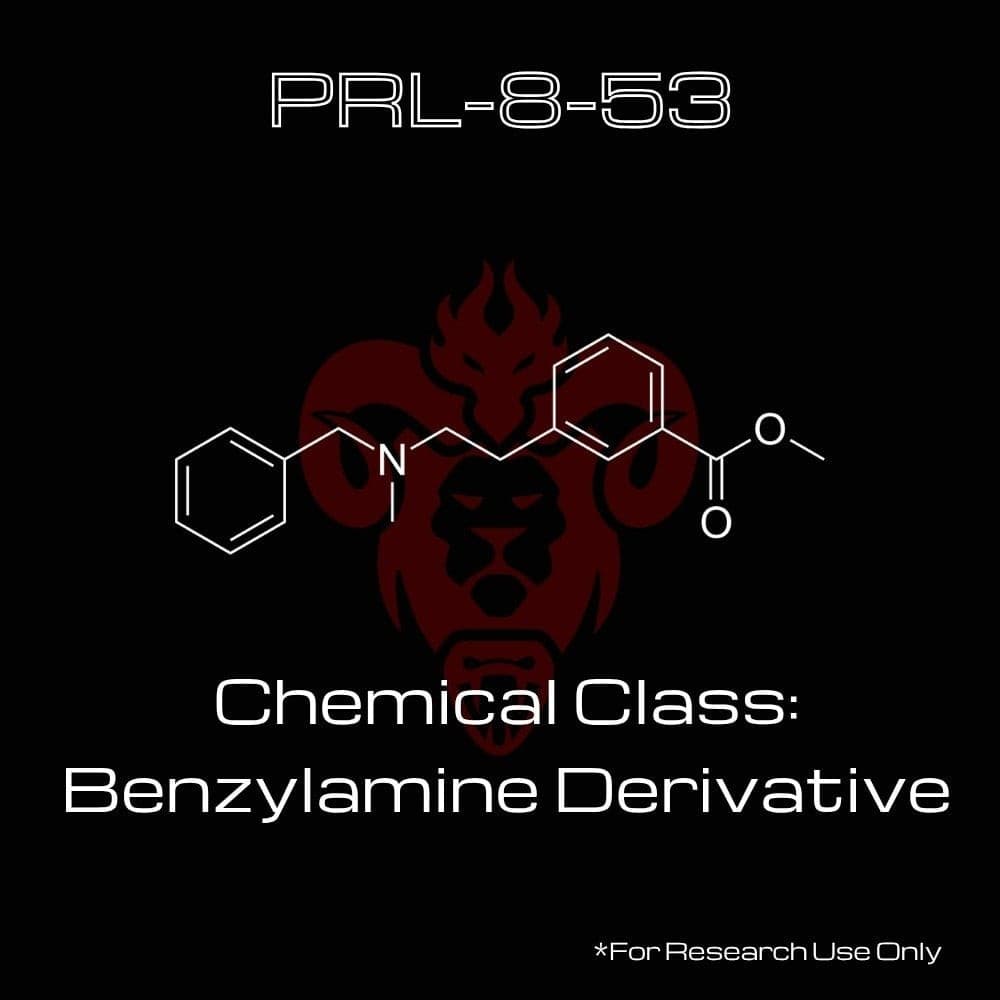
Suppliers
Vendors carrying PRL-8-53, with live product details and codes. Links are affiliate links that support the wiki at no cost to you.
Kimera Chems
PRL-8-53
RUO
PRL-8-53
Limitless Biochem🌐
PRL-8-53
Research
- 1.PRL-8-53: enhanced learning and subsequent retention in humans as a result of low oral doses of new psychotropic agent.
- 2.A novel spasmolytic and CNS active agent: 3-(2-benzylmethylamino ethyl) benzoic acid methyl ester hydrochloride.
2 listed here; entry last updated August 2026
Reviews
- unironically goated (occasionally)
good pick, super slept on. has a pro-motivation profile. subling hits really well at 20mgs. feels slightly stimulating, but by god it is pretty good for recall. not sure about encoding but 100% goated for recall, i run 30-40mgs before exams there's some speculation that it's an HDAC inhibitor alongside it seems to cause pretty bad oxidative stress with long-term use (like 3+ months) but this is still a cool sleeper exam pick
0
My notesprivate to this device
FAQ
What is PRL-8-53?
It is an older research compound studied for effects on verbal memory.
What does the human research show?
One small human study reported a notable jump in verbal memory, but the evidence base is very limited.
How is it thought to work?
It is believed to act through dopamine and acetylcholine pathways.
Is it an approved substance?
No, it remains a little-studied research chemical and is not an approved medication.
Limitations of the evidence
- Its long-term effects and safety in humans are unknown
Adverse effects
- PRL-8-53 has essentially no modern safety data, resting on a single small human study
- Because it shows anticholinergic activity in animals, dry mouth or related effects are plausible
Notes and cautions
- It is an unregulated research chemical, not an approved medicine
- Purity and content of research-chemical products are not guaranteed