
spec sheet13 rows
CDP-choline (citicoline, cytidine diphosphate-choline) is a naturally occurring compound that the body uses as an intermediate in making phosphatidylcholine, a major building block of cell membranes. Taken as a drug or dietary supplement, it supplies choline and cytidine to the brain and is studied for cognition, stroke recovery, and certain eye conditions. It is sold as a prescription medicine in some countries and as an over-the-counter supplement in others.
- Clean choline source for acetylcholine
- The go-to racetam partner
- Supports memory and focus
- Feeds cell membrane building blocks
- Studied for cognition and stroke recovery
- Well tolerated, naturally occurring
- Mild stomach upset
- Diarrhea
- Headache in some people
Overview
CDP-choline, known generically as citicoline, is a nucleotide compound that occurs naturally in the cells of the body, where it is a key intermediate in the Kennedy pathway that builds phosphatidylcholine, one of the main phospholipids of neuronal membranes [3]. When taken by mouth it is broken down and absorbed as its two components, choline and cytidine, which readily cross into the brain and are used to make membrane phospholipids and the neurotransmitter acetylcholine [3].
Citicoline has been studied for several neurological purposes. Reviews describe neuroprotective and anti-inflammatory actions and potential benefits in age-related memory decline, and some clinical trials in stroke and post-stroke cognitive impairment have reported improvements in attention and recovery [1][4]. The evidence, however, is mixed; the largest stroke trials and pooled analyses did not find a clear benefit for survival or overall recovery, so its role after stroke remains debated [1]. It has also been examined as a nootropic for focus and attention and for helping to protect vision in glaucoma [3].
Mechanistically, citicoline is thought to work by stabilizing cell membranes and supporting their repair, by supplying choline for acetylcholine synthesis, and by reducing the release of the excitatory neurotransmitter glutamate along with free radicals and inflammatory mediators after injury [1][3]. It is well absorbed, has high oral bioavailability, and is generally regarded as having low toxicity [3]. In many countries citicoline is sold as a prescription drug for neurological conditions, while in the United States it is marketed as an over-the-counter dietary supplement [3].
Citicoline is available in oral tablets and capsules, as a sodium salt, and in injectable forms used in some clinical settings. Reported side effects are typically mild and may include stomach upset and diarrhea [2][4].
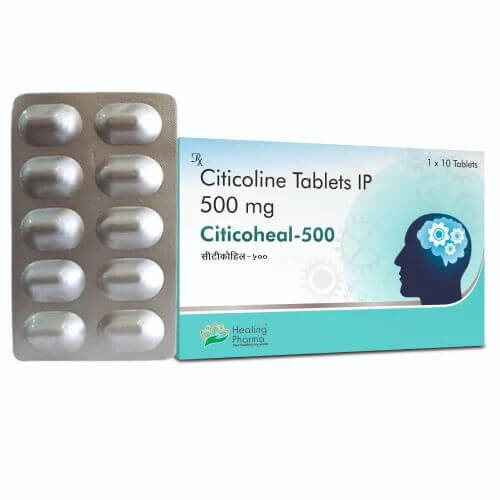
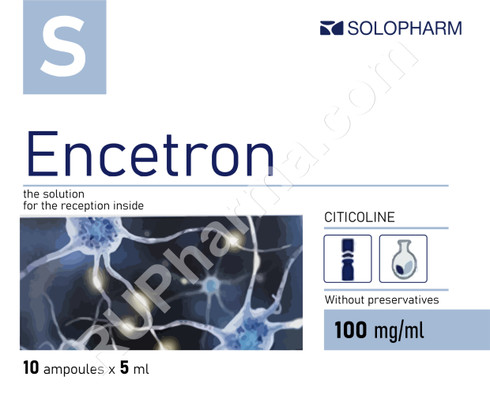
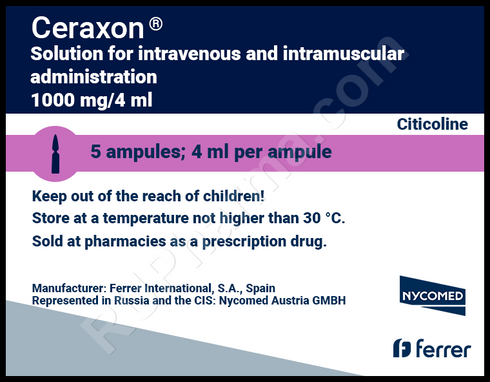

- The same molecule is a prescription drug in countries such as Japan and Spain, yet is sold as an over-the-counter dietary supplement in the United States.
- Citicoline is not a foreign chemical but a natural intermediate that every cell already uses to build phosphatidylcholine, a major component of cell membranes.
Mechanism
Once absorbed, citicoline delivers and cytidine that feed directly into the Kennedy pathway, the route cells use to synthesize phosphatidylcholine and other phospholipids that make up cell membranes; this is thought to support the structural integrity and repair of neuronal membranes [3]. The it provides is also a precursor for the neurotransmitter , which may underlie its studied effects on memory and attention [3]. In models of brain injury and stroke, citicoline has shown neuroprotective and anti-inflammatory actions, including stabilizing membranes, limiting the harmful release of , and reducing free radicals and inflammatory cytokines [1]. These membrane-based and cholinergic effects form the rationale for its use, even though clinical results have been inconsistent [1][4].
receptor fingerprint
(via )precursor
Phosphatidylcholine (Kennedy pathway)builds
receptorsraises density
Dosingtypical ranges, not medical advice
interested in protocols and clinical dosages? make an account to see them! ^_^
Safetyrisks and cautions, not medical advice
CDP-Choline goes down easy at normal doses and sells OTC as a supplement in the US and most places; in parts of Europe, Japan, and South America it's a prescription drug (Somazina) with a strong clinical track record. Healthy adults don't have much to worry about. The one theoretical flag is possible antagonism with levodopa or dopamine precursors, though the human evidence for that is shaky. Piling on too much choline can tip susceptible people into low mood because of a hypercholinergic state, so if you have a history of depression or bipolar, start low and watch how you feel. Not scheduled anywhere. Take it earlier in the day so it doesn't cut into sleep.
Interactionsdocumented pairs only, not exhaustive
The best-documented interaction for CDP-choline (citicoline) is with levodopa: clinical studies in Parkinson disease found that adding citicoline potentiated the response to levodopa and allowed the levodopa dose to be reduced while maintaining symptom control. This is a pharmacodynamic potentiation of dopaminergic therapy rather than a metabolic interaction. Beyond the levodopa data, citicoline has a limited documented interaction profile; a theoretical concern is opposition to central anticholinergic agents given its role as a cholinergic precursor, but this is not established clinically. This is research information, not medical advice.
Checking a whole stack? Run it through interactions + stacks.
History
Cytidine diphosphate-choline was first characterized as a natural metabolic intermediate through the work of Eugene Kennedy in the 1950s, who mapped the pathway (now called the Kennedy pathway) by which cells assemble phosphatidylcholine. As a therapeutic, citicoline was developed and introduced in Japan, initially studied for stroke recovery and head trauma, and it later became a widely used prescription medicine across parts of Europe and Asia under brand names such as Somazina and Ceraxon. In the United States it is instead sold as an over-the-counter dietary supplement, a status it reached in the 2000s, with the branded ingredient Cognizin being a common form. Its dual identity as both a prescription drug and a supplement, depending on jurisdiction, remains one of its defining regulatory features.
Reputation
Citicoline enjoys a solid reputation among clinicians and supplement users as one of the better-studied cholinergic compounds, valued for supplying both choline for acetylcholine synthesis and cytidine for membrane phospholipid repair. It has attracted particular interest for age-related memory complaints, stroke rehabilitation, and glaucoma, and it is often favored for its long safety record and good tolerability.
Recent reviews continue to describe encouraging signals for vascular and post-stroke cognitive impairment, and one systematic review noted improvements in declarative memory and verbal learning. In fairness, the clinical evidence base is genuinely mixed; large trials such as ICTUS in acute stroke did not confirm benefit, and results across cognitive indications have been inconsistent. It is best viewed as a well-tolerated, mechanistically sensible option rather than a proven cure.
Subjective profileweighing the evidence above
One of the few nootropics that earns a permanent slot: clean, well tolerated, and the default choline source to run alongside racetams. On its own the effect is quiet rather than dramatic, so judge it by how the rest of a stack behaves with it in place. Start low if you have a depression or bipolar history.
Where to buy

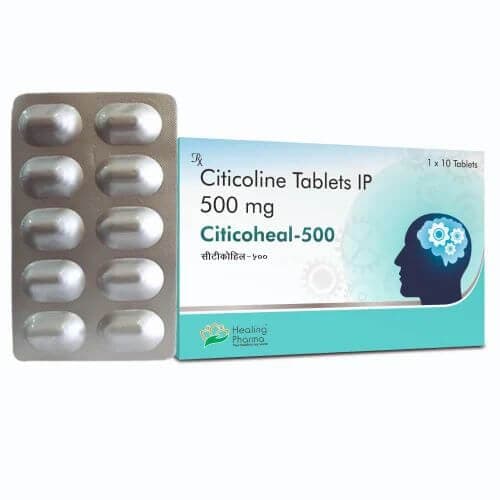
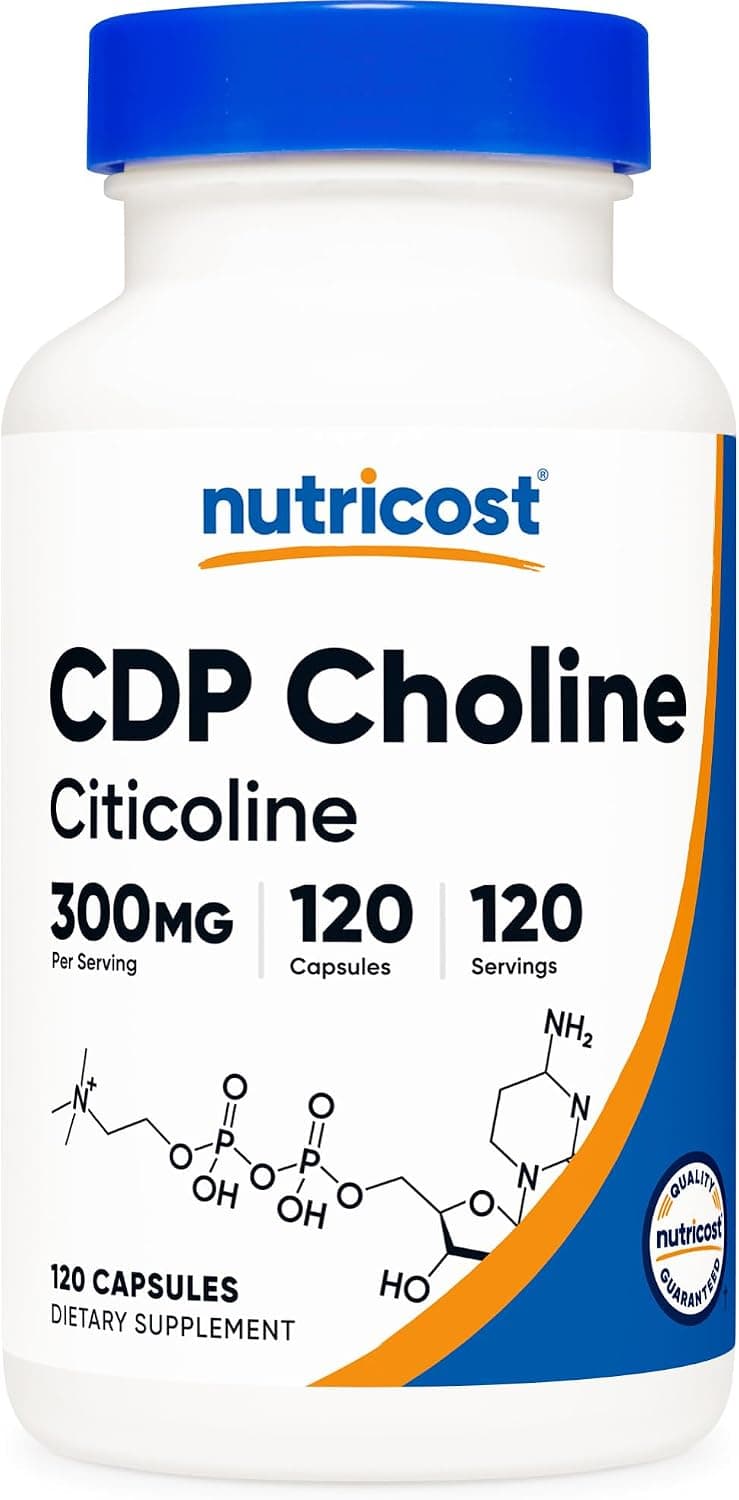

Suppliers
Vendors carrying CDP-Choline, with live product details and codes. Links are affiliate links that support the wiki at no cost to you.
PCT.Zone
CDP-Choline
RUPharma🌐
CDP-Choline

RUPharma🌐
Citicoline
Amazon
CDP-Choline
Kimera Chems
CDP-Choline

iHerb
Citicoline

iHerb
CDP-Choline
iHerb
CDP-Choline
Research
- 2004first citedTherapeutic applications of citicoline for stroke and cognitive dysfunction in the elderly: a r…
- 2011most active year3 papers
- 2016meta-analysisCiticoline for Acute Ischemic Stroke: A Systematic Review and Formal Meta-analysis of Randomize…
- 2026most recentThe effectiveness of citicoline in the treatment of cognitive disorders.
- 1.Unveiling citicoline's mechanisms and clinical relevance in the treatment of neuroinflammatory disorders
- 2.Citicoline: pharmacological and clinical review, 2010 update
- 3.Therapeutic applications of citicoline for stroke and cognitive dysfunction in the elderly: a review of the literature
- 4.Long-term treatment with citicoline may improve poststroke vascular cognitive impairment
- 5.Citicoline in acute ischemic stroke: A randomized controlled trial.
- 6.Citicoline for Acute Ischemic Stroke: A Systematic Review and Formal Meta-analysis of Randomized, Double-Blind, and Placebo-Controlled Trials.
- 7.Choline-Containing Phospholipids in Stroke Treatment: A Systematic Review and Meta-Analysis.
- 8.Citicoline in pre-clinical animal models of stroke: a meta-analysis shows the optimal neuroprotective profile and the missing steps for jumping into a stroke clinical trial.
- 9.Citicoline in intracerebral haemorrhage: a double-blind, randomized, placebo-controlled, multi-centre pilot study.
- 10.Citicoline in vascular cognitive impairment and vascular dementia after stroke.
- 11.Is aura around citicoline fading? A systemic review.
- 12.Is Citicoline Effective in Preventing and Slowing Down Dementia?-A Systematic Review and a Meta-Analysis.
22 listed here; entry last updated August 2026
Reviews
My notesprivate to this device
FAQ
What is CDP-Choline?
Also called citicoline, it is a choline source that supports acetylcholine production and cell membrane components.
Why stack it with racetams?
Racetams can increase acetylcholine demand, so a choline source is commonly added to help meet it and reduce headaches.
How does it differ from Alpha-GPC?
Both supply choline, but CDP-Choline also yields cytidine, and users often compare them for feel and effect.
When should it be taken?
Many take it earlier in the day, since choline-driven focus late on can interfere with sleep for some people.
Adverse effects
- Mild stomach upset
- Diarrhea
- Headache in some people
- Occasional trouble sleeping
Notes and cautions
- Generally well tolerated