
data + articles · 2 listed
newest 2022spec sheet12 rows
Fisetin is a naturally occurring flavonoid, specifically a flavonol, found in fruits and vegetables such as strawberries, apples and onions. It is a yellow plant pigment that acts as an antioxidant and has drawn scientific interest for its potential effects on aging, including an ability to clear senescent cells. It is sold as a dietary supplement, though clinical evidence of benefit in humans remains limited.
- The headline senolytic; clears senescent cells in models
- Strawberry flavonoid with serious longevity research behind it
- Neuroprotective and memory effects in preclinical work
- Broad antioxidant activity across many tissue types
- Calms inflammatory signaling in laboratory studies
- Low risk and easy to run in short cycles
Overview
Fisetin is a plant flavonol, a subclass of the flavonoid polyphenols, with the chemical name 3,3',4',7-tetrahydroxyflavone [1]. It occurs naturally in a variety of fruits and vegetables, including strawberries, apples, persimmons, grapes, onions and cucumbers, with strawberries containing among the highest levels, and it serves as a yellow pigment in plants [1]. As a flavonoid it has antioxidant properties, and it is available as a dietary supplement [1].
Much of the recent scientific interest in fisetin concerns aging. Laboratory studies have identified it as a senolytic, or senotherapeutic, meaning a compound that can selectively clear senescent cells, the worn-out, non-dividing cells that accumulate with age and drive inflammation and tissue dysfunction [1][2]. In a widely cited study, fisetin was found to be the most potent senolytic among a panel of flavonoids tested, and giving it to aged mice reduced markers of senescence and extended their health and lifespan [2]. Researchers have also examined fisetin for neuroprotective effects, reporting in cell and animal models that it can lower oxidative stress and inflammation in the brain and act on pathways relevant to neurodegenerative disease [1].
Despite this promising preclinical work, robust evidence that fisetin improves health in people is lacking, and its benefits in humans remain unproven [1]. A practical limitation is its low bioavailability: fisetin is poorly absorbed and rapidly metabolized, which has prompted research into improved delivery methods to raise its levels in the body [1].
Fisetin is regulated as a dietary supplement rather than a medicine, and it is not an approved treatment for any condition. Its long history of dietary consumption suggests it is generally safe as a component of food, while the safety of the higher amounts used in supplements and research is still being studied [1].

Mechanism
Fisetin's biological actions are attributed to its flavonoid chemistry, which gives it antioxidant activity: it can scavenge reactive free radicals and reinforce cells' own antioxidant defenses, thereby lowering [1]. Its most studied property is activity, the selective elimination of senescent cells [1][2]. Senescent cells resist normal programmed cell death by relying on survival signaling pathways, and fisetin is thought to interfere with these pro-survival networks so that the senescent cells die, which reduces the harmful inflammatory secretions they release into surrounding tissue [2]. Through the combination of antioxidant, anti-inflammatory and effects, fisetin has been proposed to protect neurons and to counter aspects of aging in preclinical models, although its precise molecular targets are still being mapped [1].
receptor fingerprint
Senescent cellsinduces apoptosis
/ survival pathwayinhibits
Nrf2 pathwayactivates
NF-kB signalinginhibits
Glutathionepreserves
Dosingtypical ranges, not medical advice
interested in protocols and clinical dosages? make an account to see them! ^_^
Safetyrisks and cautions, not medical advice
Fisetin has a good safety record in animals and appears well tolerated in early human use, since it is a common dietary flavonoid. High-dose senolytic protocols are still experimental, and it can interact with drug-metabolizing enzymes, so caution is warranted with medications. Long-term high-dose safety in humans is not established.
Subjective profileweighing the evidence above
Promising senolytic with strong preclinical data and low risk; reasonable to use cyclically, but the verdict stays open until human trials read out.
Where to buy
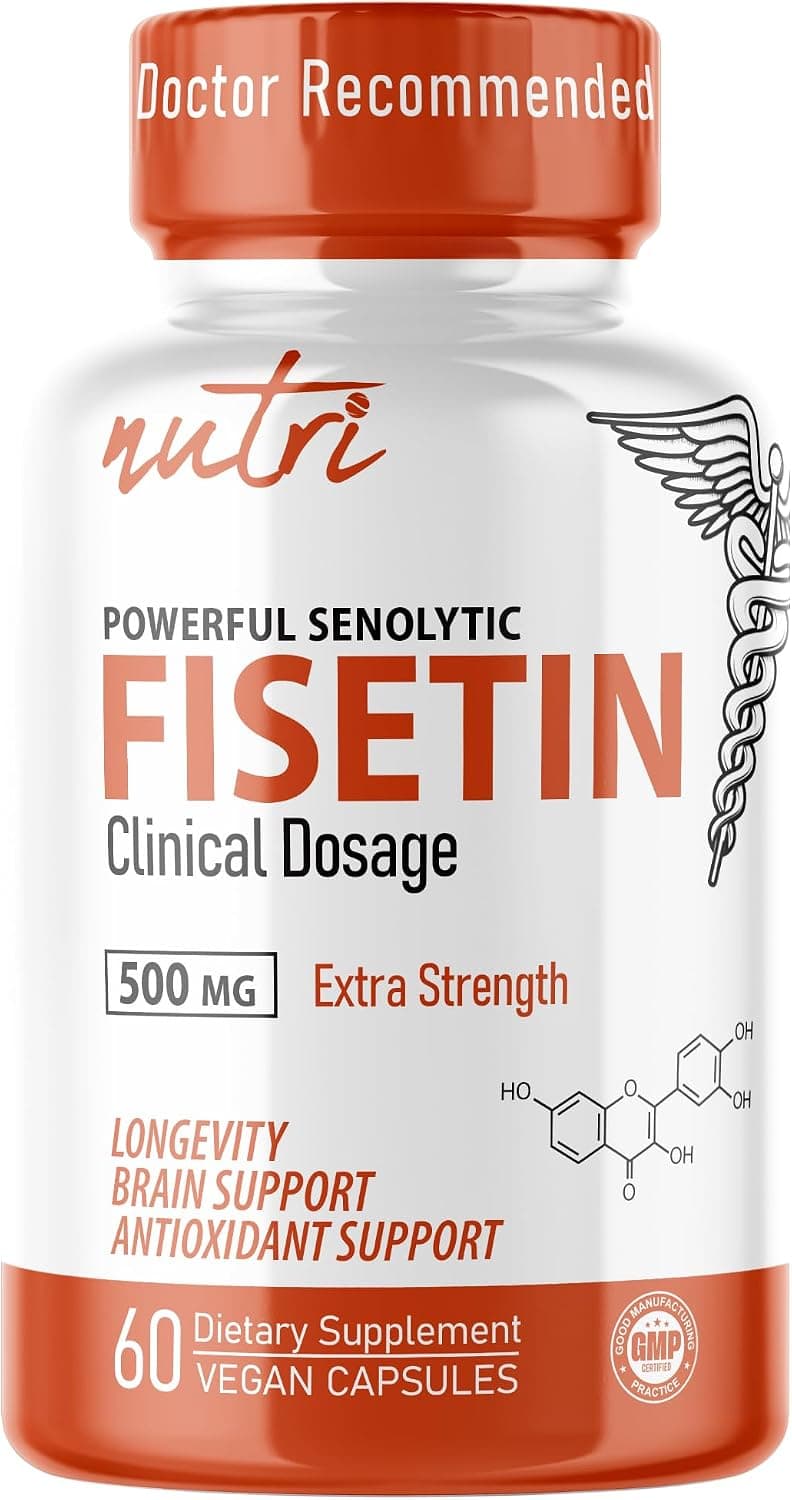
1 other outlet

Suppliers
Vendors carrying Fisetin, with live product details and codes. Links are affiliate links that support the wiki at no cost to you.
Amazon
Fisetin
iHerb
Fisetin
Research
- 1.Fisetin as a Senotherapeutic Agent: Biopharmaceutical Properties and Crosstalk between Cell Senescence and Neuroprotection
- 2.Fisetin is a senotherapeutic that extends health and lifespan
2 listed here; entry last updated August 2026
Reviews
My notesprivate to this device
FAQ
What is a senolytic?
A compound that helps clear senescent cells, which accumulate with age, resist dying, and pump out inflammatory signals. Fisetin is one of the more studied natural ones.
How should I take fisetin for absorption?
Always take it with a source of fat, or use a liposomal form, since plain fisetin is poorly absorbed.
Is the 'hit and run' dosing better?
The senolytic mouse data used short high-dose bursts, so many people mimic that with a few consecutive high-dose days rather than daily use. Human proof is still pending.
Is fisetin proven to extend human lifespan?
No. The lifespan and healthspan data are from animals. Human trials are underway but not conclusive yet.
Limitations of the evidence
- Human safety data for high supplement doses are limited
Notes and cautions
- Considered safe as a normal part of the diet
- Poorly absorbed, with low bioavailability
- No proven clinical benefit to date