
spec sheet12 rows
Coenzyme Q10 (ubiquinone) is a fat-soluble, vitamin-like molecule found in nearly every cell, and it is the only lipid-soluble antioxidant that mammals synthesize for themselves. Within the mitochondria it is the obligatory mobile carrier that shuttles electrons from Complexes I and II to Complex III of the respiratory chain, and it also protects membranes from oxidative damage. It has been studied most in cardiovascular disease, statin-associated muscle symptoms, migraine, and mitochondrial disorders; in the Q-SYMBIO trial, supplementation reduced major cardiovascular events and all-cause mortality in patients with chronic heart failure, and primary CoQ10 deficiency is notable as one of the few mitochondrial disorders treatable by supplementation.
- Fuels mitochondrial ATP production everywhere
- Eases the muscle aches statins can cause
- Supports heart function under real strain
- The only fat soluble antioxidant mammals make themselves
- Backed by the landmark Q-SYMBIO trial
- A staple for energy and healthy aging
- Mild digestive upset, such as nausea or loose stools, is occasionally reported
- Can rarely disturb sleep if taken late in the day
- May blunt the effect of the blood thinner warfarin, so anticoagulant users should seek medical advice
Overview
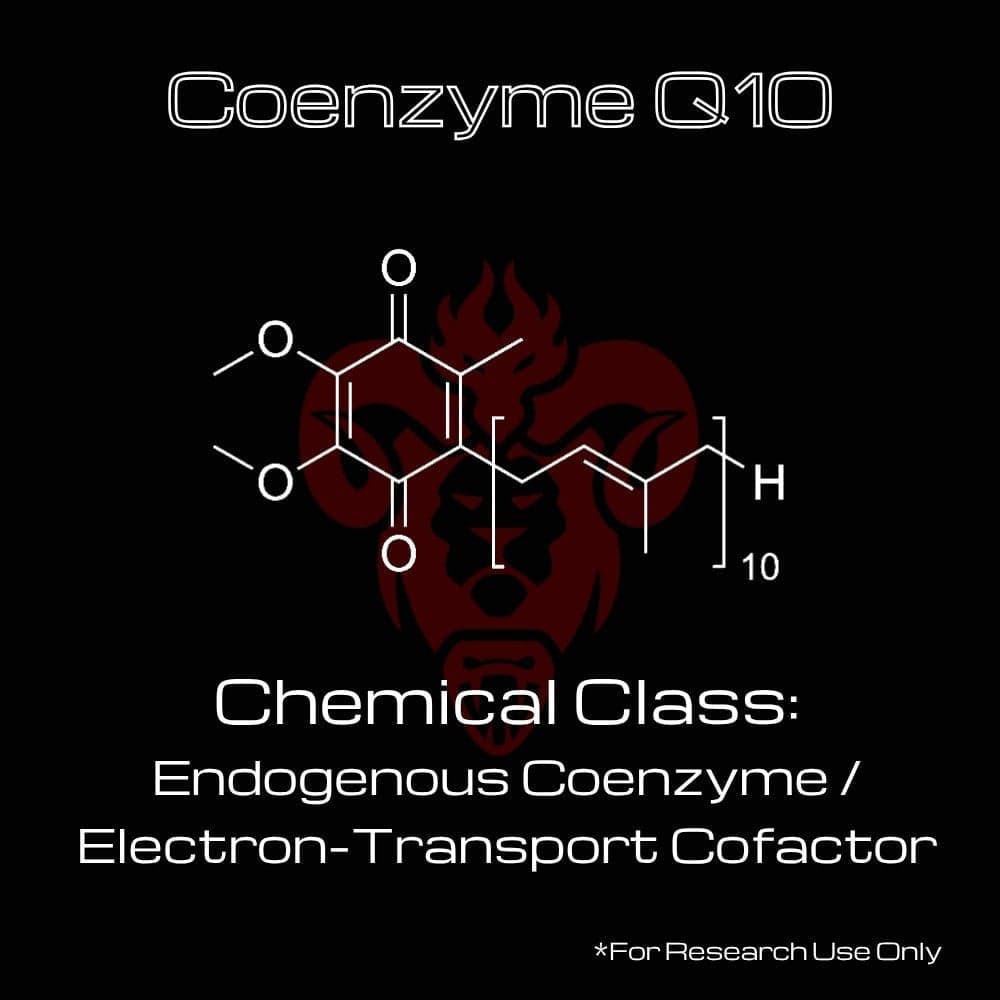
Coenzyme Q10, also called ubiquinone or CoQ10, is a fat-soluble, vitamin-like compound present in the mitochondria of virtually all human cells, which is why it earned the name ubiquinone from its ubiquitous distribution. Chemically it is a benzoquinone bearing a long isoprenoid tail; in humans that tail contains ten isoprene units, hence the designation Q10. It cycles between an oxidized form (ubiquinone) and a reduced form (ubiquinol), and this reversible redox chemistry is the basis of its two principal roles: carrying electrons in the mitochondrial respiratory chain and acting as a lipid-soluble antioxidant [3].
The molecule was first isolated from beef heart mitochondria in 1957, and its structure was elucidated shortly afterward, work that fed into the chemiosmotic theory of cellular energy production. The body synthesizes CoQ10 endogenously through the mevalonate pathway, the same pathway that produces cholesterol, which explains why cholesterol-lowering statin drugs also reduce circulating CoQ10 levels [5]. Tissue concentrations decline with age and are lower in several disease states, including heart failure, where the degree of deficiency tracks with severity [2].
Clinically, CoQ10 has been studied most extensively in cardiovascular medicine, where the Q-SYMBIO randomized trial reported reductions in cardiovascular events and mortality in chronic heart failure [1]. It has also been evaluated for statin-associated muscle symptoms, migraine prevention, and mitochondrial disorders, with mixed but frequently encouraging results [4][6]. CoQ10 is regulated as a dietary supplement rather than a drug in the United States and much of the world, and is generally regarded as safe. It is sold in two main forms, the oxidized ubiquinone and the reduced ubiquinol, usually as oil-based softgels because its absorption from the gut is otherwise poor.

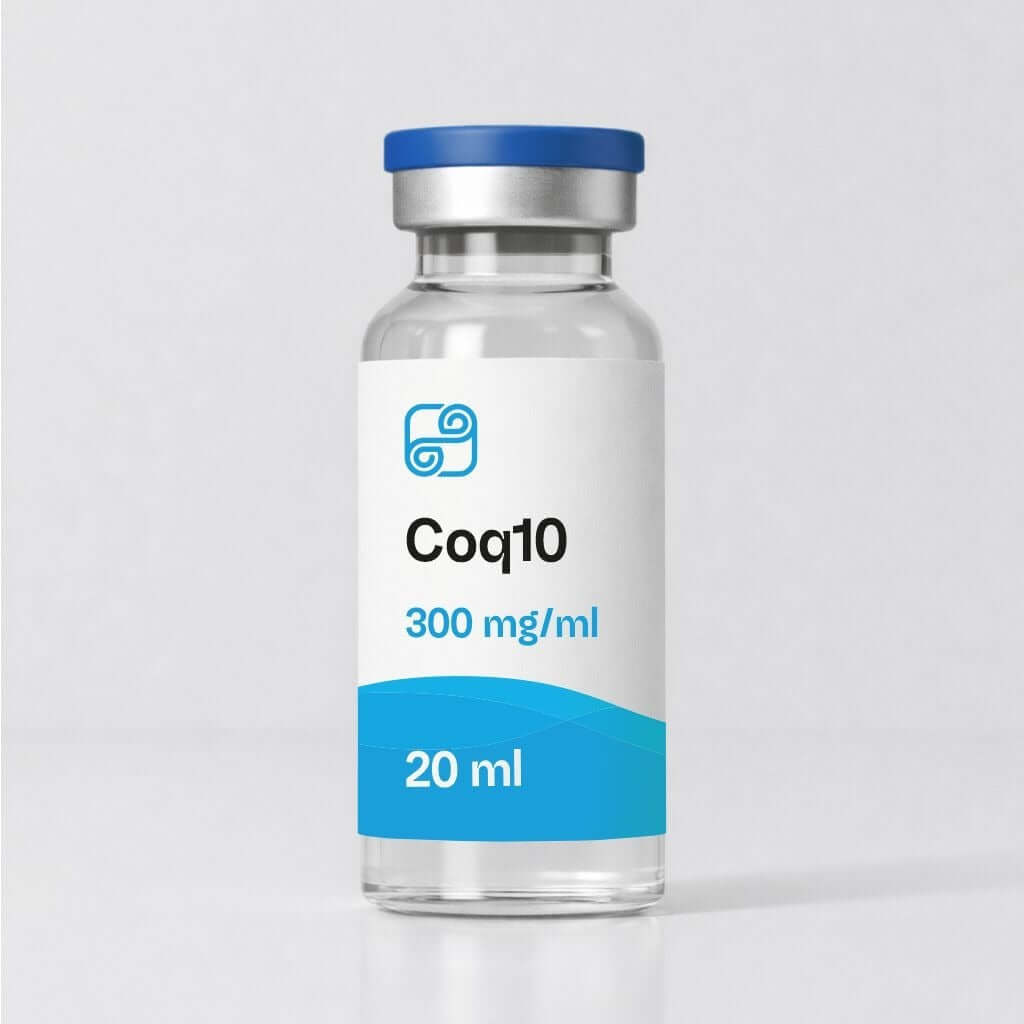
- CoQ10 was first isolated in 1957 from beef heart mitochondria, and it is the only lipid-soluble antioxidant that the human body manufactures on its own.
- In the Q-SYMBIO heart failure trial, long-term CoQ10 supplementation roughly halved major adverse cardiovascular events and lowered all-cause mortality from 18 percent to 10 percent.
Mechanism
Coenzyme Q10 sits at the heart of cellular energy metabolism as an essential electron carrier in the electron transport chain. It ferries electrons from complexes I and II to complex III, a step without which the proton gradient that drives ATP synthesis cannot be maintained; because the heart is among the most energy-hungry tissues in the body, it carries some of the highest CoQ10 concentrations, and a shortfall is strongly linked to the severity of heart failure [2][3]. Beyond bioenergetics, the reduced form ubiquinol is a potent lipid-phase antioxidant that intercepts free radicals inside cell membranes and helps regenerate vitamin E, limiting the oxidation of fats and lipoproteins [3].
These mechanisms underpin its best-documented benefit. In the Q-SYMBIO randomized controlled trial of patients with moderate to severe chronic heart failure, long-term CoQ10 supplementation lowered the primary composite endpoint of major adverse cardiovascular events to 15 percent versus 26 percent on placebo, a hazard ratio of 0.50, and reduced all-cause mortality from 18 percent to 10 percent [1]. In migraine, a randomized trial found that CoQ10 roughly tripled the proportion of patients achieving at least a 50 percent reduction in attack frequency, with 47.6 percent responding versus 14.4 percent on placebo and a number needed to treat of three [6].
The compound's link to statins is mechanistically important: because statins block the mevalonate pathway upstream of both cholesterol and CoQ10, they lower blood and sometimes muscle CoQ10, a phenomenon proposed to contribute to statin-associated muscle symptoms [5]. Supplementation restores circulating levels, although controlled trials of CoQ10 for statin myopathy have produced mixed results, with at least one rigorous study finding no change in muscle CoQ10 content or symptoms [4]. Taken together, the appeal of CoQ10 rests on a coherent story: it supports ATP output, defends membranes against , and has produced a genuine mortality signal in heart failure [1][3].
receptor fingerprint
Electron transport chainShuttles electrons for ATP production
Lipid membranesPrevents lipid peroxidation
Cardiac muscleSupports myocardial energetics
Dosingtypical ranges, not medical advice
interested in protocols and clinical dosages? make an account to see them! ^_^
Safetyrisks and cautions, not medical advice
Coenzyme Q10 is a widely used and generally well-tolerated supplement, with reported effects being mild and mostly gastrointestinal, such as nausea and upset stomach, and occasional headache or insomnia. It may reduce the effectiveness of the anticoagulant warfarin and can modestly lower blood pressure, so people on those medications should use caution.
History
Coenzyme Q10 was first isolated in 1957 by Frederick Crane and colleagues at the University of Wisconsin, who extracted the quinone from beef heart mitochondria. Its chemical structure was subsequently determined by Karl Folkers and coworkers at Merck, and the molecule was given the name ubiquinone in recognition of its ubiquitous presence across living tissues. Its central role as a mobile electron carrier in the mitochondrial respiratory chain was cemented by the broader elucidation of oxidative phosphorylation, including Peter Mitchell's chemiosmotic theory. Over the following decades CoQ10 moved from a fundamental discovery in bioenergetics to a widely used dietary supplement and an investigational adjunct in cardiovascular medicine.
Reputation
CoQ10 is among the most respected mitochondrial supplements, valued both as an essential electron carrier and as the only lipid-soluble antioxidant that mammals synthesize themselves. Its reputation rests heavily on the Q-SYMBIO trial, in which long-term supplementation reduced major adverse cardiovascular events and all-cause mortality in patients with chronic heart failure, a genuine and uncommon mortality signal for a supplement. It is also widely discussed for statin-associated muscle symptoms, migraine prevention, and the rare treatable primary CoQ10 deficiencies. In balance, results outside heart failure are more variable; rigorous trials of CoQ10 for statin myopathy have been mixed, and it is not a substitute for standard therapy. Its combination of a coherent mechanism and a real outcome trial nonetheless gives it unusual credibility.
Subjective profileweighing the evidence above
Worth taking if you are on a statin and your muscles ache, or if you have heart failure and want a low-risk adjunct, because those are the two places the evidence actually lives. As a general antioxidant it is unremarkable. Anyone on warfarin should clear it first, since it can blunt the drug.
Where to buy


Suppliers
Vendors carrying CoQ10, with live product details and codes. Links are affiliate links that support the wiki at no cost to you.
Amazon
CoQ10
Kimera Chems
CoQ10
Limitless Biochem🌐
CoQ10
iHerb
Ubiquinol
Research
- 2000first citedCoenzyme Q10 improves psychiatric symptoms in adult-onset mitochondrial myopathy, encephalopath…
- 2014most active year3 papers
- 2025most recentEffects of coenzyme Q10 administration on blood pressure and heart rate in adults: A systematic…
- 1.The effect of coenzyme Q10 on morbidity and mortality in chronic heart failure: results from Q-SYMBIO: a randomized double-blind trial
- 2.Overview on coenzyme Q10 as adjunctive therapy in chronic heart failure. Rationale, design and end-points of Q-symbio, a multinational trial
- 3.Coenzyme Q10 and Utility in Heart Failure: Just Another Supplement?
- 4.Coenzyme Q10 Supplementation in Statin Treated Patients: A Double-Blinded Randomized Placebo-Controlled Trial
- 5.The role of mitochondria in statin-induced myopathy
- 6.Efficacy of coenzyme Q10 in migraine prophylaxis: a randomized controlled trial
- 7.MELAS syndrome: Clinical manifestations, pathogenesis, and treatment options
- 8.Secondary coenzyme Q10 deficiency triggers mitochondria degradation by mitophagy in MELAS fibroblasts
- 9.Coenzyme Q 10 improves lactic acidosis, strokelike episodes, and epilepsy in a patient with MELAS (mitochondrial myopathy, encephalopathy, lactic acidosis, and strokelike episodes)
- 10.Coenzyme Q10 improves psychiatric symptoms in adult-onset mitochondrial myopathy, encephalopathy, lactic acidosis and stroke-like episodes: a case report
- 11.A randomized clinical trial of high-dosage coenzyme Q10 in early Parkinson disease: no evidence of benefit
- 12.Effects of coenzyme Q10 administration on blood pressure and heart rate in adults: A systematic review and meta-analysis of randomized controlled trials
23 listed here; entry last updated August 2026
Reviews
My notesprivate to this device
FAQ
Ubiquinol or ubiquinone?
Ubiquinol is the reduced, active form and tends to absorb better, especially in older adults; ubiquinone is cheaper and works fine for many.
Should statin users take it?
Statins lower CoQ10; some people with statin muscle aches find relief, though trial results are mixed.
Why take it with fat?
It is fat soluble, so a meal with oil meaningfully increases how much you absorb.
Does it help energy if I am healthy?
Benefits are clearest when levels are low; healthy people may notice less.
Adverse effects
- Mild digestive upset, such as nausea or loose stools, is occasionally reported
- Can rarely disturb sleep if taken late in the day
- May blunt the effect of the blood thinner warfarin, so anticoagulant users should seek medical advice
Notes and cautions
- Generally very well tolerated, even at high intake