
spec sheet10 rows
BAM15 is a mitochondrial uncoupler, a protonophore that dissipates the mitochondrial proton gradient so cells burn more fuel and expend more energy without suppressing appetite. Its defining advantage over older uncouplers such as 2,4-dinitrophenol is selectivity: it shuttles protons across the inner mitochondrial membrane without depolarizing the plasma membrane, giving it a much wider safety window, and it also activates the energy sensor AMPK. In preclinical studies it reversed diet-induced obesity and insulin resistance, reduced body and liver fat, and improved glycemic control while preserving lean mass and food intake; it remains an investigational agent.
- Burns off excess energy for real fat loss
- Mitochondrial uncoupling without the old DNP danger
- Trims fat while appetite stays untouched
- Sharpens insulin sensitivity and glucose handling
- Selective enough for a far wider safety window
- Supports metabolic flexibility at the cell level
- Uncouplers as a class have a narrow safety margin
Overview
BAM15 is a small-molecule mitochondrial uncoupler, or protonophore, developed as a metabolic therapeutic. Mitochondria normally build a proton gradient across their inner membrane and use it to synthesize ATP; an uncoupler carries protons back across that membrane, dissipating the gradient as heat and forcing the cell to burn more fuel to maintain energy, thereby increasing metabolic rate. This is the same broad principle as the notorious weight-loss drug 2,4-dinitrophenol (DNP), but BAM15 was identified and advanced specifically because it offers a much wider safety window [3].
Much of the foundational work was published in 2020. In diet-induced obese mice, orally bioavailable BAM15 increased nutrient oxidation and decreased body fat mass without altering food intake, lean body mass, or body temperature, and it reduced hepatic fat, lowered inflammatory lipids, exerted antioxidant effects, and improved insulin sensitivity across multiple tissues [1]. A parallel study showed BAM15 stimulated energy expenditure and improved body composition and glycemic control independent of weight loss, in part through sustained activation of the energy sensor AMPK [2]. Later research has extended interest to non-alcoholic and metabolic fatty liver disease, including combination with the approved thyroid-hormone-receptor agonist resmetirom [4], and to sepsis, cardiovascular, and other conditions [3].
BAM15 is an investigational compound and has not been approved as a drug for any indication; the published work is preclinical, chiefly in rodents and cell models. Reviewers note an encouraging safety and tolerability profile in these models but also challenges such as high lipophilicity and the need for better delivery methods [3]. It is encountered as a research chemical rather than an approved therapy.
- BAM15 makes cells burn more fuel by dissipating the mitochondrial proton gradient as heat, effectively raising metabolic rate from inside the cell.
- In obese mice it reduced body and liver fat without changing food intake, lean mass or body temperature, a profile that sets it apart from older uncouplers like DNP.
Mechanism
BAM15 is a protonophore, a molecule that shuttles protons across the inner mitochondrial membrane and thereby uncouples the electron transport chain from ATP synthesis. Normally the respiratory chain pumps protons out to build an electrochemical gradient, and ATP synthase lets them back in to make ATP; by ferrying protons back independently of ATP synthase, BAM15 dissipates that gradient as heat, so the mitochondria must oxidize more fuel, burning more fat and glucose, to sustain the membrane potential and energy supply. The result is increased cellular respiration and energy expenditure, effectively raising the metabolic rate from within the cell [3].
What distinguishes BAM15 from classical uncouplers such as 2,4-dinitrophenol is selectivity and safety margin; it targets the membrane without collapsing the plasma membrane potential, giving a wider gap between the effective and toxic dose. In diet-induced obese mice, this translated into increased nutrient oxidation and loss of body and liver fat with no change in food intake, lean mass, or body temperature, alongside reduced inflammatory lipids, antioxidant effects, and improved sensitivity across tissues [1]. Part of the downstream benefit is mediated by sustained activation of AMP-activated protein kinase (), the cellular energy sensor, which enhances glucose uptake and improves glycemic control even independent of weight loss [2].
The intended benefits are therefore fat loss, better sensitivity, reduced fatty liver, and lower oxidative and inflammatory stress, achieved by making metabolism less efficient rather than by suppressing appetite. This mechanism is compelling against a backdrop where obesity affects more than 40% of US adults and existing therapies often fail [1], but BAM15 remains a preclinical agent whose long-term human safety is unknown [3].
receptor fingerprint
uncoupler (protonophore)activates
Metabolic rateraises
Safetyrisks and cautions, not medical advice
BAM15 is a mitochondrial protonophore (uncoupler) studied preclinically for fat loss and metabolic disease; human safety data are essentially absent and it is sold as a research chemical. Mitochondrial uncouplers as a class carry a serious hazard because excessive uncoupling can cause dangerous hyperthermia; although BAM15 was designed to have a wider margin than older uncouplers such as DNP in animal studies, its dose-safety relationship in humans is unknown.
History
BAM15 is a mitochondrial protonophore identified during efforts to find uncoupling agents that could raise metabolic rate without the dangerous toxicity of the classical uncoupler 2,4-dinitrophenol. It was first characterized in the mid-2010s as a compound that selectively shuttles protons across the inner mitochondrial membrane while sparing the plasma membrane potential, giving it a wider safety margin than older uncouplers. It rose to prominence through a 2020 Nature Communications study led by groups at the University of New South Wales and Virginia Tech, including the laboratories of Kyle Hoehn and Webster Santos, which showed that oral BAM15 reversed diet-induced obesity and insulin resistance in mice without changing food intake, lean mass or body temperature. It remains an investigational preclinical agent whose long-term human safety has not been established.
Reputation
BAM15 has an enthusiastic reputation as a safer-minded successor to DNP, and that framing captures its genuine scientific appeal; it burns extra fuel by making mitochondria less efficient rather than by suppressing appetite, yet it targets the mitochondrial membrane selectively instead of collapsing the plasma membrane potential, which is what gives it a broader gap between effective and toxic doses.
The preclinical results are compelling, with mice losing body and liver fat while preserving lean mass and normal food intake, alongside improved insulin sensitivity, reduced inflammatory lipids and antioxidant effects, some of it mediated by sustained AMPK activation. These qualities make it one of the most talked-about metabolic research compounds against a backdrop of obesity therapies that often fail. The essential caveat is that it remains preclinical, so its safety and efficacy in humans are simply unknown.
Subjective profileweighing the evidence above
The design really is an improvement on DNP, but it remains a mitochondrial uncoupler, and uncouplers hurt people through hyperthermia when the dose is wrong. Everything known comes from animals, there is no human dose, and buying it means guessing at both purity and margin. Not worth it.
Where to buy


Suppliers
Vendors carrying BAM15, with live product details and codes. Links are affiliate links that support the wiki at no cost to you.
| supplier | size | price | $/mg |
|---|---|---|---|
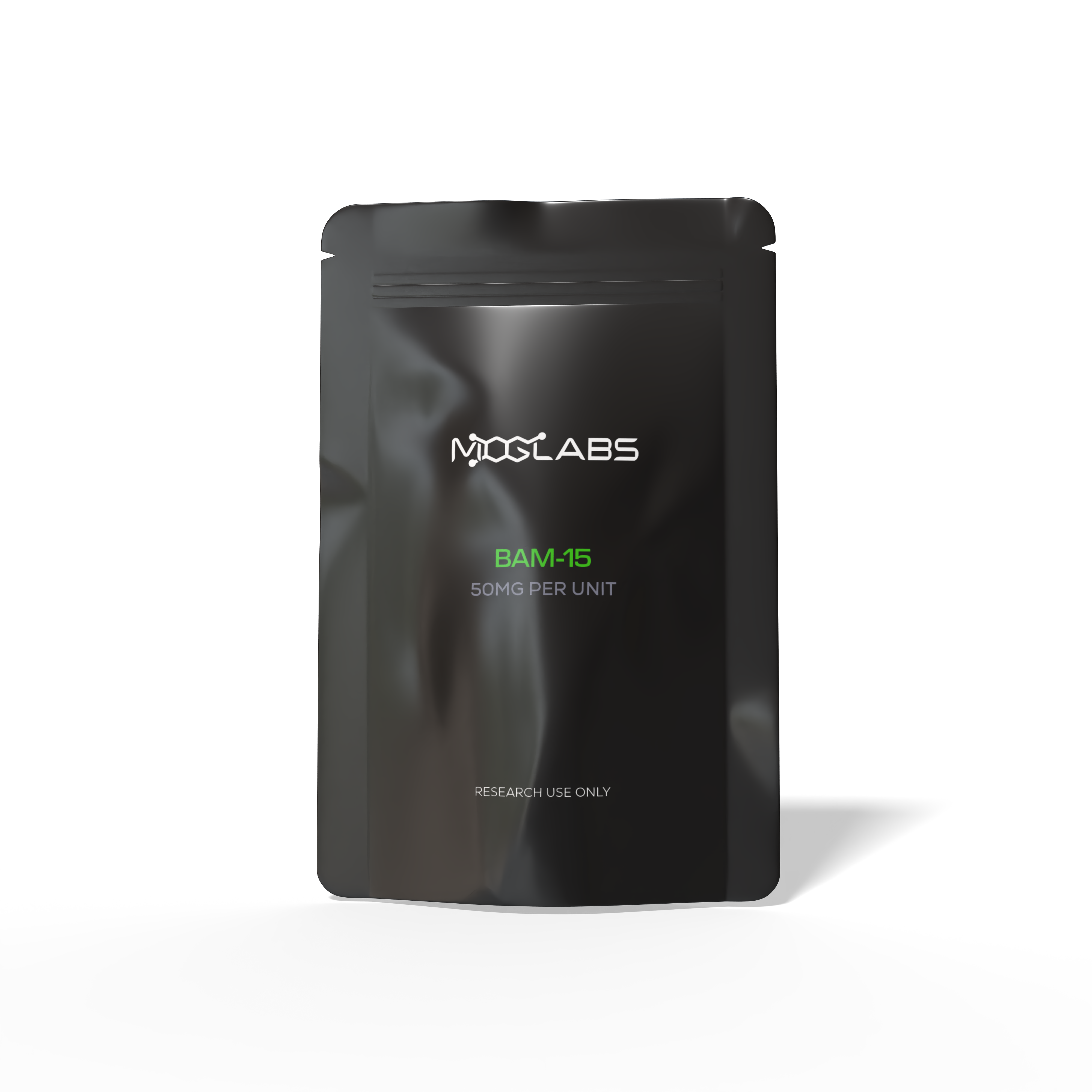
| Moglabslowest | 50mg | $98.00 | $1.96/mg |
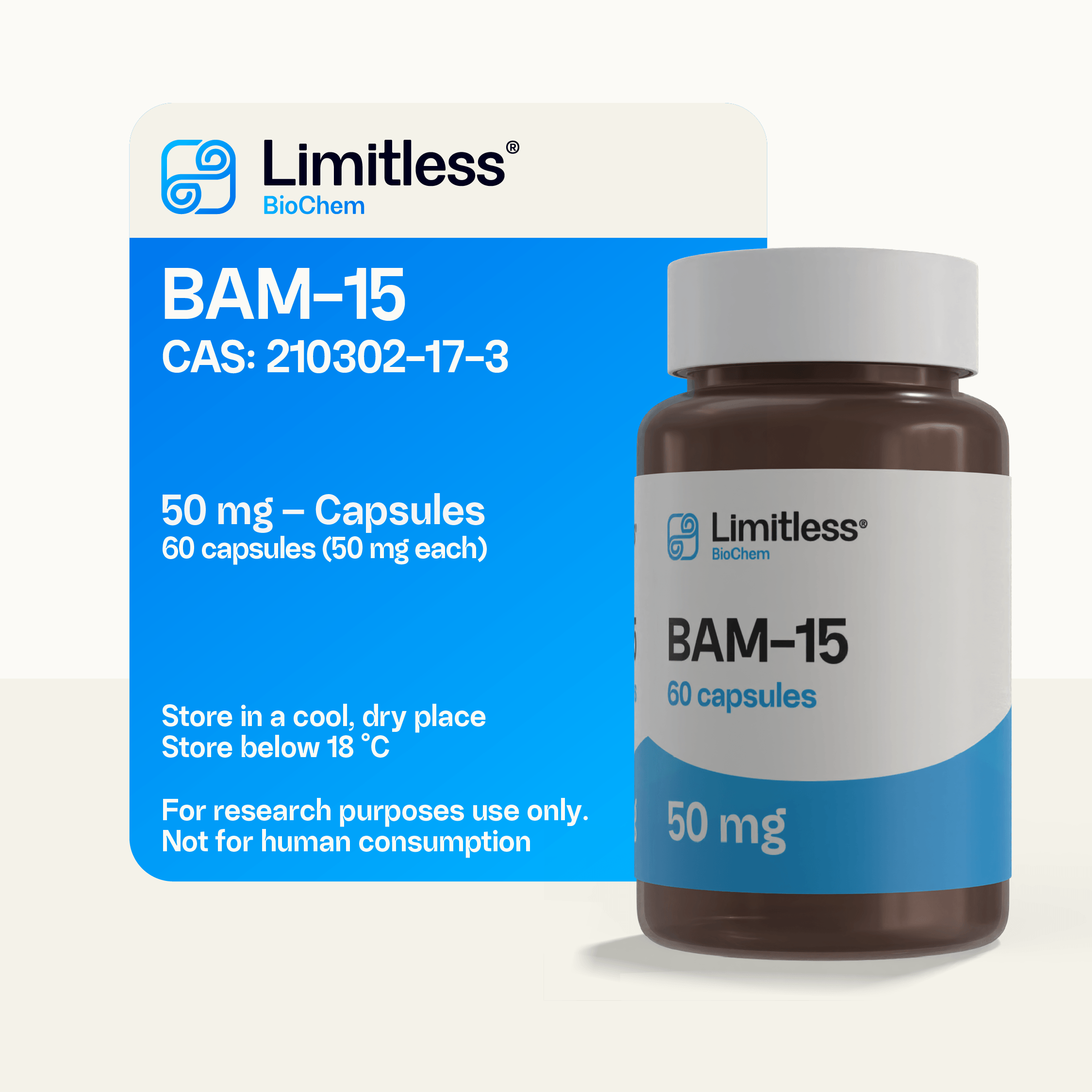
| Limitless Biochem | 50 mg | $99.99 | $2.00/mg |
Moglabs
BAM15
Limitless Biochem🌐
BAM15
Kimera Chems
BAM15
Research
- 2018first citedMitochondrial uncoupler BAM15 inhibits artery constriction and potently activates AMPK in vascu…
- 2021most active year4 papers
- 2026most recentMitochondrial uncoupler BAM15 ameliorates liver lipid metabolism disorders by activating the AM…
- 1.Mitochondrial uncoupler BAM15 reverses diet-induced obesity and insulin resistance in mice.
- 2.BAM15-mediated mitochondrial uncoupling protects against obesity and improves glycemic control.
- 3.BAM15 as a mitochondrial uncoupler: a promising therapeutic agent for diverse diseases.
- 4.Beneficial effects of MGL-3196 and BAM15 combination in a mouse model of fatty liver disease.
- 5.Protonophoric action of BAM15 on planar bilayers, liposomes, mitochondria, bacteria and neurons
- 6.Mitochondrial uncoupler BAM15 inhibits artery constriction and potently activates AMPK in vascular smooth muscle cells
- 7.BAM15 treats mouse sepsis and kidney injury, linking mortality, mitochondrial DNA, tubule damage, and neutrophils
- 8.Polymeric Particle BAM15 Targeting Macrophages Attenuates the Severity of LPS-Induced Sepsis: A Proof of Concept for Specific Immune Cell-Targeted Therapy
- 9.Sepsis Encephalopathy Is Partly Mediated by miR370-3p-Induced Mitochondrial Injury but Attenuated by BAM15 in Cecal Ligation and Puncture Sepsis Male Mice
- 10.Chemical mitochondrial uncouplers share common inhibitory effect on NLRP3 inflammasome activation through inhibiting NFκB nuclear translocation
- 11.The new mitochondrial uncoupler BAM15 induces ROS production for treatment of acute myeloid leukemia
- 12.Breast cancer growth and proliferation is suppressed by the mitochondrial targeted furazano[3,4-b]pyrazine BAM15
20 listed here; entry last updated August 2026
Reviews
My notesprivate to this device
FAQ
What is a mitochondrial uncoupler?
It is a compound that lets cells burn energy as heat instead of storing it, which researchers study for metabolic and fat-loss effects.
How is it different from DNP?
BAM15 was designed in research to avoid the dangerous body-temperature spikes associated with older uncouplers like DNP, though human safety data remains limited.
Is it approved for use?
No, BAM15 is an experimental research compound and is not an approved supplement or medication.
Is human data available?
Most evidence comes from animal and lab studies, so its effects and safety in people are not well characterized.
Limitations of the evidence
- Studied only in animals so far, with no human data
- Long-term safety still unknown
Adverse effects
- Uncouplers as a class have a narrow safety margin
Notes and cautions
- Available only as a research chemical