
spec sheet10 rows
Hesperidin is a flavanone glycoside (a plant flavonoid bound to a sugar) that is abundant in citrus fruit, especially the peel and white pith of oranges and lemons; its sugar-free form is called hesperetin. It is best understood as a venous and vascular supplement; it is best known as a partner to diosmin for chronic venous insufficiency (poor return of blood from the legs) and hemorrhoids, with lighter support for antioxidant, anti-inflammatory, and modest metabolic effects on blood sugar and lipids.
- Citrus flavonoid aimed at heavy, aching, swollen legs
- Strongest evidence sits with the diosmin plus hesperidin combination
- Calms bleeding, pain and swelling during hemorrhoid flares
- Strengthens capillaries and reduces leakage and easy bruising
- Antioxidant support from an ordinary food derived flavonoid
- Glucosyl form absorbs better for blood sugar and lipids
- Mild gastrointestinal upset, nausea, or loose stools, more likely at the high loading doses used for hemorrhoids
- Occasional headache or dizziness
- Rare skin rash or itching in sensitive people
Overview
This is a food-derived flavonoid that belongs in the "gentle, well-tolerated, modest-but-real" bucket rather than anything dramatic. Its strongest track record is vascular; the diosmin plus hesperidin combination (sold as micronized purified flavonoid fraction, or MPFF; "micronized" just means the particles are ground very fine to help absorption) has decades of use for aching, heavy, swollen legs and for flare-ups of hemorrhoids.
Worth being honest, though: that combination is diosmin-dominant (roughly 90 percent diosmin), so most of the clinical credit belongs to the pair, not to hesperidin standing alone. The big absorption caveat matters too; plain hesperidin from citrus is poorly and slowly taken up because your gut bacteria have to strip off its sugar before you can use it, so results are variable and slow to build. If you want reliable dosing, the enzymatically modified forms (glucosyl hesperidin, or G-hesperidin) absorb noticeably better and are the ones worth reaching for.

- Most of the hesperidin in an orange is not in the juicy segments but in the white pith and peel, which is why supplement makers often extract it from citrus processing byproducts.
- The prescription flavonoid fraction used for veins and hemorrhoids in much of Europe and Asia is about 90 percent micronized diosmin, with the remaining 10 percent being other citrus flavonoids expressed as hesperidin, so it is not actually 10 percent pure hesperidin.
- Hesperidin is one of the compounds behind the classic 'vitamin P' idea from the 1930s, an early name for citrus bioflavonoids thought to strengthen capillaries.
- The venotonic side of the diosmin plus hesperidin fraction is often credited to slowing COMT, the same enzyme that helps clear stress neurotransmitters, so noradrenaline keeps veins tighter for longer; that mechanism is mainly documented for diosmin, though, not for hesperidin on its own.
Mechanism
Hesperidin itself is the glycoside (hesperetin joined to the sugar rutinose); the active molecule your tissues actually use is the aglycone hesperetin (aglycone just means the sugar-free active form), freed after gut bacteria cleave off the sugar. Once absorbed, it works through a handful of overlapping vascular mechanisms rather than one clean receptor. Here it is worth carefully separating hesperidin from the classic venotonic (vein-tightening) story.
The best-documented venotonic mechanism, prolonging the vasoconstricting effect of noradrenaline on vein walls by slowing the enzyme catechol-O-methyltransferase (COMT, which normally breaks noradrenaline down) so venous tone stays firmer for longer, is really a property of diosmin and the micronized flavonoid fraction, not a proven action of plain hesperidin; and even for diosmin it is only one proposed pathway, with another being a rise in the calcium sensitivity of venous smooth muscle so the vessel contracts more readily.
Hesperidin's own independent contribution to venous tone is still not settled. What hesperidin does more clearly on its own: it reduces capillary permeability and fragility (how easily tiny vessels leak fluid and bruise), and it damps the inflammatory cascade at the vessel wall by lowering leukocyte (white blood cell) adhesion and quieting NF-kB signaling (NF-kB is a master on/off switch for inflammation genes), which pulls down inflammatory messengers like TNF-alpha and IL-6.
Hesperetin also supports the endothelium (the inner lining of blood vessels) by nudging up production of (the short-lived signal molecule that tells vessel walls to relax and widen), which can improve flow-mediated dilation (a standard test of how well an artery widens when blood flow increases). Add straightforward antioxidant behavior (scavenging free radicals and propping up your own antioxidant enzymes), and mild effects on signaling and lipid handling, and you get the broad but individually modest profile people report.
receptor fingerprint
Venous smooth-muscle tone (diosmin + hesperidin fraction)In the micronized flavonoid fraction, the diosmin component is proposed to prolong noradrenaline-driven venoconstriction (by slowing its COMT breakdown) and to raise venous smooth-muscle calcium sensitivity; plain hesperidin's own venotonic role is unsettled
Capillary permeability and microcirculationReduces capillary leakage and fragility and lowers leukocyte adhesion at the vessel wall
Reactive oxygen speciesDirectly scavenges free radicals and supports endogenous antioxidant enzymes
Endothelial synthase (eNOS)Hesperetin may increase nitric-oxide-mediated vasodilation and flow-mediated dilation (eNOS is the endothelial enzyme that makes nitric oxide, the signal that relaxes vessel walls)
NF-kB inflammatory signalingDownregulates NF-kB (a master switch for inflammation genes), lowering TNF-alpha, IL-6, and CRP (C-reactive protein, a blood marker of inflammation)
Glucose and lipid metabolismModestly improves fasting glucose, HbA1c (a marker of average blood sugar over the past ~3 months), triglycerides, and LDL in some trials (better with G-hesperidin)
Evidencehow good the literature is
The evidence is a genuine mixed bag that leans positive in one lane and thin in the others. The strongest, most clinically grounded data are for the diosmin plus hesperidin flavonoid fraction (a diosmin-dominant combination) in chronic venous disease and hemorrhoids, where multiple trials and reviews support real (if moderate) relief of leg heaviness, swelling, cramps, and hemorrhoid symptoms; the honest asterisks are that much of this work involves the proprietary micronized product, some is industry-linked, and the efficacy belongs to the combination rather than to hesperidin as a standalone (single-ingredient hesperidin venous data are much weaker). Vascular-function studies of hesperidin and hesperidin-rich orange juice show believable improvements in endothelial function and small, though inconsistent, blood-pressure effects in people with metabolic risk. The metabolic story (blood sugar, HbA1c, triglycerides, LDL, inflammatory markers) is real but modest and inconsistent across meta-analyses, with glucosyl hesperidin looking better than plain hesperidin largely because it actually gets absorbed. Everything further out (neuroprotection, anticancer, bone) is still mostly animal and cell work. Net read: solid for venous and vascular support as part of the diosmin combo, promising-but-modest for metabolism, and preliminary for the rest.
Dosingtypical ranges, not medical advice
interested in protocols and clinical dosages? make an account to see them! ^_^
Safetyrisks and cautions, not medical advice
Hesperidin has a reassuring safety record; it is a normal part of any citrus-eating diet and has been used as a supplement and prescription flavonoid fraction for decades. Side effects when they occur are usually mild and gastrointestinal (stomach upset, loose stools, nausea) or an occasional headache, and they tend to show up more at the higher loading doses used for acute hemorrhoids. There is no established serious toxicity at typical doses. A few sensible cautions apply.
Hesperetin can inhibit certain drug-metabolizing enzymes and transporters in the lab (a milder, grapefruit-flavored version of the same idea), so if you take narrow-margin medications it is worth spacing doses and mentioning it to a pharmacist; the real-world interaction risk at supplement doses looks small but is not zero.
Because it may be mildly antiplatelet and vasoactive (this is mostly preclinical and theoretical rather than shown in people), caution is still warranted when stacking large doses with blood thinners or right around surgery. Data in pregnancy and breastfeeding are limited even though flavonoid fractions are used for pregnancy hemorrhoids in some countries, so a doctor should make the call there. This is general educational information, not medical advice.
Interactionsdocumented pairs only, not exhaustive
Hesperidin is the main flavanone glycoside in sweet orange, and its documented interactions are transporter based rather than metabolic.
In cell work, hesperidin inhibits the intestinal uptake transporter OATP1A2 at low micromolar concentrations, with half maximal inhibition around 2.7 micromolar. That transporter carries several drugs across the gut wall, and orange juice has been shown clinically to reduce absorption of fexofenadine, celiprolol and atenolol substantially. Hesperidin is the presumed cause, though the human studies used juice rather than purified compound, so for isolated hesperidin the attribution is inferred rather than proven.
Hesperidin and its aglycone hesperetin also inhibit CYP3A4 and P-glycoprotein in laboratory systems, but the concentrations required exceed what supplement use tends to produce, and no clinical CYP interaction has been demonstrated. Beyond that the record is quiet; hesperidin is eaten in ordinary quantities in citrus fruit without reported problems.
Checking a whole stack? Run it through interactions + stacks.
History
Hesperidin was first isolated from the white inner peel of oranges by the French chemist Lebreton in the 1820s, and its name traces back to the Hesperides, the mythological garden of golden fruit. Its scientific profile rose sharply in the 1930s when Albert Szent-Gyorgyi and colleagues, working on vitamin C, proposed that citrus 'bioflavonoids' including hesperidin helped reduce capillary fragility and bleeding; they floated the label 'vitamin P' for this group, a designation later dropped once it was clear these were not true vitamins. That capillary-strengthening reputation carried hesperidin into vascular medicine.
From the mid-twentieth century onward, European pharmaceutical work standardized the diosmin plus hesperidin flavonoid fraction and, importantly, micronized it (grinding the particles very fine) to improve its notoriously poor absorption; this became a mainstay for chronic venous disease and hemorrhoids across Europe, Latin America, and Asia. In parallel, Japanese researchers developed glucosyl hesperidin (G-hesperidin) by enzymatically attaching glucose to make it far more water-soluble and better absorbed, extending its use into metabolic and peripheral-circulation supplements.
Reputation
Hesperidin has a quietly respectable reputation rather than a hyped one. Among vascular clinicians in the many countries where the diosmin plus hesperidin fraction is licensed, it is a trusted, unglamorous workhorse for tired, heavy, swollen legs and for hemorrhoid flares, valued mostly for being gentle and well-tolerated rather than powerful; and most of that clinical respect is really for the diosmin-led combination, not hesperidin alone.
In the supplement world it is often overshadowed by its flashier flavonoid cousin quercetin, and it tends to get bundled into 'citrus bioflavonoid' vitamin C blends where its dose is too low to matter. People who research it carefully usually land in the same place: genuinely useful for veins and capillaries as part of the combo, mildly helpful metabolically, and held back mainly by its poor native absorption, which is exactly why the better-absorbed glucosyl and micronized forms have earned a following.
Subjective profileweighing the evidence above
Worth buying for one job in particular; leg heaviness, swelling and hemorrhoid flares, where the diosmin plus hesperidin combination carries the real evidence. On its own, or for the metabolic claims, it is much weaker, so buy the combination product and expect mild stomach upset at high loading doses.
Where to buy
Suppliers
Vendors carrying Hesperidin, with live product details and codes. Links are affiliate links that support the wiki at no cost to you.
Amazon
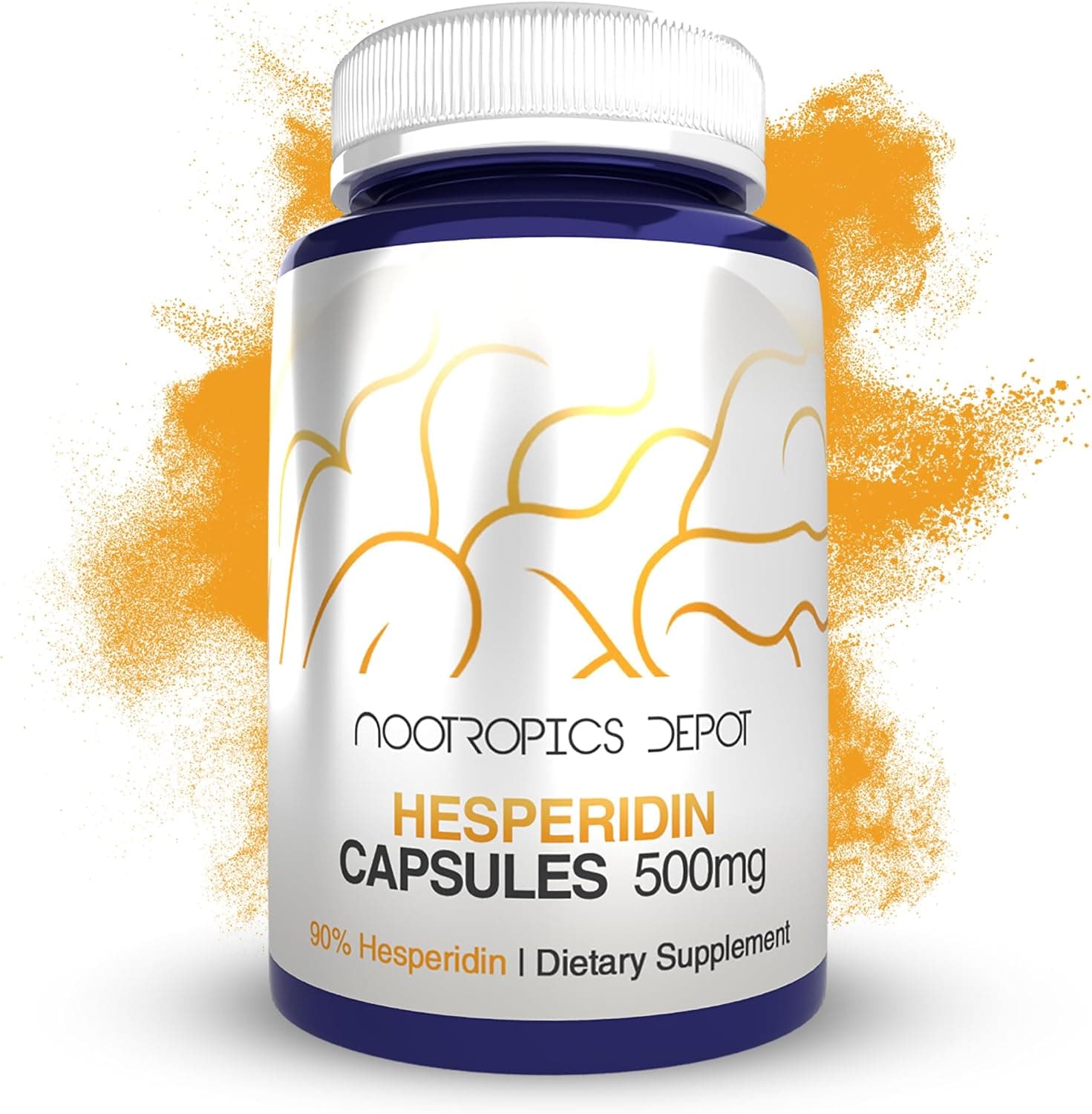
Hesperidin
Research
- 2003first citedMicronised purified flavonoid fraction: a review of its use in chronic venous insufficiency, ve…
- 2020meta-analysisPhlebotonics for venous insufficiency
- 2026most recentHesperidin: A Multifunctional Flavonoid with Therapeutic Potential in the Management of Pathoge…
- 1.Hesperidin contributes to the vascular protective effects of orange juice: a randomized crossover study in healthy volunteers
- 2.Phlebotonics for venous insufficiency
- 3.Micronised purified flavonoid fraction: a review of its use in chronic venous insufficiency, venous ulcers and haemorrhoids
- 4.Meta-analysis of flavonoids for the treatment of haemorrhoids
- 5.The effects of hesperidin supplementation on cardiovascular risk factors in adults: a systematic review and dose-response meta-analysis
- 6.Hesperidin: A Multifunctional Flavonoid with Therapeutic Potential in the Management of Pathogenesis
- 7.Effects of glucosyl hesperidin on serum lipids in hyperlipidemic subjects: preferential reduction in elevated serum triglyceride level
7 listed here; entry last updated August 2026
Reviews
My notesprivate to this device
FAQ
What is the difference between hesperidin and hesperetin?
Hesperidin is the storage form found in citrus; it is hesperetin bound to the sugar rutinose. Hesperetin is the sugar-free aglycone that your body actually absorbs and uses, after gut bacteria snip the sugar off. This is also why hesperidin absorption is slow and variable.
Why is hesperidin absorption so low, and what can I do about it?
The rutinose sugar has to be removed by your colon bacteria before hesperetin can be absorbed, so uptake is slow, incomplete, and depends on your gut microbiome. If you want more reliable dosing, choose an enzymatically modified glucosyl hesperidin (G-hesperidin) or a micronized form, and take it with a meal containing some fat.
Do I need to take hesperidin with diosmin?
For vascular use, effectively yes if you want the proven results. The clinical evidence for veins and hemorrhoids is for the diosmin plus hesperidin combination (micronized purified flavonoid fraction), which is diosmin-dominant; hesperidin on its own has much thinner venous evidence. If your main goal is venous or hemorrhoid relief, reach for that pairing rather than plain hesperidin.
How long until I notice anything for leg or vein symptoms?
Give it time. Venous symptoms respond slowly, so judge it over 6 to 8 weeks of consistent daily use rather than days. Acute hemorrhoid flares use a short high-dose loading schedule that works faster, over several days.
Is hesperidin safe to take long term?
For most people, yes; it is a normal dietary flavonoid with a long history of supplement and prescription use, and side effects are usually mild and gastrointestinal. Use caution if you are on blood thinners, take narrow-margin medications, are near surgery, or are pregnant or breastfeeding, and check with a clinician in those cases.
Can I just drink orange juice instead?
Orange juice is a real source of hesperidin and studies of hesperidin-rich juice do show vascular benefits, but the amounts are modest and come with a lot of sugar. For a therapeutic dose aimed at veins or hemorrhoids, a standardized supplement is far more practical than juice.
Adverse effects
- Mild gastrointestinal upset, nausea, or loose stools, more likely at the high loading doses used for hemorrhoids
- Occasional headache or dizziness
- Rare skin rash or itching in sensitive people
Notes and cautions
- Theoretical additive bleeding risk when stacked with blood thinners or around surgery
- Possible mild interference with certain drug-metabolizing enzymes at high doses