
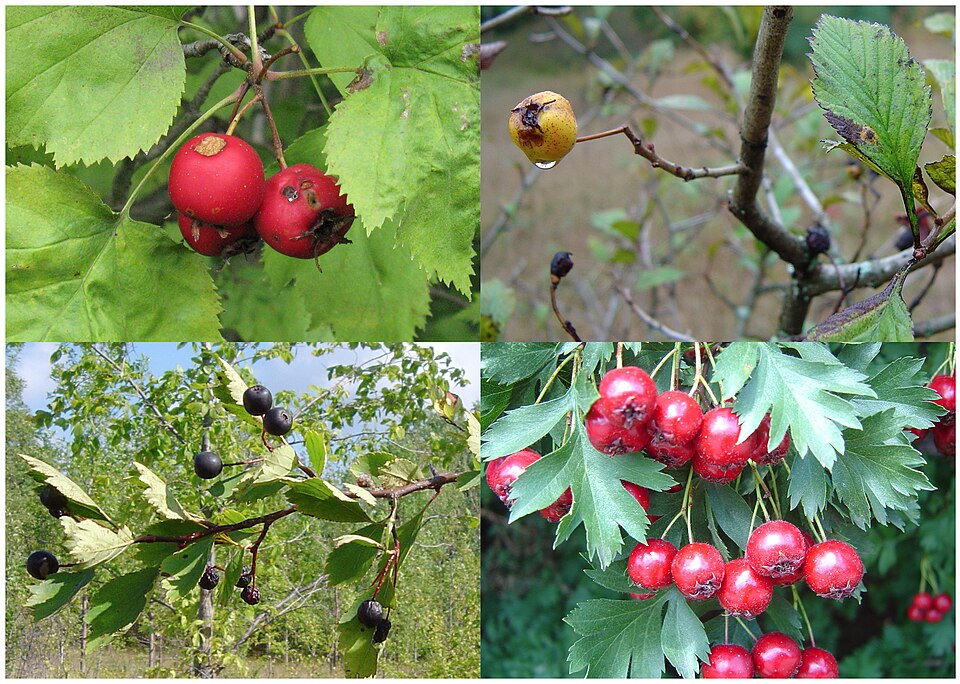
spec sheet10 rows
Hawthorn is the common name for Crataegus, a large genus of thorny shrubs and small trees in the rose family, Rosaceae, found across the temperate Northern Hemisphere. The leaves, flowers, and small red fruits, or haws, carry a long history in herbal medicine, most prominently as a remedy for the heart and circulation. Standardized leaf-and-flower extracts have been studied as an adjunct treatment for chronic heart failure, with mixed results.
- Cardiovascular support
- Improved blood flow
- Modest blood pressure reduction
- Antioxidant protection
- Nausea
- Dizziness
- Digestive upset
- Palpitations at high intake
- Possible interaction with heart medications
Overview
Hawthorn refers to the genus Crataegus, which comprises several hundred species of thorny shrubs and small trees in the family Rosaceae and grows naturally throughout the temperate regions of the Northern Hemisphere [1]. Different species are used around the world; European herbalism has drawn chiefly on Crataegus monogyna and Crataegus laevigata, while Chinese tradition favors the fruit of Crataegus pinnatifida [1]. The plant is recognized for its thorny branches, white or pink blossoms, and clusters of small red pome fruits known as haws.
The parts used medicinally are the leaves, the flowers, and the berries, often combined as a leaf-and-flower extract [2]. Their characteristic chemistry is dominated by polyphenols, among them flavonoids such as vitexin, oligomeric proanthocyanidins, and various phenolic acids, along with tannins [1][2]. These constituents are credited with the antioxidant and vascular effects that underlie the plant's traditional cardiovascular reputation.
Hawthorn has been used by many cultures for centuries. In traditional Chinese medicine the dried fruit serves mainly as a digestive aid, whereas Western herbal medicine has long regarded the leaf, flower, and berry as tonics believed to strengthen the heart and support circulation [1][2]. In Germany, an official herbal monograph historically approved hawthorn leaf-with-flower extract for use in early-stage heart failure [2].
Modern clinical research has concentrated on standardized extracts as an adjunct to conventional therapy for chronic heart failure. Earlier meta-analyses of randomized, placebo-controlled trials reported improvements in exercise tolerance, maximal workload, and symptoms such as shortness of breath and fatigue, with adverse events that were generally infrequent and mild [2][4]. A later, more rigorously controlled trial, however, found no symptomatic or functional benefit when hawthorn was added to contemporary evidence-based heart failure medication, and noted more reported adverse events in the hawthorn group [3]. As a result, the overall evidence is regarded as mixed.
Hawthorn preparations are generally well tolerated, with reported side effects that are usually mild and transient, such as nausea, dizziness, and digestive upset [2]. Higher intakes have been linked to cardiac and blood-pressure effects, and because hawthorn can interact with the cardiac drug digoxin and interfere with its measurement, caution is advised for people taking that medication [1]. Hawthorn is sold as a dietary supplement or traditional herbal product rather than an approved medicine in most countries, and is available as dried berries, teas, tinctures, and standardized capsule extracts.
Mechanism
Hawthorn's cardiovascular actions are attributed chiefly to its polyphenol content, particularly flavonoids and oligomeric proanthocyanidins [1][2]. In laboratory and animal studies these compounds have shown several effects relevant to the heart and vessels: a mild positive inotropic action that can increase the force of heart-muscle contraction, dilation of blood vessels that may lower vascular resistance, and antioxidant activity that protects tissue from [1][2].
Proposed cellular mechanisms include inhibition of certain enzymes such as phosphodiesterase, effects on ion handling in cardiac cells, and improvement of coronary and peripheral blood flow, together with which the heart's efficiency and the body's tolerance of exertion could improve [1]. Clinically, extracts have been associated with greater exercise capacity and a reduced product of heart rate and blood pressure, an index of cardiac oxygen demand, although these physiologic signals have not consistently translated into benefit when hawthorn is added to modern heart failure regimens [2][3]. The plant can also interact pharmacodynamically with digoxin, which shares some of the same cardiac targets [1].
receptor fingerprint
Endothelial supports
Free radicals / ROSscavenges
Myocardial contractilitymild positive inotrope
Blood pressurelowers
Dosingtypical ranges, not medical advice
interested in protocols and clinical dosages? make an account to see them! ^_^
Safetyrisks and cautions, not medical advice
Generally very safe with long traditional use. Mild side effects can include dizziness, nausea, or headache. The bigger caution is interaction with cardiac medications like digoxin, beta-blockers, and blood pressure drugs, so anyone with heart disease should coordinate with their doctor before using it.
Resources
This entry is here for reference.
Research
- 2003first citedHawthorn extract for treating chronic heart failure: meta-analysis of randomized trials
- 2008meta-analysisHawthorn extract for treating chronic heart failure.
- 2010most recentHawthorn (Crataegus spp.) in the treatment of cardiovascular disease
- 1.Hawthorn (Crataegus spp.) in the treatment of cardiovascular disease
- 2.Hawthorn extract for treating chronic heart failure.
- 3.Hawthorn Extract Randomized Blinded Chronic Heart Failure (HERB CHF) trial
- 4.Hawthorn extract for treating chronic heart failure: meta-analysis of randomized trials
4 listed here; entry last updated August 2026
Reviews
My notesprivate to this device
FAQ
Is hawthorn good for the heart?
It has real evidence for mild heart failure symptoms and general cardiovascular support, though effects are modest.
Can it replace heart medication?
No. It should only be used alongside proper medical care, never as a replacement.
Does it help anxiety?
That's mostly traditional use with weak evidence; don't count on it for real anxiety relief.
How long until it works?
Cardiovascular benefits build slowly, often over several weeks of consistent use.
Adverse effects
- Nausea
- Dizziness
- Digestive upset
- Palpitations at high intake
- Possible interaction with heart medications