
spec sheet13 rows
Arginine, or L-arginine, is a conditionally essential amino acid that the body uses to build proteins and, importantly, as the raw material for making nitric oxide, a molecule that relaxes and widens blood vessels. It also plays central roles in the urea cycle that clears ammonia and in the production of creatine. Healthy adults usually make enough arginine, but needs can rise during growth, illness, or injury; it is obtained from protein-rich foods and taken as a supplement for cardiovascular and exercise-related purposes.
- the direct raw material for nitric oxide
- wider vessels, better blood flow, bigger pumps
- erectile support through that same nitric oxide route
- a mild lowering of blood pressure
- feeds the body's own creatine synthesis
- Stomach upset, bloating, or diarrhea at higher intakes
- Possible drop in blood pressure
- May interact with blood-pressure or erectile-dysfunction drugs
Overview
Arginine is one of the twenty amino acids that make up proteins. It is described as conditionally or semi-essential, meaning the body can normally synthesize it but may need dietary sources during periods of rapid growth, stress, or illness. Its side chain carries a positively charged guanidinium group, which makes arginine strongly basic and important in the structure and function of many proteins and enzymes. Only the L-form occurs naturally in proteins, and it is specified by several genetic codons [1].
The amino acid was first isolated in 1886 from lupin seedlings by the German chemist Ernst Schulze and a collaborator, and its name traces to the silvery appearance of an early crystalline salt. Its chemical structure was later confirmed by synthesis in the early twentieth century.
Arginine sits at the crossroads of several metabolic pathways. It is the direct and essentially sole precursor for the synthesis of nitric oxide, a signaling gas that relaxes the smooth muscle of blood vessel walls; it is a component of the urea cycle, the liver's route for disposing of excess nitrogen as urea; and it contributes to the synthesis of creatine, proline, and polyamines [1][2]. The enzymes that handle arginine, including the nitric oxide synthases and the arginases, together determine how the amino acid is partitioned between these fates [2].
Arginine is plentiful in protein-rich foods such as meat, fish, dairy, nuts, seeds, and legumes, and the body also produces it from the related amino acid citrulline. As a supplement it is studied mainly for cardiovascular and exercise applications, on the rationale that more substrate could support nitric oxide production. A meta-analysis of randomized, placebo-controlled trials found that oral L-arginine modestly lowered both systolic and diastolic blood pressure [3]. Other investigated uses include endothelial function, exercise performance, and erectile function, with results that are mixed and often modest.
Arginine is a normal dietary constituent and is sold as a dietary supplement rather than a drug. Reviews of amino-acid safety have judged supplemental arginine to be generally well tolerated within customary ranges, with gastrointestinal upset being the most common complaint at higher intakes [4]. Because it can affect blood vessels and interact with some medications, caution is advised in particular groups, such as people who have recently had a heart attack.

Mechanism
Arginine's best-known action is as the substrate from which the enzyme family synthase generates nitric oxide, converting arginine to citrulline in the process. Nitric oxide diffuses into the smooth muscle of blood vessel walls and triggers relaxation, widening the vessel and improving blood flow, which is the basis for arginine's cardiovascular effects such as the modest lowering of blood pressure seen in trials [3].
The same amino acid feeds the urea cycle, where the enzyme arginase splits it into urea and ornithine, allowing the body to excrete waste nitrogen, and it supplies carbon and nitrogen for creatine, proline, and polyamine synthesis [1][2]. Because arginase and synthase compete for the same pool of arginine, the balance of these enzymes influences how much nitric oxide is produced in a given tissue [2]. A practical limitation of oral supplementation is that much of an ingested dose is broken down in the gut and liver before it reaches the general circulation.
receptor fingerprint
synthasesubstrate
Vascular smooth musclerelaxes
Blood pressurelowers
Erectile functionsupports
Creatine synthesiscontributes
Dosingtypical ranges, not medical advice
interested in protocols and clinical dosages? make an account to see them! ^_^
Safetyrisks and cautions, not medical advice
Generally safe, but higher doses commonly cause GI upset, bloating, and diarrhea. It can lower blood pressure, so be careful combining it with blood-pressure meds or PDE5 inhibitors. People with active herpes outbreaks sometimes find arginine aggravates them, since the virus uses it. There is also a cancer angle for the nitric-oxide amino acids: arginine can feed nitrosation reactions that form carcinogenic nitrosamines, and it showed pro-proliferative effects, a risk that rises when combined with sarcosine, PDE5 inhibitors, or high vitamin C. Pairing it with an antioxidant such as carnosic acid or idebenone, which inhibit nitrosation, is a sensible precaution.
Interactionsdocumented pairs only, not exhaustive
Arginine is the substrate for nitric oxide synthase, so its interactions are mostly hemodynamic rather than metabolic. Added to nitrates, to PDE5 inhibitors such as sildenafil, or to antihypertensives, the extra nitric oxide is additive and blood pressure can fall further than either agent alone would produce.
The better documented risk is potassium. Arginine is a cationic amino acid, and an arginine load drives potassium out of cells in exchange for hydrogen; intravenous arginine has produced rapid and clinically significant hyperkalemia, most sharply in people with impaired renal function, with HIV infection, or with a blunted aldosterone response. That direction of effect adds to ACE inhibitors, ARBs, potassium-sparing diuretics and potassium supplements, all of which raise serum potassium by their own routes.
Oral arginine at supplement doses is far weaker on both counts, and no meaningful cytochrome P450 interactions have been described for it.
Checking a whole stack? Run it through interactions + stacks.
Where to buy
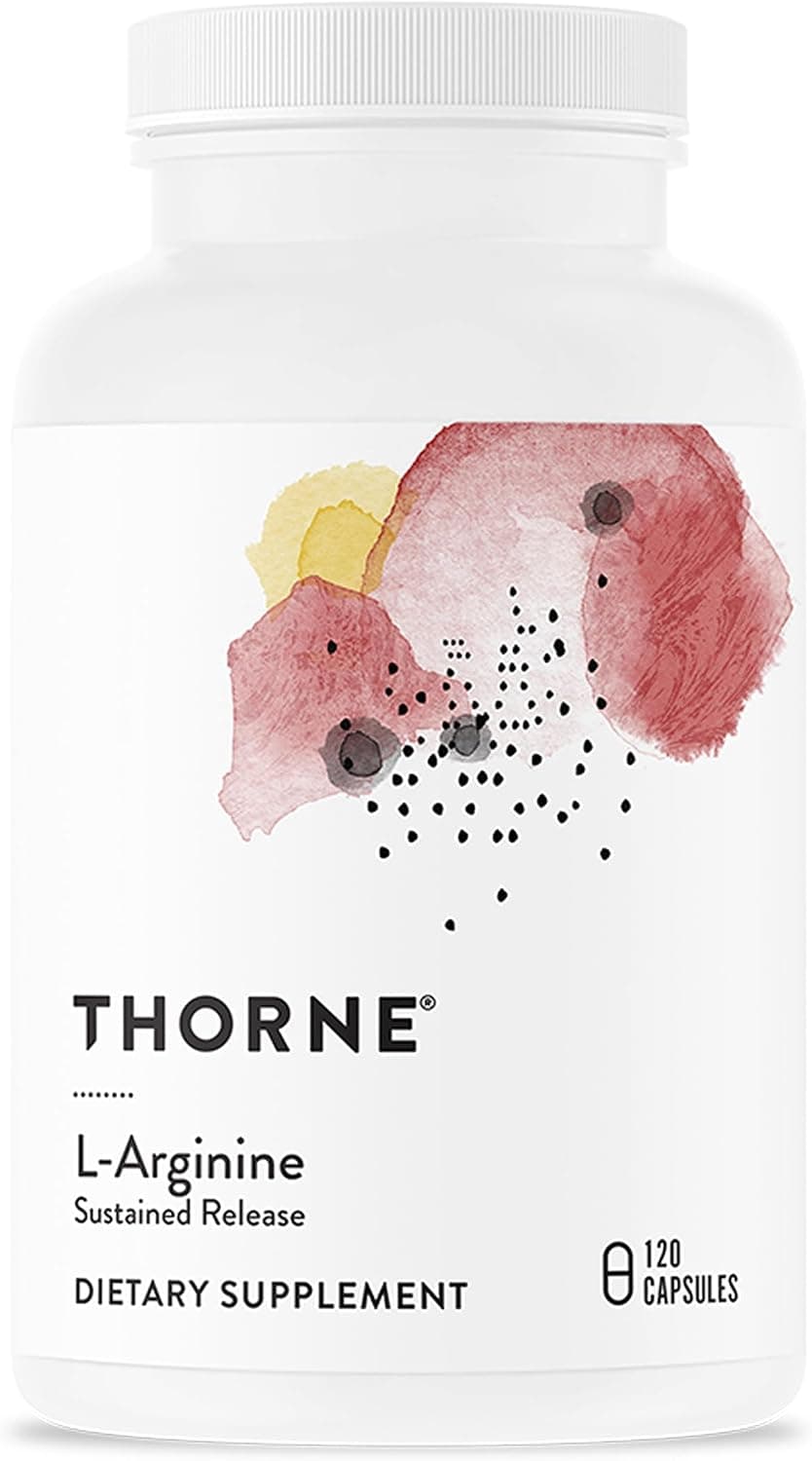
Suppliers
Vendors carrying Arginine, with live product details and codes. Links are affiliate links that support the wiki at no cost to you.
Amazon
L-Arginine
Research
- 2002first citedI. Arginine.
- 2011most recentEffect of oral L-arginine supplementation on blood pressure: a meta-analysis of randomized, dou…
- 1.I. Arginine.
- 2.Enzymes of arginine metabolism
- 3.Effect of oral L-arginine supplementation on blood pressure: a meta-analysis of randomized, double-blind, placebo-controlled trials
- 4.Risk assessment for the amino acids taurine, L-glutamine and L-arginine
4 listed here; entry last updated August 2026
Reviews
My notesprivate to this device
FAQ
Is arginine or citrulline better?
For most goals citrulline, because it survives digestion and actually raises arginine levels more reliably.
Why do I need such a big dose?
Gut and liver arginase break down a lot of oral arginine before it reaches your blood.
Can it help erections?
It can via nitric oxide, but the effect is modest; some people stack it with citrulline for better results.
Does it cause diarrhea?
High single doses often do; splitting the dose or lowering it helps.
Can I take it with ED meds?
Both lower blood pressure, so combine cautiously and ideally with medical guidance.
Adverse effects
- Stomach upset, bloating, or diarrhea at higher intakes
- Possible drop in blood pressure
- May interact with blood-pressure or erectile-dysfunction drugs
- Caution soon after a heart attack
Notes and cautions
- Generally well tolerated