
spec sheet13 rows
Terazosin is a selective alpha-1 adrenergic receptor antagonist of the quinazoline class, used mainly to relieve the urinary symptoms of benign prostatic hyperplasia and, less commonly, to lower blood pressure. By blocking alpha-1 receptors it relaxes smooth muscle in the prostate, bladder neck, and the walls of blood vessels. It is a long-acting, once-daily oral drug, available generically since its introduction in the 1980s, and has more recently drawn research attention for an unrelated action on the glycolytic enzyme phosphoglycerate kinase 1 [1].
- A stronger urine stream for men with prostate enlargement
- Lowers high blood pressure at the same time
- Fewer trips to the bathroom overnight
- Once daily, cheap and generic since the 1980s
- Two useful jobs from one small tablet
- Studied for an unrelated action on phosphoglycerate kinase 1
- Dizziness or lightheadedness
- Low blood pressure on standing
- Pronounced first-dose drop in blood pressure
Overview
Terazosin is a quinazoline-derived, selective antagonist at the alpha-1 adrenergic receptor, with the molecular formula C19H25N5O4. It belongs to the same drug family as prazosin and doxazosin, the group commonly called alpha-blockers, and was patented in 1975 before entering medical use in the mid-1980s. It is taken by mouth, has a long enough duration of action for once-daily dosing, and is now sold as an inexpensive generic.
The drug has two established uses. It is most often prescribed to ease the lower urinary tract symptoms of benign prostatic hyperplasia, an enlarged prostate, where relaxing muscle in the prostate and bladder neck improves urine flow and reduces straining and frequency; a randomized crossover study in men who had both hypertension and prostatic enlargement found that terazosin combined with enalapril improved symptom scores, urine flow, and residual bladder volume comparably to the beta-blocker carvedilol [4]. It is also used, though considered a less preferred option, to treat high blood pressure, since the same receptor blockade widens arteries. Because prostate cancer can cause similar urinary symptoms, that diagnosis is generally excluded before treatment.
Terazosin has attracted attention for an action unrelated to adrenergic receptors. Laboratory work showed that it binds the glycolytic enzyme phosphoglycerate kinase 1 (PGK1) and can raise its activity, boosting glycolysis and cellular ATP; because failing energy metabolism is a feature of Parkinson's disease, researchers tested the drug in disease models. Across toxin-induced and genetic models in mice, rats, flies, and human stem-cell-derived neurons, terazosin raised brain ATP, slowed neuron loss, increased dopamine, and partly restored movement, and analyses of large patient databases suggested slower progression and fewer diagnoses among people already taking the drug [1]. The relationship is intricate; a later kinetic model proposed that terazosin behaves as a competitive inhibitor that nonetheless speeds product release at low concentrations, giving a biphasic effect on the enzyme [2], and reviews now discuss glycolysis-enhancing agents as an experimental strategy in neurodegeneration [3].
As a widely available generic, terazosin remains in routine clinical use for prostatic symptoms and, in some patients, blood pressure. Its main cautions relate to blood-pressure lowering: a pronounced fall after the first dose, sometimes called the first-dose phenomenon, along with orthostatic hypotension, dizziness, and fatigue. Priapism is a rare but serious effect. Its neurodegeneration research remains investigational and is not an approved use.
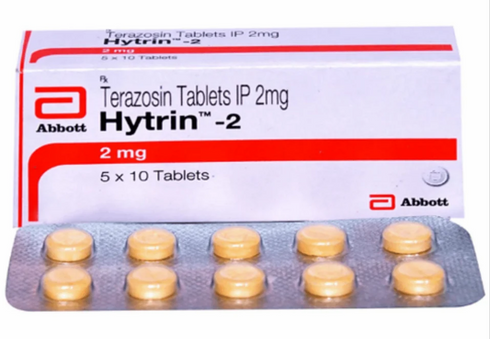

- A blood-pressure drug from the 1980s turned out to have a hidden second life: terazosin binds the glycolytic enzyme PGK1 and can raise cellular ATP, sparking research into Parkinson's disease.
- Modeling shows terazosin can paradoxically speed up the very enzyme it competitively inhibits, boosting activity at low doses while inhibiting it at high ones, a biphasic effect.
Mechanism
Terazosin competitively and selectively blocks the alpha-1 receptor, the receptor through which noradrenaline and adrenaline drive contraction of certain smooth muscles. In the prostate, bladder neck, and prostatic urethra, blocking these receptors relaxes the muscle tone that narrows the outflow channel, which is why the drug eases the urinary hesitancy, weak stream, and frequency of benign prostatic hyperplasia [4].
In the walls of arteries the same blockade reduces vasoconstriction, lowering peripheral resistance and blood pressure, an effect that also produces its characteristic orthostatic and first-dose hypotension. Terazosin acts on the postsynaptic alpha-1 subtype rather than the presynaptic alpha-2 receptor, and its relatively long allows once-daily dosing.
Separately from any effect, terazosin binds phosphoglycerate kinase 1, an enzyme in the glycolytic pathway; experimental data indicate it can enhance PGK1 activity and thereby increase glycolytic flux and ATP production, the basis for interest in its potential to protect energy-starved neurons [1].
Modeling of that interaction suggests terazosin occupies a site overlapping the enzyme's substrate, acting as a competitive inhibitor that paradoxically accelerates release of product at low drug levels while inhibiting the enzyme at high levels, producing a biphasic, dose-dependent influence on activity [2]. This metabolic action is distinct from its blood-pressure and prostate effects and is the focus of ongoing neurodegeneration research [1][3].
receptor fingerprint
Alpha-1A receptorantagonist
Alpha-1B receptorantagonist
Vascular smooth muscleblocks
Alpha-1D receptorantagonist
Phosphoglycerate kinase 1 (PGK1)activates
Dosingtypical ranges, not medical advice
interested in protocols and clinical dosages? make an account to see them! ^_^
Safetyrisks and cautions, not medical advice
Terazosin is prescription only. The best known risk is first dose hypotension, a sudden drop in blood pressure on standing that can cause dizziness or fainting, so the first dose is small and taken at bedtime. Ongoing effects include lightheadedness, tiredness, stuffy nose, swelling in the ankles and, rarely, a prolonged painful erection. Patients heading for cataract surgery should tell their eye surgeon because alpha blockers can cause intraoperative floppy iris syndrome. Combining it with erectile dysfunction drugs such as sildenafil or with other blood pressure medicines can stack the hypotensive effect.
Interactionsdocumented pairs only, not exhaustive
Terazosin is an alpha-1 blocker, so the interactions that matter are those adding to vasodilation and to its first-dose orthostatic effect.
The best-characterised is with verapamil. In a controlled study of hypertensive patients, adding either drug to the other increased terazosin bioavailability and produced symptomatic orthostatic hypotension in six of twenty-four patients on the first combined dose; the effect attenuated after about three weeks of continued treatment. The investigators attributed it to combined vasodilation rather than to any negative inotropic contribution.
PDE5 inhibitors add to the same effect and can cause syncope, particularly around dose changes. Diuretics, nitrates, other antihypertensives and alcohol all deepen the fall in blood pressure. NSAIDs work the other way, blunting the antihypertensive response through sodium retention. Terazosin also causes intraoperative floppy iris syndrome during cataract surgery, which is a surgical-planning matter rather than a drug interaction.
Checking a whole stack? Run it through interactions + stacks.
History
Terazosin was developed by Abbott Laboratories and introduced in the late 1980s, gaining US FDA approval in 1987 under the brand name Hytrin. A quinazoline-derived selective alpha-1 adrenergic antagonist, it was designed as a longer-acting relative of prazosin, allowing convenient once-daily dosing, and was first marketed for high blood pressure before its usefulness for the urinary symptoms of benign prostatic hyperplasia became a major indication. It has been available generically for decades and is a long-established, low-cost drug.
In a striking modern development, researchers in the 2010s discovered that terazosin has a second, entirely unrelated action: it binds and stimulates the glycolytic enzyme phosphoglycerate kinase 1, boosting cellular energy production. That finding, advanced notably by groups at the University of Iowa, prompted cell, animal, and epidemiological studies suggesting the drug might slow neurodegeneration, and it has since become the focus of active research in Parkinson's disease.
Reputation
Terazosin holds a solid reputation as a dependable, inexpensive workhorse for both hypertension and the urinary symptoms of an enlarged prostate, with a track record stretching back to the 1980s. Its once-daily dosing and generic availability have kept it in wide use, and clinicians appreciate its dual usefulness in men who have both high blood pressure and prostate-related urinary trouble.
What has genuinely reinvigorated interest in the drug, however, is the discovery of its effect on the energy-producing enzyme PGK1: laboratory and animal work suggests it can raise cellular ATP and protect energy-starved neurons, and several large epidemiological analyses have hinted that men taking terazosin may have a lower risk or slower progression of Parkinson's disease. This has made a decades-old blood-pressure pill an unexpected subject of neurodegeneration research. Honesty requires emphasizing that this neuroprotective potential is still investigational, and that terazosin's alpha-blockade can cause first-dose and orthostatic low blood pressure and dizziness.
Subjective profileweighing the evidence above
A cheap, effective generic that does two useful things at once for older men with both a weak stream and high blood pressure. The first dose is the one to respect, which is why it starts small and at bedtime, and anyone heading for cataract surgery should tell the eye surgeon.
Where to buy
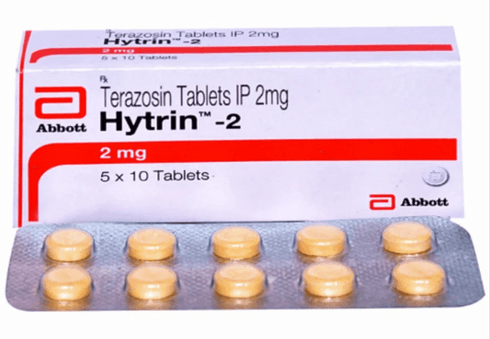
1 other outlet

Suppliers
Vendors carrying Terazosin, with live product details and codes. Links are affiliate links that support the wiki at no cost to you.
RUPharma🌐
Terazosin
PCT.Zone
Terazosin
Research
- 2019first citedEnhancing glycolysis attenuates Parkinson's disease progression in models and clinical database…
- 2021controlled trialA Randomized Crossover Pilot Study Examining the Effect of Carvedilol and Terazosin plus Enalap…
- 2024most recentImportance of glucose and its metabolism in neurodegenerative disorder, as well as the combinat…
- 1.Enhancing glycolysis attenuates Parkinson's disease progression in models and clinical databases.
- 2.A model for stimulation of enzyme activity by a competitive inhibitor based on the interaction of terazosin and phosphoglycerate kinase 1.
- 3.Importance of glucose and its metabolism in neurodegenerative disorder, as well as the combination of multiple therapeutic strategies targeting α-synuclein and neuroprotection in the treatment of Parkinson's disease.
- 4.A Randomized Crossover Pilot Study Examining the Effect of Carvedilol and Terazosin plus Enalapril on Urinary Symptoms of Patients with Hypertension and Benign Prostatic Hyperplasia.
4 listed here; entry last updated August 2026
Reviews
My notesprivate to this device
FAQ
Why do I start with such a small dose?
The first full dose can drop your blood pressure quickly and cause fainting, so a low bedtime start lets your body adjust.
Does terazosin shrink the prostate?
No; it relaxes the muscle around the prostate and bladder neck to improve flow but does not change prostate size.
Can it help both my blood pressure and my prostate?
Yes; that dual action is one reason it is chosen for men who have both conditions.
I have cataract surgery coming up, does it matter?
Tell your eye surgeon; alpha blockers can cause the iris to behave abnormally during the operation.
Is it safe with erectile dysfunction pills?
Use caution; drugs like sildenafil also lower blood pressure, so combining them can cause dizziness or fainting.
Adverse effects
- Dizziness or lightheadedness
- Low blood pressure on standing
- Pronounced first-dose drop in blood pressure
- Fatigue
Notes and cautions
- Nasal congestion
- Rare priapism