
spec sheet12 rows
Lisinopril is a long-acting ACE inhibitor, a class of drugs that relax blood vessels by blocking the angiotensin-converting enzyme. It is widely used to treat high blood pressure, heart failure, and kidney disease in people with diabetes, and to improve survival after a heart attack. Sold under brand names such as Prinivil and Zestril, it is one of the most commonly prescribed medicines in the world.
- Treats high blood pressure and heart failure
- Improves survival after a heart attack
- Slows kidney damage in people with diabetes
- Relaxes blood vessels and unloads the heart
- One of the most prescribed medicines in the world
- Once daily, and it costs pennies a day
- Dry cough
- Dizziness
- Headache or tiredness
Overview
Lisinopril is a medication in the angiotensin-converting enzyme (ACE) inhibitor class, drugs that lower blood pressure by interrupting the renin-angiotensin-aldosterone system, the body's main hormonal control loop for blood pressure and fluid balance. It is unusual among ACE inhibitors in several ways: it is not a prodrug, so it is active as taken rather than needing to be converted by the liver, it is water-soluble, and it is removed from the body unchanged by the kidneys, giving it a long duration that suits once-daily use.
The development of ACE inhibitors grew out of the discovery that a component of the venom of a Brazilian pit viper could lower blood pressure, which pointed chemists toward blocking the same enzyme with an oral drug [1]. Lisinopril was patented in the late 1970s and approved for medical use in the United States in 1987, sold under names including Prinivil and Zestril. After its patents expired it became a widely available and inexpensive generic and now ranks among the most frequently prescribed drugs.
Lisinopril is used first and foremost to treat high blood pressure, often as an initial therapy. In the very large ALLHAT trial, lisinopril lowered blood pressure and prevented cardiovascular events, though the study found that an inexpensive thiazide-type diuretic was at least as effective for first-step treatment overall [2]. Beyond hypertension, it slows the progression of kidney disease in people with diabetes and protein in the urine, and it is a mainstay of heart-failure treatment.
The drug also improves outcomes after a heart attack. In the GISSI-3 trial, starting lisinopril within a day of an acute myocardial infarction reduced deaths over the following weeks and lessened the combination of death and severe heart-pumping problems, supporting early use of ACE inhibitors in this setting [3]. These effects reflect the broader value of the class in protecting the heart and blood vessels.
Common side effects include dizziness, headache, tiredness, and a persistent dry cough that is characteristic of ACE inhibitors. More serious but less frequent problems include high blood potassium, low blood pressure, and angioedema, a sudden swelling of the face, lips, or throat that can be dangerous. ACE inhibitors must not be used during pregnancy because they can harm the developing fetus. Lisinopril is a prescription medicine supplied as tablets and as an oral solution.
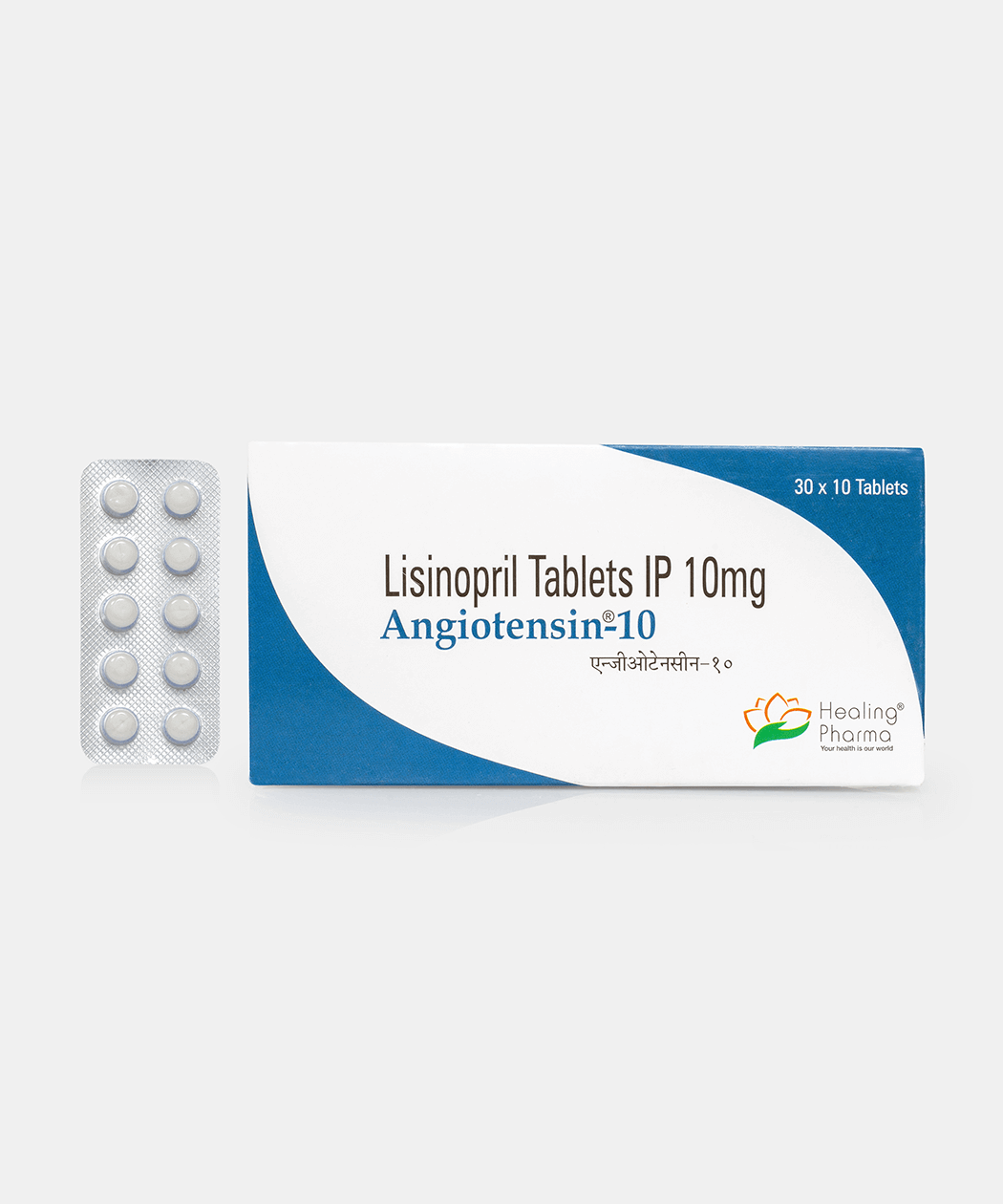
- The nagging dry cough some people get from lisinopril comes from a completely separate action than its blood-pressure effect: the same enzyme it blocks also breaks down bradykinin, which then accumulates in the airways.
- Unlike its relative enalapril, lisinopril is active exactly as swallowed and needs no activation by the liver.
- In the huge ALLHAT trial of more than 33,000 patients, lisinopril was one of three first-line therapies directly compared head to head for preventing heart attacks and other cardiovascular events.
Mechanism
Lisinopril works within the renin-angiotensin-aldosterone system, a hormone cascade that regulates blood pressure. Normally, the angiotensin-converting enzyme turns a precursor called angiotensin I into angiotensin II, a powerful hormone that narrows blood vessels and stimulates the release of aldosterone, which makes the body retain sodium and water. By blocking that enzyme, lisinopril reduces the amount of angiotensin II, so blood vessels relax and widen and less aldosterone is released, lowering blood pressure and easing the workload on the heart [1].
The same drop in aldosterone promotes the loss of sodium and water while helping the body hold on to potassium, which is why raised potassium can be a side effect. Reduced angiotensin II activity also lowers the pressure inside the kidney's filtering units, which is thought to underlie its protective effect in diabetic kidney disease. The troublesome dry cough associated with ACE inhibitors comes from a separate action: the enzyme also breaks down bradykinin, and blocking it lets this substance accumulate in the airways.
receptor fingerprint
Angiotensin-converting enzyme (ACE)inhibits
Angiotensin II formationblocks
Aldosterone releasemodulates
Bradykinin breakdowninhibits
Efferent glomerular arteriole tonemodulates
Safetyrisks and cautions, not medical advice
Lisinopril is prescription only. The classic side effect is a dry, persistent cough; it can also cause dizziness, headache, a rise in potassium and a small rise in creatinine. The most serious reaction is angioedema, a sudden swelling of the face, lips, tongue or throat that needs urgent care. It must not be used in pregnancy because it can harm the developing baby, and it is avoided in people with a history of ACE-inhibitor angioedema or narrowing of both kidney arteries. Potassium supplements, potassium-sparing diuretics, NSAIDs and lithium all need care, and it should not be combined with ARBs or aliskiren.
Interactionsdocumented pairs only, not exhaustive
Lisinopril is not metabolized and does not touch cytochrome P450 enzymes, so its interactions all follow from RAAS blockade rather than from clearance.
Anything else raising potassium stacks with it. Potassium supplements, potassium-sparing diuretics, spironolactone, eplerenone, trimethoprim and heparin can push serum potassium into an arrhythmic range, particularly where renal function is already reduced.
NSAIDs blunt the antihypertensive effect and, alongside a diuretic, can precipitate acute kidney injury.
Combining lisinopril with an ARB or with aliskiren increases hypotension, hyperkalemia and renal failure without a matching benefit, and the aliskiren pairing is contraindicated in diabetes.
Angioedema risk rises with sacubitril/valsartan, with mTOR inhibitors such as sirolimus and everolimus, and with DPP-4 inhibitors such as sitagliptin. Lisinopril also reduces lithium clearance, and lithium toxicity has followed.
Checking a whole stack? Run it through interactions + stacks.
History
Lisinopril emerged from the wave of angiotensin-converting enzyme inhibitor research that followed the discovery of captopril, and it was developed by Merck as a lysine-containing analog of the active metabolite of enalapril. Introduced in the late 1980s, it became the third ACE inhibitor to reach the market and quickly distinguished itself through two practical features: it is active as taken, requiring no conversion in the liver, and its long duration allows convenient once-daily dosing.
These qualities, combined with its water solubility and predictable pharmacology, helped make it one of the most widely prescribed medicines in the world. Its role expanded well beyond blood pressure as large clinical trials, including the landmark ALLHAT study, established the value of ACE inhibition in heart failure, in improving survival after heart attack, and in protecting the kidneys of people with diabetes. Sold under brand names such as Prinivil and Zestril and long available as an inexpensive generic, lisinopril has become a durable fixture of cardiovascular care.
Reputation
Lisinopril is one of the most trusted and heavily prescribed cardiovascular drugs in the world, valued for a rare combination of effectiveness, simplicity, and low cost. Physicians appreciate that a single daily dose reliably lowers blood pressure while also protecting the heart and kidneys, benefits confirmed across some of the largest clinical trials ever conducted, including ALLHAT.
Its usefulness in heart failure and after myocardial infarction, where it improves survival, gives it a therapeutic reach far beyond simple blood-pressure reduction, and decades of use have made its behavior thoroughly predictable. Candor is appropriate about its well-known drawbacks: a persistent dry cough affects a notable minority because the drug also slows the breakdown of bradykinin, potassium can rise, and it must be avoided in pregnancy. Weighed against its proven, life-extending benefits and its availability as an inexpensive generic, lisinopril remains a foundational and highly regarded medicine.
Subjective profileweighing the evidence above
One of the most useful drugs in medicine, with survival benefit after a heart attack, real protection in heart failure and slowed kidney damage in diabetes, all for pennies a day. The dry cough drives some people to switch, and angioedema is the rare reaction that needs urgent care.
Where to buy

Suppliers
Vendors carrying Lisinopril, with live product details and codes. Links are affiliate links that support the wiki at no cost to you.
PCT.Zone
Lisinopril
Research
- 1994first citedGISSI-3: effects of lisinopril and transdermal glyceryl trinitrate singly and together on 6-wee…
- 2002controlled trialMajor outcomes in high-risk hypertensive patients randomized to angiotensin-converting enzyme i…
- 2004most recentFrom viper's venom to drug design: treating hypertension.
- 1.From viper's venom to drug design: treating hypertension.
- 2.Major outcomes in high-risk hypertensive patients randomized to angiotensin-converting enzyme inhibitor or calcium channel blocker vs diuretic: The Antihypertensive and Lipid-Lowering Treatment to Prevent Heart Attack Trial (ALLHAT).
- 3.GISSI-3: effects of lisinopril and transdermal glyceryl trinitrate singly and together on 6-week mortality and ventricular function after acute myocardial infarction. Gruppo Italiano per lo Studio della Sopravvivenza nell'infarto Miocardico.
3 listed here; entry last updated August 2026
Reviews
My notesprivate to this device
FAQ
Why does lisinopril cause a cough?
It slows the breakdown of bradykinin, which can irritate the airways and trigger a dry, tickly cough; switching to an ARB usually clears it.
Can I take it during pregnancy?
No; ACE inhibitors can harm the developing baby, so they are avoided in pregnancy and other medicines are used instead.
Do I need blood tests?
Yes; your clinician checks potassium and kidney function after you start and after any dose change.
Should I worry about lip or tongue swelling?
Yes; sudden swelling of the face, lips, tongue or throat is angioedema, a rare but serious reaction that needs urgent care.
Can I use salt substitutes?
Be careful; many are potassium-based, and together with lisinopril they can push potassium too high.
Adverse effects
- Dry cough
- Dizziness
- Headache or tiredness
- Raised blood potassium
- Low blood pressure
- Rarely, swelling of the face or throat (angioedema)