
spec sheet14 rows
Losartan is an angiotensin II receptor blocker (ARB) used mainly to treat high blood pressure and to protect the kidneys in people with type 2 diabetes. It was the first drug of its class to reach the market, working by blocking the angiotensin II type 1 (AT1) receptor so that blood vessels relax and the heart and kidneys face less strain. Taken by mouth as the potassium salt, it is now a widely available, low-cost generic on the World Health Organization list of essential medicines.
- a first in class ARB and a low cost essential medicine
- lowers blood pressure and protects diabetic kidneys
- cuts stroke risk in left ventricular hypertrophy
- rarely brings the dry cough that ACE inhibitors do
- a single 50 mg dose sharpened prospective memory in young adults
- reversed a scopolamine induced cognitive deficit in that work
- Dizziness
- Low blood pressure
- High blood potassium
Overview
Losartan is a synthetic small molecule of the angiotensin II receptor blocker (ARB) class, with the formula C22H23ClN6O and a tetrazole ring that stands in for a carboxylic acid group. Developed by Merck and patented in the mid-1980s, it was approved in the United States in 1995 as the first ARB to reach clinical use. After absorption the liver converts part of each dose into an active metabolite known as EXP3174, which binds the AT1 receptor far more tightly and acts for longer, so much of the drug's effect comes from this metabolite rather than the parent compound.
Its core uses are lowering blood pressure and slowing kidney damage. In the LIFE trial, losartan-based treatment reduced cardiovascular events, and stroke in particular, more than a beta-blocker regimen in patients with high blood pressure and an enlarged left ventricle, with benefits that appeared to go beyond blood pressure reduction alone [1]. In the RENAAL study of people with type 2 diabetes and nephropathy, losartan lowered the risk of a doubling of serum creatinine and of progression to end-stage kidney disease, and it cut protein leakage into the urine [2]. Head-to-head work found it about as effective as valsartan at lowering blood pressure, while also modestly reducing serum uric acid [3]; in patients with diabetes, a diuretic combination lowered blood pressure somewhat more than losartan alone [4].
A practical advantage over ACE inhibitors is that losartan acts downstream of angiotensin-converting enzyme and does not raise bradykinin, so the persistent dry cough common with that older class is rare. It also has a mild uric-acid-lowering (uricosuric) action, unusual among blood pressure drugs [3].
Losartan is supplied as an oral tablet, either on its own or in a fixed combination with the diuretic hydrochlorothiazide. It is prescription-only in most countries and is contraindicated in pregnancy because of fetal harm. Between 2018 and 2019 several manufacturers recalled batches over nitrosamine impurities, a manufacturing issue rather than a property of the drug itself.


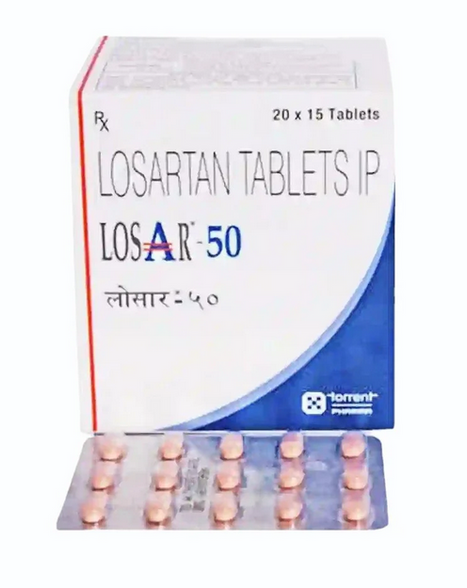
- Losartan was the first angiotensin II receptor blocker ever approved, launching an entire drug class in 1995.
- Among the ARBs, losartan is unusual in mildly lowering uric acid because it inhibits the URAT1 transporter in the kidney, a bonus for patients prone to gout.
- Much of losartan's day-long effect comes not from the parent drug but from its more potent, longer-acting metabolite known as EXP3174.
Mechanism
Losartan selectively blocks the angiotensin II type 1 (AT1) receptor, the receptor angiotensin II normally uses to constrict arteries and to signal the retention of salt and water. By occupying that receptor it relaxes blood vessels, lowers the secretion of aldosterone, and reduces the pressure the kidneys must work against. Its active EXP3174 binds the same receptor more potently and for a longer time, which extends the effect across the day.
Because losartan acts downstream of angiotensin-converting enzyme, it does not increase bradykinin the way ACE inhibitors do, so the nagging cough associated with that class is uncommon. In the kidney it also inhibits the URAT1 urate transporter, giving it a mild uric-acid-lowering effect [3]. The renal and cardiovascular benefits seen in diabetic nephropathy [2] and in hypertension with left ventricular enlargement [1] appear to exceed what blood pressure reduction alone would predict.
receptor fingerprint
AT1 (angiotensin II type 1) receptorantagonist
Aldosterone releaseinhibits
Efferent glomerular arteriole tonemodulates
URAT1 uric acid transporterinhibits
Thromboxane A2 receptorantagonist
Safetyrisks and cautions, not medical advice
Losartan is prescription only and generally well tolerated. The most important warning is that it must not be used in pregnancy because it can harm the fetus. It can raise blood potassium, especially alongside potassium supplements, spironolactone, or ACE inhibitors. It can cause dizziness from low blood pressure, particularly at the first dose or in people who are dehydrated. Kidney function and potassium should be checked after starting or increasing the dose. Combining it with NSAIDs can reduce its effect and stress the kidneys.
Interactionsdocumented pairs only, not exhaustive
Losartan combined with ACE inhibitors (such as enalapril or lisinopril) significantly increases serum potassium and carries risk of hyperkalemia and metabolic acidosis. A retrospective study in 31 pediatric kidney transplant recipients receiving losartan 50 mg daily concurrent with enalapril showed a mean increase in serum potassium from 4.0 to 5.7 mmol/L (P<0.001) and a decrease in pH from 7.35 to 7.23 (P<0.001) over 1 to 6 months of combined therapy; patients on tacrolimus immunosuppression developed hyperkalemia earlier than those on cyclosporine [6]. Dual renin-angiotensin-aldosterone system (RAAS) inhibition with both losartan and lisinopril requires close monitoring of serum potassium and renal function, particularly in patients with renal impairment, diabetes, or concurrent use of other potassium-sparing agents [7].
Checking a whole stack? Run it through interactions + stacks.
History
Losartan holds a distinctive place in cardiovascular medicine as the first angiotensin II receptor blocker to reach the market. It emerged from a research collaboration between DuPont and Merck, growing out of early imidazole leads that were refined into a potent, orally active, non-peptide antagonist of the AT1 receptor. The United States Food and Drug Administration approved it in 1995 under the brand name Cozaar, opening a new therapeutic class that offered the benefits of renin-angiotensin blockade without the cough associated with ACE inhibitors.
Two landmark trials broadened its reputation; the RENAAL study reported in 2001 that losartan slowed the progression of kidney disease in people with type 2 diabetes, and the LIFE study in 2002 showed advantages over the beta-blocker atenolol in hypertensive patients with left ventricular enlargement. Now long off patent, losartan is a low-cost generic and appears on the World Health Organization's List of Essential Medicines.
Reputation
Losartan is widely regarded as a reliable, well-tolerated cornerstone of blood pressure treatment, and it earned that standing by being the pioneer of its class. Because it acts downstream of the angiotensin-converting enzyme, it avoids the persistent dry cough that leads some people to abandon ACE inhibitors, which makes it a favored alternative.
Beyond lowering blood pressure it has evidence for protecting the kidneys in diabetes and for reducing cardiovascular risk in specific populations, and a real-world claims analysis of tens of thousands of patients confirmed favorable clinical outcomes among common renin-angiotensin agents. It also carries a mild uric-acid-lowering property that is uncommon in its class. Its effects are gentle and predictable rather than dramatic, and like all drugs acting on this system it must be avoided in pregnancy and used with attention to potassium and kidney function; within those bounds it remains a trusted, inexpensive choice.
Subjective profileweighing the evidence above
Primarily a well-tolerated blood pressure ARB, but the cognitive data are interesting: a single 50 mg dose sharpened prospective memory in healthy young adults and undid a scopolamine-induced deficit. Not a reason to take it if you do not need an ARB, yet a nice bonus if you do.
Where to buy

Suppliers
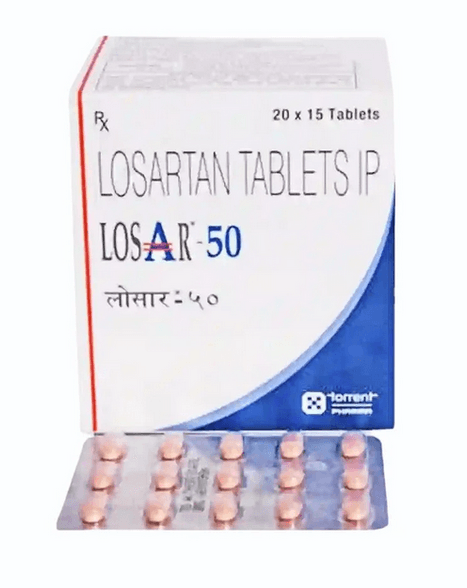
Vendors carrying Losartan, with live product details and codes. Links are affiliate links that support the wiki at no cost to you.
PCT.Zone
Losartan

RUPharma🌐
Losartan
RUPharma🌐
Losartan
Research
- 2001first citedEffects of losartan on renal and cardiovascular outcomes in patients with type 2 diabetes and n…
- 2002controlled trialCardiovascular morbidity and mortality in the Losartan Intervention For Endpoint reduction in h…
- 2023most recentComparing Cardiovascular Outcomes and Costs of Perindopril-, Enalapril- or Losartan-Based Antih…
- 1.Cardiovascular morbidity and mortality in the Losartan Intervention For Endpoint reduction in hypertension study (LIFE): a randomised trial against atenolol
- 2.Effects of losartan on renal and cardiovascular outcomes in patients with type 2 diabetes and nephropathy
- 3.Losartan versus valsartan in the treatment of patients with mild to moderate essential hypertension: data from a multicenter, randomized, double-blind, 12-week trial
- 4.Effectiveness of chlorthalidone/amiloride versus losartan in patients with stage I hypertension and diabetes mellitus: results from the PREVER-treatment randomized controlled trial
- 5.Comparing Cardiovascular Outcomes and Costs of Perindopril-, Enalapril- or Losartan-Based Antihypertensive Regimens in South Africa: Real-World Medical Claims Database Analysis
- 6.Acidosis and hyperkalemia caused by losartan and enalapril in pediatric kidney transplant recipients.
- 7.Potassium handling with dual renin-angiotensin system inhibition in diabetic nephropathy.
- 8.The role of the renin-angiotensin system in the regulation of erythropoiesis
- 9.Angiotensin II blockade and renal protection
9 listed here; entry last updated August 2026
Reviews
My notesprivate to this device
FAQ
Does losartan cause a cough like other blood pressure drugs?
Rarely; because it does not raise bradykinin, the dry cough seen with ACE inhibitors is uncommon, which is why people are often switched to it.
Can I take it while pregnant?
No; ARBs can harm a developing baby and should be stopped before or as soon as pregnancy is known.
How long until it works?
Blood pressure starts dropping within a week, but the full effect usually takes three to six weeks.
Do I need blood tests?
Yes; your doctor will check kidney function and potassium a week or two after starting or raising the dose.
Morning or night?
Either works; pick a consistent time. The once-daily effect is designed to cover a full 24 hours.
Does losartan improve cognition?
There is early human evidence: a single 50 mg dose improved prospective memory in healthy young adults and reversed a scopolamine-induced cognitive deficit in double-blind studies. It points to ARBs having brain benefits beyond blood pressure, though it is not a dedicated nootropic.
Adverse effects
- Dizziness
- Low blood pressure
- High blood potassium
- Fatigue
- Rare kidney function decline
- Rare angioedema