
Olmesartan + Amlodipine + Hydrochlorothiazide
blend · angiotensin ii at1 receptors class / blendspec sheet10 rows
Olmesartan + Amlodipine + Hydrochlorothiazide Olmesartan plus amlodipine plus hydrochlorothiazide is a fixed-dose antihypertensive tablet that combines three blood-pressure medicines with complementary actions: the angiotensin II receptor blocker olmesartan medoxomil, the dihydropyridine calcium channel blocker amlodipine, and the thiazide diuretic hydrochlorothiazide. The single-pill regimen is intended for adults whose high blood pressure is not adequately controlled on a two-drug combination, and in the United States it is marketed under the brand name Tribenzor. By pairing agents that act on different parts of the cardiovascular system, the tablet is designed to lower blood pressure more fully while reducing the number of pills a person must take.
- Three blood pressure mechanisms working together in one tablet
- Lowers blood pressure more fully than a two drug combination
- One pill instead of three, which makes it easier to take
- The diuretic offsets fluid retention from amlodipine
- Blocks angiotensin, calcium channels and salt retention at once
- Sold in the United States as Tribenzor
- Dizziness or lightheadedness can occur, especially when blood pressure drops or on standing up
- Swelling of the ankles or feet (peripheral edema) is associated with the calcium channel blocker component
- The diuretic component can disturb electrolytes, including lowering potassium, and may raise uric acid or blood sugar
Overview
Olmesartan/amlodipine/hydrochlorothiazide is a single-tablet, fixed-dose combination that unites three established antihypertensive drugs drawn from three different pharmacologic classes [1][2]. Its purpose is to control blood pressure in patients who need more than one or two agents, delivering a renin-angiotensin system blocker, a calcium channel blocker, and a diuretic in one daily pill. Fixed-dose combinations of this kind were developed largely to simplify treatment and improve adherence, since studies consistently show that the more separate tablets a person must take, the less reliably they take them [3].
The three constituents act on distinct targets. Olmesartan medoxomil is an angiotensin II type 1 (AT1) receptor antagonist, commonly called an angiotensin receptor blocker, that is given as an inactive medoxomil ester and converted in the body to its active form [4]. Amlodipine is a long-acting dihydropyridine calcium channel blocker that relaxes arterial walls, and hydrochlorothiazide is a thiazide diuretic that increases the kidneys' excretion of sodium and water [1][2]. Because each drug lowers pressure by a separate route, combining them tends to produce additive reductions and can offset some side effects; for instance, the diuretic and the receptor blocker may lessen the fluid swelling sometimes seen with the calcium channel blocker [1].
The combination treats high blood pressure, generally as a step for patients who have not reached their goal on two of the three drugs [1][2]. Its evidence base includes the TRINITY trial, a large randomized study in adults with moderate to severe hypertension that compared the triple regimen against each of the corresponding two-drug combinations. In that trial the three-drug tablet produced significantly greater reductions in both systolic and diastolic pressure and allowed more patients to reach recommended targets than any of the dual therapies, with benefits seen across subgroups defined by age, sex, race, and diabetes status [1]. Reviews emphasize its usefulness in populations that often have hard-to-control pressure, such as older adults and people with diabetes, chronic kidney disease, or established cardiovascular disease [3].
The fixed-dose triple tablet is a prescription-only medicine and is available in several strength combinations so that dosing can be matched to the patient's needs [1]. In the United States it is sold under the brand name Tribenzor, and the individual components and their two-drug pairings are also marketed separately and as generics. Labeling generally calls for the drug to be used once a patient's dose of the individual agents has been established, rather than as a first treatment, and it carries the class warning shared by renin-angiotensin blockers that these drugs can cause fetal harm and should be stopped if pregnancy occurs [4].
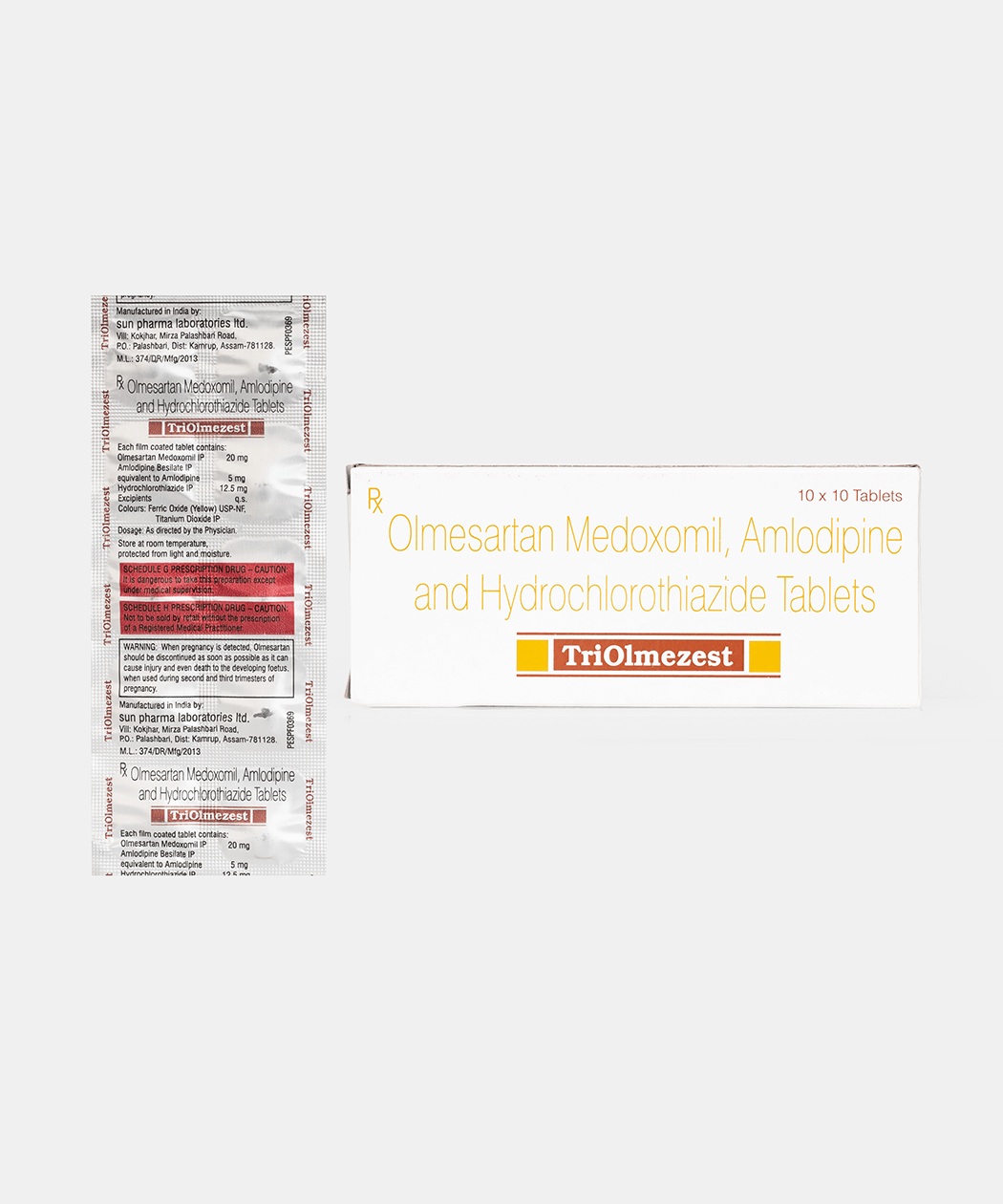
- The single-pill triple combination was supported by the TRINITY trial, in which it outperformed every two-drug pairing of its own ingredients.
- Its three components block three different blood-pressure pathways at once; the renin-angiotensin system, calcium entry into vessel muscle, and salt retention by the kidney.
- Pairing an angiotensin receptor blocker with a thiazide diuretic helps offset the potassium loss the diuretic would otherwise cause.
Mechanism
The three ingredients lower blood pressure through complementary mechanisms that together interrupt several of the body's pressure-raising pathways [1][2]. Olmesartan blocks the angiotensin II type 1 receptor, preventing the hormone angiotensin II from constricting blood vessels and from promoting the sodium-retaining hormone aldosterone; the result is and reduced fluid retention [4]. Amlodipine inhibits the flow of calcium through L-type channels in vascular smooth muscle, so the arteries relax and peripheral resistance falls, an effect that builds gradually because of the drug's long duration of action [1].
Hydrochlorothiazide acts on the distal tubule of the kidney, blocking the sodium-chloride cotransporter so that more salt and water are excreted, which lowers circulating volume [2]. Blocking the renin-angiotensin system at the same time also blunts the reflex activation and potassium loss that a diuretic can provoke, which is one reason the pairing is considered pharmacologically rational [1][2].
receptor fingerprint
Angiotensin II AT1 receptorantagonist
L-type calcium channelblocks
Distal tubule sodium-chloride cotransporter (NCC)inhibits
Renin-angiotensin-aldosterone systemmodulates
Vascular smooth muscle toneactivates
Safetyrisks and cautions, not medical advice
This is a prescription combination. Common effects are dizziness, swelling of the ankles or legs (mostly from amlodipine), headache, and low blood pressure. The diuretic can drop potassium and sodium and nudge up uric acid and blood sugar, while the angiotensin blocker can raise potassium and affect kidney function; rarely, olmesartan triggers a sprue-like enteropathy with chronic diarrhea and weight loss. It must not be used in pregnancy, since angiotensin blockers can harm the developing baby, and it is avoided in anuria and in people allergic to sulfonamides because of the hydrochlorothiazide. Use caution in kidney disease, narrowing of the renal arteries, volume depletion, gout, and diabetes; NSAID painkillers blunt its effect and add to the kidney risk.
History
This tablet combines three medicines with long individual histories. Hydrochlorothiazide, the oldest, was introduced as a thiazide diuretic in the late 1950s and has been a foundation of blood-pressure therapy ever since. Amlodipine, a long-acting dihydropyridine calcium channel blocker, was developed by Pfizer and reached the market as Norvasc around 1990. Olmesartan medoxomil, an angiotensin II receptor blocker, was developed by Sankyo, now Daiichi Sankyo, and approved in the United States in 2002 as Benicar. The fixed triple combination was approved by the United States Food and Drug Administration in 2010 under the brand name Tribenzor, following the pivotal TRINITY trial, which demonstrated that the three-drug tablet lowered blood pressure more fully than any of its component two-drug pairings.
Reputation
This three-in-one tablet is well regarded as a rational, potent tool for high blood pressure that resists simpler regimens. By combining an angiotensin receptor blocker, a calcium channel blocker, and a diuretic, it attacks hypertension along three complementary fronts, and the pivotal TRINITY trial showed it lowered pressure more fully than any two-drug pairing of its parts. Its most practical virtue is simplicity; replacing several pills with one is a proven way to improve adherence, itself a major reason blood pressure so often goes uncontrolled.
The honest notes are that it is intended for patients who already need multi-drug therapy rather than as a starting treatment, and that its components carry the usual class considerations, including electrolyte shifts from the diuretic, ankle swelling from the calcium blocker, and the need to avoid it in pregnancy. For the right patient, it is an efficient and effective regimen.
Subjective profileweighing the evidence above
A sensible pill for someone whose blood pressure is not controlled on two drugs, and one tablet beats three for actually taking them. Expect ankle swelling from the amlodipine and electrolyte checks for the diuretic. It is a step-up combination rather than a starting point, and off-limits in pregnancy.
Where to buy
Suppliers
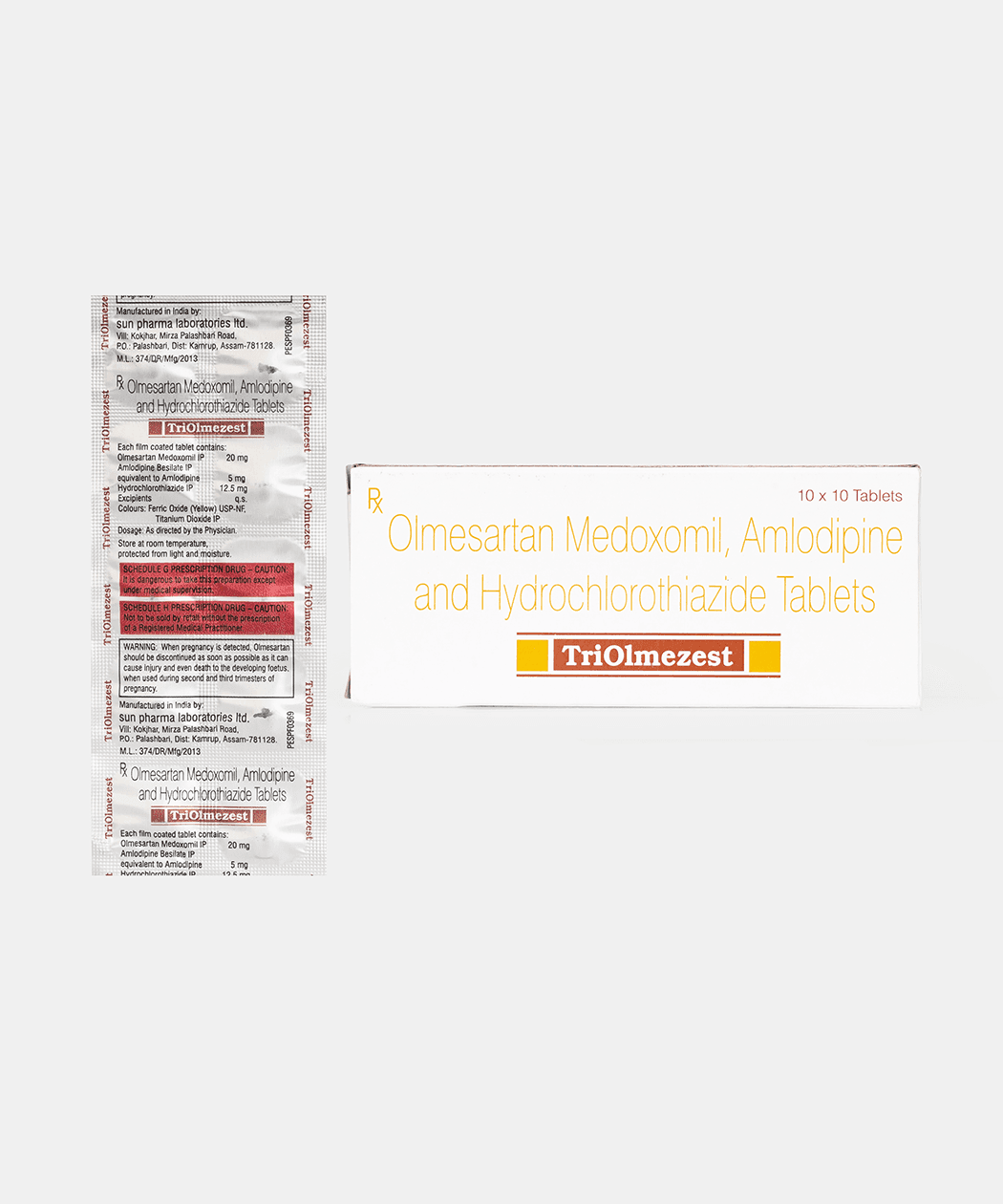
Vendors carrying Olmesartan + Amlodipine + Hydrochlorothiazide, with live product details and codes. Links are affiliate links that support the wiki at no cost to you.
PCT.Zone
Olmesartan + Amlodipine + Hydrochlorothiazide
Research
- 2008first citedOlmesartan medoxomil: a review of its use in the management of hypertension.
- 2013most recentEffectiveness of the fixed-dose combination of olmesartan/amlodipine/hydrochlorothiazide for th…
- 1.Olmesartan medoxomil/amlodipine/hydrochlorothiazide: fixed-dose combination in hypertension.
- 2.Olmesartan medoxomil, amlodipine besylate and hydrochlorothiazide triple combination for hypertension.
- 3.Effectiveness of the fixed-dose combination of olmesartan/amlodipine/hydrochlorothiazide for the treatment of hypertension in patients stratified by age, race and diabetes, CKD and chronic CVD.
- 4.Olmesartan medoxomil: a review of its use in the management of hypertension.
4 listed here; entry last updated August 2026
Reviews
My notesprivate to this device
FAQ
Why three drugs in one tablet?
Each lowers pressure a different way, so together they reach targets a single drug often cannot, all with one pill to remember.
Why are my ankles swelling?
That usually comes from amlodipine widening small vessels; the diuretic in the pill helps offset it, but tell your doctor if it bothers you.
Can I take it while pregnant?
No; the angiotensin blocker can harm a developing baby, so this pill is stopped and switched before or during pregnancy.
Do I need blood tests on it?
Yes; doctors check kidney function and electrolytes like potassium and sodium, since the diuretic and the angiotensin blocker pull them in opposite directions.
Can I take ibuprofen for a headache?
Once in a while may be fine, but regular NSAIDs blunt the blood-pressure effect and add to kidney strain, so check with your doctor.
Adverse effects
- Dizziness or lightheadedness can occur, especially when blood pressure drops or on standing up
- Swelling of the ankles or feet (peripheral edema) is associated with the calcium channel blocker component
- The diuretic component can disturb electrolytes, including lowering potassium, and may raise uric acid or blood sugar
- Headache, fatigue, or gastrointestinal upset are reported
- As a renin-angiotensin blocker, it can affect kidney function and potassium levels and is not used during pregnancy
Notes and cautions
- Blood pressure, kidney function, and electrolytes are typically monitored during treatment