
spec sheet7 rows
Trimetazidine is an anti-anginal metabolic agent that shifts cardiac energy production from fatty acid oxidation toward glucose oxidation; it is banned in sport and carries a movement disorder risk.
- An unusual metabolic route to angina control
- Shifts cardiac energy from fatty acids toward glucose
- Lowers the oxygen cost of each unit of cardiac work
- Leaves heart rate and blood pressure untouched
- Layers cleanly on top of a beta blocker
- A reasonable second line option under a cardiologist
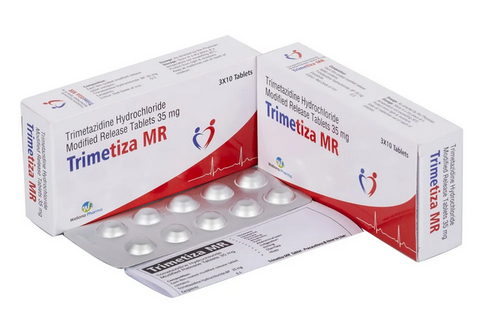
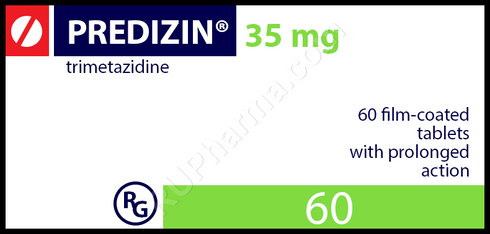
- Trimetazidine is on the WADA Prohibited List under category S4.4, Metabolic Modulators, alongside meldonium, and is prohibited at all times both in and out of competition [5]. It is a routine target analyte in accredited anti-doping screening panels.
- Its mechanism is precisely defined and quantified: selective inhibition of the long-chain isoform of 3-ketoacyl-CoA thiolase with an IC50 of 75 nM, roughly 130-fold and 1,300-fold selective over the medium- and short-chain isoforms [1].
- ATPCI is the largest and most decisive trial: 6,007 patients randomised after successful PCI and followed a median of 47.5 months showed no benefit whatsoever on the composite primary endpoint (23.3% vs 23.7%; HR 0.98, 95% CI 0.88-1.09, p=0.73) and no benefit on any individual component [2].
- In chronic heart failure the picture is softer but still surrogate-heavy: a meta-analysis of 19 RCTs and 994 patients found LVEF improved by 7.29 percentage points, NYHA class by 0.55, and cardiac hospitalisation fell (RR 0.43), but exercise duration and all-cause mortality were unchanged [3].
- Trimetazidine causes drug-induced parkinsonism. In a 14-year Korean claims cohort of 9,712 users versus 29,116 matched non-users, incidence was 9.34 versus 6.71 per 1,000 person-years and the adjusted hazard ratio was 1.38 (95% CI 1.26-1.51), with a cumulative-dose gradient [4].
- The EMA restricted trimetazidine in 2012 to second-line add-on therapy for stable angina only, withdrawing its former indications for tinnitus, vertigo and vision disturbance, specifically because of Parkinsonian and other movement-disorder reports.
Mechanism
It inhibits long chain 3-ketoacyl-CoA thiolase, the last enzyme of fatty acid beta oxidation, forcing the ischaemic myocardium toward glucose oxidation and lowering its oxygen cost per unit of ATP. It does not slow the heart or dilate vessels, which is why it can be added on top of a beta blocker.
receptor fingerprint
long-chain 3-ketoacyl coenzyme A thiolase (long-chain 3-KAT, mitochondrial trifunctional protein)Inhibitor
Pyruvate dehydrogenase complex (PDH), active fractionIndirect activation (secondary to reduced fatty acid oxidation)
Myocardial oxygen consumption / haemodynamicsNo direct effect; trimetazidine is not a vasodilator and has no negative inotropic action
Striatal receptor (proposed off-target)Weak antagonism (mechanism proposed but not directly quantified)
Safetyrisks and cautions, not medical advice
the EMA restricted it in 2012 to second line add on therapy for angina after reports of parkinsonism, tremor and restless legs, and WADA prohibits it
Subjective profileweighing the evidence above
Two very different people buy this and only one of them should. As a second line addition for angina under a cardiologist it is a reasonable drug with an unusual mechanism, lowering the oxygen cost of each unit of cardiac work without touching heart rate or blood pressure. As an endurance aid it is a poor trade: European regulators restricted it after reports of parkinsonism, tremor and restless legs, some of it slow to resolve, and WADA prohibits it outright, so an athlete is risking a movement disorder and a ban for a benefit nobody has demonstrated in healthy people.
Where to buy
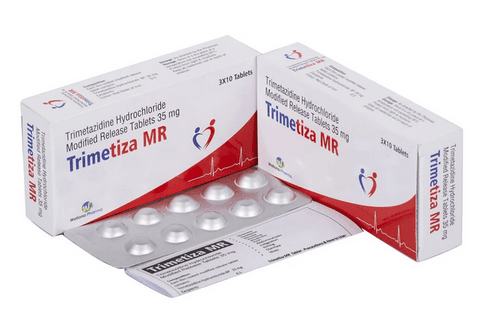
1 other outlet
Suppliers
Vendors carrying Trimetazidine, with live product details and codes. Links are affiliate links that support the wiki at no cost to you.
RUPharma🌐
Trimetazidine
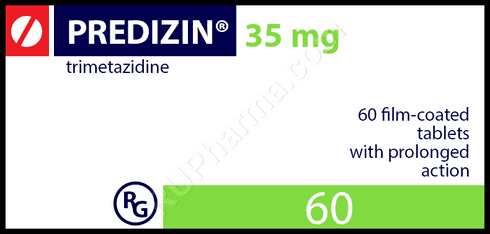
RUPharma🌐
Trimetazidine
Research
- 2000first citedThe antianginal drug trimetazidine shifts cardiac energy metabolism from fatty acid oxidation t…
- 2014meta-analysisIs treatment with trimetazidine beneficial in patients with chronic heart failure?
- 2024most recentMexidol, Cytoflavin, and succinic acid derivatives as antihypoxic, anti-ischemic metabolic modu…
- 1.The antianginal drug trimetazidine shifts cardiac energy metabolism from fatty acid oxidation to glucose oxidation by inhibiting mitochondrial long-chain 3-ketoacyl coenzyme A thiolase
- 2.Efficacy and safety of trimetazidine after percutaneous coronary intervention (ATPCI): a randomised, double-blind, placebo-controlled trial
- 3.Is treatment with trimetazidine beneficial in patients with chronic heart failure?
- 4.Trimetazidine Use and the Risk of Parkinsonism: A Nationwide Population-Based Study
- 5.Mexidol, Cytoflavin, and succinic acid derivatives as antihypoxic, anti-ischemic metabolic modulators, and ergogenic aids in athletes and consideration of their potential as performance enhancing drugs
5 listed here; entry last updated August 2026
Reviews
My notesprivate to this device
Notes and cautions
- Trimetazidine has no boxed warning but two facts dominate its risk profile.
- First, it causes drug-induced parkinsonism, tremor, restless legs and gait instability, with a dose-dependent 38% relative increase in parkinsonism risk in a nationwide cohort; the EMA cut its indications in 2012 for exactly this reason, and it is contraindicated in Parkinson's disease, parkinsonian symptoms, tremor and restless legs syndrome [4].
- It is renally cleared and contraindicated in severe renal impairment.
- Second, it is a WADA-prohibited substance in category S4.4 at all times, so any competing athlete who takes it faces an anti-doping rule violation regardless of therapeutic intent [5].
- Finally, the largest outcome trial found no clinical benefit after PCI, so the honest framing is a symptomatic second-line antianginal, not a disease-modifying drug [2].