
spec sheet10 rows
Flecainide is a prescription Class Ic antiarrhythmic best known for suppressing ventricular and supraventricular arrhythmias, but it is featured here through an unconventional cognition and neuroprotection lens rather than its approved cardiac indication. The scientific hook is that flecainide, in addition to blocking the cardiac sodium channel, directly stabilizes the ryanodine receptor RyR2 and suppresses pathological intracellular calcium leak; the same RyR2 calcium leak has been implicated in neuronal dysfunction, tau pathology, and cognitive impairment in Alzheimer's models and in heart failure associated cognitive decline. A separate line of work shows that sodium channel blockade with flecainide protects axons from degeneration in neuroinflammatory models, which is a distinct neuroprotective rationale. Some users additionally pair a low dose antiarrhythmic with stimulants used for focus, reasoning that stimulants raise heart rate and arrhythmia risk while flecainide has proven antiarrhythmic action; this pairing is a theoretical, off label rationale rather than an established protocol. It is essential to be clear that human cognitive enhancement evidence for flecainide is preclinical or theoretical, and that flecainide remains a potent cardiac drug with a documented proarrhythmic risk in people with structural heart disease.
- Shuts down the RyR2 calcium leak
- Targets the calcium leak tied to cognitive decline
- Protects axons; quiets inflamed microglia
- Blocks overactive sodium channels on demand
- Shares a target with cognition-focused calcium stabilizers
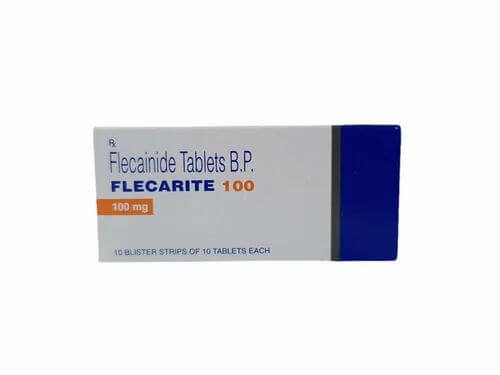
- Real prescription drug, not a research powder
- Proarrhythmia, the central risk highlighted by the CAST trial, especially with structural or ischemic heart disease
- Dizziness and visual disturbances, the most common extracardiac effects; rarely vestibular symptoms
- Interaction potential with other cardioactive drugs and with stimulants that raise heart rate
Overview
Flecainide is a prescription antiarrhythmic drug placed in class Ic of the Vaughan Williams classification, the group of agents that most strongly slow the rapid inward sodium current of heart cells [1][3]. Chemically it is a fluorinated benzamide carrying two trifluoromethyl groups, with the molecular formula C17H20F6N2O3, and it has long been marketed under the trade name Tambocor [1]. Taken by mouth it is almost completely absorbed, is broken down partly by the liver enzyme CYP2D6, and has an elimination half-life of roughly a day [1].
The drug was developed in the 1970s and received approval from the United States Food and Drug Administration in 1985 [1]. Its patent later expired, and generic versions became available in 2004 [1]. It remains in regular clinical use; as of the early 2020s it still ranked among the few hundred most commonly prescribed medicines in the United States [1].
Flecainide is used to control a range of fast heart rhythms that arise above the ventricles, including atrioventricular nodal reentrant tachycardia and the arrhythmias of Wolff-Parkinson-White syndrome, and it is a recognised option for restoring and maintaining normal rhythm in atrial fibrillation [1][4]. It can also be given for selected ventricular tachycardias, and cardiologists sometimes administer it deliberately to unmask the electrocardiographic pattern of Brugada syndrome as a diagnostic test [1]. After a quarter century of use, reviewers concluded that in patients whose hearts are structurally normal, flecainide is both effective and reasonably safe for managing atrial fibrillation [4].
The most important limit on its use comes from the Cardiac Arrhythmia Suppression Trial, a large study published in 1991 that tested whether suppressing extra beats after a heart attack would prevent sudden death [2]. Instead the trial found excess deaths among patients taking flecainide or the related drug encainide, and that arm of the study was halted early [2]. As a result, flecainide is avoided in people with a history of myocardial infarction, reduced heart function, or other significant structural heart disease, and is reserved chiefly for those with otherwise healthy hearts [2][4].
- The 1989 CAST trial, which tested this drug class, became one of cardiology's defining moments by showing that suppressing arrhythmias after a heart attack could raise mortality.
- Around 2009 flecainide was found to directly stabilize the ryanodine receptor RyR2, giving it a new role in the inherited arrhythmia CPVT.
- The very calcium leak that flecainide calms in the heart has been implicated in neuronal dysfunction and tau pathology, the basis for its speculative neuroprotection story.
Mechanism
Through the cognition lens, the most interesting target is the ryanodine receptor, the large intracellular channel that releases calcium from the endoplasmic and sarcoplasmic reticulum. In neurons, tightly regulated calcium release supports plasticity, learning, and memory, and chronic "leak" through post translationally remodeled ryanodine receptors is associated with synaptic dysfunction, tau pathology, and cognitive deficits in Alzheimer's models; the stabilizing subunit calstabin (FKBP12.6) dissociates from the channel and the resulting diastolic calcium leak is a shared theme across heart failure, arrhythmia, and neurodegeneration.
Flecainide was shown to directly inhibit cardiac ryanodine receptor mediated calcium release and to prevent catecholaminergic polymorphic ventricular tachycardia by targeting this molecular defect, which is the mechanistic basis for the idea that RyR2 stabilizers may curb pathological neuronal calcium leak; related RyR antagonists such as dantrolene reduce calcium leak and improve cognition in Alzheimer's model mice, supporting the broader class hypothesis while leaving flecainide's own neuronal effects unproven in humans.
Flecainide's second mechanism is use dependent block of voltage gated sodium channels. In the heart this slows conduction and underlies its antiarrhythmic action, and in the nervous system state dependent sodium channel blockade limits sodium loading, reverse sodium calcium exchange, and downstream calcium overload in electrically active axons; flecainide has been shown to protect axons from degeneration and to dampen microglial activation in experimental models of multiple sclerosis.
Because calcium homeostasis is central to signaling and neuronal survival, both mechanisms, RyR2 stabilization and sodium channel modulation, converge on limiting pathological calcium entry. The cardioprotective rationale for pairing flecainide with stimulants follows from its established antiarrhythmic profile: stimulants such as amphetamine and methylphenidate modestly raise heart rate and blood pressure and can, rarely, provoke arrhythmias, so a proven antiarrhythmic is cited as a theoretical hedge. This pairing rationale is mechanistic and off label; it is not supported by controlled human trials and carries its own cardiac risk.
receptor fingerprint
Cardiac sodium channel (Nav1.5)Blocker (Class Ic)
Ryanodine receptor 2 (RyR2)Stabilizer
Neuronal voltage gated sodium channelsUse dependent blocker
Sodium calcium exchange / intracellular calcium overloadIndirect reducer
Dosingtypical ranges, not medical advice
interested in protocols and clinical dosages? make an account to see them! ^_^
Safetyrisks and cautions, not medical advice
Flecainide is a prescription Class Ic antiarrhythmic, not a supplement, and its risk profile is defined by the Cardiac Arrhythmia Suppression Trial, in which flecainide and related agents increased mortality when used to suppress ventricular ectopy after myocardial infarction; the excess risk was attributed to proarrhythmia, amplified by adrenergic tone in diseased tissue.
For this reason flecainide is contraindicated in people with structural or ischemic heart disease and is used only in patients without significant structural heart disease, with baseline and follow up electrocardiography, exercise testing, and often therapeutic drug monitoring. Extracardiac effects include dizziness, visual disturbances, and, rarely, vestibular symptoms. Any use of flecainide for cognition, neuroprotection, or as an adjunct to stimulants is off label and theoretical, is not endorsed by cognitive outcome trials, and must involve a physician given the drug's cardiac risk and interaction potential. Not medical advice.
Interactionsdocumented pairs only, not exhaustive
Flecainide is metabolized primarily by cytochrome P450 2D6 (CYP2D6), making its clearance highly sensitive to enzyme inhibition. Coadministration with CYP2D6 inhibitors such as paroxetine increases systemic flecainide exposure and prolongs the QT interval; in one study, paroxetine coadministration resulted in an additional 6.5 to 6.7 millisecond increase in the corrected QT interval compared to flecainide alone, with more pronounced effects in extensive metabolizers. [28] Genetic polymorphisms in CYP2D6 substantially affect flecainide disposition; patients with reduced CYP2D6 activity show decreased clearance and higher concentrations. Additionally, case reports describe flecainide toxicity triggered by herbal supplements that inhibit CYP2D6, highlighting the clinical significance of this metabolic pathway in patients taking concurrent CYP2D6 inhibitors. [29]
Checking a whole stack? Run it through interactions + stacks.
History
Flecainide was developed by Riker Laboratories, later part of 3M, in the 1970s and reached the market as a Class Ic antiarrhythmic, receiving Food and Drug Administration approval in 1985 under the brand name Tambocor. Its early career was profoundly shaped by the Cardiac Arrhythmia Suppression Trial (CAST), which in 1989 found that suppressing arrhythmias with drugs of this class actually increased mortality in patients recovering from heart attacks; the result became a landmark lesson in evidence-based medicine and narrowed the drug's use to patients without structural heart disease.
Years later, research by Bjorn Knollmann and colleagues, published in 2009, revealed that flecainide directly stabilizes the cardiac ryanodine receptor RyR2 and can prevent catecholaminergic polymorphic ventricular tachycardia, an inherited arrhythmia. That discovery of a distinct calcium-handling mechanism opened new scientific interest. The proposed cognition and neuroprotection applications discussed here remain investigational and are not approved uses.
Reputation
Flecainide is a well-established and effective antiarrhythmic with a long clinical record for suppressing supraventricular and ventricular arrhythmias in appropriately selected patients. What makes it scientifically intriguing beyond cardiology is its second, more recently appreciated mechanism; it directly stabilizes the ryanodine receptor RyR2 and curbs pathological intracellular calcium leak, the same kind of leak implicated in synaptic dysfunction, tau pathology, and cognitive decline in Alzheimer's models.
A separate line of work shows that its sodium-channel blockade can protect axons from degeneration in neuroinflammatory models, offering a distinct neuroprotective rationale. For researchers interested in calcium homeostasis as a bridge between the heart and the brain, flecainide is a genuinely compelling molecule. It must be stated plainly that human cognitive-enhancement evidence is preclinical or theoretical, and that flecainide remains a potent cardiac drug with a documented proarrhythmic risk in people with structural heart disease.
Subjective profileweighing the evidence above
A prescription antiarrhythmic, and not a cognitive compound in any practical sense; the RyR2 neuroprotection angle is theory with no human cognitive data behind it. The CAST trial found excess deaths from proarrhythmia in structural heart disease, which is not a risk worth taking on a nootropic hunch.
Where to buy
Suppliers
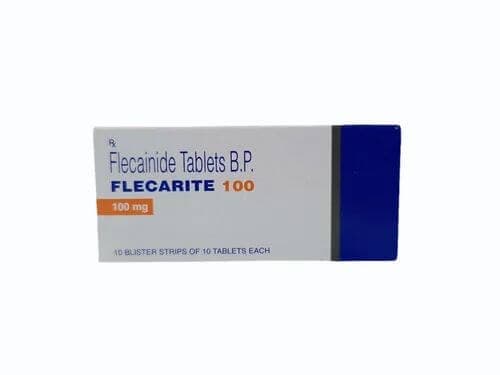
Vendors carrying Flecainide, with live product details and codes. Links are affiliate links that support the wiki at no cost to you.
PCT.Zone
Flecainide
Research
- 1997first citedMechanism of lethal proarrhythmia observed in the Cardiac Arrhythmia Suppression Trial: role of…
- 2017most active year3 papers
- 2025most recentRyanodine receptor 2-mediated calcium leak is associated with increased glyoxalase I in the agi…
- 1.Flecainide prevents catecholaminergic polymorphic ventricular tachycardia in mice and humans.
- 2.Calstabin deficiency, ryanodine receptors, and sudden cardiac death.
- 3.Post-translational remodeling of ryanodine receptor induces calcium leak leading to Alzheimer's disease-like pathologies and cognitive deficits.
- 4.Targeting Post-Translational Remodeling of Ryanodine Receptor: A New Track for Alzheimer's Disease Therapy?
- 5.Heart failure-induced cognitive dysfunction is mediated by intracellular Ca2+ leak through ryanodine receptor type 2.
- 6.Ryanodine receptor 2-mediated calcium leak is associated with increased glyoxalase I in the aging brain.
- 7.Age-related calcium dysregulation linked with tau pathology and impaired cognition in non-human primates.
- 8.Calstabin 2: An important regulator for learning and memory in mice.
- 9.Dysregulation of neuronal calcium homeostasis in Alzheimer's disease - A therapeutic opportunity?
- 10.Ca2+ homeostasis dysregulation in Alzheimer's disease: a focus on plasma membrane and cell organelles.
- 11.Safinamide and flecainide protect axons and reduce microglial activation in models of multiple sclerosis.
- 12.Axonal protection using flecainide in experimental autoimmune encephalomyelitis.
29 listed here; entry last updated August 2026
Reviews
My notesprivate to this device
FAQ
Why would an antiarrhythmic drug be discussed as a cognition or nootropic agent?
Because flecainide does more than block sodium channels; it also directly stabilizes the ryanodine receptor RyR2 and suppresses pathological intracellular calcium leak. That same calcium leak has been implicated in synaptic dysfunction, tau pathology, and cognitive deficits in Alzheimer's and heart failure models, so a drug that curbs the leak is of mechanistic interest for neuroprotection. This is a preclinical and theoretical framing, not a proven cognitive enhancer.
What is the rationale for pairing flecainide with a stimulant used for focus?
Stimulants such as amphetamine and methylphenidate modestly raise heart rate and blood pressure and, rarely, can provoke arrhythmias. The reasoning some cite is that flecainide is a proven antiarrhythmic, so it could act as a cardiac hedge during stimulant driven focus use. This is an off label, mechanistic rationale only; there are no controlled trials supporting the combination, and flecainide itself carries proarrhythmic risk, so it is not a validated protocol.
How strong is the human evidence that flecainide improves cognition?
There is essentially no direct human cognitive outcome evidence. The cognition and neuroprotection case rests on preclinical work: flecainide's direct RyR2 stabilization, axonal protection in neuroinflammation models, and cognition improvements seen with related RyR stabilizers such as dantrolene in Alzheimer's model mice. All of it should be read as theoretical and hypothesis generating for flecainide specifically.
Is flecainide safe to experiment with for focus or brain health?
No, not casually. Flecainide is a prescription Class Ic antiarrhythmic that increased mortality in the Cardiac Arrhythmia Suppression Trial when given to people with prior heart attacks. It is contraindicated in structural or ischemic heart disease and requires electrocardiographic and often drug level monitoring. Any cognition oriented use is off label and must involve a physician. Not medical advice.
Adverse effects
- Proarrhythmia, the central risk highlighted by the CAST trial, especially with structural or ischemic heart disease
- Dizziness and visual disturbances, the most common extracardiac effects; rarely vestibular symptoms
- Interaction potential with other cardioactive drugs and with stimulants that raise heart rate
Notes and cautions
- Negative inotropy and conduction slowing (QRS widening)
- Cognitive or neuroprotective use is entirely off label and unproven in humans