
spec sheet13 rows
Fenofibrate is a lipid-lowering medication of the fibrate class, used mainly to reduce high triglyceride levels and to manage mixed dyslipidemia. It is a prodrug that the body converts to its active form, fenofibric acid, which switches on a receptor called PPAR-alpha to change how the body handles fats. Sold under brand names such as Tricor, it is taken by mouth and is often combined with a statin.
- large triglyceride reductions where a statin falls short
- raises HDL cholesterol at the same time
- shifts LDL toward larger, less troublesome particles
- lowers pancreatitis risk when triglycerides run severely high
- purpose built for mixed dyslipidemia
- a once daily tablet that pairs with a statin
- Headache
- Muscle aches
- Nausea or stomach upset
Overview
Fenofibrate is an oral lipid-lowering drug belonging to the fibrate class, agents used to correct abnormal blood fats [1]. It is prescribed chiefly to lower elevated triglycerides and to treat mixed dyslipidemia, in which both triglycerides and cholesterol are raised, and it tends to lower triglycerides and raise HDL cholesterol more than it lowers LDL cholesterol [1]. The drug is a prodrug: after it is swallowed it is converted to its active form, fenofibric acid, which is responsible for its effects [1].
Fenofibrate has been marketed under a number of brand names, including Tricor, Lipidil and Lofibra, and is also widely available as a generic [1]. It is frequently used alongside a statin when a statin alone does not adequately control triglycerides, and it remains a commonly prescribed lipid medication [1]. Because both drug classes can affect muscle, combining a fibrate with a statin calls for some caution [1].
Several large trials have tested whether fenofibrate reduces cardiovascular events. The FIELD study, in people with type 2 diabetes, did not significantly cut its primary measure of coronary events, although it reduced some secondary cardiovascular outcomes and slowed certain diabetic complications [2]. The ACCORD Lipid trial found that adding fenofibrate to a statin did not lower the overall rate of major cardiovascular events in high-risk diabetic patients, though analyses suggested a possible benefit in the subgroup with both high triglycerides and low HDL cholesterol [3]. Findings like these are why fenofibrate is generally reserved for managing high triglycerides rather than used as a routine partner to statins for everyone [1][3].
Fenofibrate is a prescription-only medicine. Its recognized side effects include headache, muscle aches and gastrointestinal upset, and less commonly gallstones or, rarely, muscle breakdown, particularly when it is combined with a statin [1].
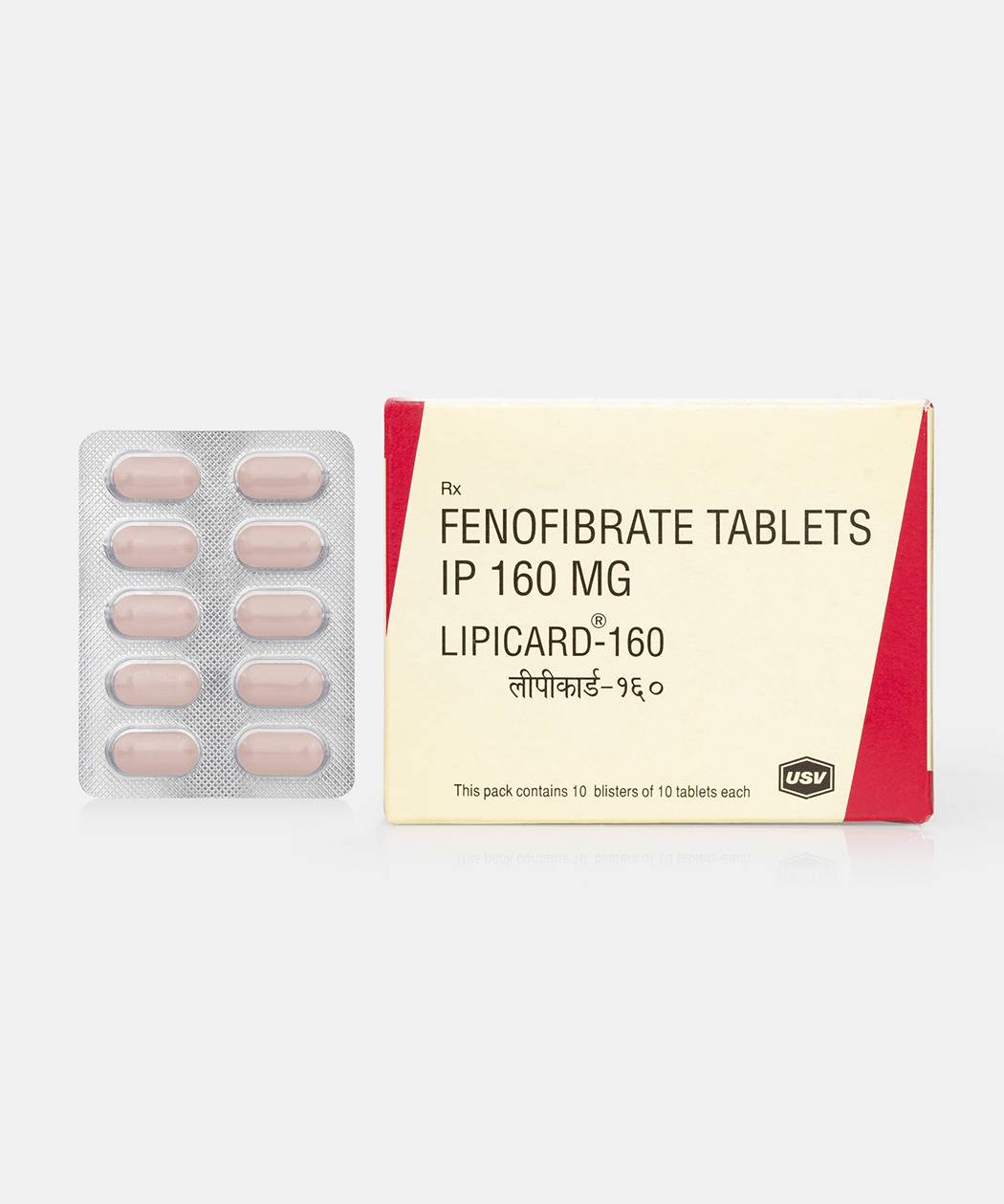
- Fenofibrate is a prodrug; it is inert until the body converts it into its active form, fenofibric acid.
- In the FIELD and ACCORD trials it slowed the progression of diabetic retinopathy, an eye benefit unrelated to its effect on blood fats, and it is now studied for that purpose.
- It descends from clofibrate, one of the first fibrates, and helped define the modern triglyceride-lowering class.
Mechanism
Fenofibrate works through its active , fenofibric acid, which activates peroxisome proliferator-activated receptor alpha (PPAR-alpha), a nuclear receptor that regulates genes involved in fat metabolism [1]. Switching on PPAR-alpha increases the breakdown of fatty acids and boosts the activity of lipoprotein lipase, the enzyme that clears triglyceride-rich particles from the blood, so circulating triglyceride levels fall [1]. At the same time, PPAR-alpha activation raises production of the main proteins of HDL, apolipoprotein A-I and A-II, which tends to increase HDL cholesterol [1]. Through these shifts in gene expression the drug rebalances the blood lipid profile toward fewer triglyceride-rich lipoproteins and more of the protective HDL fraction [1].
receptor fingerprint
PPAR-alphaagonist
Lipoprotein lipaseactivates
Apolipoprotein C-IIIinhibits
Apolipoprotein A-Iactivates
Fatty acid oxidationactivates
Dosingtypical ranges, not medical advice
interested in protocols and clinical dosages? make an account to see them! ^_^
Safetyrisks and cautions, not medical advice
Fenofibrate is prescription only. Common effects include stomach upset, headache, and reversible rises in liver enzymes, so liver tests are monitored. It can raise blood creatinine and, less often, cause gallstones because it increases cholesterol in bile. The most important interaction is with statins, since the pair can raise the risk of muscle injury and, rarely, rhabdomyolysis; gemfibrozil is riskier here than fenofibrate. It potentiates warfarin, so anticoagulation must be watched, and it needs dose separation from bile acid sequestrants. It is contraindicated in severe kidney disease, active liver disease, and gallbladder disease. Report unexplained muscle pain, weakness, or dark urine promptly.
Interactionsdocumented pairs only, not exhaustive
Fenofibrate is frequently co-prescribed with statins for mixed dyslipidemia, and this combination carries a pharmacokinetic interaction. When fenofibrate is combined with simvastatin, the drugs interact; this is not considered clinically significant for lipid control, and large randomized trials (ACCORD Lipid and FIELD) found no increase in serious adverse events such as rhabdomyolysis [5]. Fenofibrate has minimal effect on atorvastatin exposure, with actual clinical studies confirming negligible atorvastatin interactions with fenofibrate [6]. This is a pharmacokinetic interaction mediated by changes in statin metabolism and transport.
Fenofibrate also increases serum creatinine and homocysteine levels but does not increase the risk of diabetic nephropathy or thrombotic events when combined with statins in large prospective trials [5]. The mechanism appears to involve renal hemodynamic effects rather than true drug-drug interaction at the metabolic level. Interactions with other lipid-lowering agents, most antihypertensives, and non-cardiovascular drugs remain poorly studied.
Checking a whole stack? Run it through interactions + stacks.
History
Fenofibrate belongs to the fibrate class and was developed in France by Groupe Fournier (Laboratoires Fournier) in the 1970s as a derivative of the earlier fibrate clofibrate. It was first marketed in France in 1975 and, after decades of European use, reached the United States market in 1998 under the brand name Tricor. Researchers later established that its active metabolite, fenofibric acid, works by activating the nuclear receptor PPAR-alpha to reshape the body's handling of fats. Two major cardiovascular trials in people with type 2 diabetes, FIELD in 2005 and ACCORD Lipid in 2010, tested it rigorously; while their primary cardiovascular endpoints were mixed, both unexpectedly signaled a slowing of diabetic retinopathy progression. That eye-protective finding has since driven renewed scientific interest and dedicated study of the drug beyond its lipid-lowering origins.
Reputation
Fenofibrate holds a respected place in lipid management as a go-to agent for stubbornly high triglycerides and mixed dyslipidemia, where statins alone often fall short. Clinicians value its dual action, trimming triglyceride-rich particles while nudging up the protective HDL fraction, and it is frequently paired with a statin for broader lipid control. Its most intriguing modern chapter is the consistent signal across FIELD and ACCORD that it can slow diabetic retinopathy, an effect that appears largely independent of its lipid changes and has opened a genuinely new avenue of research. As a long-established generic taken once daily, it is both affordable and familiar to prescribers. It is fair to note that its cardiovascular event benefit is most convincing in patients with high triglycerides and low HDL rather than across the board.
Subjective profileweighing the evidence above
A good fit for a specific problem: high triglycerides, particularly in mixed dyslipidemia, where a statin alone falls short. Much less useful if LDL is the main issue. Liver enzymes get monitored, and pairing it with a statin needs a prescriber watching for muscle trouble.
Where to buy

Suppliers
Vendors carrying Fenofibrate, with live product details and codes. Links are affiliate links that support the wiki at no cost to you.
PCT.Zone
Fenofibrate
Research
- 2005first citedEffects of long-term fenofibrate therapy on cardiovascular events in 9795 people with type 2 di…
- 2025most recentThe use of fenofibrate in diabetic retinopathy: Narrative review
- 1.Established and Emerging Lipid-Lowering Drugs for Primary and Secondary Cardiovascular Prevention
- 2.Effects of long-term fenofibrate therapy on cardiovascular events in 9795 people with type 2 diabetes mellitus (the FIELD study): randomised controlled trial
- 3.Effects of combination lipid therapy in type 2 diabetes mellitus.
- 4.The use of fenofibrate in diabetic retinopathy: Narrative review
- 5.Safety considerations with fenofibrate/simvastatin combination.
- 6.Atorvastatin glucuronidation is minimally and nonselectively inhibited by the fibrates gemfibrozil, fenofibrate, and fenofibric acid.
6 listed here; entry last updated August 2026
Reviews
My notesprivate to this device
FAQ
Is fenofibrate a statin?
No, it is a fibrate and works through a different pathway. It targets triglycerides and HDL more than LDL, which is where statins are strongest.
Can I take it with a statin?
Sometimes, but the combination raises the chance of muscle problems, so it is done carefully with monitoring. Fenofibrate is preferred over gemfibrozil for this pairing.
Why is it prescribed mainly for triglycerides?
Its PPAR-alpha action is especially good at clearing triglyceride-rich particles. Very high triglycerides also raise pancreatitis risk, which fenofibrate helps reduce.
What muscle symptoms should worry me?
Unexplained muscle pain, tenderness, or weakness, especially with dark urine, needs prompt medical review. These can signal rare but serious muscle breakdown.
Does it affect kidney tests?
It can raise blood creatinine, which usually reverses if the drug is stopped. Your doctor may check kidney function periodically.
Adverse effects
- Headache
- Muscle aches
- Nausea or stomach upset
- Elevated liver enzymes
- Rare muscle breakdown, especially when combined with a statin
Notes and cautions
- Gallstones with long-term use